
Views: 222 Author: Tina Publish Time: 2026-01-22 Origin: Site


Content Menu
● What Really Determines “Best” Filter
● White vs Blue Filter Housings: Practical Differences
● Aesthetics and Backyard Design
● Heat, Sunlight, and UV Behavior
● How Color Influences Perceived Water Quality
● Matching Filter Color With Pool Pump and Equipment Set
● Filtration Technology Matters More Than Color
● OEM Opportunities: White and Blue Filter Lines
● Design Trends: How Color Choices Are Changing
● The Role of the Pool Pump in the System
● Sizing Filter and Pool Pump Together
● Practical Tips for Installers and Buyers
● FAQ
>> 1. Does filter color affect water clarity?
>> 2. Is white better than blue in hot, sunny climates?
>> 3. Which color is more popular for modern designer pools?
>> 4. Can one filter model be offered in both white and blue?
>> 5. What should brands prioritize when specifying filter color?
Choosing between a white or blue pool filter tank is mainly an aesthetic and branding decision, not a water‑quality decision, as long as the pool pump and filtration system are correctly sized and engineered. Both white and blue housings can deliver crystal‑clear water when paired with the right filter media (sand, cartridge, or DE) and a properly matched pool pump.

The color of the filter tank or housing does not change the filtration performance, which depends on internal design, media quality, flow rate, and correct sizing with the pool pump. Whether the tank is white, blue, beige, or another color, it will work effectively if the media meets the manufacturer's size and shape requirements and the pool pump provides the correct flow.
For most brand owners, wholesalers, and pool builders, “best” means stable, quiet circulation with an efficient pool pump and hydraulically balanced filter. It also means easy maintenance, safe pressure, and long media life for sand, cartridge, or DE systems, so service teams can clean and restart the system quickly during peak season.
When you are comparing models, look at:
- Maximum working pressure and tank material.
- Recommended flow range so it matches your pool pump curve.
- Valve type (multiport or slide), union size, and plumbing layout.
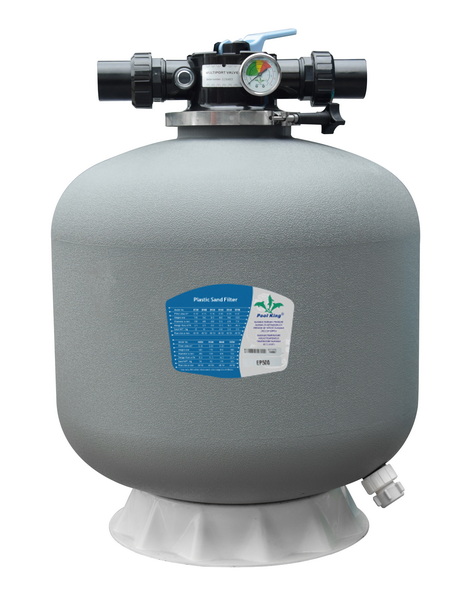
A white filter housing reflects more sunlight, which can help reduce heat buildup on equipment surfaces in very sunny climates. Blue housings are popular for branding and visual impact, especially where equipment is visible and needs to match modern pool finishes, liners, and accessories.
Pool owners rarely see the internal sand or cartridge color; what they notice is how the filter and pool pump look together beside the pool or in the equipment room. They also pay attention to how clearly the filtration system keeps the water and how quietly the pool pump runs day to day.
From a practical standpoint:
- White tanks show dirt and stains more easily, so they can encourage faster cleaning.
- Blue tanks can hide light surface dust better and visually “disappear” near darker backgrounds.
Modern pool design trends emphasize a coordinated look between water color, deck surface, lighting, and equipment. White filters often pair well with light stone decks, white coping, and classic light‑blue water, while blue filters complement darker pool finishes and contemporary, resort‑style backyards.
Brand owners and OEM partners can use filter color strategically to target different customer segments. White housings signal a clean, clinical, technical style near bright plaster pools, while blue housings blend with blue‑tiled pools, darker interiors, and LED lighting schemes. When the pool pump and filter share the same color family, the whole pad looks more professional to homeowners and commercial clients.
Darker colors absorb more solar heat, while lighter colors reflect more light and heat. In very hot regions, a white filter body can help keep external plastic slightly cooler to the touch. Blue or darker housings, on the other hand, visually integrate with modern dark pool finishes and darker equipment enclosures.
Both white and blue housings can be produced with UV‑stabilized resins to resist fading and cracking under strong sun. Good ventilation around the pool pump and filter pad, plus correct installation clearances, is more important to equipment life than the exact color alone. For outdoor installations, consider shading and airflow as part of the equipment design, no matter which color filter you select.
Many people associate a blue pool with cleanliness, but the water's apparent color mostly comes from light scattering, pool depth, and interior finish, not the filter tank color. A white pool interior with clear water looks blue because shorter blue wavelengths scatter more strongly and the bright surface reflects them back to the eye.
For equipment choices, white filters visually reinforce the “crystal clear, light‑blue” water image that many traditional homeowners love. Blue filters visually connect to deeper ocean‑blue and graphite pool trends that dominate many of today's luxury projects. In both cases, a correctly sized pool pump and filter combination is what actually keeps the water safe and clean.
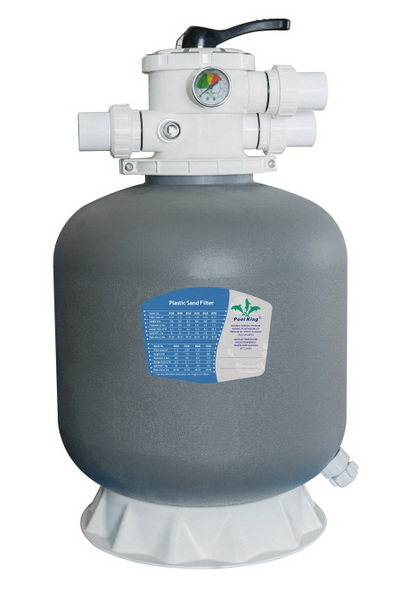
From an OEM or builder perspective, the best approach is to design a unified equipment set where the pool pump, filter, valve set, and accessories share a coherent look. Many premium pool packages combine a color‑coordinated pool pump housing and filter tank with matching unions, bases, and label designs to present a professional, high‑end brand image.
With modern molding and smart production, the same internal filter design can be supplied in both white and blue housings. This means:
- European or North American brands may prefer subtle white or light‑gray housings paired with neutral pool pump colors.
- Other markets may favor bold blue housings that match liners, tiles, and blue‑accent pool pump designs.
Pool clarity and hygiene depend on correct filtration technology, not tank color. For serious buyers and professional installers, the main focus should be on filter type and media, then on matching it correctly with the pool pump.
- Sand filters are robust, economical, and easy to backwash for most residential and commercial pools. They are often combined with a medium‑head pool pump that delivers steady flow for 6–8 hours per turnover.
- Cartridge filters provide fine filtration with less water used for cleaning, ideal where backwashing is restricted. They are frequently paired with energy‑efficient variable‑speed pool pump models.
- DE filters offer very fine filtration for premium clarity when users accept extra maintenance steps. These systems typically work best with carefully sized pool pumps that keep pressure within the recommended range.
In every case, an appropriately sized, energy‑efficient pool pump is essential to move enough water through the media every day to meet turnover and health code requirements.
For overseas brands, wholesalers, and pool equipment manufacturers, offering both white and blue filter options allows better targeting of different market segments and design styles. With flexible OEM production, one factory can provide white, blue, or custom‑color sand filter tanks matched with high‑efficiency pool pump models.
You can also coordinate accessories such as multiport valves, pressure gauges, LED pool lights, and plumbing kits to create complete equipment packages. This dual‑color strategy lets distributors position white filters as “classic, clinical, and professional,” and blue filters as “modern, resort‑style, and design‑driven,” without redesigning the hydraulic core of the filter.
For big projects, such as hotel pools or community facilities, OEM partners can offer:
- Branded nameplates on both white and blue filters.
- Matching pool pump stickers and control panels.
- Customized boxes and manuals aligned with the chosen equipment color.
White pool filter housings make sense when the pool design uses white or very light interiors and bright, minimalistic decks. They are also an excellent choice when the equipment pad is visible and the owner wants a clean, technical look that matches light‑colored pool pumps and pipes.
Advantages frequently mentioned by installers and brands include:
- Easy to see dirt or staining on the exterior, encouraging quick maintenance.
- “Cooler” visual impression in hot climates and strong visual contrast with dark valves or fittings.
- Familiar, medical‑clean look that reassures homeowners about water quality.
White filters combined with a white or light‑gray pool pump can create a minimalist, timeless equipment zone that appeals to many residential buyers.
Blue pool filter housings are ideal when the design direction focuses on color coordination and resort‑style visuals. They work especially well when the pool interior finish is darker blue, graphite, or charcoal, aligning water color with equipment tone.
Blue filters fit brands that market themselves with ocean‑inspired, lifestyle‑focused images. When combined with blue‑accented pool pump housings, blue LED lighting systems, and blue‑printed control panels, they create a visually unified equipment package that stands out in brochures, trade shows, and online product pages.
In markets where dark pools, infinity edges, and dramatic lighting dominate, a blue filter and matching pool pump may actually support higher selling prices because the equipment “feels” more premium and customized.
Recent pool design trends show a strong shift toward deeper, richer interior colors like graphite, deep blue, and even black. These darker finishes create a more luxurious, resort‑like aesthetic, and many homeowners want the equipment color to match this atmosphere instead of the traditional white‑plaster look.
As a result, blue and dark‑toned filters are becoming more common in high‑end projects, especially when combined with advanced LED lighting and automation. At the same time, the classic light‑blue and white style remains popular for family pools, public facilities, and customers who prefer a bright, clean appearance.
For brands and OEM buyers, this means there is real value in offering both a traditional white line and a fashion‑forward blue line, both driven by the same pool pump and filter technology inside.
No matter which color filter you choose, the pool pump is the heart of the circulation system. It pulls water from the skimmer and main drain, pushes it through the filter media, and returns clean water back to the pool.
A correctly selected pool pump should:
- Turn over all the water in the pool within the recommended time, often 6–8 hours.
- Match the flow rate limits of the chosen filter, so you avoid excessive pressure or poor filtration.
- Offer energy‑saving features, such as variable‑speed operation, to reduce running costs.
When you specify a pool pump together with a filter for your OEM line, consider pool volume, plumbing size, and expected usage. A well‑matched pump‑and‑filter set, whether white or blue, will give better clarity, quieter operation, and longer service life than a mismatched system with the “wrong” pump.
For the best performance, always size the filter and pool pump as a pair instead of treating them as separate products. Larger pools with complex plumbing often need larger filters and carefully sized pool pump models to keep pressure within a safe, efficient range.
General principles include:
- Calculate pool volume and desired turnover to estimate the needed flow rate for the pool pump.
- Choose a filter whose recommended flow range comfortably covers that rate.
- Ensure plumbing (piping diameter and layout) supports the chosen pool pump without excessive friction loss.
By designing pre‑matched packages, your brand can make it easier for dealers and installers to choose the right combination and avoid after‑sales complaints. You can offer, for example, a “white 24‑inch sand filter plus 1.0 HP pool pump kit” and a “blue 24‑inch sand filter plus 1.0 HP pool pump kit” that are identical inside but visually different outside.
When you are advising customers or designing your own OEM line, keep these practical tips in mind:
- Focus on internal engineering first: filter size, media type, and pool pump selection decide water quality.
- Use color to support the design story: white for clinical and classic, blue for resort and modern.
- Consider the visibility of the equipment: if the filter and pool pump are hidden, color matters less; if they are on display, color matters more.
- Standardize spare parts across both white and blue lines to simplify inventory: same valves, same pressure gauges, same pool pump ranges.
From a technical point of view, neither white nor blue filter housings are inherently “better,” because filtration performance depends on internal design, media quality, and correct pairing with an efficient pool pump. The best choice is the one that supports your brand image, matches your market's pool design trends, and can be integrated into a complete, energy‑efficient equipment set including pool pump, filter, LED lights, and accessories. For many professional buyers, the ideal solution is to standardize high‑quality internal engineering, then offer both white and blue filter options so every dealer can choose the look that fits their customers while enjoying the same reliable performance.
Contact us to get more information!
No, the color of the filter tank does not directly affect water clarity. What really matters is the internal filter design, the quality of the media, and the way it is matched with the pool pump and plumbing. As long as the filter and pool pump are correctly sized and installed, white and blue housings can achieve the same clear, healthy water.
White housings reflect more sunlight and may stay a little cooler on the surface in very hot regions. Blue housings absorb more heat but still perform well when they are manufactured from UV‑stabilized, outdoor‑grade materials. In practice, good ventilation, proper installation, and correct pool pump sizing are far more important to equipment life than the color of the filter shell.
Modern designer pools often use deep blues, charcoals, and dark stone finishes, so blue or darker filter housings are becoming popular to match this luxury style. However, classic residential pools with light interiors and bright decks still favor white filters, especially when they are paired with light‑colored pool pump models. Offering both colors lets your brand satisfy both design directions.
Yes, this is a common OEM strategy. The same internal filter structure and media can be molded in both white and blue housings, allowing factories to supply multiple visual lines without changing hydraulic performance. This makes it easy to pair the same pool pump and valve set with different color options for different regions or sales channels, while keeping spare parts and service procedures unified.
Brands should prioritize hydraulic performance, energy‑efficient pool pump selection, and long‑term reliability first. After those core technical requirements are defined, they can use housing color and label design to support marketing and design goals. Coordinating filter, pool pump, and accessory colors creates a professional, high‑value equipment package that helps dealers sell more confidently and helps homeowners feel they are buying a premium, well‑thought‑out system.


