
Views: 222 Author: Tina Publish Time: 2026-01-10 Origin: Site


Content Menu
● Essential safety precautions
● Basic inspection before electrical tests
● Common symptoms of a failing motor
● Tools and information you need
● Step‑by‑step: mechanical checks
● Step‑by‑step: testing supply voltage
● Step‑by‑step: testing motor windings
● Step‑by‑step: testing the capacitor
● When to bench‑test vs test in place
● When to repair, replace, or upgrade
● FAQs about testing a pool pump motor
>> 1. How do I know if my pool pump motor is bad or just the capacitor?
>> 2. Can I test a pool pump motor with the multimeter it came with my basic tool kit?
>> 3. Is it safe to run the pump briefly if the motor is making noise?
>> 4. How often should a pool pump motor be checked?
>> 5. When should I call a professional instead of testing the motor myself?
Testing a pool pump motor is mainly about safety, checking simple mechanical issues first, then using a multimeter to test voltage, resistance (windings), and the capacitor. Done in the right order, this tells you whether you can repair the motor or if it is time to replace it.[1][2][3][4]

A weak or failed pool pump motor quickly leads to cloudy or green water, higher chemical use, and possible damage to the pump and filter. Early testing helps you decide if a simple part like a capacitor can be replaced or if a full motor replacement is the smarter choice.[5][6][4][7]
Working on a pool pump motor exposes you to mains voltage and stored energy in the capacitor, so electrical safety comes first. Always shut off the breaker, lock it out if possible, confirm with a meter that the power is off, and discharge the capacitor before touching terminals.[8][9][5]
- Turn off the pool pump at the control panel and main breaker, not just the timer.[3][10]
- Use a non‑contact voltage tester or multimeter to confirm zero voltage at the motor terminals before proceeding.[9][3]
- Wear insulated gloves, safety glasses, and use insulated‑handle tools when opening the motor or capacitor cover.[5][8]
- Never test a motor in wet conditions or with standing water on the pad; wait until the area is dry.[10][7]
Many pump issues that look like “bad motors” are actually simple mechanical or hydraulic problems. Before using a multimeter, a quick inspection can save time and unnecessary parts.[2][4][7][10]
- Check that the pump basket and skimmer baskets are clean and that the impeller is not jammed with debris.[10][5]
- Inspect the motor for obvious damage such as burn marks, corrosion, water ingress, or bulging capacitor housing.[4][5]
- Rotate the motor shaft by hand from the back (or spin the impeller from the front, with power off); it should turn smoothly without grinding.[5][10]
- Listen for previous symptoms: humming without starting, screeching, or frequent breaker trips all hint at specific motor faults.[11][2][4]
Understanding symptoms helps you choose which test to do first: mechanical, voltage, winding resistance, or capacitor. Each pattern of noise or behavior usually points to a shortlist of likely causes.[7][2][4][10]
- Loud grinding or screeching often points to failing bearings, which may make repair uneconomical compared with replacing the motor.[2][4]
- A steady humming sound with no rotation usually indicates a bad start capacitor or a seized motor shaft.[6][2][5]
- Frequent breaker trips can be caused by shorted windings, moisture in the motor, or wiring faults drawing excessive current.[4][7]
- Poor circulation and cloudy water, even when the pump appears to run, can signal a weak motor that no longer delivers adequate torque.[7][4]
Testing a pool pump motor requires a few basic tools and the correct motor information from its label. Having everything ready reduces the chance of unsafe improvisation around live wiring.[1][8][3][9]
- Multimeter that can measure AC voltage and resistance (ohms); capacitance mode is helpful but not mandatory.[6][3][5]
- Insulated screwdriver for safely discharging the capacitor and removing covers.[8][5]
- Manufacturer data: voltage (115/230 V), full‑load amps, wiring diagram, and terminal layout, normally printed on the motor nameplate.[3][10]
- Optional clamp meter to measure running current once you have confirmed the motor can operate safely.[9][3]
Mechanical checks should always come before advanced electrical testing, because no amount of voltage or new parts will fix a physically seized motor. Simple debris or rust problems can mimic more serious failures but are cheaper and easier to correct.[4][10][5]
1. Isolate power and open the pump
- Shut off and verify the breaker is off, then remove the pump lid and basket.[10][5]
- Inspect for rocks, leaves, or plastic stuck near the impeller opening and remove any visible debris.[5][10]
2. Check shaft or impeller rotation
- Access the motor shaft from the rear cover plate or by gently spinning the impeller from the front.[10][5]
- If the shaft does not spin freely or feels gritty, bearing or rust issues are likely, and the motor may need rebuilding or replacement.[4][10]
3. Look for water damage and overheating marks
- Examine the motor housing and wiring compartment for signs of leaks, rust, or water lines.[7][4]
- Burn marks or melted insulation indicate overheating or electrical faults that require professional attention or replacement.[4][10]
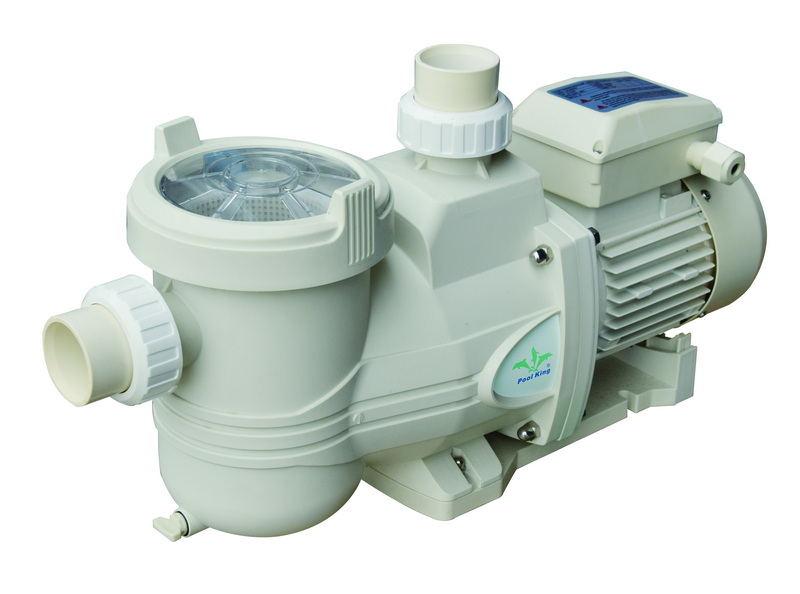
Once mechanical issues are checked, verify that the motor is receiving the correct supply voltage; a good motor cannot run on poor power. Incorrect voltage can cause overheating, low torque, or motors that will not start.[3][10][4]
1. Confirm wiring configuration
- Identify whether the motor is wired for 115 V or 230 V and match that to the breaker and timer output.[3][10]
- Check that line and neutral (or both hot legs) are on the correct terminals according to the motor diagram.[3][10]
2. Measure voltage at the timer or switch
- With the breaker on and the timer calling for the pump to run, place multimeter probes on the output terminals to the motor.[12][3]
- For a 230 V system, you should see close to the rated voltage across the two hot legs; significantly low readings can indicate upstream wiring problems.[13][3]
3. Measure voltage at the motor terminals
- Carefully open the motor wiring compartment and probe the incoming power leads with the multimeter.[10][3]
- If voltage at the motor is far off the nameplate rating, correct the supply before concluding that the motor itself is bad.[9][3]
Resistance tests help reveal broken or shorted windings in the motor, which are common causes of motors that hum, overheat, or trip breakers. A multimeter set to ohms can check continuity between motor terminals and to ground.[15][13][1]
1. Power off and disconnect leads
- Turn off the breaker and confirm no voltage is present at the motor terminals before switching the meter to resistance.[1][3]
- Label and disconnect the incoming power wires so you are only measuring the motor windings, not the external circuit.[13][1]
2. Measure resistance between motor terminals
- On many capacitor‑start pool motors, you will see several terminals corresponding to main and start windings.[8][1]
- Measure resistance between each pair of appropriate winding terminals; open readings indicate broken windings, while abnormally low readings can indicate shorted turns.[13][1]
3. Measure resistance from each terminal to motor housing
- Place one probe on each terminal, and the other on the bare metal motor frame.[15][13]
- A good motor typically shows very high or infinite resistance to ground; readings near zero suggest a ground fault, which is unsafe and usually requires motor replacement.[15][4]
Because many pool pump motors are capacitor‑start designs, a failed capacitor is one of the most common, inexpensive causes of a “humming and not starting” motor. Testing this component correctly can save the cost of a new motor.[6][8][9][5]
1. Locate and access the capacitor
- The capacitor is usually under a small bump‑shaped cover on top or side of the motor; remove this cover with the breaker off.[6][5]
- Visually inspect for bulging, cracks, burn marks, or leaking fluid, any of which suggest immediate replacement.[5][6]
2. Discharge the capacitor safely
- Use an insulated screwdriver to briefly short the terminals together, or follow manufacturer guidance, to remove stored charge.[8][5]
- Handle the component with insulated tools and avoid touching bare terminals directly even after discharge.[9][8]
3. Test with a multimeter
- If your meter has a capacitance mode, connect probes to the capacitor and compare the reading to the microfarad rating on the label.[16][6]
- With only an ohm setting available, a healthy capacitor will usually cause the needle or digits to jump toward low resistance and then drift back toward infinity when charged.[9][5]
In some cases, it is useful to remove the motor from the pump housing to test it away from plumbing and water. Bench testing helps confirm whether the motor spins up under correct voltage without mechanical load.[14][8][9]
- Bench testing should still be done by someone comfortable with safe live electrical work and secure mounting.[14][9]
- If the motor runs normally on the bench but not when attached to the pump, the impeller, seal, or wet end may be binding and causing overload.[5][10]
- If the motor fails to start, overheats quickly, or trips breakers even on the bench with proper voltage, internal windings or bearings are likely damaged.[8][4]
Combining symptom history with voltage, resistance, and capacitor tests gives a clear picture of the motor's health. This helps you decide between replacing a small part, rebuilding, or installing a new motor or complete pump.[2][1][3][4]
- Good voltage, good capacitor, and intact windings but noisy operation usually indicate bearing failure; replacement is often more cost‑effective than repair.[2][4]
- Correct voltage but open or shorted windings means the motor is at end of life and should be replaced for safety and reliability.[1][13]
- Humming with low or no rotation plus a failed capacitor reading often resolves by installing the correct new capacitor with the proper microfarad rating.[6][5]
- Motors that repeatedly trip breakers or show leakage to ground are unsafe and should be removed from service immediately.[7][4]
Once testing confirms the condition of the motor, you can decide whether repair is reasonable or whether upgrading to a more efficient pump is better. For older pools, high‑efficiency motors and OEM‑grade pumps can also cut energy costs and noise.[11][7][4]
| Situation | Typical choice | Reason |
|---|---|---|
| Only capacitor failed | Replace capacitor | Low cost, quick repair, minimal downtime. intheswim+1 |
| Bearings noisy but windings good | Replace or rebuild motor | Repair possible, but new motors offer longer life. poolpartstogo+1 |
| Windings shorted or grounded | Replace motor or whole pump | Internal damage is uneconomical to fix. inyopools+1 |
| Frequent trips, overheating, very old | Upgrade to new pump/motor | Improves reliability and energy efficiency. poolcarespecialists+1 |
| Motor OK but pump undersized | Upgrade complete pump set | Better circulation and filtration performance. poolcarespecialists+1 |
For OEM brands, wholesalers, and builders, upgrades are also an opportunity to standardize on modern, quiet, energy‑efficient pump designs matched to sand, cartridge, or DE filters. Supplying pre‑configured pump and filter packages simplifies installation and support for downstream partners.[11][7][10]
Testing a pool pump motor properly always starts with safety, including shutting off power, verifying zero voltage, and discharging the capacitor before touching any terminals. From there, a structured process—mechanical checks, voltage verification, winding resistance tests, and capacitor evaluation—will clearly show whether the motor can be repaired or needs replacement. For many pools, replacing an aging or inefficient motor with a modern, correctly sized pump is an opportunity to improve circulation, reduce noise, and cut long‑term energy and maintenance costs.[11][7][1][3][4][9][5]

A motor that only hums when powered, especially after sitting idle, often has a failed start capacitor, while motors with grinding noises, severe overheating, or visible burn damage are usually failing internally. Testing the capacitor with a multimeter and inspecting for bulging or leaks helps confirm whether a simple capacitor swap will restore normal starting.[2][6][4][5]
Yes, most basic digital multimeters can measure AC voltage and resistance, which is enough to check supply voltage and winding continuity on a pool pump motor. If your meter also has a capacitance mode, you can measure the capacitor value directly; otherwise, you can still perform a basic “charge and discharge” test using the ohm setting.[1][6][3][5]
Running a noisy motor briefly for diagnosis is possible, but extended operation with grinding, screeching, or strong vibrations can accelerate bearing and winding damage or even cause a catastrophic failure. If noise is severe or the motor overheats and trips breakers, shut it down immediately and schedule repair or replacement.[7][11][4][2]
Most residential pool motors are inspected in detail when problems appear, but a quick annual check of noise level, running temperature, and electrical connections can prevent surprises. During seasonal openings, verifying that the shaft spins freely and that the capacitor housing is intact is a simple way to catch issues early.[11][4][7][5]
If you are not fully comfortable working around live electrical circuits, or if tests suggest shorted windings, ground faults, or recurring breaker trips, it is safer to call a licensed technician. Professionals have the equipment and experience to evaluate complex faults, size replacement motors correctly, and upgrade pumps to more efficient models where appropriate.[4][10][9][11]
[1](https://www.inyopools.com/HowToPage/how-to-use-a-multimeter-to-test-a-pool-pump-motor-continuity.aspx?CommentPage=1)
[2](https://poolpartstogo.com/blogs/articles/how-can-you-tell-if-your-pool-pump-is-going-bad)
[3](https://www.inyopools.com/HowToPage/how-to-use-a-multimeter-to-test-a-pool-pump-motor.aspx?CommentPage=1)
[4](https://alphawest.com/signs-a-pool-pump-motor-is-in-need-of-replacement/)
[5](https://intheswim.com/blog/how-to-test-a-pool-pump-capacitor.html)
[6](https://www.kscapacitor.com/resources/6-signs-a-pool-pump-capacitor-is-bad-and-how-to-test.html)
[7](https://pooloperationmanagement.com/pool-pump-repair-how-to-tell-when-you-need-it/)
[8](https://acim.nidec.com/motors/usmotors/-/media/usmotors/documents/literature/ebooks-and-articles/pool-troubleshooting-ebook-120220.ashx?la=en)
[9](https://www.poolspanews.com/how-to/ultimate-tech-manual/electrical-examination_o)
[10](https://lesliespool.com/blog/pool-pump-troubleshooting-guide.html)
[11](https://poolcarespecialists.com/7-signs-you-need-to-replace-your-pool-pump/)
[12](https://www.youtube.com/watch?v=wxz9EadJLV8)
[13](https://forums.mikeholt.com/threads/resistance-check-on-a-pool-pump-motor.149637/)
[14](https://www.youtube.com/watch?v=RHFSJ4xu-3g)
[15](https://www.reddit.com/r/pools/comments/m1mr9h/is_there_a_way_to_test_a_pool_pump_without/)
[16](https://www.youtube.com/watch?v=hl9BnW9XwFY)
[17](https://www.reddit.com/r/pools/comments/1ab8unb/signs_pool_motor_is_going_bad/)
[18](https://www.youtube.com/shorts/9zc2tErR3uU)


