
Views: 222 Author: Tina Publish Time: 2026-01-08 Origin: Site


Content Menu
● Why Ladder Stability Matters
● Method 1: Use Built‑In Water or Sand Chambers
● Method 2: Add External Sandbags or Anchor Bags
>> Using commercial ladder weight bags
● Method 3: PVC or Concrete Weight Tubes
>> Concrete‑filled PVC anchors
● Method 4: Combine Ballast With Proper Ladder Positioning
● Safety Tips and Things to Avoid
● OEM and Professional Solutions for Brands and Installers
● FAQs About Weighing Down Above Ground Pool Ladders
>> 1. How much weight do pool ladders usually need?
>> 2. Is sand or water better for weighing down a ladder?
>> 3. Are concrete blocks safe to use in a vinyl pool?
>> 4. How often should I check my ladder weights?
>> 5. Can I just tie dumbbells or gym weights to the ladder?
>> 6. Do I still need a ladder pad if my ladder is weighted?
A floating or unstable above ground pool ladder is usually caused by trapped air and not enough ballast weight, so the solution is to remove air and add safe weights (water, sand, or purpose‑made anchors) while protecting the liner and keeping the steps easy to use. With the right method, your ladder will sit firmly on the pool floor and feel solid every time someone climbs it.[1][2][3]
Above ground pool ladders and step systems are often made from hollow resin that naturally wants to float, especially in strong circulation or when bathers move in and out quickly. If the ladder lifts, shifts, or scrapes along the floor or wall, it becomes a real safety and liner‑damage risk rather than a helpful access point.[2][3][1]
To weigh the ladder down correctly, you need a stable combination of internal ballast (inside the steps or ladder body) and/or external ballast (weights or bags placed around the base), matched to the ladder's design and your pool's surface. Many modern step systems already include fill chambers and compatible weight kits, while older models may require DIY solutions like sand‑filled PVC tubes or encased concrete anchors.[4][1][2]
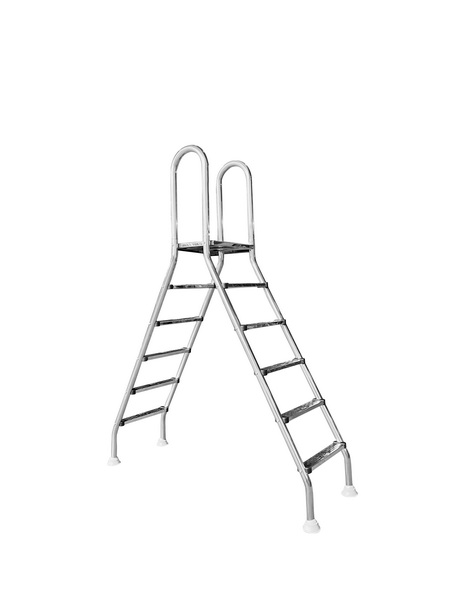
- A buoyant ladder can suddenly lift or tilt when someone is climbing, increasing the risk of slipping, falling backwards, or getting a foot trapped under a step edge.[5][1]
- If the base or sides rub against a vinyl liner, they can create pressure points and friction marks that eventually turn into tears or holes.[3][2]
- In above ground pools, ladder movement can also interfere with the circulation pattern, trapping debris and algae around the base and making the water harder to keep clear.[6][2]
For commercial or rental installations, unstable ladders may violate local safety guidelines or insurance conditions, making proper weighting part of regulatory compliance. From a brand or OEM standpoint, a ladder that stays solid and comfortable to climb is also a strong differentiator for your overall pool package.[7][2][3]
Many modern above ground pool steps and ladders have molded cavities specifically designed to be filled with water or sand so the unit becomes self‑weighted once installed.[1][2]
- Locate the caps or plugs on the inside of the ladder or steps; these usually open to reveal internal cavities for water filling.[2][1]
- Submerge the ladder in the pool, then open the caps and allow pool water to rush in until the chambers are full, gently rocking the ladder to release trapped air pockets.[8][2]
- Close the caps firmly and test the ladder by climbing a few steps to confirm it stays in full contact with the floor without lifting.[1][2]
Water ballast is convenient for seasonal pools because it is easy to drain for winter storage and does not leave residue inside the ladder. However, on very buoyant designs or tall A‑frame units, water alone may not provide enough weight, and sand or external ballast might still be needed.[8][2][1]
- Check that the manufacturer explicitly allows sand in the chambers and confirm the recommended fill amount, because overfilling can stress the plastic.[2][1]
- Use clean, dry play sand and a funnel to fill each cavity evenly, tapping the side of the ladder periodically so the sand settles without leaving large voids.[5][2]
- Seal the caps tightly and, if necessary, add a bead of silicone around the threads or plug to reduce the chance of slow leaks over multiple seasons.[3][2]
Sand is denser than water, so it provides more weight in the same volume and gives a more “permanent” feel once the ladder is in place. Because sand is harder to remove, this method is best for ladders that stay installed year‑round or are rarely moved.[8][5][2]
If your ladder does not have fill chambers—or you want extra stability—external sandbags or dedicated anchor bags are one of the simplest solutions.[1][2]
- Fill heavy‑duty polyethylene or contractor‑grade bags with 20–50 lb of clean play sand, tie the openings securely, then double‑bag them to protect against abrasion and leaks.[6][2]
- Place the bags beside or under the bottom steps so they rest flat on the pool floor without sharp corners or hard edges touching the liner.[5][2]
- Distribute weight on both sides of the ladder to prevent twisting, and avoid placing bags where toes or fingers can get trapped between the ladder and weight.[4][2]
Some pool owners use tent‑style sandbags or wrapped concrete bricks as a low‑cost alternative, but any DIY weight must be sealed so loose material cannot escape into the water if a bag fails. For vinyl pools, always ensure the outer surface is smooth and flexible so it will not cut or rub the liner.[6][4][3][2]
- Purpose‑made ladder weight bags are usually designed to be filled with sand or water and then clipped around the ladder base or hung from the step frame.[9][1]
- These bags often feature durable fabrics, reinforced seams, and integrated attachment points that minimize entrapment spaces and simplify installation.[9][2]
- Many leading above ground step brands recommend or sell their own matched weight kits to guarantee stability and protect warranty conditions.[7][2]
Commercial anchor bags look cleaner and are easier to explain to customers or inspectors, making them a good choice for OEM ladder packages or professional installers.[9][2]
A popular long‑term solution uses capped PVC tubes filled with sand or concrete and then attached to the ladder frame or placed alongside the base.[10][2]
- Cut sections of schedule 40 PVC pipe to a manageable length—commonly 18–36 inches—then glue or solvent‑weld caps onto one or both ends.[10][2]
- Drill small holes in one cap and install stainless eye bolts before filling so you have secure attachment points for zip ties or rope.[11][12]
- Fill the tubes with dry sand, close the remaining cap, and fasten the finished tubes to the ladder base with heavy zip ties or nylon straps.[11][10]
These tubes are reusable and can be custom‑weighted simply by choosing different diameters, lengths, or fill materials. When properly sealed and attached, they keep the ladder stable without any loose material touching the liner.[10][2]
- Instead of sand, some owners pour premixed concrete into PVC pipes, vibrate or tap the pipe to consolidate the mix, and seal each end after it sets.[12][8]
- Concrete provides more density than sand, so shorter tubes can deliver the same ballast, which is helpful in tight stair cavities.[8]
- Because concrete is inert and solid, there is no risk of granular leaks, but the units are heavy and better suited for semi‑permanent installations.[4][8]
Concrete anchors encased in PVC are especially popular for curved or large step systems where the manufacturer specifies a relatively high ballast weight. For serviceability, ensure the attachment method still allows you to remove the ladder for cleaning and winterization.[3][2][8]
Weight alone will not solve every issue if the ladder is poorly placed or not compatible with your pool structure.[2][3]
- Confirm that the ladder is correctly sized for the pool wall height and that its base sits flat on the floor without rocking or over‑extension of the legs.[7][3]
- Pull the ladder slightly away from the wall and use a dedicated ladder pad or protective mat between the ladder base and the vinyl liner to prevent rubbing.[3][2]
- For A‑frame ladders, make sure the outside legs are on firm, level ground and that any locking mechanism or removable outside steps work correctly.[7][1]
In in‑ground installations with deck‑mounted rails, secure the ladder into proper anchor cups or mounting flanges and tighten set screws so the rails cannot shift while people climb. If the ladder supports are structurally loose, no amount of extra ballast at the bottom will fully correct the wobble.[2][3][7]
- Do not use loose bricks, rocks, or metal scrap directly on the pool floor, as sharp edges or rust can damage the liner and stain the surface.[6][4]
- Avoid standard household items not designed for long‑term submersion—like thin plastic bottles or non‑UV‑stable bags—because they can degrade, split, and release contents into the water.[12][6]
- Always keep the space beneath and around the steps free of traps where hair, limbs, or swimsuits could get stuck; many modern step systems include built‑in anti‑entrapment panels for this reason.[7][2]
Check the ladder's published weight capacity and never exceed it; a secure ladder must support a realistic user load with a safety margin, not just stay on the bottom. Periodically inspect weights, bags, and fasteners for wear, replacing any corroded or brittle parts before the swimming season gets busy.[13][3][2][7]
For overseas brands, wholesalers, and pool kit manufacturers, offering a complete, stable ladder solution can reduce customer complaints and warranty claims.[7][2]
- Many professional equipment suppliers now integrate ladder systems with compatible sand filters, pumps, and LED lighting, so the entire package is engineered for safety and convenience.[2][7]
- Matching the ladder design to the pool's filtration flow pattern, depth, and liner type helps control debris around the base and cuts down on service calls.[7][2]
As an OEM or private‑label buyer, consider specifying ladders with molded sand or water chambers plus included weight bags and ladder pads in your standard kit. This ensures that end users in different markets can install the ladder correctly without improvising risky homemade weights.[9][3][2]
Weighing down an above ground pool ladder is not a one‑size‑fits‑all job, but a structured approach makes it straightforward: use built‑in chambers whenever possible, add external ballast safely where needed, and always protect the liner and users. Between water‑filled cavities, sand ballast, external bags, and PVC or concrete anchors, you can choose a method that fits your ladder design, pool surface, and long‑term maintenance plan.[8][1][2]
Proper positioning, regular inspections, and the right protective accessories – such as ladder pads and anti‑entrapment panels – turn your ladder into a stable, professional‑grade entry system rather than a constant worry. For brands, wholesalers, and OEM customers, bundling high‑quality ladders with matched filtration and accessory packages is a powerful way to deliver a safer, more reliable swimming experience worldwide.[3][2][7]
Most residential above ground pool step systems require somewhere between 40 and 100 pounds of ballast, depending on size and buoyancy, but the exact figure should come from the manufacturer's instructions. Some heavy‑duty steps used in deep or high‑traffic pools may specify even higher ballast weights or multiple weight kits.[8][2][7]
Water is easier to add and remove, making it convenient for seasonal setups, but sand is significantly denser and provides more permanent ballast in the same chamber volume. Many owners use water for lightweight ladders and sand for larger step systems that need a more solid, year‑round feel.[8][1][2]
Bare concrete blocks or pavers can scrape, puncture, or stain a vinyl liner, so they should never be placed directly on the pool floor. If you prefer concrete, encase it in PVC tubes or wrap bricks thoroughly in heavy‑duty bags so only smooth surfaces contact the liner.[4][6][8]
At a minimum, inspect your ladder and its weights at the beginning of each swimming season and again mid‑season, looking for leaks, cracked bags, or loose attachments. If your pool sees heavy use or strong currents from powerful pumps and return jets, more frequent checks are recommended.[3][2][7]
Some pool owners use plastic‑coated dumbbells as ballast, but bare metal can rust quickly and stain the pool, and many gym weights are not designed for long‑term submersion. If you use them, choose fully coated models, check for sharp edges, and consider adding a protective wrap to keep metal away from the liner.[12][4][3]
Yes, a ladder pad or mat is strongly recommended for vinyl liners even when the ladder is properly weighted, because it spreads the load and prevents wear spots under the feet. Pads also make it less likely that minor movement at the base will translate into friction damage on the liner over time.[2][3][7]
[1](https://www.homesandgardens.com/gardens/how-to-weigh-down-pool-steps)
[2](https://www.poolkingfilter.com/how-to-weigh-down-a-pool-ladder.html)
[3](https://blog.linerworld.com/2011/01/14/swimming-pool-ladder-installation/)
[4](https://www.facebook.com/groups/637529959937311/posts/2293986627624961/)
[5](https://www.reddit.com/r/AboveGroundPools/comments/1cwwfnh/pool_ladder_weight_suggestions/)
[6](https://www.reddit.com/r/pools/comments/nvpwqn/question_about_above_ground_pool_ladder_weight/)
[7](https://intheswim.com/blog/above-ground-pool-step-buyers-guide.html)
[8](https://www.youtube.com/watch?v=-qkS06U4SC0)
[9](https://www.homedepot.com/p/Main-Access-Universal-Anchors-Swimming-Pool-Ladder-Step-Sand-Weights-3-x-200888/310623840)
[10](https://www.facebook.com/groups/637529959937311/posts/2578471772509777/)
[11](https://www.facebook.com/groups/637529959937311/posts/2550092255347729/)
[12](https://www.facebook.com/groups/637529959937311/posts/2621602224863398/)
[13](https://www.thepoolfactory.com/a/answers/5331753/What-is-the-maximum-weight-capacity-of-the-ladder)
[14](https://www.youtube.com/watch?v=pacoHDlvEAE)
[15](https://www.facebook.com/groups/637529959937311/posts/2595255864164701/)


