
Views: 222 Author: Tina Publish Time: 2026-01-09 Origin: Site


Content Menu
● Typical Weight Capacity of Pool Ladders
● Factors That Affect Ladder Weight Capacity
● Pool Ladder Weight Capacity by Type
>> Common Weight Ratings by Ladder Type
● Above-Ground vs Inground Pool Ladders
● Safety Standards and Regulations
● How to Choose the Right Weight Capacity
● Installation, Maintenance, and Real-World Capacity
● How Our Factory Supports Safe Pool Access
● FAQs About Pool Ladder Weight Capacity
>> 1. How much weight can an average pool ladder hold?
>> 2. Is a 300‑pound capacity ladder enough for my family?
>> 3. Are there pool ladders for heavier users?
>> 4. Does the weight capacity change over time?
>> 5. What affects a ladder's weight capacity the most?
>> 6. Are above‑ground ladders weaker than inground ladders?
An average residential pool ladder typically holds around 250–300 pounds, while heavy-duty models are rated anywhere from 350 up to 500 pounds depending on design and materials. For real-world safety, users should always check the ladder's specific weight rating and choose a capacity at least 20–30% higher than the heaviest person who will use it.[1][2][3][4][5]
Pool ladders are critical safety components for any swimming pool, yet their weight capacity is often overlooked until something goes wrong. Understanding how much an average pool ladder can hold helps protect users, prevent accidents, and guide purchasing decisions.[2][1]
In addition, well-chosen ladders complement professional filtration systems, pumps, and lighting in creating a safe, comfortable, and high‑end pool environment for residential and commercial users.[3][4]
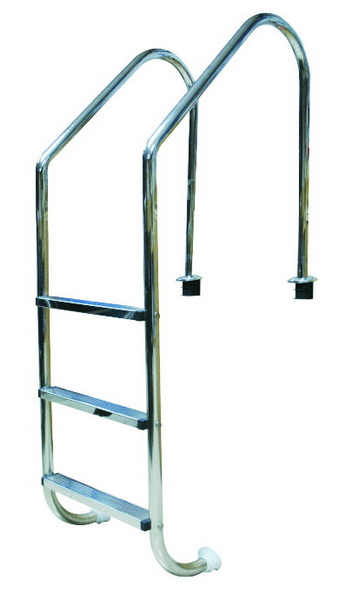
Most standard residential pool ladders are designed to support an average weight capacity in the 250–300 pound range. Many above‑ground pool ladders list a nominal rating of about 300 pounds, which is considered sufficient for most family pools.[4][2][3]
Heavy‑duty pool steps and premium ladders can support 350, 400, or even 500 pounds, aimed at commercial facilities, resorts, or heavier users. Regulations for related pool equipment also often require treads or rungs to hold at least 300 pounds without permanent deformation, reinforcing this common baseline.[6][7][5][4]
Several design and material choices determine how much weight a pool ladder can safely support. When evaluating weight capacity, consider both the static strength of the structure and how the ladder behaves under dynamic loading from people entering, exiting, or jumping on the steps.[7][8][3][4]
Key factors include:
- Ladder material (plastic/resin, stainless steel, coated steel)
- Step and rail design (width, thickness, bracing, triangular supports)
- How the ladder is anchored to the pool wall, deck, or frame
- Pool type (above‑ground vs inground) and water depth[6][3][4]
Different ladder types show different typical load ratings. The table below summarizes commonly advertised capacities.[2][4]
| Ladder type | Typical capacity range | Notes |
|---|---|---|
| Basic above‑ground A‑frame ladder | 250–300 lb | Entry‑level, often lighter plastic or slim rails.poolzilla+1 |
| Standard inground deck‑mounted | 250–300 lb | Stainless rails with simple treads, fixed to deck.intheswim+1 |
| Heavy‑duty above‑ground steps | 300–400 lb | Wide steps, resin body, may use sand/ballast.lowes+2 |
| Extra‑heavy commercial style | 400–500 lb | Reinforced handrails, thick treads, premium materials.royalpoolsandspas+1 |
| Integrated step/entry systems | 300–400 lb | Large footprint, anti‑entrapment panels, multi‑step.poolzilla+1 |
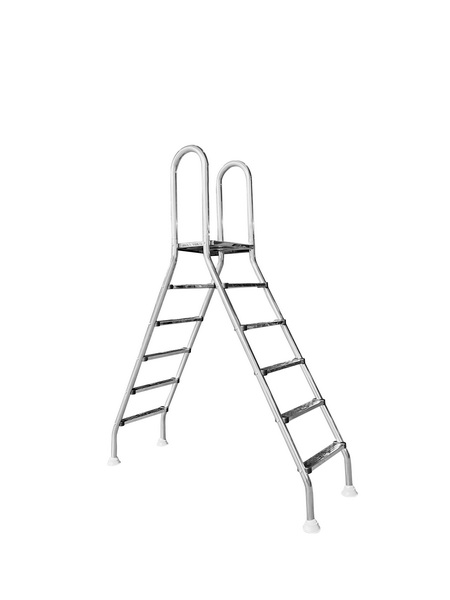
Above‑ground and inground pools use different ladder forms, which influences weight capacity and safety performance. Above‑ground systems often combine interior steps with an exterior ladder to bridge the pool wall, while inground pools use deck‑mounted rails and drop‑in steps.[8][3][4]
- Above‑ground A‑frame ladders: Commonly rated around 250–300 pounds, with some upgraded models reaching 350 pounds when reinforced or paired with step systems.[3][4][6]
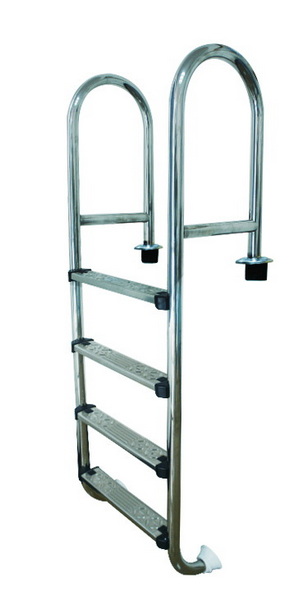
- Inground ladders: Frequently use stainless steel rails and heavy‑duty treads, with many products rated at 300–400 pounds for residential use.[4][8]
Safety standards offer useful guidance on minimum strength requirements even when local codes differ. For example, some regulations for pool slides require ladder treads or rungs to withstand a static load of 300 pounds applied at the center without failure or permanent deformation.[7]
While these rules may target slides or specific equipment, they illustrate a widely accepted minimum strength level for safe pool access components. Quality manufacturers of ladders, steps, pumps, and filtration systems often align with or exceed these thresholds to provide greater safety margin.[1][3][7]
Selecting the right ladder capacity starts with understanding who will be using the pool and how. It is best practice to choose a ladder rated at least 20–30% above the heaviest expected user to account for movement, wet surfaces, and extra loads from accessories or multiple users on the steps.[1][2][3]
When choosing capacity:
- For typical family use, 300‑pound rated ladders or steps are generally adequate.
- For larger users or shared commercial facilities, 350–500‑pound rated systems provide better safety margins.[10][2][4]
Real‑world load capacity depends not only on the printed rating but also on proper installation and maintenance. Even a high‑capacity ladder can become unsafe if loosely anchored, corroded, or used on an unstable pool base.[8][3][4]
- Secure anchoring: Deck‑mounted ladders must be firmly fixed to flanges, while A‑frame ladders need stable positioning on the pool bottom and wall.[3][8]
- Regular inspection: Check rails, treads, bolts, and anti‑entrapment panels for wear, cracking, or rust and replace components when necessary.[4][3]
Professional pool equipment manufacturers combine strong engineering with automated production to achieve consistent quality and reliable load ratings. By pairing robust ladders with sand filter systems, cartridge filters, DE filters, efficient pumps, and LED lighting, pool owners can build a complete, safe, and energy‑efficient system.[11][9][2][3]
For OEM and branding clients such as foreign wholesalers, pool brands, and pool equipment manufacturers, integrated solutions make it easier to create matched product lines that meet local safety codes and consumer expectations. Consistent performance and clear labeling of weight capacity also reduce warranty claims and after‑sales issues in overseas markets.[10][2][1][4][3]
Most average pool ladders are engineered to hold about 250–300 pounds, with many standard residential products rated around 300 pounds as a general safety benchmark. For households with heavier users or commercial environments, upgraded ladders and entry systems rated at 350–500 pounds deliver stronger safety margins and better long‑term performance.[5][2][10][6][4]
Choosing an appropriate ladder capacity means evaluating user weight, usage patterns, and pool type, then matching those needs with clearly labeled products from reliable manufacturers. Proper installation, regular inspection, and pairing with quality filtration, pumps, and lighting ensure that the pool remains both safe and comfortable throughout its service life.[2][1][4][8][3]
Most average residential pool ladders hold about 250–300 pounds, with 300 pounds being a very common rating for both above‑ground and inground designs.[2][4]
For typical family use, a 300‑pound rating is usually sufficient, but it is best to choose at least 20–30% above the heaviest user for extra safety.[1][2]
Yes, many heavy‑duty ladders and step systems are rated between 350 and 500 pounds, designed for larger users or semi‑commercial and commercial pools.[5][10][6]
If the ladder corrodes, cracks, or becomes loose, its real‑world capacity can drop below the labeled rating, which is why seasonal inspection and timely replacement are important.[4][8][3]
Material quality, step width and thickness, internal bracing, and how securely the ladder is anchored to the pool or deck are the biggest factors in its safe capacity.[6][3][4]
Not necessarily; many above‑ground ladders and step systems reach 300–400 pounds, but cheaper entry‑level models may have lower capacities and less robust construction.[6][3][4]
[1](https://www.thepoolfactory.com/a/answers/5769018/What-is-the-ideal-weight-capacity-for-pool-ladders)
[2](https://www.oreateai.com/blog/choosing-the-right-pool-ladder-for-your-aboveground-oasis/7a23eeff75330b6b7b01881dc37cd447)
[3](https://poolzilla.com/blogs/blog/the-simple-guide-selecting-the-right-pool-steps-and-ladders-for-your-swimming-pool)
[4](https://intheswim.com/blog/above-ground-pool-step-buyers-guide.html)
[5](https://www.lowes.com/pl/pools/pool-ladders-lifts/above-ground-pool-ladders-steps/500-lb-weight-capacity/4294610238-4294728358)
[6](https://www.lowes.com/pl/pools/pool-ladders-lifts/above-ground-pool-ladders-steps/350-lb-weight-capacity/4294610238-4294556702)
[7](https://www.law.cornell.edu/cfr/text/16/1207.5)
[8](https://www.poolsupplies.com/shop/accessories-ladders)
[9](https://aapools.net/wp-content/uploads/2021/06/2020-LEADER-IN-LADDERS-BROCHURE-1.pdf)
[10](https://www.royalpoolsandspas.com/products/pool-accessories/ladders/)
[11](https://bestwayusa.com/bestway-above-ground-pool-ladder-48-58336e)
[12](https://www.facebook.com/groups/637529959937311/posts/2576536166036671/)
[13](https://intexcorp.com/products/above-ground-pools/pool-accessories/ladders/deluxe-pool-ladder-with-removable-steps-for-48in-depth-pools/)
[14](https://www.homedepot.com/p/Swimline-Above-Ground-Pool-A-Frame-Ladder-with-Barrier-for-48-Inch-Pools-87950/310300329)
[15](https://yourpghlawyer.com/Above-Ground-Pool-Ladder-4-Step-With-Handrails-450Lbs-Capacity-467995/)


