
Views: 222 Author: Tina Publish Time: 2026-01-12 Origin: Site


Content Menu
● What does “51 in pool ladder that holds” really mean?
● Typical price range for a 51 in pool ladder
● Key cost drivers: what makes a 51 in ladder cheap or expensive?
● Safety and standards: “holds” is about more than weight
● Ideal ladder specs for a 51 in above‑ground pool
● Example price positioning by ladder type
● How a professional Chinese OEM factory adds value
>> 1. How much does a 51 in pool ladder usually cost?
>> 2. What weight capacity should I choose for a family pool?
>> 3. Are stainless‑steel pool ladders worth the extra cost?
>> 4. What safety features should a good pool ladder have?
>> 5. Can OEM factories customize pool ladders for my brand?
>> 6. Do I need a different ladder for a saltwater pool?
How much is a 51 in pool ladder that holds? The honest answer is: it usually ranges from about 80–300 USD depending on design, material, brand and how much weight it can safely support, and heavy‑duty 300–400 lb models sit toward the higher end of that range. Choosing the right 51 in ladder means balancing price with safety, weight capacity, and long‑term durability, especially if the ladder will be used daily by a family.[1][2][3][4][5][6]
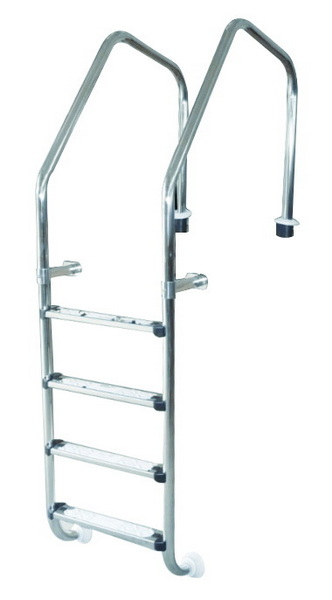
When buyers search for “51 in pool ladder that holds,” they are usually combining three key requirements.[3][5]
- 51 inches normally refers to the approximate wall height of an above‑ground pool, often marketed as ladders for 48–52 in or 48–54 in pool walls.[2][7][4]
- “That holds” almost always implies a concern about weight capacity, with mainstream residential ladders typically rated between 250 and 400 lb.[4][6][2]
- Many users also want the ladder to hold up structurally over time without rusting, wobbling or deforming, especially in outdoor and chlorinated environments.[8][9][3]
Retail prices for 51–52 in above‑ground pool ladders vary depending on material, brand, and features, but market listings give a clear band.[10][1][2]
- Entry‑level A‑frame or deck ladders for about 48–52 in walls often start around 80–120 USD at big‑box retailers and online marketplaces.[10][1][2]
- Mid‑range heavy‑duty models in the same height class, including adjustable 48–54 in ladders with stronger frames and better treads, commonly fall in the 150–250 USD range.[7][2][4]
- Premium stainless‑steel or high‑capacity step systems (often 48–54 in compatible) with 300–400 lb ratings or LED accessories can run from roughly 250 up to 350 USD or more.[6][4][8]
For volume OEM orders from Chinese factories, unit prices are usually significantly lower than retail—especially on stainless‑steel ladders and engineered plastic step systems—but depend on step count, tube diameter, surface finish and packaging.[11][8]
Several technical factors explain why two ladders of similar height can have very different price points.[5][3][6]
- Material:
- Basic powder‑coated steel or molded plastic ladders tend to be the least expensive but may need more frequent replacement in harsh environments.[3][5]
- 304 stainless‑steel ladders, widely used by professional OEM factories in China, cost more but offer higher corrosion resistance and a more upscale look, especially for brand‑label products.[9][11][8]
- Weight capacity:
- Ladders rated around 250–300 lb use lighter sections and smaller steps and usually occupy the lower price tier.[2][6]
- Heavy‑duty ladders engineered for 300–400 lb require thicker tube walls, reinforced steps and stronger joints, which increases both material and manufacturing cost but greatly improves stability and safety.[4][6]
- Design & features:
- Simple A‑frame “up and over” ladders without platforms or removable sections are economical and popular in entry‑level kits.[2][3]
- Systems with wide, staircase‑style steps, removable outside treads, lockable features, and integrated LED lighting add convenience and safety but move the price into the mid‑ to high‑range.[12][7][4]
For OEM customers, additional cost components include logo printing, customized color for plastic treads, special packaging, and certifications for specific export markets.[11][8][9]
The phrase “that holds” is closely tied to safety, which is a major concern in modern ladder design.[12][9][3]
- Consumer‑oriented safety bodies recommend features such as non‑slip steps, handrails on both sides, adequate step width, and the absence of sharp edges or exposed bolts.[3][12]
- Above‑ground pool ladders are guided by voluntary safety standards and design recommendations, while in‑ground ladders may need to align with ANSI and local codes for pool access equipment.[9][12]
- Design decisions on step spacing, tread texture, and rail geometry aim to reduce slip and fall risk for children, seniors, and users with limited mobility, which also improves the perceived value of the ladder.[5][12][9]
Well‑engineered OEM‑grade ladders use these guidelines during design and testing so that overseas brands can pass local inspections more easily and build trust with end users.[8][9]
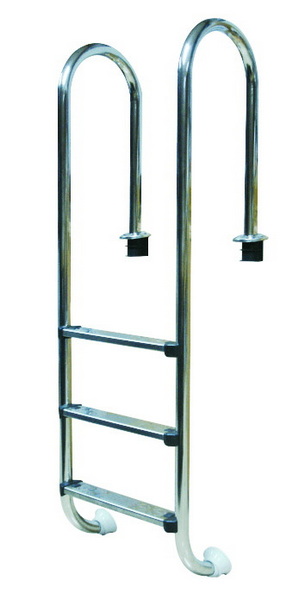
For a 51 in wall height, buyers typically look for a set of core specifications that balance price and safety.[6][2][3]
- Ladder or step system adjustable for 48–52 in or 48–54 in above‑ground pools, ensuring proper immersion depth for the bottom step and comfortable rail height.[7][4][2]
- Weight capacity around 300–400 lb to suit family use and offer a margin of safety for heavier users and people carrying children or accessories.[4][6]
- Rust‑resistant frame—either high‑quality plastic with UV protection or 304 stainless steel—with non‑slip treads and secure fasteners.[8][9][3]
OEM factories in China often offer multiple step counts, tube diameters, and tread widths so that brand owners and wholesalers can position their models at different price points within the same height category.[11][8]
Real‑world listings help illustrate how 51–52 in class ladders are positioned in the market.[1][10][2][4]
| Ladder type (48–52/54 in class) | Typical advertised features | Approx. retail band (USD) | Notes on “how much it is” for 51 in use |
|---|---|---|---|
| Basic steel A‑frame ladder | Narrow steps, 250–300 lb rating, minimal adjustability | 80–130 | Entry choice for budget 51 in pools.homedepot+2 |
| Mid‑range A‑frame with removable outer steps | Anti‑slip treads, removable/lockable outside section | 130–220 | Better safety for families with children.lowes+1 |
| Wide plastic step system + outside ladder | 300–350 lb rating, 48–54 in adjustment, 24–26 in step width | 200–300 | Very stable, “stairs‑like” comfort.lowes+1 |
| Stainless‑steel in‑pool ladder (3–5 steps) | 304 stainless steel rails, anti‑slip steps, deck mounting | 200–350+ | Common in premium above‑ground and in‑ground setups.poolux.made-in-china+2 |
Price bands above are indicative and depend on brand, region, and seasonal promotions, but they give a realistic answer to what a 51 in pool ladder that holds is likely to cost in the consumer market.[10][1][2][4]
For overseas brand owners, wholesalers and pool equipment manufacturers, working with an experienced OEM factory changes the cost and value equation.[11][8]
- One‑stop manufacturers that already produce sand filters, pumps, LED lights and accessories can design pool ladders that visually and functionally match the rest of the product line, simplifying branding and catalog management.[9][8][11]
- Intelligent production lines enable consistent welding, polishing and pressure testing, which improves yield and reduces warranty claims on high‑load ladders while keeping pricing competitive for bulk orders.[8][11]
- OEM partners can co‑develop ladders with specific wall heights, step widths, color schemes and packaging sizes required by different regional markets, while also supporting custom manuals, safety labels and certifications.[9][11][8]
For an international audience searching “how much is a 51 in pool ladder that holds,” positioning the answer within an OEM context sends a clear message: the right factory partner can deliver higher perceived value at a controlled landed cost.
A 51 in pool ladder that “holds” typically costs about 80–300 USD in the retail market, with heavy‑duty, 300–400 lb rated models and stainless‑steel designs positioned toward the top of that range. The exact price depends on material, weight capacity, safety features and branding, but well‑designed ladders following modern safety guidelines offer more stability, longer service life, and better user confidence around the pool. For overseas brands, wholesalers and manufacturers, partnering with a professional Chinese OEM factory capable of producing matching filters, pumps, lights and ladders provides an efficient path to differentiated, high‑margin pool equipment solutions.[1][6][10][2][3][12][4][5][11][8][9]
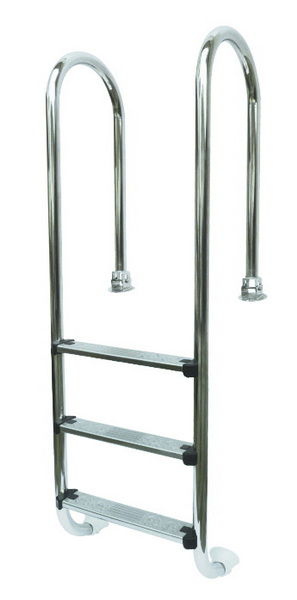
Most 51 in class ladders for 48–52 in above‑ground pools sell between about 80 and 300 USD, depending mainly on material, weight rating and extra features such as removable steps.[10][1][2][4]
For most households, a ladder rated between 300 and 400 lb provides a comfortable safety margin and is widely recommended for stable, long‑term use.[6][4]
304 stainless‑steel ladders cost more than basic plastic or painted steel versions but offer higher corrosion resistance, better appearance, and improved durability, especially in outdoor or salt‑exposed environments.[11][8][9]
Key features include non‑slip treads, handrails on both sides, adequate step width, covered fasteners, and for above‑ground models, removable or lockable outer steps to reduce unauthorized access.[3][12][9]
Yes, specialized Chinese OEM factories can customize ladder height, step count, tube diameter, colors, branding elements, packaging and documentation, so your ladder matches your filter systems, pumps and lighting line.[8][9][11]
Saltwater pools benefit from corrosion‑resistant materials such as 304 or higher‑grade stainless steel and UV‑stable plastics, which resist rust and degradation better than basic painted steel.[3][9][8]
[1](https://www.walmart.com/browse/patio-garden/above-ground-pool-ladders/5428_132873_3700536_1753186)
[2](https://www.lowes.com/pl/pools/pool-ladders-lifts/above-ground-pool-ladders-steps/300-lb-weight-capacity/4294610238-4294728367)
[3](https://www.mavaquadoc.com/blogs/pool-maintenance-blog/different-types-of-pool-ladders)
[4](https://www.lowes.com/pl/pools/pool-ladders-lifts/above-ground-pool-ladders-steps/350-lb-weight-capacity/4294610238-4294556702)
[5](https://cincinnatipoolandpatio.com/choosing-pool-ladders/)
[6](https://www.thepoolfactory.com/a/answers/5769018/What-is-the-ideal-weight-capacity-for-pool-ladders)
[7](https://vminnovations.com/products/bestway-flowclear-52-inch-heavy-duty-metal-a-frame-above-ground-pool-ladder)
[8](https://www.pikespool.com/china-factory-wholesale-swimming-pool-stainless-steel-step-ladder_p63.html)
[9](https://www.svadonpoolcn.com/slug-a-comprehensive-guide-to-in-ground-pool-ladders-safety-selection-and-maintenance/)
[10](https://www.homedepot.com/b/Outdoors-Pool-Supplies-Pool-Accessories-Pool-Ladders/N-5yc1vZcfz3)
[11](https://poolux.en.made-in-china.com/product/udItwzVLXvar/China-Factory-Supply-OEM-Stainless-Steel-304-Swimming-Pool-Ladder.html)
[12](https://www.poolfencediy.com/blogs/blog/pool-ladder-safety)
[13](https://www.lowes.com/pd/Intex-52-in-Steel-A-frame-pool-ladder/4844146)
[14](https://www.facebook.com/groups/637529959937311/posts/2272628026427488/)
[15](https://rincondelaviejatubing.com/products/main-access-easy-incline-white-pool-deck-ladder-for-48-to-54/4267536/)


