


Content Menu
● Understanding your pool ladder
● Safety checks before adjustment
● Step‑by‑step: adjusting ladder height
● Anchoring and stabilizing the ladder
● Extra tips for above‑ground ladders
● Routine maintenance after adjustment
● FAQs about adjusting a pool ladder
>> 1. How high should my pool ladder be?
>> 2. How do I stop my pool ladder from wobbling?
>> 3. Can I use a pool ladder that is slightly too short or too tall?
>> 4. How far should a pool ladder be from the pool wall?
>> 5. How often should I recheck my ladder adjustment?
>> 6. Do I need a special pad under my pool ladder?
How to adjust a pool ladder correctly depends on your ladder type, pool height, and deck design, but the core goals are always the same: match the ladder height to the pool, anchor it firmly, and eliminate wobble or sharp edges for safe entry and exit. Following a structured step‑by‑step process also helps extend ladder life and protect the pool liner.[1][2][3]
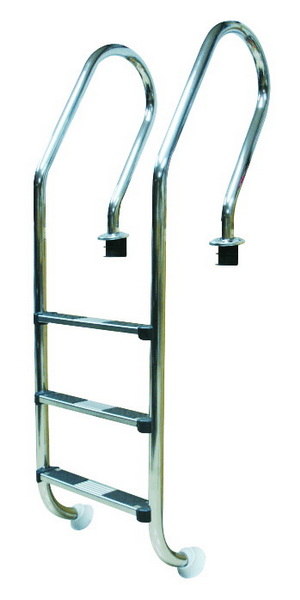
Different ladder designs adjust in different ways, so the first step is to identify what you have and how it is meant to fit your pool.[2][4]
- Above‑ground A‑frame ladders stand on the ground outside the pool and on the liner or pad inside, often with sand‑fillable legs for stability.[5][2]
- Deck‑mounted in‑pool ladders usually have stainless steel rails that slide into deck anchors and steps that follow the pool wall contour.[3][2]
- Easy‑step or platform style ladders use wide, perforated steps, double handrails, and sometimes sand or water weight to stay seated on the floor.[1][2]
Before adjusting anything, confirm your pool type (above‑ground vs inground), wall height (for example 48–54 inch above‑ground), and whether the ladder is rated for that range.[3][1]
Adjusting a ladder always starts with safety checks, because a poorly supported ladder is one of the most common sources of poolside slips and falls.[6][1]
- Confirm all steps have a non‑slip surface at least about 3 inches wide so bare, wet feet have enough grip.[6][1]
- Make sure handrails exist on both sides and are shaped so even a child can hold them securely.[6]
- Check that no sharp bolts or cut tube ends are exposed; all protruding fasteners should be capped or covered to avoid cuts.[1][6]
If the ladder is removable or flip‑up, verify that any locking mechanism works properly so the ladder can be secured when the pool is not in use.[1][6]
The most important part of adjustment is matching the ladder height to your pool so the top platform and lower legs contact surfaces evenly without lifting or digging in.[5][1]
1. Measure your pool and ladder
- Measure from the ground (or deck surface) to the top of the pool wall or coping to determine the true ladder height you need.[3][1]
- Compare this measurement to the ladder's specified range (for example “fits 48–54 inch pools”) in the manual or label.[2][3]
2. Adjust telescoping or multi‑position legs
- Many above‑ground ladders have telescoping legs or multiple lug/bolt positions so you can lengthen or shorten each side.[5][1]
- With the ladder standing on level ground, slide or re‑position the lower legs until the top platform rests flat on the top rail, then lock with bolts or clips as specified by the manufacturer.[7][1]
3. Cutting legs for fixed‑height models
- Some resin A‑frame ladders are shipped long and require cutting at a molded line when used with 48 inch pools.[5]
- If your manual specifies cut marks, carefully saw each leg at the indicated line so all four legs end up exactly the same length.[5]
4. Fine‑tuning with pads or risers
- If the ladder is slightly short, slip firm foam pads, rubber risers, or a rigid mat under the legs to bring the platform level with the top rail and protect the liner.[1]
- For minor variations or uneven ground, pool‑grade foam, pool mats, or even yoga‑mat style pads can be used under the external legs.[1]
After adjusting, test‑fit the ladder in the pool without swimmers, checking that weight is evenly distributed and no leg is hanging or digging.[7][1]
Height alone does not guarantee safety; secure anchoring prevents wobbling, tipping, and damage to the pool wall or deck.[2][1]
- Add internal weight where specified
- Many A‑frame and step ladders require filling hollow legs or side chambers with sand or water—often around 20 pounds per leg or 40 pounds total—to keep them seated.[2][1]
- Always seal fill caps or plugs as directed to avoid leaks that could reduce weight or let pool water into areas not designed for it.[2]
- Anchor to the deck
- For stainless steel or easy‑step ladders with decks, slide deck flanges or mounting brackets over the vertical rails, then align them with the deck surface.[7][2]
- Secure each flange with corrosion‑resistant screws or bolts into the deck; once tightened, the rails should not shift when you pull or shake them.[3][2]
- Stabilize on the pool floor
- Place a protective ladder pad or mat on the liner where the feet rest to prevent abrasion or punctures.[8][1]
- If the floor is slightly uneven, use foam shims or purpose‑designed pads beneath the internal legs to remove rocking.[1]
Shake the ladder firmly from side to side and front to back; any noticeable wobble usually means one or more bolts are loose, the legs are mis‑set, or additional support is needed.[2][1]
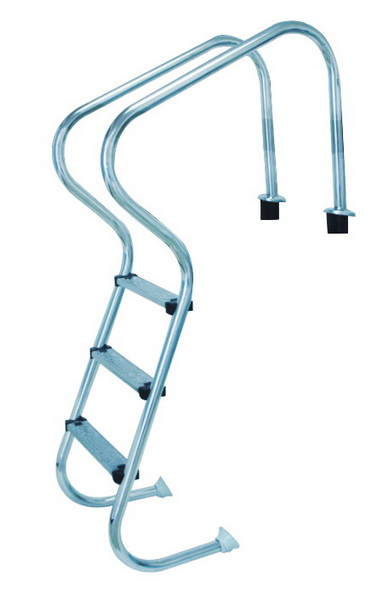
Above‑ground ladders often need more careful adjustment because they bridge ground, wall, and water, with different forces acting on each part.[2][1]
- Keep a safe gap from the pool wall
- Maintain a small, even clearance—around 2 inches—between the ladder and the wall so steps do not grind into the liner but swimmers cannot get trapped behind the structure.[7][1]
- Make sure the top platform sits squarely on the top rail, not just on one edge, so weight is spread evenly.[7][3]
- Secure against floating or shifting
- If the internal side of the ladder tends to float, confirm that all sand or water ballast compartments are full and properly sealed.[1][2]
- In some cases, additional anchor weight on the exterior legs, such as sandbags placed safely away from walking paths, can reduce movement.[1]
- Use barriers or locking steps
- For families with children, consider ladders with flip‑up steps, removable sections, or integrated gates so the ladder can be disabled when unsupervised.[6][1]
- Always follow local regulations regarding access control to above‑ground pools, which may require removing or locking the ladder when not in use.[6]
These adjustments help prevent common issues like ladders that are too short, flexing rails, or steps that tilt under load.[2][1]
Once your ladder is properly adjusted, simple periodic checks keep it safe and extend its service life.[3][1]
- Inspect hardware regularly
- Every few weeks in the swimming season, inspect all bolts, nuts, and plastic clips for loosening, rust, or cracks.[2][1]
- Replace corroded metal parts with stainless or manufacturer‑approved hardware so structural strength is not compromised.[1]
- Check stability and surfaces
- Test the ladder by climbing slowly and rocking gently; any new movement may indicate sinking legs, worn pads, or shifting fill material inside the frame.[2][1]
- Clean non‑slip treads to remove algae or sunscreen buildup, which can defeat even textured surfaces.[1]
- Off‑season care
- Many above‑ground ladders are designed to be removed for winter; disassemble or at least lift them out of the water if recommended by the manufacturer.[3][1]
- Store in a dry, shaded area to reduce UV damage and metal corrosion, especially for OEM‑grade composite or resin units.[1]
Consistent care keeps your ladder safe for swimmers and reduces the chance of sudden failures during peak season.[2][1]
Adjusting a pool ladder correctly means matching its height to the pool, anchoring it solidly to the deck or ground, and eliminating wobble and sharp edges. By measuring carefully, setting leg positions or cut lines precisely, and using appropriate pads, ballast, and deck brackets, you can create a stable, comfortable access point that protects both swimmers and the pool liner. Regular inspection and cleaning finish the job, ensuring your ladder remains safe, durable, and aligned with safety recommendations from manufacturers and regulators.[6][5][2][1]
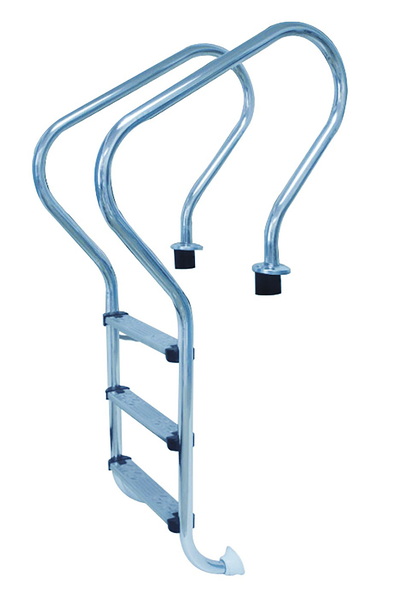
Your pool ladder should be tall enough that the top platform rests flat on the top rail or deck while all feet contact the ground or pool floor evenly. Many above‑ground models are adjustable for 48–54 inch walls, but you must measure your specific pool height to set the correct leg position or cut line.[4][5][3][1]
Wobbling usually means loose hardware, uneven leg length, or insufficient ballast in the ladder legs or step chambers. Tighten all bolts, verify that each leg is adjusted to the same length, add or top up sand or water as specified, and use pads or shims under the feet until the ladder feels solid when shaken.[2][1]
Using a ladder that is noticeably too short or too tall can make entry difficult and may stress the liner or deck edge. Small gaps can sometimes be corrected with firm pads under the legs or by adjusting telescoping sections, but if the ladder is far outside the pool's height range, replacing it with a correctly sized model is safer.[4][3][1]
There should be a small, even space—around a couple of inches—between the inner ladder structure and the pool wall to protect the liner while preventing swimmers from becoming trapped behind the steps. Check the manufacturer's instructions, because some designs specify a minimum and maximum gap as part of their safety certification.[7][1]
During the swimming season, inspect and test the ladder at least once a month, and any time you notice movement, squeaking, or visible damage. At the start and end of each season, perform a full check of leg position, ballast levels, deck anchors, caps, and step surfaces so any issues are fixed before heavy use.[3][2][1]
A ladder pad or mat under the feet is highly recommended for vinyl‑lined above‑ground pools because it spreads the load and helps prevent punctures or wear. Choose a pad or mat specifically sold for pool use, and make sure it lies flat with no wrinkles or trapped debris beneath it.[8][1]
[1](https://www.poolkingfilter.com/how-to-adjust-above-ground-pool-ladder.html)
[2](https://poolpartstogo.com/blogs/pool-equipment/how-to-fit-a-ladder-to-your-above-ground-pool-the-right-way)
[3](https://blog.linerworld.com/2011/01/14/swimming-pool-ladder-installation/)
[4](https://cincinnatipoolandpatio.com/choosing-pool-ladders/)
[5](https://www.familypoolfun.com/pdf/ne1222_manual.pdf)
[6](https://www.poolfencediy.com/blogs/blog/pool-ladder-safety)
[7](https://www.youtube.com/watch?v=UOszx5_q0s4)
[8](https://www.facebook.com/groups/637529959937311/posts/2614240675599553/)
[9](https://www.youtube.com/watch?v=JJkG7vsan1E)
[10](https://www.youtube.com/watch?v=AcVIHFSLCTY)
[11](https://www.facebook.com/groups/637529959937311/posts/2551874295169525/)
[12](https://www.reddit.com/r/swimmingpools/comments/14dkmoh/above_ground_ladder_too_shorthow_to_fix/)
[13](https://www.youtube.com/watch?v=ioYl-25dDXY)
[14](https://www.svadonpoolcn.com/the-ultimate-guide-to-choosing-the-perfect-inground-pool-ladder/)
[15](https://www.youtube.com/watch?v=AsN8AiEYSI8)


