
Views: 222 Author: Tina Publish Time: 2026-01-09 Origin: Site


Content Menu
● Understanding Grounding vs Bonding
● Code Requirements for Pool Ladder Bonding
● Step‑by‑Step: How to Bond an Inground Pool Ladder
>> 1. Inspect the Ladder Anchors and Area
>> 2. Install or Verify Bonding Lugs on the Cups
>> 3. Connect the Ladder Cups to the Bonding Grid
>> 4. Tie Into Equipment and Water Bonding
>> 5. Test Continuity and Document the Work
● Safety Tips and Common Mistakes
● Where an OEM Manufacturer Fits In
● FAQs About Grounding an Inground Pool Ladder
>> 1. Do all inground pool ladders need to be bonded?
>> 2. What size wire is required to bond a pool ladder?
>> 3. Can I just drive a ground rod next to the ladder instead of bonding it?
>> 4. How can I tell if my existing ladder is already bonded?
>> 5. Who should perform pool ladder bonding work?
>> 6. Does replacing my ladder or filter affect bonding?
For a typical metal inground pool ladder, the safe method is to bond the metal anchor cups (and any metal rails) into the pool's equipotential bonding grid using a listed bonding lug and at least #8 AWG solid copper wire, following your local electrical code (for example NEC 680.26 in the U.S.). When this is done correctly, all metal around the pool—including the ladder, handrails, pump, filter, and reinforcing steel—stays at the same electrical potential, which greatly reduces the risk of shock to swimmers.[1][2][3][4][5]
Grounding (more accurately, bonding) an inground pool ladder is a core part of modern pool electrical safety and code compliance. For brands, wholesalers, and installers, properly bonded ladders, rails, pumps, and filters are also a strong selling point when promoting “safety‑first” pool equipment packages.[2][3][5][1]
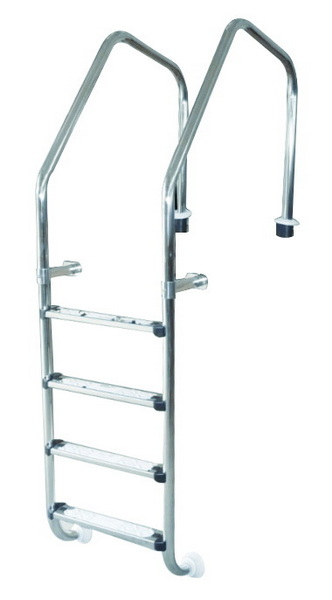
- Bonding ties all conductive parts (ladder, rails, metal deck parts, pump, heater, etc.) together so there is virtually no voltage difference between them, creating an equipotential bonding grid around the pool.[6][1]
- Grounding connects electrical equipment (like pump motors) to earth so over‑current devices trip during a fault, but the ladder itself is usually part of the bonding network, not a separate grounding electrode.[7][8]
In most national codes, including NEC 680.26, the requirement for ladders is equipotential bonding with at least #8 AWG solid copper wire, not driving a separate ground rod just for the rail. This bonding grid typically extends around the pool, connects to the steel in the shell or a copper grid, and ties in metal fittings such as handrails, ladders, and light niches.[4][5][1][6]
- Most pool codes require *all* metallic parts within about 5 ft horizontally and 12 ft vertically of the water's edge to be bonded to a common equipotential grid, including metal ladder anchor cups and handrails.[9][1]
- Standard practice is to use a bare or insulated solid copper conductor not smaller than #8 AWG, attached with listed bonding lugs or clamps made of brass, copper, or copper alloy suitable for direct burial.[5][2]
Metal fittings such as hand rails, ladders, metal drains, and diving board supports are specifically called out as parts that must be bonded. Some non‑conductive rails (for example, certain sealed composite or vinyl‑coated products) may be listed as not requiring bonding, but the metal anchor cups they sit in usually still need to be part of the bonding system.[10][2][4][5]
- Confirm that the ladder uses metal anchor cups set into the deck; if the anchors are plastic with no metallic connection point, they cannot be bonded and should be swapped for listed metal anchors when the deck is built or renovated.[3][4]
- Clean each anchor cup to bare metal using a wire brush, removing paint, oxidation, or debris so the bonding lug or clamp can make solid metal‑to‑metal contact.[2][3]
Also check for an existing perimeter bonding grid or copper ring around the pool; in most professional installations this ring runs 18–24 inches from the water's edge, buried 4–6 inches deep, and ties into at least four points around the pool and the equipment pad.[11][6][5]
- Most modern metal ladder cups are manufactured with a threaded side port where a bonding lug or clamp can be attached; install a listed lug if it is not already present.[3][2]
- Tighten the lug using a corrosion‑resistant screw or bolt, ensuring it sits flush against clean metal with no paint or sealant between the lug and the cup.[2][3]
If the cups are older and lack a clear bonding connection, many pros replace them entirely or add a listed retrofit clamp designed for pool fittings so they can be tied into the bonding conductor.[12][5]
- Measure and cut a length of #8 AWG solid copper wire so that it can run from the ladder's bonding lug to the main pool bonding grid or to the next bonded component in the loop.[5][3]
- Insert the stripped end of the copper wire into the bonding lug, tighten the set screw securely, and route the wire through the deck or conduit to tie into the pool's equipotential grid.[6][3]
Best practice is to keep the bonding grid as a continuous loop with minimal splices, connecting ladder cups, handrails, metal deck components, and the equipment pad (pump, filter housing, heater, and any metallic piping) into one common network.[1][6][5]
- The bonding conductor from the ladder cups should continue on to other major components such as the pump, filter, heater jacket, and any metal conduits on the equipment pad.[1][5]
- Many modern installations also include a water bonding device (such as a brass fitting or plate in contact with pool water) that is tied to the same grid, reducing the risk of potential differences between water and metal parts.[3][6]
For a complete OEM system, pairing bonded ladders and rails with bonded pump and filter sets—sand filters, DE filters, or cartridge filters—gives distributors and installers a clear, simple package that meets typical residential code requirements.[5][1][3]
- Use a multimeter set to resistance (ohms) to check continuity between the ladder anchor cup and other bonded parts such as handrails, pump housings, and the bonding bar; readings near zero indicate a solid bond.[2][3]
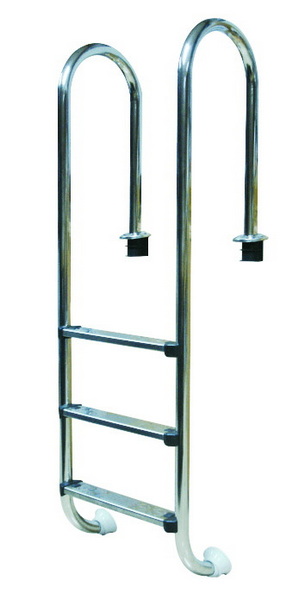
- Never assume stainless steel alone is safe; a shiny ladder still needs to be bonded to the grid to prevent dangerous touch voltage if a fault appears in nearby equipment or wiring.[5][2]
- Do not use a lone ground rod as a substitute for the required equipotential bonding network around the pool; rods handle faults to earth but do not keep local metal parts at the same potential.[7][6]
All aftermarket changes—such as replacing pumps, adding LED lights, upgrading filters, or changing ladder styles—should include a quick bonding check to make sure new metal components are tied into the existing grid. For commercial pools and high‑end residential projects, partnering with OEM manufacturers that design ladders, rails, filters, and pumps to be bonding‑friendly simplifies compliance for installers and brand owners.[1][3][2][5]
- Professional OEM suppliers can provide ladders, rails, deck anchors, and filtration sets (sand, DE, and cartridge filters) designed with clear bonding points, corrosion‑resistant lugs, and documentation for inspectors and installers.[3][2]
- For brands, wholesalers, and pool builders, sourcing complete equipment packages—ladders, pumps, LED pool lights, filters, and accessories—from a single factory using smart machinery helps standardize bonding practices and reduce on‑site wiring errors.[3][5]
Many private‑label opportunities focus on safety plus efficiency: heavy‑duty sand filter tanks, high‑flow pumps, and low‑voltage LED lights combined with easy‑bond ladder anchors make it simpler for local contractors to install code‑compliant systems that also look and feel premium.[2][3]
Ensuring that an inground pool ladder is properly bonded into the pool's equipotential grid is one of the most important steps in protecting swimmers from electrical shock and meeting modern safety codes. By using metal ladder cups with listed bonding lugs, #8 AWG solid copper conductors, and a continuous bonding loop that ties into pumps, filters, heaters, and water bonding devices, pool professionals can create a safe, stable environment around every inground pool installation.[4][6][1][5][2][3]
For brands, wholesalers, and equipment manufacturers, combining well‑designed ladders and rails with high‑quality sand, DE, and cartridge filters, energy‑efficient pumps, and LED lighting—each with clear bonding points—delivers a complete, safety‑focused equipment solution that appeals to both installers and end users.[5][2][3]
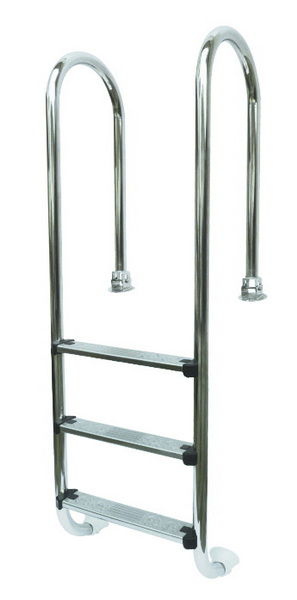
Most metallic inground pool ladders and their anchor cups must be bonded to the pool's equipotential grid if they are within the code‑defined zone around the water, typically 5 ft horizontally and 12 ft vertically from the water's edge. Some non‑conductive ladders may be exempt, but the metal cups or brackets holding them usually still require bonding.[10][9][1][2]
Commonly, at least #8 AWG solid copper conductor (bare or insulated) is required for bonding pool metal parts, including ladder cups, rails, and equipment housings. Local electrical codes or specific commercial installations may require larger conductors, so always verify the standard in your area.[9][1][2][5]
No; a separate ground rod next to the ladder does not replace the requirement for an equipotential bonding grid, and in some cases it can actually create potential differences. The ladder must be connected into the same bonding loop as other metal parts and the pool shell or copper grid to effectively equalize voltages.[7][4][6][1]
Look for a copper wire (often bare #8) attached to the ladder's metal anchor cup or a bonding lug, with that wire running under the deck to the bonding grid or equipment pad. A continuity test with a multimeter between the ladder and other bonded metal (such as the pump housing) that shows low resistance is another strong indicator.[2][3][5]
Because bonding errors can lead to serious shock hazards, most experts recommend that a licensed electrician or pool professional experienced in pool electrical codes perform new bonding work and major upgrades. However, OEM manufacturers and distributors can support installers by supplying ladders, anchors, filters, and pumps with clear bonding provisions and documentation.[13][1][3][2]
Yes; changing ladders, pumps, filters, heaters, or metal accessories can add new conductive surfaces that must be tied into the existing bonding system. Any renovation is a good time to inspect all lugs, clamps, and wires, replacing corroded parts and confirming continuity between ladder cups and other equipment.[4][1][9][3]
[1](https://www.jadelearning.com/blog/2017-nec-checklist-for-installing-a-safe-effectively-bonded-pool-at-a-dwelling/)
[2](https://global-poolproducts.com/help-support/ada-resources/electrical-bonding-code/)
[3](https://www.poolkingfilter.com/how-to-bond-a-pool-ladder.html)
[4](https://www.carrollecc.com/upload/pool_equipotential_bonding.pdf)
[5](https://www.nespapool.org/Portals/0/Pool%20GroundingE270LT07.pdf)
[6](https://www.nvent.com/sites/default/files/acquiadam/assets/E673B.pdf)
[7](https://forums.mikeholt.com/threads/pool-grounding.34802/)
[8](https://www.electricallicenserenewal.com/Electrical-Continuing-Education-Courses/NEC-Content.php?sectionID=172.0)
[9](https://carpinteriaca.gov/wp-content/uploads/2022/10/cdd_Swimming-Pool-and-Spa-Equipotential-Bonding.pdf)
[10](https://www.thebuildingcodeforum.com/forum/threads/pool-ladder-that-do-not-require-bonding.30581/)
[11](https://www.facebook.com/groups/637529959937311/posts/2016198358737124/?locale=en_US)
[12](https://forums.mikeholt.com/threads/looking-for-a-simple-pool-bonding-outline.2563016/)
[13](https://www.youtube.com/watch?v=NiurYY5Oq0w)
[14](https://www.youtube.com/watch?v=VW7UHvJOIdk)
[15](https://www.youtube.com/watch?v=nFNmXY98mFU)


