
Views: 222 Author: Tina Publish Time: 2026-01-08 Origin: Site


Content Menu
● Do All Pools Need a Ladder Mat?
● What to Look for in a Pool Ladder Mat
● How to Install a Mat Under a Pool Ladder
● Alternatives and DIY Options
● How Long Do Ladder Mats Last?
● OEM and Bulk Purchasing Considerations
● FAQs About Mats Under Pool Ladders
>> 1. Do you really need a mat under a pool ladder?
>> 2. Can you use a regular bath mat instead of a pool ladder pad?
>> 3. How do you keep a ladder mat from floating or shifting?
>> 4. How often should a pool ladder mat be replaced?
>> 5. Are ladder mats only for above‑ground pools?
>> 6. Can I get custom‑size ladder mats for my branded ladders?
Do you need a mat under a pool ladder? In most cases, yes—a ladder mat (also called a ladder pad or step pad) is strongly recommended to protect your pool liner, increase safety, and stabilize the ladder. While a few owners manage without one, using a mat is a low-cost way to avoid expensive liner damage and reduce slip risks.[1][2][3]
A pool ladder mat is a flat, non‑slip pad placed under the ladder or steps where they rest on the pool floor or liner. It creates a protective barrier between the hard ladder base and your pool surface, especially important for vinyl‑lined above‑ground pools.[2][4][3]
Typical ladder mats are made from vinyl or rubber, pre‑cut in sizes like 20" x 24", 9" x 30", 36" x 36", or larger for step systems. Many products are chemical‑resistant and textured so they stay in place and do not float away during use.[5][4][3]
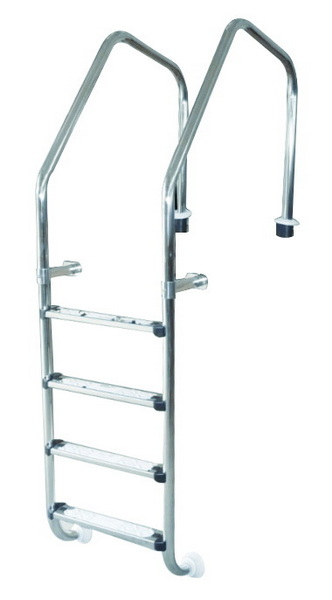
Using a mat under your pool ladder offers several key benefits that go far beyond appearance. For most pool owners, especially with vinyl liners and heavy use, a mat is one of the simplest protective upgrades you can add.[3][1][2]
- Protects vinyl liners from punctures, stretching, and abrasions caused by ladder feet pressing into a small area.[1][2]
- Reduces friction and movement when swimmers climb, preventing small holes that often appear in high‑traffic entry zones.[6][2]
- Provides a non‑slip surface, improving grip and stability as people step on and off the ladder.[2][1]
- Helps keep the ladder from shifting or sliding, which can otherwise stress the liner or cause falls.[3][1]
- Extends liner life and lowers the likelihood of expensive repairs or full liner replacement costing hundreds to thousands of dollars.[1][2]
Some owners in user forums report using no mat and having no problems, especially when they remove the ladder when not in use and strictly forbid jumping from it. However, many others report holes and tears in the first season if the ladder moves or children jump on it without a pad underneath.[7][8][6]
Whether you “must” use a mat depends on your pool type, liner material, ladder weight, and how the pool is used. Still, both above‑ground and inground pools can benefit from ladder padding.[2][1]
- Above‑ground vinyl pools: Highly recommended, as vinyl liners are vulnerable to point pressure and sharp edges from ladder feet.[1][2]
- Inground pools with vinyl liners: Strongly advised, especially where heavy resin or steel steps rest on the liner.[4][2]
- Concrete or fiberglass inground pools: Less critical for liner protection, but mats still help with grip and ladder stability.[3][1]
- Family or public pools: Usage is intense, kids often jump or play on ladders, so a mat helps absorb impact and prevent wear.[2][1]
If your ladder is very light, you never allow jumping, and you remove the ladder when not in use, you might get by without a mat, but you accept higher risk of unseen wear. For most pool owners, a dedicated ladder pad is a safer and more economical choice.[8][9][3][2]
Choosing the right mat ensures both protection and convenience in daily use. Matching size, thickness, and surface texture to your ladder and pool type is essential.[5][4][1]
- Size and coverage: The mat should at least cover the footprint of the ladder base, such as 20" x 24" for many above‑ground ladders or larger (36" x 48", 56" x 48") for step systems.[4][5]
- Material: Heavy‑duty vinyl or rubber that is chemical‑resistant and designed for continuous submersion performs best.[5][3]
- Non‑slip surface: A textured or non‑skid top surface improves traction when stepping on the mat.[1][2]
- Weight and stability: A good mat will not float away and will stay flat on the floor under the ladder.[4][5]
- Trim‑to‑fit capability: Some mats can be easily cut to match custom steps or tight corners around the ladder base.[5]
Several brands market protective ladder mats, such as Blue Wave vinyl mats, Swimline rubber mats, and generic “ladder pad” or “step pad” products sized for popular above‑ground ladders. For OEM or bulk buyers, custom‑made mats in specific shapes and thicknesses can also be sourced from manufacturers in China.[3][5][1]
Installing a ladder mat is straightforward and usually takes just a few minutes. Most pool owners can handle the process as part of regular ladder setup or seasonal opening.[4][2]
1. Remove ladder or steps
- Take the ladder or step unit out of the pool carefully so you do not drag the feet across the liner.[2]
2. Position the mat
- Place the mat flat on the pool floor where the ladder will rest, with the smooth side down if specified by the manufacturer.[4][2]
3. Set the ladder on the mat
- Lower the ladder gently so all feet rest fully on the mat and the whole contact area is protected.[2][4]
4. Check alignment and stability
- Ensure the mat is not curled or folded and that the ladder does not rock or shift.[2]
5. Inspect regularly
- During the season, check for mat movement, wrinkles, or early signs of wear so you can correct issues before they affect the liner.[3][2]
If you use wedding‑cake or wide entry steps, larger liner guards are available in pre‑cut formats up to 56" x 48", which are installed in a similar way under the entire step footprint.[4]
Some pool owners explore lower‑cost or DIY alternatives, especially if they want to avoid “pool‑taxed” accessories. These solutions can work, but they may not be as durable or perfectly fitted as dedicated mats.[10][6]
- Shower or bath mats: Textured bath mats with suction cups have been used successfully under ladders for extra grip.[8][6]
- Shelf liner or padding: Wrapping ladder rungs with cushioned liner material can reduce pressure points and scratches.[9]
- Pool noodles: Pieces of noodle can be attached to ladder backs or edges that contact the liner.[6]
- Heavy rubber mats: Generic rubber pads trimmed to size can serve as a budget ladder mat, provided they are safe for pool chemicals.[10][3]
DIY options should be checked frequently for degradation, floating, or color leaching into the water. For long‑term reliability and warranty compliance, purpose‑built ladder pads specifically marketed for pool use remain the safest choice.[9][8][3][2]
A quality ladder mat can last several seasons with proper care. Durability depends on material quality, sun exposure, water chemistry, and how heavily the ladder area is used.[1][2]
- Many manufacturers and pool care resources suggest an expected life of 3–5 years or more for good mats under normal conditions.[1][2]
- Mats should be inspected each season for cracks, thinning areas, or punctures and replaced if they no longer provide full protection.[3][2]
Maintaining balanced pool chemistry and avoiding sharp debris under the ladder will help extend mat life. When in doubt, replacing a worn mat is far cheaper than repairing a damaged liner.[1][2]
For brands, wholesalers, and pool equipment manufacturers, ladder mats can be integrated into complete ladder or step packages. OEM cooperation with specialized factories allows customization to match specific ladder designs and market needs.[3][1]
- Custom sizes and shapes: Mats can be molded or cut to match particular ladder footprints and step geometries.[1]
- Material customization: Options include different vinyl or rubber compounds, thicknesses, surface textures, and color schemes to align with brand identity.[3][1]
- Branding and packaging: Private‑label printing and packaging can position mats as premium safety accessories bundled with ladders or pool starter kits.[1]
- Bulk cost advantages: Large‑volume orders significantly reduce per‑unit cost, enabling value‑added bundles for retailers and installers.[3][1]
For foreign brands looking to expand their pool accessory lines, working directly with a professional Chinese OEM factory for mats, ladders, filters, pumps, and lighting creates a cohesive product ecosystem for end users.
Using a mat under a pool ladder is not strictly mandatory, but it is strongly recommended for most pool owners, especially those with vinyl liners. A ladder mat protects the liner from wear and punctures, improves traction, and stabilizes the ladder, helping you avoid costly repairs while making entry and exit safer and more comfortable.[2][3][1]
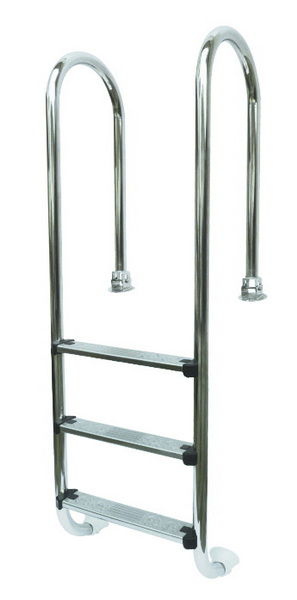
For vinyl‑lined above‑ground and inground pools, a mat is highly recommended because it prevents ladder feet from digging into and damaging the liner. While some owners use ladders without mats, the risk of long‑term wear, punctures, and costly repairs is significantly higher.[7][8][2][1]
Some pool owners successfully use textured bath mats with suction cups as a budget alternative under the ladder. However, bath mats are not always designed for pool chemicals or long‑term submersion, so they may wear out faster or move more easily than dedicated ladder pads.[8][6][10]
Quality ladder mats are made from heavy, non‑floating vinyl or rubber and stay down under the ladder's weight. Ensuring the mat lies flat, the ladder feet fully cover it, and the water is free of trapped air below the mat helps prevent movement.[5][4][2]
With normal use and balanced water chemistry, many mats last several seasons, often 3–5 years or more. Replace the mat any time you notice cracks, thinning, or punctures so it continues to protect your liner effectively.[2][3][1]
No, ladder mats can be used in both above‑ground and inground pools. Above‑ground vinyl pools benefit the most, but even inground pools with vinyl or smooth surfaces use mats for better grip and ladder stability.[1][2]
Yes, many manufacturers offer OEM and custom production of ladder mats tailored to specific ladder footprints, materials, and branding needs. This is especially useful for pool equipment brands and wholesalers who want to bundle mats with their ladder or step systems.[1]
[1](https://www.poolkingfilter.com/do-i-need-a-mat-under-my-pool-ladder.html)
[2](https://blog.linerworld.com/2024/06/18/pool-ladder-pads-faq/)
[3](https://www.poolsupplies.com/shop/pool-ladder-mats-step-pads)
[4](https://www.youtube.com/watch?v=uDbSNO5Bl_8)
[5](https://www.thepoolfactory.com/products/swimline-ladder-mat-20x24)
[6](https://www.facebook.com/groups/637529959937311/posts/2289506661406291/)
[7](https://www.facebook.com/DavesAbovegroundPools/videos/this-is-what-happens-if-you-dont-use-a-protective-mat-underneath-the-bottom-rung/906083040254423/?locale=zh_CN)
[8](https://www.reddit.com/r/AboveGroundPools/comments/1ll74eg/do_you_put_something_under_the_stairladder_legs/)
[9](https://www.facebook.com/groups/637529959937311/posts/2587591354931152/)
[10](https://www.reddit.com/r/pools/comments/gw3zyy/pad_for_under_the_ladder/)
[11](https://www.facebook.com/groups/637529959937311/posts/2296236560733301/)
[12](https://adelaideepic.org/Pool-Ladder-Mat-24x36-Inch-Non-Slip-Protective-Mat-For-Above-630124)
[13](https://www.facebook.com/groups/637529959937311/posts/2254365184920439/)
[14](https://www.facebook.com/groups/637529959937311/posts/1946252065731754/)
[15](https://www.poolsupplies.com/product/aqua-select-36-x-36-protective-pool-ladder-mat--step-pad)


