
Views: 222 Author: Tina Publish Time: 2026-01-09 Origin: Site


Content Menu
● Tools and materials you will need
● Plan ladder position on the patio
● Step‑by‑step: anchoring into concrete
● Prevent wobbling, sliding, and damage
● Bonding and electrical safety (for mixed plastic/metal ladders)
● Extra stabilization methods for plastic ladders
● Maintenance and inspection on concrete patios
● How your factory and OEM services fit in
● FAQs about securing a plastic pool ladder on concrete
>> 1. Can I just use regular screws to secure my ladder to concrete?
>> 2. How deep should ladder anchors go into the concrete patio?
>> 3. Do I need to bond a plastic ladder installed on concrete?
>> 4. What if my concrete patio is uneven or cracked where I want the ladder?
>> 5. How often should I check the bolts and anchors?
>> 6. Can I make the ladder more comfortable and slip‑resistant on concrete?
A plastic pool ladder can be securely fixed on a concrete patio by using the correct mounting flanges, corrosion‑resistant concrete anchors, and non‑slip pads, combined with careful positioning, drilling, and regular safety checks. When done correctly, the ladder will feel solid underfoot, resist wobbling, and stay aligned with your pool edge for many seasons.[1][2][3][4]
A plastic or resin pool ladder on a concrete patio must be firmly attached so it cannot slide, tip, or twist when people climb in and out of the pool. The goal is to combine mechanical anchoring into the concrete with stable contact at the ladder feet and proper bonding for any metal parts near the water.[5][6][1]

Not all plastic pool ladders mount to concrete in the same way, so you must identify the design before drilling.[6][5]
- Freestanding A‑frame ladders usually sit on the patio without permanent anchors but can be stabilized using anti‑slip mats and optional bolt‑on flanges.[4][5]
- Deck‑mounted plastic ladders are designed to bolt to surface flanges or deck anchors that fasten directly into the concrete around the pool.[2][1]
Common mounting configurations for plastic ladders on concrete include:[1][5]
- Integrated plastic flanges at the top of the ladder, each with 2–4 screw holes for concrete fasteners
- Separate metal or plastic deck flanges that clamp around ladder tubes and then bolt into the patio surface
For any ladder with metal rails or reinforcing tubes, local codes may require bonding to the existing pool bonding grid for shock protection.[3][5]
Securing a plastic ladder on concrete requires the right tools and corrosion‑resistant hardware.[2][1]
Recommended tools:
- Hammer drill with masonry bits sized for your chosen anchors
- Impact driver or wrench for setting concrete screws/bolts
- Tape measure, pencil/marker, and straightedge for layout
- Vacuum or blower to remove dust from drilled holes
Recommended materials:[7][1][2]
- Stainless steel or hot‑dip galvanized concrete anchors or Tapcon‑type screws in appropriate length
- Compatible deck flanges or anchor plates rated for pool ladders
- Non‑slip rubber pads or a ladder mat under the feet to prevent sliding and protect surfaces
- High‑quality outdoor sealant or epoxy (where specified by anchor manufacturer)
- For ladders with metal components, bonding lugs or sockets that can connect to the pool bonding wire as required by code
Correct positioning ensures safe entry and exit and reduces stress on the ladder.[6][1]
Key planning points:
- Place the ladder where swimmers naturally enter and exit, avoiding skimmer lids, returns, and cover tracks.
- Maintain recommended distance from the pool edge as specified in the ladder manual so steps hang correctly into the pool and not too far out.[1]
On a concrete patio, also check:[3][1]
- The surface is level and free of large cracks where anchors will go.
- There is enough concrete thickness (often at least 4 in) for safe anchor embedment, or you may need through‑bolted plates or alternative solutions.
Once the layout is marked, follow a careful installation sequence.[6][1]
1. Mark anchor hole locations
- Place the ladder where you want it and lightly load it (have someone stand on it) to simulate real use.
- Mark the flange or mounting hole centers on the concrete with a marker.[1]
2. Remove the ladder and drill pilot holes
- Use a hammer drill with the correct masonry bit size for your anchor type.
- Drill perpendicular to the surface to the manufacturer's recommended depth, typically slightly deeper than the anchor length.[3][1]
3. Clean the holes thoroughly
- Vacuum or blow out concrete dust so anchors seat properly and achieve full strength.
- For adhesive or epoxy anchors, follow the clean–blow–clean procedure described in many anchor instructions.[3]
4. Install anchors or concrete screws
- Insert expansion anchors, wedge anchors, or sleeve anchors, or drive structural concrete screws where specified.
- Ensure anchors sit flush and remain aligned with your marks.[4][1]
5. Set flanges or brackets and bolt the ladder
- Position deck flanges over anchors and snug bolts just enough to hold alignment.
- Reinstall the ladder into the flanges and tighten mounting hardware evenly, avoiding over‑tightening that could crack plastic parts.[7][1]
6. Check alignment and step depth
- Confirm that each step is level and evenly spaced above and below water.
- Adjust flange position slightly (if slots allow) before fully tightening all bolts.[1]
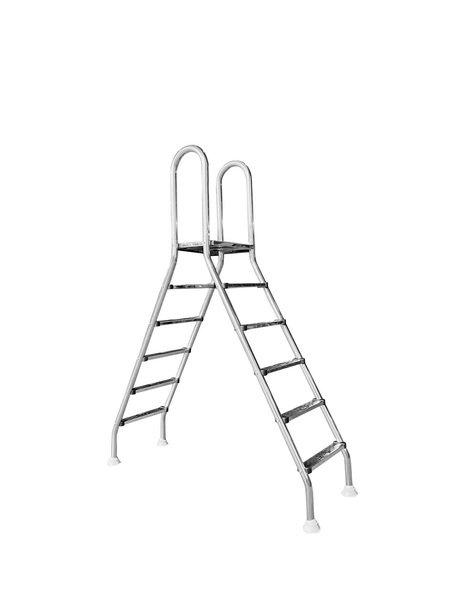
Even a bolted ladder can feel unstable if the contact points are not managed properly.[2][4]
Ways to improve stability:
- Add rubber pads, non‑slip feet, or a dedicated ladder mat under the bottom of the ladder to increase friction and protect the surface.[2]
- Double‑check all bolts after the first few days of use, then at least once per season, tightening any that loosen.[3]
On concrete patios, also watch for:[8][1]
- Anchors installed too close to edges or cracks, which can cause concrete to chip or break under load.
- Uneven surfaces that leave one foot hovering or rocking; shim with non‑corroding pads rather than stacking metal washers.
For pools using saltwater chlorination or aggressive sanitizers, choose hardware rated for pool use and rinse metal components periodically to slow corrosion.[5][2]
Many plastic ladders still include metal handrails, reinforcing rods, or mounting sockets, which can require bonding.[5][3]
Key safety notes:
- Pool ladder anchor sockets for in‑ground decks are typically bonded using a bare copper wire connected to the pool's bonding grid.[5][3]
- Even on a surface‑mounted ladder, any permanent metal near the waterline should comply with local electrical and pool codes.
Because electrical safety rules vary, complex bonding work is usually done by a licensed electrician who understands pool environments.[9][3]
Some plastic ladders are hollow and may still move slightly as people climb.[12][5]
Common factory and aftermarket stabilization options include:
- Internal ballast chambers filled with water or sand, sealed according to the manufacturer's instructions.[12]
- External weight systems such as PVC ballast tubes attached to the back of steps to keep the ladder firmly in place.[12][4]
Any added weight must not create trip hazards, pinch points, or sharp edges that could injure swimmers or damage pool finishes.[12][3]
Once secured, the ladder and anchors still require periodic inspection.[2][3]
Recommended routine checks:
- Inspect anchors, bolts, and flanges each month during the swimming season for rust, cracking, or movement.[2]
- Clean around the anchor bases to prevent debris and chemicals from accelerating corrosion or plastic degradation.[4][2]
At the start and end of each season:
- Re‑check torque on all bolts and replace any that show deformation, rust, or thread damage.[3]
- Confirm non‑slip pads are intact and still soft enough to grip the patio surface effectively.[2]
For overseas brands, wholesalers, and pool equipment producers, a well‑engineered plastic ladder system with proper anchoring solutions can become a premium selling point.
Ways to highlight your OEM capability in the article:
- Mention that your factory designs plastic ladders and step systems with compatible deck flanges, anchor kits, and ballast options, simplifying installation on concrete patios.
- Point out that smart manufacturing and strict quality control ensure consistent dimensions, making drilling templates and pre‑set anchors more accurate for installers.
- Offer co‑developed solutions where the ladder, anchors, and even matching filtration equipment (sand filters, pumps, LED lights, and accessories) come as integrated packages for your partners' pool lines.
You can also link to downloadable installation guides, 3D drawings, and product videos hosted by your brand or OEM clients.
Securing a plastic pool ladder on a concrete patio is not difficult, but it does require the correct hardware, thoughtful layout, and a careful installation process. With properly selected deck flanges, corrosion‑resistant concrete anchors, stable non‑slip feet, and periodic maintenance checks, the ladder will feel firm, safe, and professional for swimmers of all ages. For brands and installers, pairing quality plastic ladders with complete anchor kits and clear visual instructions can greatly reduce callbacks and safety risks while enhancing the overall value of your pool equipment packages.[6][1][2]
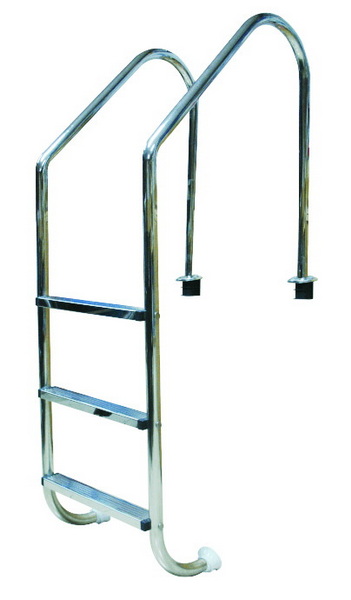
No. Regular wood or drywall screws are not designed for concrete and can pull out easily, creating a serious safety hazard. Always use rated concrete anchors or structural concrete screws recommended by the hardware manufacturer and, ideally, by the ladder supplier.[1][2]
Most expansion anchors and wedge anchors for pool ladders require sufficient embedment into sound concrete, often several centimeters or more depending on size and design. Follow the anchor manufacturer's depth guidelines and ensure the slab is thick enough, or use alternative mounting plates if the patio is thin or damaged.[1][3]
If the ladder is fully plastic with no exposed metal parts near the waterline, bonding may not be required, but local codes govern the final decision. Any permanent metal handrails, anchor sockets, or reinforcing tubes associated with the ladder must usually be bonded to the pool's bonding system for electrical safety.[5][3]
Avoid anchoring into severely cracked or unstable concrete, as it can break under the load of people using the ladder. Choose a structurally sound area, repair the slab first, or install a steel or composite mounting plate that spans weaker areas before bolting the ladder flanges.[4][1]
At minimum, inspect all ladder mounting hardware at the start and end of each swim season, tightening or replacing any loose or corroded components. For commercial pools or heavily used residential pools, monthly inspections during the season are recommended to keep the ladder stable and compliant.[3][2]
Yes. Adding rubber or foam‑backed ladder mats, non‑slip feet, and textured step treads can significantly improve comfort and grip on wet concrete surfaces. Many OEM ladder systems now integrate soft‑touch step surfaces and pre‑matched pads to reduce slip risk and protect the deck.[4][2]
[1](https://ladderhitchrack.com/how-to-install-a-pool-ladder-in-concrete/)
[2](https://www.poolweb.com/collections/deck-anchors)
[3](https://www.doheny.com/media/Pdfs/26401-install.pdf)
[4](https://www.getpoolparts.com/section/18/ladder-parts)
[5](https://intheswim.com/c/ladder-and-handrail-parts/)
[6](https://www.poolkingfilter.com/news/How-To-Secure-Pool-Ladder-In-Concrete-Steps.html)
[7](https://www.poolsupplies.com/product/pool-flange-concrete-anchor-set-hardware-only)
[8](https://www.facebook.com/groups/637529959937311/posts/2066368633720096/)
[9](https://www.reddit.com/r/HomeMaintenance/comments/1lwc253/best_way_to_attach_pool_ladder_to_concrete_deck/)
[10](https://www.youtube.com/watch?v=kBZZrt8Gop4)
[11](https://www.youtube.com/watch?v=cqGXFASqmak)
[12](https://www.youtube.com/watch?v=-qkS06U4SC0)
[13](https://www.facebook.com/groups/637529959937311/posts/2579369582419996/)
[14](https://www.doheny.com/ladder-anchor-socket-wedges)
[15](https://lesliespool.com/pool-ladder-anchor-socket-wedges/)


