
Views: 222 Author: Tina Publish Time: 2025-09-29 Origin: Site


Content Menu
● Why Disassemble a Pool Ladder?
● Step-by-Step Guide: Disassembling a Pool Ladder
>> Detaching Above-Ground A-Frame Ladders
>> Removing Deck-Mounted and In-Ground Ladders
>> Special Tips for Stuck or Cemented Ladders
>> 1. How can I remove a ladder with damaged mounting brackets?
>> 2. Can a homeowner remove pool ladders, or should a professional be hired?
>> 3. What's the safest tool to detach stubborn ladder hardware?
>> 4. How do I clean rust off a pool ladder?
>> 5. My ladder was cemented in—how do I remove it?
Disassembling a pool ladder is a necessary task for seasonal storage, deep cleaning, repair, or replacement. This guide is ideal for pool owners and professionals needing a systematic approach to safely remove and disassemble different types of pool ladders. Images and videos are referenced throughout to maximize clarity and usability.[1][2]
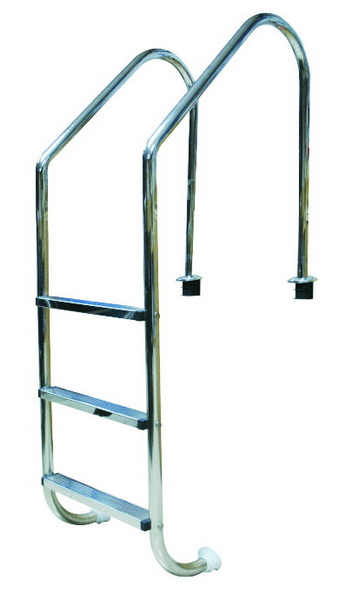
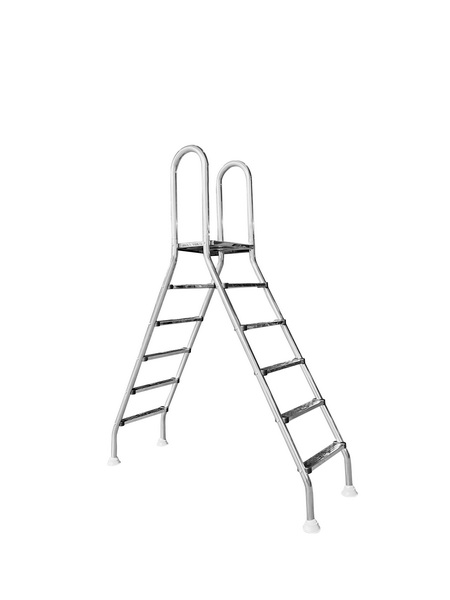
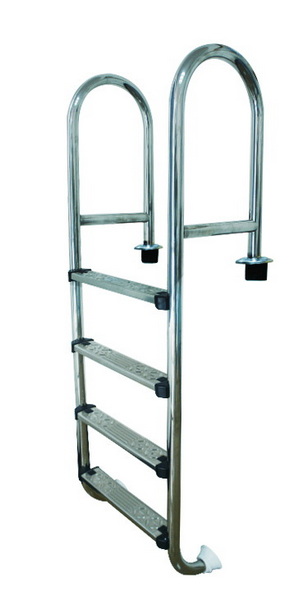
Pool ladders come in several styles—A-frame, deck-mounted, and modular designs. Most are made of corrosion-resistant stainless steel, resin, or aluminum and feature handrails and anti-slip steps for safety. Knowing the type helps prepare for disassembly, as fasteners and connections will differ.[2][1]
- A-frame ladders: Stand alone and are common for above-ground pools.
- Deck-mounted ladders: Anchor directly to pool decks, often with bolts or quick-release clamps.
- Modular ladders: Have removable steps and rails, usually featuring snap-fits or screws for fast removal.[2]
Disassembling your ladder is essential for several reasons:
- Off-season storage prevents freeze damage and rust.[1]
- Deep cleaning of joints, treads, and handrails.
- Repair or replacement of worn or damaged components.
- Access to underlying pool structures for maintenance.
Regular disassembly and inspection improve ladder longevity and pool safety.[1][2]
Before starting, assemble the following tools:
- Phillips/flathead screwdriver
- Adjustable wrench
- Hammer or rubber mallet
- Pry bar
- Tape measure
- Work gloves
- Lubricant (WD-40 or similar)
- Pool cleaning brush
1. Lubricate Metal Parts:
Spray lubricant on bolts, nuts, and joints to prevent "freeze-seize" and rust. Gently tap stuck fasteners with a rubber mallet to loosen them.[1][2]
2. Drain Water as Needed:
If the ladder is submerged, drain the pool to lower water level at least one foot below normal for easier hardware access.[1]
Step 1: Unscrew fasteners on each step with screwdriver/wrench. Remove handrails and side rails as needed (see video demonstration).[5][2]
Step 2: Grip steps and rails and gently wiggle to release snap-fits and modular joints.
Step 3: Slide ladder base away from pool wall. If stuck, pry gently with a screwdriver—do not force to avoid cracking joints.[5][2]
Step 1: Locate and unscrew anchor bolts applying WD-40 if rusted. If anchors use wedges, loosen bolts about half an inch, hammer down the bolt head to release the wedge (refer to pool ladder anchor removal videos).[6][7]
Step 2: Wiggle the ladder rails to loosen, then lift vertically and tilt away from the pool wall.
Step 3: Set the ladder carefully on flat ground. Inspect anchor points left behind for damage, fill and sand holes as needed.
- Use a pry bar with a protective coating to avoid scratching.
- For cemented brackets, chip away gently around bolts using small tools, not power tools, as shown in pool ladder troubleshooting discussions.[8][9]
- If impossible to remove, consult a professional for safe extraction without damaging pool structures.
- Rinse ladder thoroughly with clean water and brush joints and treads.
- Dry completely and store in a moisture-free place to prevent corrosion.
- Apply spray lubricant to metal ladders for off-season protection.
For rust removal and restoration, use steel wool and Rust-Oleum paint as demonstrated in pool ladder repair forums.[10]
- Always wear gloves and safety goggles while handling tools.
- Keep children and pets away from the pool area during disassembly.
- If ladder is heavy or awkward, move with assistance to prevent injury.[1]
Disassembling a pool ladder is a straightforward task when approached systematically. Regular removal, cleaning, and inspection extend ladder life, maximize safety, and help maintain pool hygiene. Always follow manufacturer instructions for specific ladder models. For complex removals or damaged hardware, consult professionals to avoid unintended damage.
Use duct tape or clamps to stabilize the ladder temporarily, then pry brackets loose and carefully lower the ladder. Patch holes as needed.[1]
Most ladders are removable with basic mechanical skills and proper tools. For heavy or reinforced ladders, professional help is recommended.[1]
An 8–12-inch pry bar with a forked end and protective tip is optimal. Spray lubricant before prying.[1]
Use steel wool or a wire brush to remove rust, then paint with Rust-Oleum or equivalent metal-safe paint.[10]
Chip around bolts carefully by hand, or consult a professional if the ladder is permanently anchored.[9]
[1](https://blog.watsons.com/blog/remove-above-ground-pool-ladder)
[2](https://www.poolkingfilter.com/how-to-take-apart-a-pool-ladder.html)
[3](https://www.shutterstock.com/search/pool-maintenance)
[4](https://www.freepik.com/free-photos-vectors/pool-ladder)
[5](https://www.youtube.com/watch?v=C_FF_-RtEcg)
[6](https://www.youtube.com/watch?v=4JtT3B246oA)
[7](https://www.youtube.com/watch?v=O09H6tW9WAk)
[8](https://www.reddit.com/r/pools/comments/16z28qn/how_to_remove_ladder_for_winter/)
[9](https://www.reddit.com/r/DIY/comments/1d6pxs3/removing_inground_pool_ladder/)
[10](https://www.reddit.com/r/pools/comments/1fmwm9l/how_to_repair_a_rusted_intex_pool_ladder/)
[11](https://www.youtube.com/shorts/H7LzundRtgc)
[12](https://www.youtube.com/watch?v=z2tjyznDJek)
[13](https://www.shutterstock.com/search/repair-pool-steps)
[14](https://stock.adobe.com/search?k=pool+repair)
[15](https://www.intexsales.com/b2cmnl/B2CMNLServlet?instantiate=B2cMnldownloadApp&action=pub_mnl&filnam=330IO_A0_1805_EN.pdf)
[16](https://www.srsmith.com/en-us/products/residential-products/ladders-and-rails/)


