


Content Menu
● Why Ladder Reinforcement Matters
● Safety Standards & Weight Ratings
● Tools & Materials You May Need
● Step 1: Inspect Your Existing Ladder
>> Check Structure, Hardware, and Deck Anchors
>> Evaluate Compatibility With Your Pool
>> Use Foam, Noodles, and Mats
● Step 3: Anchor the Ladder to Deck or Wall
>> Secure Top Brackets and Rails
>> Rebuild or Upgrade Deck Sockets
● Step 4: Add Weight and Anti‑Float Measures
>> Prevent Floating and Shifting
● Step 5: Improve Step Traction and User Comfort
>> Upgrade Treads and Handholds
>> Optimize Step Spacing and Width
● Corrosion Control for Metal Ladders
>> Deal With Saltwater and Chlorine Exposure
>> Use Better Materials and Protection
● Maintenance to Keep Ladders Strong
>> Routine Checks and Tightening
>> Seasonal Removal and Storage
● FAQ: How to Reinforce Pool Ladder
>> 1. How do I stop my pool ladder from wobbling?
>> 2. What is the safest way to weigh down an above‑ground pool ladder?
>> 3. How can I protect a stainless steel ladder in a saltwater pool?
>> 4. When should I replace instead of reinforce a pool ladder?
>> 5. Are pool noodles under ladder legs really effective?
>> 6. Do pool codes say anything specific about ladders?
>> 7. How often should I check a reinforced ladder?
Reinforcing a pool ladder is essential for improving safety, extending its lifespan, and giving swimmers a more secure way in and out of the water. With a few smart upgrades, you can make most above‑ground and in‑ground pool ladders more stable, corrosion‑resistant, and comfortable to use.[1][2][3]
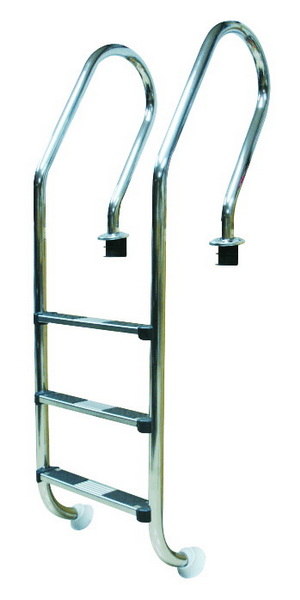
A loose, wobbly, or corroded pool ladder is one of the most common causes of slips and near‑miss accidents around pools. Extra reinforcement reduces movement, prevents premature metal fatigue, and protects users of all ages.[2][3][4][1]
- Reinforcement spreads the load more evenly across the steps, rails, and anchoring points, reducing stress on weak components.[3][2]
- In saltwater or highly chlorinated pools, proper materials and corrosion control can prevent dangerous hidden damage at anchors and rails.[5][6]
Before reinforcing anything, you must respect the ladder's original design, instructions, and weight rating. Over‑building with heavy DIY add‑ons can overload brackets or deck anchors if you ignore these limits.[7][4][1][2]
- Residential pool standards and codes emphasize secure handholds, non‑slip steps, and correctly anchored ladders, especially for above‑ground pools.[8][4]
- Never exceed the manufacturer's stated maximum user weight, and do not modify structural parts in ways that void product warranties or violate local codes.[9][2]
The exact materials depend on your ladder type (A‑frame, in‑pool, deck‑mounted, resin, or stainless steel), but many reinforcement projects share similar tools.[1][2]
- Hand tools: wrench set, socket set, screwdrivers, rubber mallet, 4‑ft level, tape measure, and power drill with masonry/metal bits.[3][1]
- Materials: stainless steel hardware, anti‑corrosion spray, pool‑grade sealant, PVC pipe, foam rods or pool noodles, sandbags or water‑filled weights, anti‑slip treads, and step mats.[10][2]
Thorough inspection shows where reinforcement is most needed: at the feet, deck anchors, steps, or handrails.[4][2]
- Look for wobble by stepping carefully on each rung while another person observes rail movement and base rocking.[1][3]
- Check for rust, pitting, loose bolts, cracked resin, and worn non‑slip surfaces, paying special attention to anchor sockets in saltwater pools.[6][5]
Your ladder should match your pool wall height, deck configuration, and water depth.[2][1]
- For above‑ground pools, confirm that the ladder or step system is rated for your wall height and does not strain the pool wall or liner.[4][3]
- For in‑ground pools, verify that deck anchors are properly positioned and that the ladder geometry gives a safe entry angle at the waterline.[8][4]
A solid, level base is the foundation of any reinforcement plan.[2][1]
- Use a long level across the ladder feet or step pads and adjust until there is no rocking; shim low spots with firm pads or a small concrete paver if needed.[3][1]
- Avoid placing ladder feet on loose gravel, soft sand, or cracked concrete that can shift under load.[2][3]
Soft supports can dramatically reduce sliding and micro‑movement without stressing the ladder frame.[1][2]
- Slide cut pool noodles or foam rods under the rear legs of above‑ground ladders to absorb shock and improve friction on the pool floor.[1][2]
- Add a textured step mat or liner‑safe pad beneath in‑pool steps to increase grip and protect vinyl liners from abrasion.[3][2]
Deck‑mounted or A‑frame ladders become dramatically sturdier when the top is tightly anchored.[2][1]
- Tighten or replace all mounting bracket bolts using stainless steel hardware and lock washers to resist loosening from vibration and wave action.[3][2]
- Where allowed, add manufacturer‑approved clamps or braces that tie the ladder top to the pool rim or deck framing for extra rigidity.[4][2]
For in‑ground ladders, the weakest point is often the anchor socket set into the deck.[11][5]
- If anchors are loose or corroded, remove the rails, clear debris, and consider re‑grouting or partially re‑casting the anchor pockets with suitable non‑shrink repair material.[7][11]
- When corrosion is advanced, upgrade to high‑quality stainless or composite anchor cups designed for harsh or saltwater environments.[5][6]
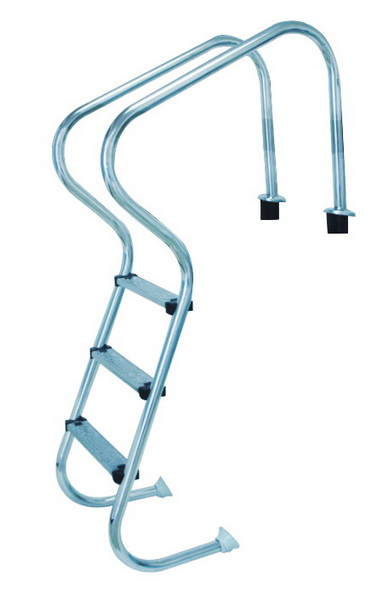
Above‑ground pool ladders and plastic step systems often tend to float or shift when the pool is in use.[12][2]
- If the design allows, fill internal cavities or bottom treads with water or manufacturer‑recommended ballast to keep the ladder submerged and stable.[12][2]
- Where appropriate, drape light sandbags or purpose‑made ladder weights over the bottom rungs, avoiding overly heavy additions that could exceed design loads.[1][2]
PVC‑based weights offer a clean, removable solution that keeps the ladder in place.[13][12]
- Some pool owners use capped PVC pipes filled with sand or gravel, attached to the ladder sides or tucked behind steps to hold them firmly against the wall.[13][12]
- Any DIY weight system must not create sharp edges, pinch points, or obstructions that trap swimmers, especially children.[4][2]
Non‑slip surfaces reduce fall risk, especially when combined with a stable frame.[2][3]
- Apply peel‑and‑stick anti‑slip strips or molded treads rated for wet, chlorinated environments to each step.[3][2]
- Ensure handrails are smooth, properly spaced, and continuous from deck level into the water so swimmers always have a secure grip.[8][4]
Comfortable spacing encourages proper use and reduces strain for older swimmers.[4][3]
- Choose or adjust ladders so step spacing is consistent and not excessively tall between rungs, following manufacturer guidance for your pool height.[4][3]
- Wider treads and platform tops distribute weight better and reduce the sensation of instability when stepping in and out.[1][3]
Salt and aggressive chemicals attack metals, especially around the waterline where evaporation leaves concentrated deposits.[10][5]
- Saltwater environments accelerate corrosion of ladder anchors, rails, and nearby deck hardware if water chemistry is not carefully controlled.[11][5]
- Maintain recommended ranges for salt, pH, alkalinity, and calcium hardness to protect stainless steel, aluminum, and coated metal surfaces.[6][10]
Material upgrades are sometimes the most effective reinforcement.[10][6]
- When replacing or upgrading, choose marine‑grade stainless steel, high‑quality resin, or coated metals designed for pool use.[6][10]
- Apply appropriate protective coatings or sacrificial zinc anodes in salt systems to divert corrosion away from structural ladder components.[11][6]
Reinforcement is not a one‑time project; it requires regular follow‑up.[2][3]
- Inspect and tighten all bolts, clamps, and brackets at the start of each swimming season and monthly during heavy use.[3][2]
- Look for early signs of stress such as hairline cracks in plastic steps, small rust spots, and subtle wobble, then correct them immediately.[6][2]
For many regions, off‑season care is part of reinforcement.[10][2]
- Removing portable ladders before winter reduces freeze‑thaw damage and extends the life of metal and resin parts.[10][2]
- Store ladders in a dry, shaded space and rinse off accumulated salt or chemicals before storage.[6][10]
Reinforcing a pool ladder is about more than just stopping a little wobble; it is a systematic approach to anchoring, leveling, weighting, and protecting every part that supports swimmers. By combining proper base support, secure deck connections, improved traction, corrosion control, and regular maintenance, pool owners can greatly increase comfort and safety for every user.[2][3][1]
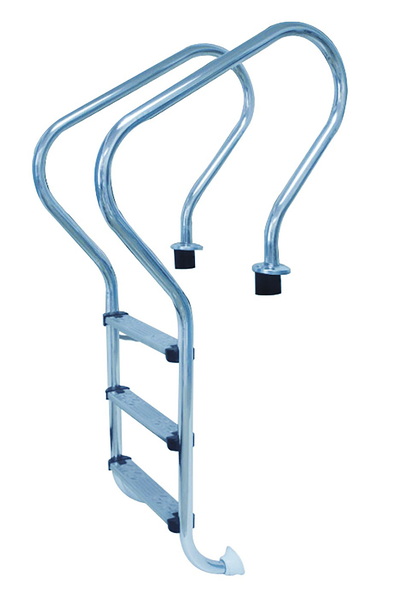
Most wobble problems come from an uneven base or loose top mounts, so the first step is to level the feet and tighten all hardware. Add foam supports, step mats, and secure deck brackets to eliminate rocking while staying within the ladder's weight rating.[3][1][2]
Use manufacturer‑approved ballast systems, water‑fillable chambers, or light sandbags that attach where recommended instead of improvised heavy objects. DIY PVC weight tubes can work if they are smooth, secure, and do not overload or distort the ladder frame.[13][12][2]
Keeping water chemistry balanced and within the recommended salt, pH, and alkalinity ranges is crucial to slowing corrosion. Combine marine‑grade stainless components with protective coatings and, if needed, a zinc anode to draw corrosion away from your ladder and other metal parts.[5][10][6]
If the rails are deeply pitted, anchors are badly corroded, or structural cracks appear in key load‑bearing areas, reinforcement alone is not safe. In these cases, upgrading to a new, code‑compliant ladder or step system made from better materials is the best long‑term solution.[11][5][10][4]
For minor instability, pool noodles or foam rods under ladder legs can compensate for small floor irregularities and increase friction. They should be combined with proper leveling, brackets, and non‑slip mats rather than used as the only reinforcement method.[1][2][3]
Pool standards and codes focus on safe access, minimum handhold requirements, and secure installation rather than detailed DIY reinforcement tricks. However, any modifications should preserve these safety goals and must not reduce ladder strength or interfere with safe entry and exit.[9][8][4]
Check your reinforced ladder at the beginning of each swimming season, after any major storm or heavy use, and at least once a month during peak season. Regular inspections help catch loosening hardware, early corrosion, or damage to foam, mats, and weights before they become safety hazards.[6][2][3]
[1](https://blog.watsons.com/blog/make-above-ground-pool-ladder-stable)
[2](https://www.poolkingfilter.com/how-to-make-a-pool-ladder-sturdy.html)
[3](https://blog.watsons.com/blog/stabilize-above-ground-pool-ladder)
[4](https://www.svadonpoolcn.com/slug-a-comprehensive-guide-to-in-ground-pool-ladders-safety-selection-and-maintenance/)
[5](https://eclearsa.com/wp-content/uploads/2019/10/Salt-Water-Systems-Corrode-the-Pool-Equipment.pdf)
[6](https://www.wavetechspoolandspa.com/blog/how-to-prevent-your-pool-salt-system-from-corroding)
[7](https://www.reddit.com/r/pools/comments/1bkj319/pool_ladder_railing_is_loose_can_i_just_pour/)
[8](https://assets.poolweb.com/state_regs/ansi.pdf)
[9](https://codes.iccsafe.org/s/ISPSC2024V2.0/chapter-7-onground-storable-residential-swimming-pools/ISPSC2024V2.0-Ch07-Sec705.2.3)
[10](https://www.pinnaclepoolservices.com/salt-water-pool-corrosion)
[11](https://www.ecosmarte.com/blog/seven-secrets-of-salt-water-pool-sellers)
[12](https://www.youtube.com/watch?v=Nb82H39bU0g)
[13](https://www.youtube.com/watch?v=3KOgijvL2kg)
[14](https://www.facebook.com/groups/637529959937311/posts/1739131436443819/)
[15](https://www.srsmith.com/media/47241/06-052ansi-standard.pdf)
[16](https://www.youtube.com/watch?v=jHL7mH-UdwA)
[17](https://www.poolsafely.gov/wp-content/uploads/2016/04/vgba.pdf)
[18](https://www.facebook.com/groups/273395260599363/posts/1355878149017730/)
[19](https://www.federalregister.gov/documents/2025/04/10/2025-06125/petition-requesting-a-mandatory-regulation-for-child-resistant-above-ground-and-portable-pool)
[20](https://www.youtube.com/watch?v=E_yS2OX4AD4)


