
Views: 222 Author: Tina Publish Time: 2025-12-08 Origin: Site


Content Menu
● How to Secure Pool Ladder to Deck
● Understand Your Pool Ladder and Deck Type
● Choose the Right Mounting Hardware
● Tools and Materials Checklist
● Plan the Ladder Position on the Deck
● Mark and Drill Mounting Holes
● Secure the Ladder with Deck Flanges or Anchors
● Check for Wobble, Level, and Load Capacity
● Bonding and Electrical Safety Considerations
● Extra Safety Features and Accessories
● Maintenance Tips to Keep the Ladder Secure
● OEM and Professional Installation Opportunities
● Step‑by‑Step Example – Securing a Ladder to a Wood Deck
● FAQs About Securing a Pool Ladder to a Deck
>> 1. Do I need special anchors to secure a pool ladder to concrete?
>> 2. Can I secure a pool ladder to a wood or composite deck?
>> 3. How do I stop a secured ladder from wobbling?
>> 4. Do I need to bond or ground a metal pool ladder?
>> 5. How often should I check the ladder mounting hardware?
How to secure a pool ladder to a deck safely comes down to choosing the right ladder, using the correct deck mounting hardware, positioning it correctly, and checking for wobble and electrical safety on a regular schedule. A properly secured ladder protects swimmers from slips, falls, and shocks while making your pool look and feel more professional, especially in commercial or OEM-focused installations.[1][2][3][4]
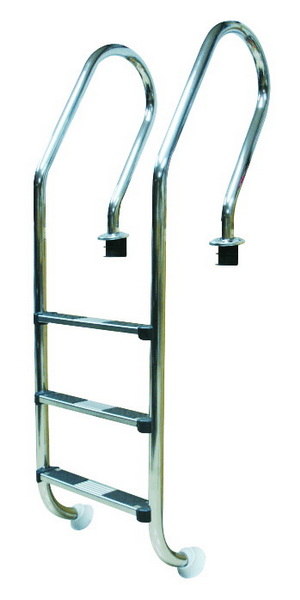
A pool ladder that moves, rocks, or twists under load is one of the most common causes of poolside accidents, but it is also one of the easiest issues to fix with proper mounting and maintenance. For deck-mounted ladders, the key is to create a strong mechanical connection between the ladder rails and the deck structure using flanges, anchors, and corrosion‑resistant fasteners.[5][3][1]
For OEM buyers, installers, and pool owners, understanding this process helps you choose the right ladder design and hardware, and it also influences how you design the surrounding filtration, lighting, and safety systems. The following guide shows, step by step, how to secure a pool ladder to a wood or concrete deck, including practical tips, code‑related safety points, and rich visual ideas (photos and videos) that you can integrate into your content or installation manuals.[3][6][7][1]
Different ladders and decks require different hardware and installation methods. Before drilling any holes, identify what type of ladder and deck material you are working with so you can select suitable flanges, anchors, and sealants.[8][5][1]
- In‑ground pool ladders normally have two stainless rails that drop into anchor sockets set in the concrete deck.[5][8]
- Above ground pool ladders that connect to a deck may use surface‑mount flanges or side‑mount brackets that screw directly into the deck framing.[9][1]
- Deck types include solid poured concrete, paver decks, and wood or composite framed decks with decking boards on top.[6][1]
The most important components for securing a pool ladder to a deck are deck flanges or anchor sockets, stainless steel fasteners, and wedges or escutcheons for a tight, clean finish. Using generic or low‑grade hardware can lead to corrosion, wobble, and early failure, which is especially risky in saltwater or commercial environments.[3][8][5]
Typical hardware sets include:
- Deck flanges or anchor cups for 1.5 inch or 1.9 inch rails, usually cast bronze or heavy‑duty plastic for concrete decks.[8][5]
- Surface‑mount ladder flanges with screw holes for wood or composite decks on above ground pools.[9][1]
- Stainless steel bolts, screws, and chemical anchors rated for marine or pool use to resist rust and chlorine.[10][1]
Having all tools and materials ready before starting avoids errors and rework. For most deck‑mounted ladder installations, you will need:[1]
- Power drill with masonry bits (for concrete) or wood bits (for timber/composite)
- Tape measure, marker, level, and straight edge
- Stainless steel screws or expansion anchors sized to the flange holes
- Silicone or polyurethane sealant for around holes in decks
- Wrenches and screwdrivers for tightening hardware
Some installations on new concrete decks also require pre‑set anchor channels or anchor cups that are tied into the rebar and backfill before the concrete pour. For retrofits on existing concrete, you can drill and set stand‑alone anchor sockets with epoxy‑set bolts.[2][8][5]
Correct positioning keeps the ladder comfortable to use and aligns it with pool walls, steps, and circulation flow. Building codes and pool design guidelines typically require that the top ladder tread sits within about 12 inches below the deck or coping and that treads are slip‑resistant and evenly spaced.[6][3]
When planning the position:
- Center the ladder in a clear entry/exit zone away from skimmers, returns, and main drains.[6]
- Ensure enough clearance on both sides for users to hold the rails and step safely.[3]
- For above ground pools with decks, align the ladder so that the bottom rests firmly against the pool wall or step platform without stressing the liner.[1]
Once the ladder position is set, place the flanges or anchor cups on the deck and mark the screw or bolt hole locations. Double‑check spacing with the ladder rails inserted into the flanges to make sure the legs sit vertical and the treads are level.[3][1]
For concrete decks:
- Use a hammer drill and appropriate masonry bit to drill holes for expansion anchors or epoxy‑set studs.[5]
- Vacuum dust from the holes and insert anchors according to manufacturer instructions.[5][2]
For wood or composite decks:
- Pre‑drill pilot holes for lag screws into the deck framing, not just the surface boards, to prevent pull‑out.[1]
- If necessary, add blocking between joists so the flange screws bite into solid timber.[1]
With anchors in place, position the flanges and fasten them firmly. For concrete, tighten bolts into expansion anchors or threaded inserts; for wood, tighten lag screws or structural screws until the flange base sits flat without rocking.[5][1]
Then:
- Slide the ladder rails into the flanges or anchor cups.[5]
- Use wedges, set screws, or clamping bolts to lock the rails in place so they cannot twist or lift out.[8][5]
- Verify that the ladder treads are level and that all connections between treads and rails are secure, as safety standards require treads to withstand repeated loading without fasteners loosening.[11][12]
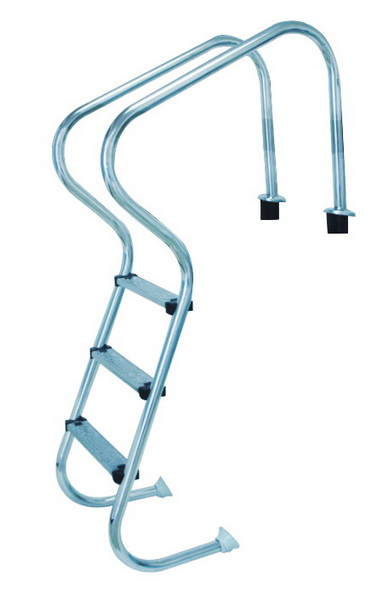
A properly secured pool ladder should feel rock‑solid when tested. After mounting, test stability by pulling, pushing, and stepping on each tread while watching for movement at the base, mid‑rails, and top connection to the deck.[3][1]
Focus on:
- Level: Use a spirit level on the top tread and side rails; adjust flange shims or leg height if available.[1]
- Wobble: If the ladder shifts under side load, tighten all fasteners; add extra anchors or blocking if necessary.[8][1]
- Load: Commercial safety standards expect treads and rails to support around 300 pounds of static load without failure or permanent deformation.[12][11]
Metal ladders and rails near pools must be bonded to the pool's equipotential bonding system to reduce the risk of electrical shock. Many anchor sockets and deck channels include bonding terminals that connect to the bonding grid or wire installed around the pool.[4][2]
Key points:
- Ensure that any metal anchor cups or rails are connected to the existing bonding network in accordance with national and local codes, such as NEC 680 and related pool standards.[4]
- For retrofit projects, consult a licensed electrician if you are unsure how to integrate the ladder into the bonding system.[4]
Beyond basic mechanical security, several accessories can improve ladder safety and user comfort. These are particularly relevant for family pools, public facilities, and OEM brands that want to offer complete access packages.[13][7][3]
Common options include:
- Non‑slip treads or step covers that reduce slip risk in wet, soapy, or algae‑prone conditions.[3]
- Handrail covers and escutcheons to hide sharp edges, exposed bolts, and gaps between rails and deck.[13][3]
- Barrier systems or locking swing‑up ladders for above ground pools so access can be restricted when the pool is not in use.[12][3]
Even the best installation will loosen over time if not maintained. Seasonal checks extend the life of the ladder, hardware, and surrounding deck.[8][5][3]
Recommended routine:
- Inspect flanges, bolts, and treads at the start and end of each swim season, tightening fasteners and replacing any corroded hardware.[8][5]
- Check for deck cracks or rot around the mounting points and repair promptly to prevent anchor movement.[5][1]
- Clean metal parts and apply protective treatments suitable for stainless steel in chlorinated or saltwater environments.[7][3]
For brands, wholesalers, and manufacturers, offering ladders that are easy to secure to standard deck structures is a powerful value‑add. Pre‑engineered mounting kits, clear manuals, and video support help installers complete safe, compliant installations quickly and confidently.[13][7][2][1]
Professional OEM‑style solutions often include:
- Pre‑drilled rails matched to standardized flange systems and anchor sockets.[8][5]
- Multi‑language installation guides with diagrams, QR codes linking to videos, and step‑by‑step safety checklists.[2][1]
- Optional bundles that combine ladders with pool filters, pumps, and LED lights to deliver a complete pool equipment package to distributors and builders.[7][4]
To bring everything together, here is a simplified example of securing a deck‑mount ladder to a wood or composite deck.[1]
1. Place the ladder in the desired position with feet resting on the pool floor and rails leaning over the deck edge. Confirm the top tread is at a comfortable height below the deck and that the rails are vertical.[6][1]
2. Slide the surface‑mount flanges onto the rails and rest them flat on the deck surface, then mark the screw holes.[9][1]
3. Move the ladder aside, pre‑drill pilot holes into the deck sub‑framing, and install structural screws through the flange holes into the framing.[1]
4. Re‑insert the ladder rails into the flanges, use set screws or clamps to lock them in place, and verify there is no twist.[8][1]
5. Test stability by stepping on each tread and pulling on the rails; tighten or reinforce any connection that shows movement.[3][1]
Securing a pool ladder to a deck is not just a hardware task; it is a core part of overall pool safety and user experience. By selecting the right flanges and anchors, positioning the ladder correctly, bonding metal parts, and checking fasteners regularly, you can create a stable, professional‑grade access point for any pool environment.[4][5][3][1]
For brands, wholesalers, and manufacturers, offering complete ladder and mounting packages—together with filtration systems, pumps, and LED lighting—helps end users install everything correctly the first time and builds long‑term trust in your pool solutions. Pairing clear instructions with strong visuals and video support makes it easier for global customers to achieve safe, reliable pool access in both residential and commercial projects.[13][7][2][1]
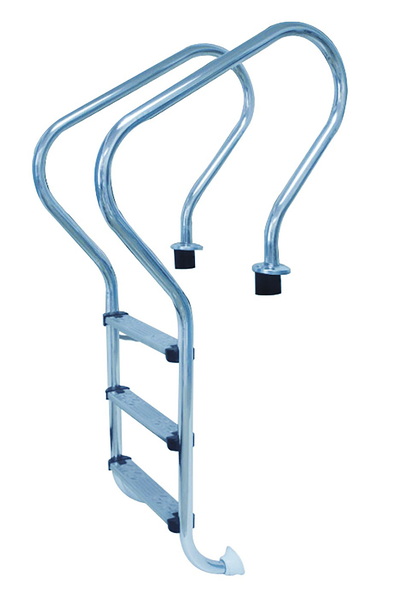
Yes, pool ladders mounted on concrete decks typically use dedicated deck anchors or anchor cups designed to be set into the concrete or attached with expansion or epoxy anchors. These components are engineered to hold metal rails securely and work with wedges or set screws so the ladder does not lift or twist under load.[11][8][5]
You can secure a pool ladder to a wood or composite deck by using surface‑mount ladder flanges and stainless structural screws that penetrate the deck boards and fasten into solid framing or added blocking. The key is to avoid relying only on thin decking boards and to check the deck structure for rot or weakness before installing the ladder.[9][3][1]
If a secured ladder still wobbles, first retighten all flange screws, anchor bolts, and set screws that clamp the rails. If movement remains, add extra backing or blocking under the deck, install additional anchors, or replace worn wedges and bushings so the rails fit tightly in their cups.[8][5][1]
Most modern electrical codes require metal pool ladders to be connected to the pool's equipotential bonding system to reduce the risk of stray voltage and electric shock. Many ladder anchors include bonding terminals, and any new ladder installation should be checked or upgraded by a qualified electrician if bonding is not obvious.[4][2]
At a minimum, inspect ladder mounting hardware at the start and end of each swimming season, tightening fasteners and replacing any rusted bolts or cracked flanges. In commercial or heavily used pools, more frequent checks are recommended, especially after storms or high‑bather‑load events that may stress ladders and decks.[7][8][5][3]
[1](https://www.thorntoncodeckbuilders.com/how-to-attach-pool-ladder-to-deck/)
[2](https://www.youtube.com/watch?v=cqGXFASqmak)
[3](https://www.poolfencediy.com/blogs/blog/pool-ladder-safety)
[4](https://www.poolkingfilter.com/how-to-bond-a-pool-ladder.html)
[5](https://www.poolweb.com/collections/deck-anchors)
[6](https://codes.iccsafe.org/s/ISPSC2021P1/chapter-3-general-compliance/ISPSC2021P1-Ch03-Sec322.3)
[7](https://www.doheny.com/pool-supplies/above-ground/accessories/pool-ladders)
[8](https://www.poolblu.com/anchors-and-hardware)
[9](https://nationaldiscountpoolsupplies.com/above-ground-pool-deck-ladder-mounting-flange-1-5/)
[10](https://www.homedepot.com/b/Outdoors-Pool-Supplies-Pool-Accessories-Pool-Ladders/Deck-Mounting/N-5yc1vZcfz3Z1z1b96h)
[11](https://www.law.cornell.edu/cfr/text/16/1207.5)
[12](https://www.ecfr.gov/current/title-16/chapter-II/subchapter-B/part-1207)
[13](https://intheswim.com/c/step-ladder-accessories/)
[14](https://www.wildwestpoolsupplies.com/deck-anchors/)
[15](https://www.facebook.com/groups/637529959937311/posts/2575443976145890/)
[16](https://www.getpoolparts.com/section/18/ladder-parts)
[17](https://www.reddit.com/r/HomeMaintenance/comments/1lwc253/best_way_to_attach_pool_ladder_to_concrete_deck/)
[18](https://www.poolsupplies.com/product/deck-flange-to-mount-pool-ladder)
[19](https://www.facebook.com/groups/637529959937311/posts/1992732391083721/)
[20](https://codes.iccsafe.org/content/ispsc2018/chapter-3-general-compliance)


