
Views: 222 Author: Tina Publish Time: 2025-11-26 Origin: Site


Content Menu
● Understanding your Bestway pool ladder
● Safety checks before assembly
● Tools and workspace preparation
● Step 1: Unbox and identify parts
● Step 2: Assemble the ladder legs and step clips
● Step 3: Install the steps (rungs)
● Step 4: Attach the top rails and handrails
● Step 5: Add safety features and caps
● Step 6: Positioning the ladder at the pool
● Step 7: Final safety inspection and test
● Ongoing maintenance and safe use tips
● Why a quality ladder matters for OEM pool brands
● FAQs about Bestway pool ladder assembly
>> 1. How long does it take to put a Bestway pool ladder together?
>> 2. Can one person assemble the ladder, or is two better?
>> 3. How do I keep the ladder from moving on a soft pool floor?
>> 4. Is it safe to leave the ladder in the pool all the time?
>> 5. What should I do if a step cracks or hardware rusts?
>> 6. Which Bestway ladder height should I choose for my pool?
Putting a Bestway above ground pool ladder together is straightforward when you follow a clear, step‑by‑step process and pay attention to safety details. This guide walks through each stage, from unpacking and layout to final safety checks and basic maintenance, so homeowners and pool owners can assemble a sturdy, safe ladder with confidence.[1][2]
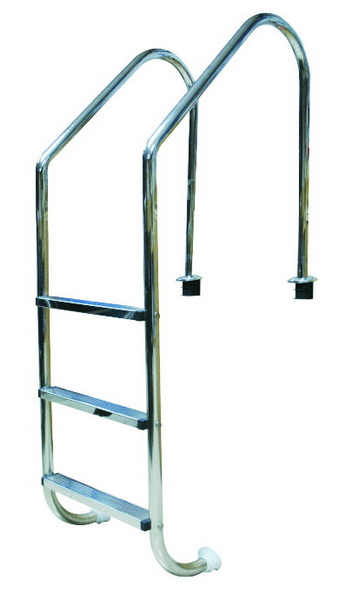
Bestway pool ladders are designed for above ground pools and usually come with a corrosion‑resistant metal frame and heavy‑duty plastic steps, made to fit specific pool wall heights such as 42 in, 48 in, or 52 in. Some models are “safety ladders” with a hinged outer section that flips up to prevent unsupervised children from entering the pool.[3][1]
Most Bestway ladders include:
- Two pairs of ladder legs (often labeled A and B).
- Plastic steps or rungs, marked to match leg labels.
- Top handrails or top platform/connection bar.
- Hardware: bolts, nuts, washers, safety clips.
- Optional safety legs or removable outer section.
Before touching any tools, read the owner's manual and safety section thoroughly, paying attention to warnings about weight limits, supervision, and placement. Many Bestway ladders have a maximum load rating (for example, about 305 kg / 672 lb), and exceeding it can cause structural failure.[2][4][5]
Key pre‑assembly safety points:
- Only one person on the ladder at a time.
- No running, diving, or jumping from the ladder.
- Always face the ladder when entering or exiting the pool.[4][6]
Most Bestway ladders can be assembled with basic tools, usually a Phillips (crosshead) screwdriver and an adjustable wrench or small spanner. Choose a flat, stable working area near the pool, with enough room to lay out all parts so nothing is lost or stepped on.[5][2]
Recommended preparation steps:
- Lay a tarp or cardboard on the ground to protect plastic steps from scratches.
- Sort hardware (bolts, nuts, washers, clips) into separate small containers.
- Keep manual nearby and match each part number to the diagram.[2][5]
Open the box carefully so you do not cut or damage any plastic rungs or the vinyl pool liner if the box is near the pool wall. Remove all components and check them against the parts list in the manual, confirming that the number of steps, legs, connectors, and bolts matches the list.[5][2]
Check for:
- Bent metal rails, cracked plastic steps, or missing caps.
- Damaged threads on bolts or nuts that may prevent tightening.
If anything is missing or defective, contact the retailer or Bestway customer support instead of improvising with non‑original parts, which can compromise safety.[3][4]
Most Bestway ladders use two main pairs of legs, marked A and B, and each plastic step has A and B ends that must match the correct leg. Attaching the connectors or clips to the legs prepares them to hold the steps.[7][8]
General procedure:
1. Take one leg labeled A and one step connector piece. Slide the connector onto the leg with the larger flared side facing the bottom of the ladder.
2. Repeat with the second connector on the same leg, placing them at the positions indicated in the manual (bottom and next rung position, etc.).[8][7]
3. Assemble the matching leg B in the same way, with connectors oriented in the same direction.
Repeat this process for the second side of the ladder, again matching A‑side connectors to A legs and B‑side connectors to B legs to avoid twisting or misalignment.[7][8]
Once the connectors are in place, the plastic steps can be installed by sliding them down into the notches on the clips, forming the sides of the ladder. Proper seating of each step is essential for strength and stability.[9][8]
Typical method:
1. Identify the bottom step and confirm which end is labeled A and which B.
2. Position the A side of the step over the A leg and the B side over the B leg, then slide the step straight down from the top of the legs into the connector notches.[8]
3. Push until the step “clicks” or sits firmly inside the connector groove with no visible gap.
Repeat for each higher step, ensuring that each rung is fully seated and matches the label orientation. Some installers lightly tap the step ends with a rubber mallet to ensure full engagement, but only if the manual permits and with gentle force to avoid cracking the plastic.[9][7][8]
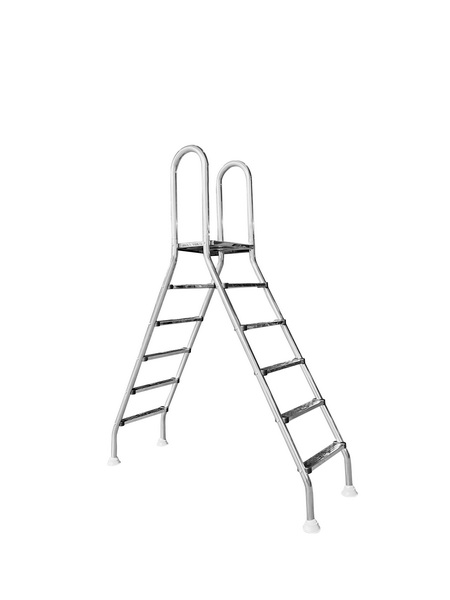
The top section connects both sides of the ladder and provides a handhold for safe entry and exit. Depending on the model, this may be a set of curved handrails or a flat top platform with side rails.[9][8]
Assembly overview:
1. Position the top connection bar or platform between the two upper ladder legs.
2. Align bolt holes on the top bar with holes at the tops of both legs.
3. Insert bolts from the outside in, add washers and nuts on the inside, and hand‑tighten them first.[8][9]
4. Attach any additional braces or crossbars as shown in the manual, again matching labels A and B where indicated.[2][5]
After all top pieces are in place and aligned, use the screwdriver and wrench to tighten each bolt snugly, but do not over‑tighten to the point of deforming plastic parts.[4][5]
Many Bestway ladders include safety legs, removable outer steps, or a hinged outer section that can be lifted to restrict unsupervised access. Some models also have plastic end caps, anti‑slip treads, or small warning plates that must be installed.[10][3]
Common tasks:
- Fit plastic end caps onto the bottom of each leg to prevent damage to the liner and improve grip.
- Attach anti‑slip pads or textured step overlays if supplied.
- Install the safety hinge or removable outer ladder according to the diagram, making sure the lock mechanism turns smoothly.[10][3]
If your model has a flip‑up outer ladder, practice lifting and lowering it and show other supervising adults how to lock and unlock it properly.[3]
Correct positioning protects the pool wall, ensures stability, and reduces the risk of the ladder tipping or shifting. The ladder must stand on a firm, level base outside and inside the pool.[6][4]
Positioning guidelines:
- Place the ladder perpendicular to the pool wall, centered between vertical frame posts where possible.
- Ensure the inner legs rest flat on the pool floor, not on uneven ground or wrinkles in the liner.
- Adjust the ladder so the top rail or platform sits securely over the pool top rail, without twisting the frame.[1][3]
For soft‑sided above ground pools, make sure the base pads are fully under the legs and not cutting into the liner, and avoid placing the ladder on loose stones or uneven pavers.[6]
Before allowing anyone to use the ladder, carry out a final safety inspection to identify loose fasteners, sharp edges, or rocking movement. This step is essential, especially when the ladder is new or has been moved.[4][5]
Inspection checklist:
- Confirm all bolts and nuts are tight and retention clips are properly engaged.
- Wiggle the ladder side to side and front to back; there should be minimal movement.
- Check each step by applying weight with your hand or foot—no creaks, bending, or shift.[6][4]
- Look for sharp edges, burrs, or cracked plastic that could cause cuts.
Once satisfied, have an adult carefully climb the ladder while another person steadies it, observing for any flexing or instability. Only after a stable test should children or less experienced swimmers use it.[6]
A Bestway ladder will last longer and stay safer with simple periodic maintenance. Chlorinated or saltwater environments can gradually corrode metal parts if not rinsed and inspected.[5][3]
Maintenance best practices:
- Rinse the ladder with fresh water regularly to reduce corrosion, especially in saltwater systems.
- Inspect bolts, nuts, and clips every few weeks and tighten or replace any corroded hardware.
- Check plastic steps for UV damage, cracking, or excessive flex and replace if needed.[5][6]
- Remove or flip up the outer ladder when the pool is not in use to prevent unsupervised access by children.[3][4]
If you close the pool for winter, many owners remove the ladder entirely, clean it, dry it thoroughly, and store it indoors away from direct sunlight to extend its life.[3][6]
For overseas brands, wholesalers, and manufacturers selling above ground pools, a reliable ladder is critical to the overall product experience and brand reputation. Stable, corrosion‑resistant frames, non‑slip steps, and clear safety mechanisms reduce returns, complaints, and liability risks.[1][3]
Partnering with an experienced OEM factory that already produces pool filtration systems, pumps, LED lights, and accessories allows brand owners to integrate compatible ladders into full pool packages. Offering a complete kit—pool, filter, pump, ladder, and lighting—helps distributors upsell, simplify logistics, and provide customers with a turnkey backyard solution.
Assembling a Bestway pool ladder is a manageable project when you follow the manual, prepare a clean work area, and move through each stage—leg assembly, step installation, top rail connection, and safety checks—systematically. Matching A/B labels, tightening hardware correctly, and verifying stability before use ensure a safe, comfortable way for swimmers to enter and exit the pool while protecting your pool wall and liner. Regular inspection, cleaning, and secure storage during off‑season keep the ladder strong for many summers, whether it is part of a single backyard pool or a branded OEM package for international customers.[2][8][5][3]
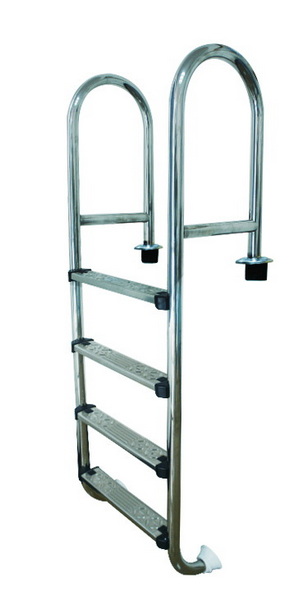
Most homeowners can assemble a standard Bestway above ground pool ladder in about 30–60 minutes, depending on the model and familiarity with tools. Sorting parts and reading the manual in advance usually reduces overall time and prevents re‑work from misaligned A/B legs or steps.[11][9][2][8]
One person can usually assemble the ladder by following the step‑by‑step instructions with basic hand tools. However, having a second person helps when holding both sides steady while attaching the top rails and when performing the first stability test near the pool.[2][8][4][5]
Ensure the ladder feet have their protective caps installed and rest on a smooth, level pool base without wrinkles or sharp debris. For very soft floors, some owners use purpose‑made ladder mats or base pads under the feet to distribute weight and reduce movement while protecting the liner.[4][6]
Many Bestway ladders are designed to be used in water, but safety guidelines recommend removing or flipping up the outer section when the pool is not supervised to prevent children entering unsupervised. In cold climates or during off‑season, removing, cleaning, and storing the ladder indoors also protects it from corrosion and UV damage, extending service life.[4][5][3]
Stop using the ladder immediately if any step cracks, loosens, or shows significant flex under weight, and inspect all hardware for corrosion. Replace damaged steps and rusted bolts with approved spare parts from the manufacturer or retailer to maintain the original safety rating rather than mixing incompatible components.[5][6][3][4]
Choose a ladder height that matches or slightly exceeds your pool wall height, such as 42 in or 48 in models for pools up to those wall heights. A correctly sized ladder allows comfortable stepping over the top rail without over‑reaching or stepping on unsupported sections of the frame.[11][1][3]
[1](https://bestwayusa.com/bestway-above-ground-pool-ladder-48-58336e)
[2](https://manuals.plus/bestway/58331-1-22m-48-inch-pool-ladder-manual)
[3](https://www.bestwaystore.de/en/pool-accessories/pool-accessories/pool-ladders/)
[4](https://bestwayusa.com/media/pdf_files/Coleman_Pool_Ladder_90392E_2024.pdf)
[5](https://manuals.plus/m/c437d46de4bc7d49c47614cdfb7a2f66cf4a5bd1226375ee3cb0ac4da00d4e63)
[6](https://www.thepoolfactory.com/blogs/equipment/make-your-pool-safer-simple-steps)
[7](https://www.youtube.com/watch?v=7kl3jaOPnnw)
[8](https://www.youtube.com/watch?v=JJkG7vsan1E)
[9](https://www.youtube.com/watch?v=AcVIHFSLCTY)
[10](https://www.youtube.com/watch?v=ANV4WKmQTxI)
[11](https://www.youtube.com/watch?v=1keTaAzgBVU)
[12](https://www.youtube.com/watch?v=ofBp-RbwJCs)
[13](https://www.facebook.com/groups/637529959937311/posts/2628704567486497/)
[14](https://www.facebook.com/groups/637529959937311/posts/2586520505038237/)
[15](https://www.reddit.com/r/Carpentry/comments/xc509n/how_do_i_install_this_pool_ladder/)
[16](https://www.facebook.com/groups/637529959937311/posts/2572652556425032/)
[17](https://www.reddit.com/r/needadvice/comments/o8ltv0/my_family_got_an_above_ground_pool_i_want_to_be/)


