
Views: 222 Author: Tina Publish Time: 2025-11-26 Origin: Site


Content Menu
● Tools and materials you need
● Unboxing and organizing parts
● Attach the top platform and handrails
● Adjusting ladder height for your pool
● Adding ballast: sand or water fill
● Positioning ladder at the pool
● Securing the ladder to deck or ledge
● Maintenance tips for longer ladder life
● FAQs about how to put above ground pool ladder together
>> 1. Do I need professional help to assemble an above ground pool ladder?
>> 2. How can I stop my pool ladder from floating?
>> 3. How do I know if the ladder is safe for children?
>> 4. Should I remove the ladder when closing the pool?
>> 5. What tools are essential for ladder assembly?
>> 6. Can one ladder fit different above ground pool heights?
Assembling an above ground pool ladder is a simple DIY task if you follow a clear step‑by‑step process and pay attention to safety details. This guide walks through how to put an above ground pool ladder together, add weights, and secure it to the pool so swimmers can enter and exit safely.[1][2][3]
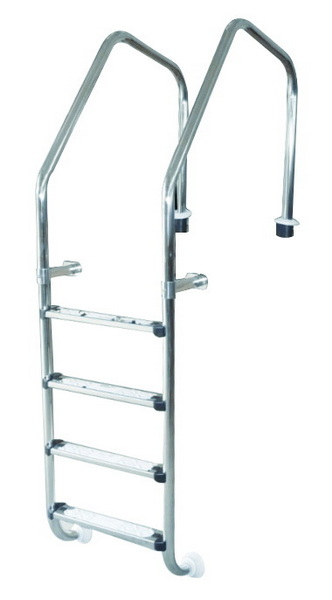
Different above ground pool ladders have slightly different assembly steps, so first identify your ladder style and read the manufacturer's manual. Most residential ladders are either A‑frame ladders (inside and outside the pool), deck‑mount ladders, or molded entry steps with a platform.[4][2][5][6]
- A‑frame ladders stand on both sides of the pool wall and are common for pools without decks.[7][8]
- Deck‑mount ladders anchor directly to a surrounding deck and require drilling into the deck surface.[2][5]
- Molded entry steps look like small staircases and often use sand or water ballast to stay stable under water.[9][7]
Before you start, lay out all ladder parts and verify that you have the complete hardware kit from the manufacturer. Gathering basic hand tools in advance makes the assembly smoother and helps you avoid damaging plastic treads or rails.[5][4][2]
Typical tools and materials include:[4][2]
- Phillips screwdriver or screw gun
- Small flat screwdriver for plastic clips
- Adjustable wrench or pliers for nuts
- Rubber mallet to seat treads fully
- Tape measure and marker for mounting positions
- Drill with appropriate bit if you need to secure the ladder to the pool ledge or deck
Start by opening the ladder box carefully and placing all components on a flat surface near the pool. Most ladders include side rails or legs, treads (steps), top platform or handrail assembly, hardware, and sometimes ballast containers.[7][5][4]
- Match the parts against the parts list in the manual and check for labels such as A/B or plus/minus on treads and rails.[10][7]
- Group hardware (bolts, nuts, spacers, caps) in small containers or trays so nothing rolls away.[2][4]
Many above ground pool ladders are built by assembling each side (leg + treads) separately, then connecting them with a top platform. Pay attention to orientation labels stamped into the plastic or printed on stickers.[10][5][7]
General process for each side:[10][4]
1. Lay the first leg flat with the correct side facing up, aligning it with its markings.
2. Insert tread ends into the upper lugs or sockets on the leg; some models use “A/B” or “+/–” to match treads and holes.
3. Tap the treads gently with a rubber mallet until fully seated against the leg.
4. Place the second leg on top, line up the markings, and press or tap tread ends into the matching sockets.
Once both legs are aligned, install the remaining treads from top to bottom, following the specific height configuration for your pool. Some manuals specify that steps must be installed into the upper set of lugs only, or that one particular bottom tread is installed last.[4][7]
- Ensure each tread is pushed all the way down and is sitting flat on the molded lugs or supports.[7][4]
- If the ladder is height‑adjustable, do not cut any legs or rails yet; complete the basic assembly first.[4]
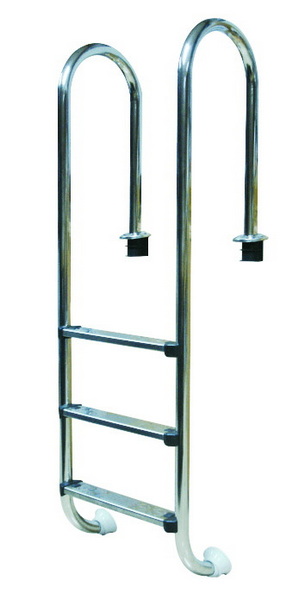
After assembling both ladder sides, you can attach the top platform and any handrail or bridge pieces. This top section stabilizes the ladder and often includes mounting points for securing it to the pool ledge or deck.[5][2][10][7]
Typical steps:[2][10]
1. Position the platform over the tops of both legs and slide it down until it sits evenly.
2. Insert bolts through the platform and leg holes; add washers and nuts, then tighten firmly but without over‑torquing plastic.
3. Install handrails or braces according to markings on the platform and legs, using the supplied hardware.
Many A‑frame and deck‑mount ladders support multiple pool wall heights, such as 48–54 inches, by trimming the legs at the marked cut lines. Adjusting height correctly ensures that the treads are level and the platform sits at the right position above the water.[5][2][4]
- Locate the height markings or lines on the legs and handrails; these may indicate specific pool wall heights.[4]
- Use a hacksaw to cut all four legs evenly at the correct line if the manual instructs you to do so, then smooth edges with sandpaper.[2][4]
If you use molded entry steps or certain A‑frame ladders, you may need to fill ballast chambers with sand or water to keep the ladder stable and prevent floating. Not filling the ladder correctly can make it move or tip in the water, creating a safety risk.[11][9][4]
- Follow the manual to find the correct fill ports and recommended weight (often around 40 lb of sand or similar).[9][4]
- After filling, gently tap or shake the ladder to distribute sand and remove trapped air pockets.[12][9]
With basic assembly complete, move the ladder to the pool and test how it sits against the wall or deck surface. For A‑frame ladders, ensure that both the inside and outside legs are level on the ground and the base is at a safe distance from the pool edge if required by the design.[11][2]
- For deck‑mount ladders, confirm that the lower ends rest firmly on the pool floor while the top rests on the deck with no gaps.[2]
- For barrier‑type A‑frame ladders, verify that the safety barrier or outer side meets the recommended spacing from the pool wall.[8][13]
Securing the ladder is crucial for safety and is often required by safety guidelines and local codes. Many platforms have pre‑drilled holes and a hardware kit designed to attach the ladder to the steel top rail or deck boards.[14][15][4][2]
General mounting steps:[5][2]
1. Mark hole positions on the pool ledge or deck through the platform or mounting brackets.
2. Drill holes using the recommended bit size, taking care not to damage the pool wall or liner.
3. Insert bolts through the platform and deck or ledge, add washers and nuts, and tighten until the ladder feels solid.
Before swimmers use the ladder, perform a thorough safety inspection focusing on step stability, handrails, and sharp edges. Safety organizations recommend features like non‑slip treads, secure handrails, and protected hardware to reduce the risk of slips and injuries.[1][14][11]
- Check all steps for wobbling or flexing; retighten hardware if needed.[2]
- Look for sharp corners or exposed bolts and cover them with caps or protective fittings.[1]
- Confirm that the ladder meets any local barrier requirements and can be locked, raised, or removed when the pool is not in use.[15][14]
Regular maintenance protects your investment and keeps the ladder safe season after season. Sun, pool chemicals, and heavy use can weaken plastic if you do not inspect and clean the ladder periodically.[11][1]
- Rinse the ladder periodically with fresh water to remove chlorine, salt, and debris.[11]
- Inspect hardware for corrosion and replace rusted metal parts with manufacturer‑approved replacements.[3][2]
- In cold climates, remove the ladder during winter closing and store it in a shaded, dry area to minimize UV degradation.[11]
Putting an above ground pool ladder together is a straightforward project if you organize parts, follow the labeled assembly sequence, and secure the ladder properly to the pool. By combining clear written instructions with photos and short videos, you can help pool owners assemble their ladders safely while highlighting your professional pool equipment brand and OEM capabilities.[17][10][4][2]
Most homeowners can assemble and install a standard above ground pool ladder using basic tools like a screwdriver, drill, and wrench, as long as they closely follow the manufacturer's manual. For commercial pools, custom ladders, or installations that must meet strict local codes, professional installation is recommended.[18][3][2]
Many molded steps and A‑frame ladders include internal chambers that must be filled with sand or water to weigh the ladder down. If the ladder still floats, check for trapped air, confirm that you used the correct ballast weight, and inspect for leaks in the ballast compartments.[12][9][4]
Safe above ground pool ladders usually have non‑slip treads, dual handrails, no sharp edges or protruding bolts, and some way to restrict access when the pool is not in use. Look for ladders designed to meet recognized pool safety guidelines and always supervise children when they use the pool.[14][15][1]
Removing the ladder during the off‑season protects it from weather damage and can also reduce unauthorized access to the pool. Store the ladder clean and dry in a shaded location and reinstall it only after the pool has been reopened and water levels are correct.[15][11]
In most cases you will need a Phillips screwdriver, an adjustable wrench or pliers, and sometimes a drill and rubber mallet to seat treads and mount the platform securely. Always check the specific tool list in the ladder manual before starting so you can complete the assembly without interruption.[5][4][2]
Many modern above ground pool ladders are designed with cut lines or adjustable legs so they can fit a range of pool heights, such as 48–54 inches. You simply assemble the ladder, adjust or trim the legs at the indicated marks, and then mount it according to the manual for your pool height.[4][5]
[1](https://www.poolfencediy.com/blogs/blog/pool-ladder-safety)
[2](https://blog.watsons.com/blog/install-above-ground-pool-ladder)
[3](https://www.poolkingfilter.com/how-to-put-a-swimming-pool-ladder-together.html)
[4](https://www.familypoolfun.com/pdf/ne1222_manual.pdf)
[5](https://www.intexsales.com/b2cmnl/B2CMNLServlet?instantiate=B2cMnldownloadApp&action=pub_mnl&filnam=330IO_A0_1805_EN.pdf)
[6](https://xtremepowerusa.com/products/above-ground-swimming-pool-ladder-heavy-duty-step-system-entry-non-slippery)
[7](https://www.youtube.com/watch?v=qb_u48dTL0M)
[8](https://www.youtube.com/watch?v=6D2VWj3Z_q8)
[9](https://www.youtube.com/watch?v=kstTbJYtypE)
[10](https://www.youtube.com/watch?v=JJkG7vsan1E)
[11](https://sternsbackyard.com.au/blogs/news/safety-tips-for-installing-and-using-above-ground-pool-ladders)
[12](https://www.facebook.com/groups/637529959937311/posts/2635564603467160/)
[13](https://www.poolsafely.gov/wp-content/uploads/2016/04/Safety-Barrier-Guidelines-for-Residential-Pools.pdf)
[14](https://www.cpsc.gov/s3fs-public/362%20Safety%20Barrier%20Guidelines%20for%20Pools.pdf)
[15](https://doh.wa.gov/community-and-environment/water-recreation/pool-safety)
[16](https://www.youtube.com/watch?v=AcVIHFSLCTY)
[17](https://www.youtube.com/watch?v=ham2QiY9M7M)
[18](https://www.torhoermanlaw.com/lawsuits-for-above-ground-pool-accidents/above-ground-pool-barrier-requirements/)
[19](https://www.youtube.com/watch?v=qpJDdgZaclQ)
[20](https://www.facebook.com/groups/637529959937311/posts/2656993104657643/)


