
Views: 222 Author: Tina Publish Time: 2026-01-23 Origin: Site


Content Menu
● What “marine grade” really means
● Key environments for a marine grade Pool ladder
● Comparing common Pool ladder materials
>> Pool ladder material overview
● Design and safety features to look for
>> Essential Pool ladder features
● Choosing the right Pool ladder for different pool types
>> In‑ground residential pools
>> Commercial and high‑traffic pools
● Checking technical specifications
● Maintenance tips for a marine grade Pool ladder
● Installation and sizing considerations
● Integrating a Pool ladder with your overall pool system
● Practical checklist for choosing a marine grade Pool ladder
● FAQ
>> 1. What is the difference between 304 and 316 marine grade Pool ladder stainless?
>> 2. Do I really need a 316 marine grade Pool ladder for a saltwater pool?
>> 3. Is a resin Pool ladder as strong as stainless?
>> 4. How often should a marine grade Pool ladder be inspected?
>> 5. Can I retrofit a marine grade Pool ladder to my existing pool?
>> 6. How can I reduce the risk of corrosion on a marine grade Pool ladder?
>> 7. What safety standards should a Pool ladder meet?
Choosing the right marine grade Pool ladder is critical for safety, comfort, and long‑term durability, especially in saltwater or coastal environments where corrosion is a serious threat. A well‑designed Pool ladder also improves the overall pool experience for families, seniors, and commercial users by providing secure entry and exit in all water conditions.
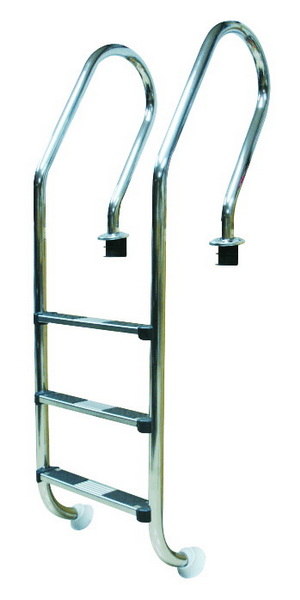
Marine grade describes Pool ladder materials and finishes engineered to withstand harsh environments with salt, chlorides, and strong chemicals. In practice, marine grade Pool ladder products usually refer to upgraded stainless steel such as 316 or 316L, or to non‑metallic materials like resin that resist rust and pitting over many seasons.
304 stainless steel Pool ladder products offer good corrosion resistance in well‑maintained, standard chlorinated pools, and they are more economical than 316. However, 304 stainless is more vulnerable to pitting and staining in saltwater pools and coastal air, particularly around welds and splash zones.
By contrast, 316 and 316L marine grade stainless steel Pool ladder rails and treads include added alloying elements such as molybdenum that significantly improve resistance to chlorides. This makes a 316 marine grade Pool ladder the preferred choice for saltwater pools, seaside resorts, and heavily chlorinated commercial environments where corrosion resistance and long service life are priorities.
Resin‑based Pool ladder designs present another option, especially for above‑ground pools. Full‑resin or hybrid Pool ladder structures, which combine stainless rails with resin treads, are completely immune to rust and are popular where low maintenance and slip‑resistant surfaces are more important than a metallic look.
The environment around your pool largely determines which marine grade Pool ladder you should choose. Matching Pool ladder grade to your water and location protects both safety and appearance over time.
Saltwater pools place the highest demands on a Pool ladder. In this setting, 316 or 316L marine grade stainless is strongly recommended, because salt accelerates pitting on lower grades of stainless steel. Resin Pool ladder designs are also attractive here, as they eliminate the risk of rust altogether at the cost of a different appearance.
Heavily chlorinated or commercial pools also benefit from marine grade materials. Commercial facilities often specify 316 marine grade Pool ladder rails and treads to withstand high bather loads, aggressive sanitizing routines, and strict inspection standards. A robust Pool ladder frame and wide treads reduce slip risk and support continuous use.
Coastal and windy outdoor environments are another area where marine grade Pool ladder products shine. Even if your water chemistry is standard chlorine, airborne salt can deposit on the ladder surface and cause staining over time. Choosing 316 stainless or a powder‑coated Pool ladder helps reduce maintenance and keeps the metal looking bright.
A marine grade Pool ladder can be built from several material types, each with distinct pros and cons. Understanding them helps you balance performance, cost, and aesthetics.
| Ladder material | Durability & corrosion resistance | Typical use cases | Maintenance level |
|---|---|---|---|
| 304 stainless steel Pool ladder | Strong and long‑lasting in standard, well‑balanced pools; less resistant to chlorides than 316. | Residential in‑ground pools with reliable chemical control. | Periodic cleaning and monitoring for staining. |
| 316/316L stainless steel Pool ladder | Premium marine grade resistance to salt and chlorides, ideal for harsh environments and long service life. | Saltwater, coastal, or commercial pools where longevity is critical. | Routine rinse‑down and light polishing to keep shine. |
| Resin or plastic Pool ladder | Corrosion‑proof and lightweight, but may be less rigid and more prone to UV‑related wear. | Above‑ground pools and budget‑friendly setups. | Minimal rust issues; inspect for cracking or fading. |
| Hybrid Pool ladder (steel + resin) | Combines metal strength with non‑metal treads for better grip and chemical resistance. | Mixed environments, residential or light commercial pools. | Standard cleaning plus occasional tread replacement if worn. |
For most high‑end marine applications, 316 stainless steel is considered the benchmark for a durable Pool ladder, while resin and hybrid options offer lighter, more affordable alternatives for less demanding conditions.
A marine grade Pool ladder is more than just metal. Design features greatly impact safety, comfort, and ease of use for swimmers of all ages. When evaluating any Pool ladder, focus on ergonomics, tread design, and how firmly it anchors to the pool structure.
Step count and rise are fundamental. A typical in‑ground Pool ladder offers between two and five steps depending on pool depth and deck height. For deeper pools and taller decks, extra steps on the Pool ladder reduce the vertical distance between treads, making climbing easier for children, seniors, and anyone with limited mobility.
Tread style and grip are equally important. Marine grade Pool ladder treads may be stainless, resin, or plastic, and many brands offer ergonomic “hip” or contoured shapes that feel more comfortable under bare feet. Non‑slip surfaces and adequate tread width are essential in public pools and family pools where wet, soapy, or sunscreen‑coated feet can make surfaces slippery.
Rail shape and diameter influence how safe the Pool ladder feels in the hand. Many residential Pool ladder rails use round tubing sized for a comfortable grip, which balances comfort and structural rigidity. Smooth bends and a consistent gripping radius help people pull themselves in and out of the water without straining wrists or forearms.
Anchoring and bumpers are another key safety factor. Quality Pool ladder designs use heavy‑duty deck anchors and escutcheons to secure the rails firmly and protect the deck surface. Rubber bumpers or pads at the Pool ladder base protect vinyl liners and pool walls where the ladder contacts the shell, preventing abrasion and noise when swimmers move the ladder.
Each pool configuration demands a slightly different marine grade Pool ladder specification. Matching ladder style to pool type helps ensure better safety and a longer service life.
For standard in‑ground backyard pools, a stainless steel Pool ladder with 304 or 316 rails is the most common choice. Many homeowners prefer a classic three‑step Pool ladder with resin treads for a combination of grip, comfort, and easy cleaning.
If your pool uses a simple chlorine system and you maintain balanced water chemistry, a 304 stainless Pool ladder can perform well for years. However, if your home is near the ocean, or you use a salt chlorine generator, upgrading to a 316 marine grade Pool ladder is a smart long‑term investment that reduces staining and structural deterioration.
Commercial facilities, water parks, and hotels face higher usage and stricter codes, so they require a heavier‑duty Pool ladder. These pools often specify 316 marine grade Pool ladder rails with reinforced treads, larger diameters, and robust anchoring hardware suitable for continuous use.
Wider treads and dual handrails on the Pool ladder help manage large numbers of swimmers and reduce crowding at entry and exit points. Many commercial designs also follow local regulations for tread spacing, handhold clearance, and slip resistance, so choosing a certified marine grade Pool ladder helps operators pass inspection more easily.
Above‑ground installations usually rely on free‑standing or deck‑mounted Pool ladder systems that can be repositioned. These may be constructed from resin, plastic, aluminum, or hybrid designs that deliver corrosion resistance with lighter frames.
Many heavy‑duty above‑ground Pool ladder products focus on weight capacity and stability, using wide, non‑slip steps and side rails that brace against the pool wall. If your above‑ground pool uses a saltwater generator, a resin or hybrid Pool ladder minimizes rust risk at the waterline and splash zones while still providing solid support.
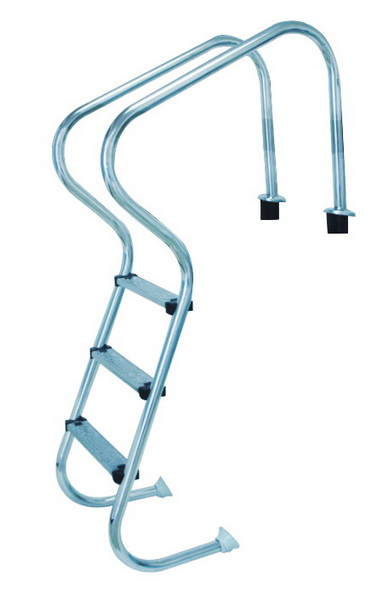
Before buying a marine grade Pool ladder, carefully read the product specifications and technical datasheets. Clear labeling helps you distinguish true marine grade Pool ladder products from generic stainless options.
Stainless grade marking is the first detail to confirm. A true marine grade Pool ladder typically specifies “316” or “316L marine grade stainless” on its product page or label. If a ladder only lists “stainless steel” without a specific grade, it is likely 304 or a lower grade that may not be suitable for saltwater or coastal use.
Tube dimensions and wall thickness are another clue to overall quality. Many premium Pool ladder models list tube outer diameter and wall thickness, such as a common 1.90‑inch outside diameter paired with a robust wall. Thicker walls add rigidity and reduce flexing under load, which is important for commercial or heavy‑use Pool ladder installations.
Finish and coating options also affect durability. Electro‑polished or highly polished stainless surfaces on a Pool ladder help resist staining and make cleaning easier, since the smoother surface leaves fewer microscopic crevices where contamination can cling. Some manufacturers also offer powder‑coated Pool ladder rails in designer colors that enhance both corrosion resistance and visual appearance.
Even the best marine grade Pool ladder needs basic care to perform at its best. Simple routines extend the ladder's life and protect its appearance, especially in challenging environments.
Regular rinsing and wiping are the first line of defense. Rinsing the Pool ladder with fresh water after heavy use, storms, or high‑wind events helps wash away salt, chlorides, and airborne contaminants. Wiping the rails and treads with a soft cloth and mild, non‑abrasive cleaners prevents mineral deposits and water spots from building up.
Inspecting contact points reduces safety risks. Check Pool ladder anchors, treads, bolts, and rubber bumpers for looseness, wear, or cracking at least once a month during the swimming season. Replace damaged treads or bumpers promptly to avoid injuries, noisy movement, or damage to the pool wall beneath the Pool ladder.
Monitoring water balance is just as important. Keeping pH, alkalinity, and sanitizer levels within recommended ranges reduces aggressive corrosion on any stainless Pool ladder, including marine grade models. Good records of water balance are also helpful for warranty support if any Pool ladder components fail prematurely.
In especially harsh coastal or salt‑air regions, some owners add extra protection by applying compatible waxes or clear sealants to their Pool ladder rails. These coatings act as sacrificial barriers that reduce direct exposure of the metal surface to salt and chlorine, further extending service life when combined with regular cleaning.
Choosing the correct marine grade Pool ladder also means confirming that the ladder's dimensions and anchor spacing fit your pool. Proper installation ensures that the Pool ladder is solid, safe, and compliant with local building codes.
Before ordering, measure key dimensions such as deck height above water level, distance from deck edge to waterline, and the horizontal space where the Pool ladder will sit. Many manufacturers publish recommended height and anchor spacing charts, which indicate the center‑to‑center distance between ladder rails and minimum setback from the pool edge. Matching these figures helps your new Pool ladder fit existing anchors or guides you when installing new ones in the deck.
During installation, anchors should be set in strong, crack‑free concrete using the manufacturer's specified hole diameter and depth. After cleaning and drying the holes, anchors are bonded, leveled, and secured with high‑strength grout or epoxy. Once cured, the Pool ladder rails can be inserted and tightened, ensuring that the ladder sits firmly without wobble and that all treads are level.
Finally, always check that there is a comfortable handhold and adequate clearance between the Pool ladder rails and the pool wall. This clearance allows fingers and toes to move freely without getting trapped, and it gives swimmers the leverage they need to climb safely.
When you choose a marine grade Pool ladder, consider how it fits with other core pool equipment such as filters, pumps, circulation lines, and lighting. A coordinated system from a professional OEM manufacturer improves both performance and visual harmony.
From an aesthetic standpoint, matching the finish of your Pool ladder rails with handrails, grab rails, and other stainless accessories creates a cohesive, high‑end appearance. Many premium installations use consistent tube diameters and finishes across ladders, rails, and even diving board stands so the entire pool environment looks unified.
Functionally, it is helpful to align the corrosion resistance of your Pool ladder with that of your filtration and circulation components. In saltwater systems, pairing a 316 marine grade Pool ladder with corrosion‑resistant sand filters, pumps, and PVC plumbing maximizes reliability. For commercial clients, working with an OEM that supplies both Pool ladder hardware and core filtration systems simplifies procurement, installation, and after‑sales support.
To make selection easier, use a simple checklist when comparing options:
- Confirm that the Pool ladder uses 316 or 316L stainless steel if the pool is saltwater, coastal, or heavily chlorinated.
- Decide whether you prefer full stainless construction, a hybrid Pool ladder with resin treads, or a fully resin ladder for above‑ground use.
- Check step count, tread spacing, and tread width to ensure that children, seniors, and less confident swimmers can climb comfortably.
- Verify anchor spacing, deck setback, and rail height against your pool's dimensions so the Pool ladder will fit without modification.
- Review weight rating and any commercial or residential certifications that apply in your region.
- Consider long‑term maintenance: choose a Pool ladder finish and tread design that you can keep clean with your normal routine.
Following these steps helps you choose a Pool ladder that not only survives your environment but also meets the daily needs of everyone who uses the pool.
A marine grade Pool ladder is a long‑term investment in safety, comfort, and aesthetics for any pool exposed to salt, chlorides, or harsh weather. By understanding the differences between 304 and 316 stainless steel, comparing resin and hybrid designs, and carefully checking specifications such as tube thickness, tread style, and anchoring hardware, you can select a Pool ladder that truly matches your environment and usage level. When you combine that choice with correct installation, regular maintenance, and integration with corrosion‑resistant filtration and lighting systems from a reliable OEM, your marine grade Pool ladder will deliver secure, attractive access to the water season after season.
Contact us to get more information!
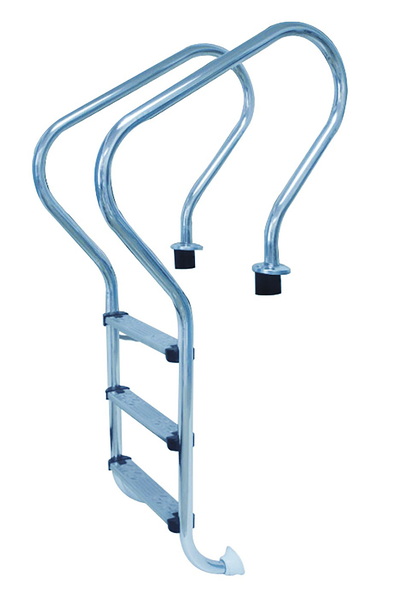
304 stainless steel Pool ladder products offer good corrosion resistance in standard, well‑balanced pools but are more vulnerable to pitting in saltwater and coastal air. 316 marine grade stainless Pool ladder rails and treads include molybdenum, which significantly improves resistance to chlorides, making them the preferred choice for saltwater and seaside installations.
For most saltwater systems, a 316 or 316L marine grade Pool ladder is strongly recommended because salt accelerates pitting and staining on lower stainless grades, especially around welds and splash zones. Using a true marine grade Pool ladder, or a resin‑based ladder, greatly reduces rust marks on tiles and extends overall ladder life.
Resin Pool ladder designs are corrosion‑proof and lightweight, making them popular for above‑ground and budget‑friendly pools. However, they are not usually as rigid as heavy‑gauge stainless steel, so for high‑traffic commercial settings a 316 marine grade stainless Pool ladder typically offers better long‑term strength and stability.
A residential marine grade Pool ladder should be visually inspected at least once per month during the swimming season, focusing on anchors, treads, fasteners, and bumpers. Commercial facilities usually include the Pool ladder in their routine safety checks, sometimes daily or weekly, depending on local regulations, traffic levels, and internal maintenance policies.
In many cases, a new marine grade Pool ladder can be retrofitted to existing anchor sockets or replaced using compatible deck anchors and escutcheons. Before purchasing, compare the center‑to‑center rail spacing, tube diameter, vertical height, and step configuration of your current Pool ladder to the new model's specifications to ensure a straightforward installation.
You can reduce corrosion by keeping pool chemistry within recommended ranges, rinsing the Pool ladder regularly with fresh water in salt or coastal environments, and avoiding harsh cleaners or abrasive pads that scratch the surface. In extreme salt‑air locations, additional protective treatments such as compatible waxes or clear sealants can further extend the life of a stainless Pool ladder.
While regulations vary by region, a quality Pool ladder should use corrosion‑resistant materials, slip‑resistant treads, and a handhold design that allows swimmers to grip securely. For commercial or public facilities, look for Pool ladder products that explicitly state compliance with local pool codes or widely recognized safety guidelines.
1. https://www.poolkingfilter.com/do-marine-grade-pool-ladder-come-in-different-grades.html
2. https://medleypool.com/blog-details/best-materials-for-swimming-pool-ladders-pros-and-cons-of-stainless-steel-resin-and-plastic
3. https://allfold.com/best-stainless-steel-swimming-pool-ladder-guide/
4. https://www.srsmith.com/en-us/products/ladders-and-rails/residential-ladder/
5. https://www.royalswimmingpools.com/sr-smith-marine-grade-economy-ladder-with-hip-tread-19-3-step.html
6. https://intheswim.com/c/steps-ladders/
7. https://www.poolweb.com/pages/ladders-and-rails
8. https://www.poolsupplies.com/shop/ladders-above-ground
9. https://www.pikespool.com/china-factory-direct-sales-swimming-pool-water-durable-traditional-filtration-system-sand-filter_p290
10. https://angelwyq.en.made-in-china.com
11. https://floridadetail.com/pool-ladder-corrosion-prevention-for-salt-air-environments/
12. https://www.poolkingfilter.com/why-is-my-pool-ladder-rusting.html
13. https://yourpoolplans.com/pool-ladders-recessed-steps-and-stairs/
14. https://mrpoolman.com.au/blogs/news/easily-install-or-replace-your-pool-ladders-and-rails


