
Views: 222 Author: Tina Publish Time: 2026-01-20 Origin: Site


Content Menu
● Plan deck and Pool Ladder layout
● Choose the right Pool Ladder and deck style
● Site preparation around the pool
● Build posts and frame around Pool Ladder
● Install decking boards and create walking surface
● Build stairs and landings to the Pool Ladder
● Mount and secure the Pool Ladder to the deck
● Add railings, gates, and safety details
● Integrate lighting and electrical planning
● Storage, seating, and functional zones
● Maintenance of deck and Pool Ladder
● FAQ
>> 1. How much space should I leave around the Pool Ladder on the deck?
>> 2. What kind of Pool Ladder works best with a raised deck?
>> 3. How deep should the first Pool Ladder step be below the deck or water line?
>> 4. What safety features should a Pool Ladder include?
>> 5. How often should I inspect the Pool Ladder and its connection to the deck?
>> 6. Can I build the deck and install the Pool Ladder myself, or should I hire a professional?
>> 7. How close should the deck edge be to the pool wall near the Pool Ladder?
>> 8. What is the best way to keep the Pool Ladder area from becoming slippery?
Building a deck around a Pool Ladder is one of the most effective ways to upgrade your backyard pool, making access safer, cleaner, and far more comfortable for swimmers of all ages. A properly planned deck and Pool Ladder combination turns a basic pool into a resort‑style space where people can enter and exit the water confidently, relax, and enjoy the surrounding area.
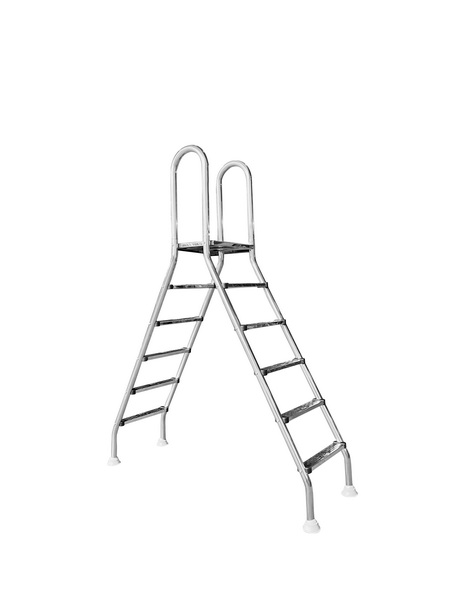
Good planning is the foundation of a strong, safe, and attractive pool deck that works perfectly with your Pool Ladder. Before touching any tools, take time to measure the pool, study the yard, and decide how people will move around the space.
- Measure the overall pool size, shape, and height. Note the distance from the ground to the top rail or coping and from the coping to the waterline so the deck surface and top of the Pool Ladder align comfortably.
- Identify the primary access point where the Pool Ladder should go. This is usually on the side facing the house or the main patio so parents and guests can see who is entering or leaving the water.
- Plan the deck footprint. Decide whether you want a full wrap‑around deck with multiple Pool Ladder locations, or a smaller platform focusing on a single Pool Ladder zone for compact yards.
- Mark clear walking paths. Allow generous circulation around the Pool Ladder so swimmers can queue, dry off, and move between stairs, seating, and the pool without crowding.
The type of Pool Ladder you choose will strongly influence the deck structure, opening size, and railing layout. Matching the deck style and Pool Ladder style from the beginning avoids costly redesign later.
- For above‑ground pools, many homeowners start with an A‑frame Pool Ladder, then switch to a deck‑mount Pool Ladder once the deck is built. A deck‑mount Pool Ladder gives a more solid, permanent feel.
- For inground pools, a built‑in Pool Ladder with stainless rails anchored into the deck is common. The deck should include enough space on both sides so people can pass around the Pool Ladder easily.
- If elderly users or children will use the pool often, consider wide‑tread Pool Ladder steps or integrated step systems. These designs pair well with wider deck landings and handrails.
- Match the deck style to the Pool Ladder. Sleek composite decks work well with modern stainless Pool Ladder designs, while natural wood decks pair nicely with powder‑coated or resin Pool Ladder options.
Before setting posts or building around the Pool Ladder area, prepare the ground so the deck will stay stable and drain properly. Skipping this step can create long‑term problems.
- Clear grass, roots, and debris where the deck will sit, especially near the planned Pool Ladder entrance and stair area. A clean, level base makes post layout easier.
- Check drainage patterns after heavy rain. The Pool Ladder entry area should not sit in a puddle; slope soil slightly away from the pool and deck footings so water moves off the site.
- Mark underground utilities and irrigation lines so deck posts and any Pool Ladder anchoring hardware do not interfere with pipes or cables.
- Decide whether to add a small equipment pad near the deck where the sand filter, pump, and valves can be serviced without blocking the Pool Ladder zone.
Because the deck and Pool Ladder sit in a wet, chemical‑rich, and sun‑exposed environment, material choices must focus on durability and low maintenance.
- Use pressure‑treated lumber or high‑quality composite boards for the deck surface and frame. These materials handle water splashes and sun exposure better than standard interior lumber.
- Select corrosion‑resistant fasteners and brackets. Galvanized or stainless screws, joist hangers, and bolts help protect the deck structure near the Pool Ladder, where water drips and splashes constantly.
- Choose a Pool Ladder made from stainless steel, UV‑stable resin, or other pool‑grade materials. Avoid generic indoor ladders, which can rust or break quickly around pool water.
- Prepare essential tools: saw, drill/driver, level, square, tape measure, post hole digger, and the Pool Ladder mounting kit with deck flanges and anchors.
The structural frame carries all deck loads and must be especially strong near the Pool Ladder, where people concentrate their weight.
- Lay out post locations according to your design and local code tables. Pay special attention to posts near the Pool Ladder opening so the frame can support frequent step and rail loads.
- Set posts in concrete or on approved deck blocks, making sure each post is plumb and aligned. Use temporary bracing until the frame is complete.
- Install perimeter beams and rim joists, then add inner joists with correct spacing. Add extra blocking near the Pool Ladder opening and at deck edges where rails and Pool Ladder flanges will be fastened.
- For curved above‑ground pools, use short segments of framing to follow the curve while keeping the inner edge as close as allowed to the pool wall. This helps the Pool Ladder reach the water with minimal gap.
The deck boards form the visible surface where swimmers walk toward the Pool Ladder, so they must be stable, slip‑resistant, and neatly finished around the pool.
- Run deck boards perpendicular to the joists, maintaining even gaps for drainage. Keep fasteners aligned for a clean look, especially in the Pool Ladder zone where feet naturally focus.
- Trim the inner edge carefully to match the pool shape. For round pools, use a template or flexible guide to mark a smooth curve that hugs the pool while leaving a small inspection gap.
- Leave a precisely sized opening where the Pool Ladder will pass through or sit. This might be a cut‑out in the deck surface for a deck‑mount Pool Ladder, or a dedicated corner platform for step systems.
- Add nosing or bullnose trim on any deck step edges leading to the Pool Ladder so users can see each edge clearly, reducing trips and slips.
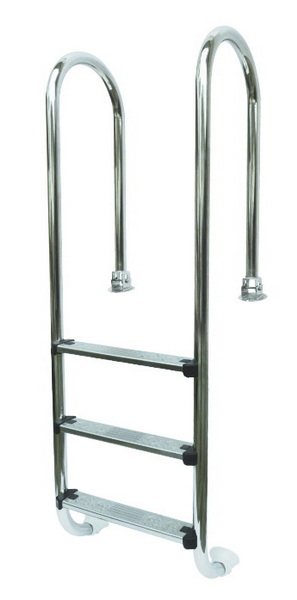
Safe stairs and landings guide people from the yard level to the Pool Ladder area, so careful attention to height, width, and hand support is essential.
- Use consistent riser heights and tread depths on all steps leading to the deck. Inconsistent step dimensions are one of the biggest contributors to falls, especially when people are wet and barefoot.
- Provide a landing area at the top of the stairs that leads directly toward the Pool Ladder. This landing should be wide enough for people to turn comfortably and for parents to assist children.
- Consider adding an extra deep landing platform directly behind the Pool Ladder. This creates a “staging area” where swimmers can sit, adjust goggles, or dry off before using the Pool Ladder.
- Install handrails along the stairs from yard level up to the main deck surface, mirroring the hand support offered by the Pool Ladder itself.
Mounting the Pool Ladder safely is one of the most important steps in the project. A properly installed Pool Ladder should feel solid and inspire confidence every time someone uses it.
- Position the Pool Ladder at the planned opening with the bottom resting on the pool floor or wall pad and the upper rails aligned over the deck edge. Confirm that the Pool Ladder sits at a comfortable angle.
- Mark locations for any deck flange brackets or rail holes on the deck surface. Double‑check measurements before drilling so the Pool Ladder rails remain vertical and symmetrical.
- Drill holes or pre‑install flanges according to the manufacturer's guidelines. Insert the Pool Ladder rails through the deck or into the flanges, then secure them with stainless bolts or set screws.
- Test the Pool Ladder under load. Have an adult climb up and down several times, shifting weight from side to side. There should be no noticeable flex in the rails, steps, or deck boards.
- Add protective caps or covers over exposed bolt heads or hardware around the Pool Ladder so they do not catch on toes, swimwear, or cleaning tools.
Safety elements around the Pool Ladder help prevent accidents and are often required by local codes or insurance providers. A deck that looks beautiful but ignores Pool Ladder safety standards can create serious liability.
- Install guardrails around all open deck edges, with balusters spaced close enough to prevent children from slipping through. Pay extra attention near the Pool Ladder and stair openings.
- Ensure the Pool Ladder has secure, easy‑to‑grip handrails on both sides. If necessary, choose a Pool Ladder upgrade kit that includes extended rails for better support.
- For above‑ground pools, consider a gate or removable outer section on the yard‑side steps. This locks off access to the Pool Ladder and pool when adults are not present.
- Add anti‑slip strips or textured coatings on deck boards near the Pool Ladder, where water drips and foot traffic are heaviest.
Water and electricity demand careful coordination, especially around the Pool Ladder and deck. Thoughtful lighting can dramatically improve both safety and atmosphere.
- Place low‑glare LED step lights along stairs leading to the Pool Ladder so each tread edge is clearly visible in the evening.
- Install post‑top or rail‑mounted lights around the deck perimeter, ensuring that the Pool Ladder area is well lit without shining directly into swimmers' eyes.
- If using underwater lights near the Pool Ladder, ensure they are installed by a qualified technician following relevant electrical codes and using proper transformers and bonding.
- Plan all conduit runs, junction boxes, and switches before closing the deck surface, so you do not need to remove boards later to correct wiring routes.
A well‑designed deck around a Pool Ladder is more than just a walkway; it is also a living space. Allocating functional zones keeps the Pool Ladder area clear and makes the entire poolside experience more enjoyable.
- Place lounge chairs, dining sets, and umbrellas away from the Pool Ladder path so people entering and exiting the pool are not forced to dodge furniture.
- Add storage benches for towels, toys, and cleaning tools, positioned just far enough to keep clutter away from the Pool Ladder but close enough for convenience.
- Consider an equipment corner or low service door in the deck that provides access to plumbing lines and Pool Ladder anchor points for maintenance.
- If you use large filters, pumps, or advanced water treatment, create a small service platform away from the Pool Ladder but still accessible for technicians.
Routine inspection and care will keep the deck and Pool Ladder safe, good‑looking, and long‑lasting. Establish a maintenance schedule that fits your climate and usage level.
- Inspect the Pool Ladder weekly during the swimming season. Look for loosened bolts, worn treads, or movement at the deck flanges, and correct issues immediately.
- Rinse metal Pool Ladder surfaces and nearby railings regularly, especially in saltwater or heavily chlorinated pools, to reduce corrosion and staining.
- Sweep and wash the deck surface to remove dirt, sunscreen residue, and algae. Pay special attention to the high‑traffic area at the Pool Ladder landing.
- Every year, check deck posts, beams, and joists for rot or insect damage, and re‑seal or clean the deck boards according to the material manufacturer's instructions.
A well‑designed deck built around a Pool Ladder can completely transform the look, feel, and safety of any backyard pool. By planning the layout carefully, choosing compatible materials and a sturdy Pool Ladder, reinforcing the frame in high‑traffic areas, and installing railings, gates, and lighting, you create a space where entering and exiting the water feels natural and secure. With regular inspection and maintenance of both the deck structure and the Pool Ladder hardware, this investment will deliver years of reliable performance, giving family and guests a professional‑quality pool experience at home.
Contact us to get more information!
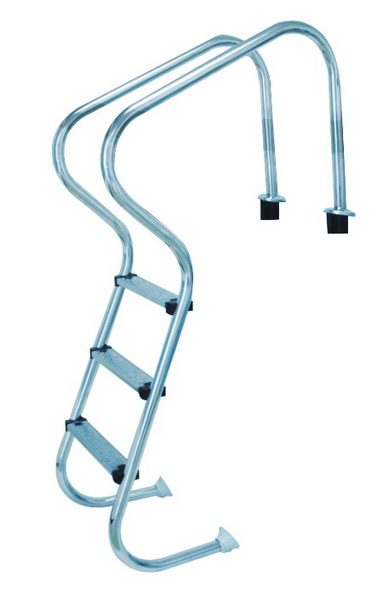
Aim for at least about 1.2 meters (around 4 feet) of clear deck space around the Pool Ladder whenever possible. This gives swimmers plenty of room to line up, dry off, and move safely between the Pool Ladder, stairs, and seating without bumping into obstacles.
A deck‑mount Pool Ladder with rails that pass through or bolt directly to the deck usually offers the best stability for raised structures. Many pool owners replace an original A‑frame Pool Ladder with a dedicated deck‑mount Pool Ladder once the deck is built, because the connection to the frame and flanges feels more solid and permanent.
In many residential setups, the first Pool Ladder tread is positioned roughly 20–30 centimeters (8–12 inches) below the deck or coping level. This depth lets most adults and children step down comfortably without over‑stretching or feeling like they must jump into the water. Always follow the Pool Ladder manufacturer's spacing recommendations.
An ideal Pool Ladder has non‑slip treads, smoothly finished edges, and sturdy handrails on both sides that even children can grip easily. For above‑ground pools, a removable or lockable outer section or gate at the steps prevents unsupervised access, while clearly visible anti‑slip strips around the Pool Ladder landing help reduce falls.
Perform a quick visual and physical check every week during the swimming season, testing the Pool Ladder rails and steps for any looseness or noise. At least once a year, do a deeper inspection: tighten all hardware, look for rust or cracks, confirm the deck around the Pool Ladder remains firm, and replace any worn components before the next season.
Many handy homeowners can build a basic deck and install a Pool Ladder on their own by following detailed plans and instructions. However, if your design is complex, your local codes are strict, or you are unsure how to size beams and posts safely, working with a professional builder or structural engineer is a smart way to protect your investment and ensure the Pool Ladder area meets safety standards.
The deck should come close enough to the pool wall so the Pool Ladder can pass comfortably over the edge or mount securely, while still leaving a narrow gap for inspection, drainage, and liner movement in above‑ground designs. Exact distances vary by pool type and local regulations, but the key is to avoid wide gaps that could trap feet while keeping enough space to prevent deck boards from pressing against the pool structure.
Combine several strategies: choose a Pool Ladder with textured or non‑slip treads, use anti‑slip tape or coatings on nearby deck boards, and clean the area often to remove algae, sunscreen, and dirt. Adding drainage slopes and small channels so water does not sit around the Pool Ladder landing also reduces slipperiness and extends the life of the deck surface.
1. https://atlaspoolsofcentralfl.com/resources/blog/how-to-build-a-deck-around-a-pool
2. https://www.trex.com/academy/how-to-guides/all-guides/how-to-diy-an-above-ground-pool-deck-with-trex-enhance-decking/
3. https://www.instructables.com/DIY-Pool-Deck-With-a-Secret-Hatch-How-to-Build-a-D/
4. https://www.popularmechanics.com/home/how-to-plans/how-to/a174/how-to-build-a-pool-deck-easily/
5. https://www.poolkingfilter.com/how-to-mount-a-pool-ladder-to-a-deck.html
6. https://www.poolkingfilter.com/how-to-make-a-pool-ladder.html
7. https://www.poolfencediy.com/blogs/blog/pool-ladder-safety
8. https://swimply.com/hostblog/post/how-do-you-build-a-pool-deck-a-complete-guide
9. https://www.decks.com/resource-index/decking/how-to-build-an-above-ground-pool-deck/
10. https://floridadetail.com/pool-ladder-safety-standards-every-charlotte-county-homeowner-should-know/
11. https://sternsbackyard.com.au/blogs/news/safety-tips-for-installing-and-using-above-ground-pool-ladders
12. https://littledipperpools.com/need-a-pool-ladder-installation-heres-what-to-know-before-you-buy/
13. https://www.thepoolco.com.au/blog/designing-safe-pool-access-steps-and-ladders


