
Views: 222 Author: Tina Publish Time: 2025-10-14 Origin: Site


Content Menu
● Tools and Preparation Needed
● Step 1: Sort and Identify Ladder Components
● Step 2: Attach Steps to J-Shaped Legs
● Step 3: Assemble Straight Legs and Steps
● Step 4: Combine Leg Assemblies
● Step 5: Install Top Platforms
● Step 6: Attach U-Shaped Top Rails and Support Bases
● Step 7: Final Assembly and Safety Checks
>> 1. How can I tell which ladder parts belong on the "A" and "B" sides?
>> 2. Is ladder assembly doable for one person?
>> 3. How often should I inspect the ladder for safety?
>> 4. What if parts are missing or damaged?
>> 5. Can I use the ladder without the support bases?
Intex pool ladders are designed to provide safe and easy access in and out of above-ground pools. Typically constructed from durable, rust-resistant materials such as corrosion-proof steel with powder coating, these ladders include components like J-shaped legs, steps, top platforms, and safety locks. Correct assembly is critical not only to protect the pool liner but also to avoid accidents and injuries during use.
By following this comprehensive guide, you ensure the longevity of your ladder and the safety of swimmers, making pool maintenance both straightforward and worry-free.
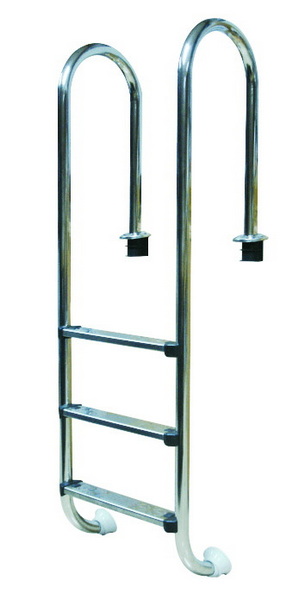
Before starting the ladder assembly, gather the following tools and supplies:
- Philips head screwdriver
- Flat-head screwdriver
- Pliers or adjustable wrench
- Rubber hammer or mallet (optional for fitting tight parts)
- Clean cloth or towel (to protect pool surface during assembly)
Inspect the package contents carefully against the parts inventory list in the manual. Typical parts include J-shaped legs, straight legs, steps, top platforms, screws, washers, nuts, U-shaped rails, and safety locks. Report any missing items promptly to your supplier before continuing.
Working in a clutter-free environment on a flat, stable surface will facilitate quick and precise assembly. Remember, some assembly steps may require two people for safety and ease of handling.
Begin by laying all parts on a flat surface for easy access. The components are usually labeled with letters "A" and "B" to indicate the left and right sides of the ladder. J-shaped legs curve to fit around the pool wall; these are distinct from the straight legs meant to rest on the ground. Steps may also be labeled A or B to correspond with their side.
Careful identification prevents confusion during assembly. Familiarize yourself with how the steps and anchor sleeves slide onto the legs and the orientation of the top platforms.
- Take the J-shaped legs and place them with the curved ends pointing outward (left for leg A, right for leg B).
- Slide the anchor sleeves onto the lowest set of ridges on each J-shaped leg. These sleeves help secure the steps in place.
- Push the bottom step down over the anchor sleeves. Applying gentle force or using a rubber mallet may help.
- Continue sliding up the remaining steps, securing them firmly in each corresponding groove.
- Ensure step anchors are aligned with arrows pointing upward to prevent slipping.
Matching marked steps with their corresponding leg (A with A, B with B) ensures the proper fit and ladder stability.
- Locate the straight legs labeled A and B.
- Attach the steps to these legs using the same sliding anchor sleeve method from step 2.
- Fix the upper leg portions (A1 and B1) to the straight legs with supplied screws and washers.
- The straight legs should be sturdy since they bear the ladder's weight on the ground.
This section forms the primary support for the user's weight during climbing in and out of the pool.
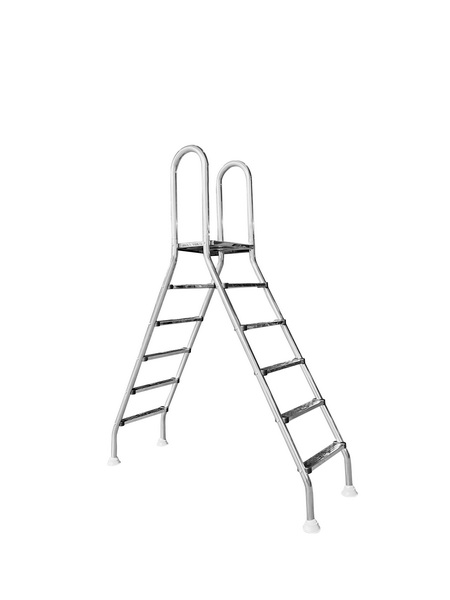
- Slide the upper legs attached to straight legs onto the J-shaped legs until the locking buttons snap securely into place.
- Double-check that all snap buttons engage fully and that the combined structure feels stable.
- This connection allows the ladder to fold for storage if your model supports it.
- Slide the top platform pieces onto the combined leg assemblies.
- Align holes marked "A" and "B" on platforms with corresponding leg sides.
- Fasten the platforms with the longer screws and washers included.
- Tighten screws just enough to hold the platform firmly, but wait until final tightening after all pieces are assembled.
Top platforms provide a safe and comfortable surface for users entering and exiting the pool.
- Slide the U-shaped rails over the legs extending from the platforms.
- Secure rails with screws, ensuring screw heads face outward for a smooth finish.
- Attach the support bases under the ladder end to provide stability against tipping.
- These parts are key safety features designed to maintain ladder balance during use.
- Push the ladder legs into the support bases, ensuring a snug fit.
- Close all safety clasps until a distinct "click" confirms locked positions.
- Fully tighten every screw, washer, and bolt on the ladder structure.
- Test each step for secure placement by applying pressure with your hand.
- Check that all legs sit evenly on the ground and that no wobbling occurs.
If your ladder has removable steps, ensure locking mechanisms function properly to prevent accidental detachment.
Maintaining your Intex pool ladder is crucial for safe, long-term use:
- Regularly inspect screws and bolts, tightening as needed.
- Clean ladder surfaces to prevent buildup of dirt or algae.
- Remove ladder from pool during off-season or when pool is unattended.
- Never allow children to use the ladder unsupervised.
- Place the ladder on a flat, firm surface to avoid tipping hazards.
- Replace worn or damaged components immediately to maintain safety.
Proper upkeep will help prevent accidents and safeguard your investment.
- Problem: Steps won't slide on smoothly.
Solution: Check for correct orientation of anchor sleeves and use a light rubber hammer to gently tap steps into place.
- Problem: Ladder feels unstable.
Solution: Tighten all screws and ensure support bases are properly aligned and seated on the ground.
- Problem: Safety locks not engaging.
Solution: Inspect locking buttons for debris and ensure parts are correctly aligned. Adjust gently if misaligned.
- Problem: Missing parts.
Solution: Contact your supplier or manufacturer for replacement parts and avoid assembly until all components are present.
Proper assembly of your Intex pool ladder guarantees safe access and prolonged product life. Follow each detailed step carefully, using the right tools and safety practices. Regular maintenance and cautious use will protect your pool and prevent accidents. When the pool is not in use, storing the ladder safely out of reach of children reduces risks. For additional support, always refer to your official Intex manual or authorized service centers.
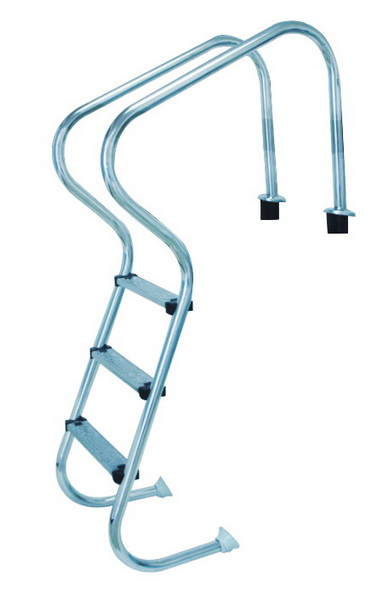
Parts are marked with letters or colored indicators. These correspond to the left and right sides respectively and should be matched carefully during assembly.
While possible, it is safer and easier to have someone assist for alignment and holding parts in place.
Check all screws, bolts, and safety locks weekly during pool season and before each use.
Contact Intex customer support or your supplier immediately for replacements before attempting assembly.
No, they are essential to ensure the ladder's stability and should always be installed on a flat surface.


