
Views: 222 Author: Tina Publish Time: 2026-01-15 Origin: Site


Content Menu
● Tools, Parts and Safety Prep
● Step 1: Sort and Identify Ladder Parts
● Step 2: Assemble the Side Frames
● Step 3: Install Steps on Both Sides
● Step 4: Attach the Top Platform and Handrails
● Step 5: Add Stabilizer Braces and Foot Caps
● Step 6: Positioning the Ladder on the Pool
● Essential Safety Tips for Everyday Use
● Maintenance Tips for Longer Service Life
● How OEM Pool Equipment Suppliers Can Help
>> 1. Can I use a Coleman 48 ladder on any above ground pool?
>> 2. How many people can be on the ladder at the same time?
>> 3. Is it safe to jump or dive from the ladder platform?
>> 4. Do I need to remove the ladder when the pool is not in use?
>> 5. How often should I check the hardware on the ladder?
>> 6. What is the typical weight capacity of a Coleman 48 pool ladder?
A Coleman 48 inch pool ladder is a simple but critical accessory that ensures safe entry and exit for above ground pools around 48 inches high. A proper assembly not only improves stability but also minimizes the risk of accidents for family members and guests.
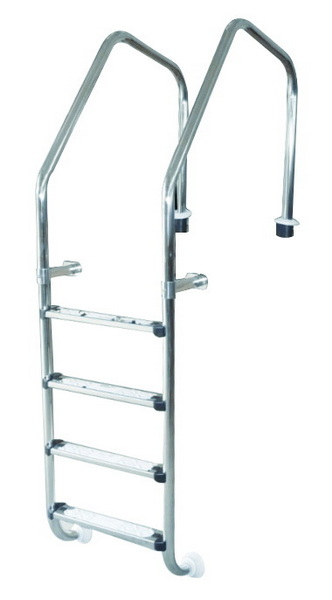
Before starting, prepare all tools, confirm the ladder model, and read the safety warnings that come with the official manual. A 48 inch Coleman ladder is usually made by Bestway and is designed only for pools up to about 1.22 m wall height, so using it on taller or much shorter pools is unsafe.[3][1]
- Basic tools: Phillips screwdriver, small flat screwdriver, and a pair of pliers or an adjustable wrench.[4]
- Typical hardware: Different sizes of M6 screws/bolts with matching nuts and plastic caps, often labeled in the parts list.[5]
- Main components: Two sets of side rails, 6–8 plastic steps, top platform or bridge, curved handrails, stabilizer braces, and foot caps.[6]
- Safety prep: Work on a flat, solid surface, keep children away from the assembly area, and never climb the ladder until every nut and bolt is fully tightened.[4]
The first step is to sort and identify all parts according to the printed manual or exploded diagram that comes with your Coleman 48 pool ladder. Many models use “A” and “B” markings on the rails and steps, and matching them correctly (A to A, B to B) is essential for both fit and stability.[1][6]
- Lay all pieces on the ground in groups: side rails, steps, top platform, handrails, braces, and hardware bags.[7]
- Check that the number of steps matches the manual, usually 4 on each side for 48 inch ladders.[5]
- Confirm that the J‑shaped legs curve outward; if they curve inward, the ladder will be unstable and dangerous.[4]
- Compare every part with the parts list in the Coleman/Bestway PDF (e.g., 90392E or 90393E) to ensure nothing is missing before assembly.[8][1]
Once parts are sorted, the side frames (the two “ladders” on each side) are built first, usually starting from the rails and lower steps. Correct orientation of the legs and rails ensures the ladder stands securely when placed against the pool wall.[2][4]
- Position two rails labeled “A” parallel on the ground, with the curved lower legs pointing outward and away from each other.[6][4]
- Insert the lowest step between the rails at the designated holes that correspond to “A” marks on both step ends.[6]
- Slide the step into place until it clicks or sits flush, depending on your specific Coleman model.[5]
- Insert M6 bolts through the pre‑molded holes and secure them with nuts; lightly tighten for now so you can still adjust the alignment.[4]
- Repeat for each remaining step on that side, working from bottom to top, keeping spacing consistent and following the hole numbers shown in the manual.[1]
Repeat the same process for the second side using rails and steps labeled “B”, again ensuring that B components connect only with B components.[6]
With both sets of rails prepared, continue installing the remaining steps so that each side becomes a complete mini‑ladder. This is where careful alignment and consistent tightening start to matter for the final rigidity of the ladder.[2][4]
- Ensure the rails stay parallel and upright as you add each additional step; use a flat floor to check that all legs touch the surface equally.[4]
- Follow the figure sequence in the Coleman/Bestway ladder manual (e.g., figures 1.1–1.3) so the step order and positioning match the design.[4]
- After all steps are installed on one frame, snug each nut and bolt using a screwdriver and pliers, but avoid over‑tightening which could distort the plastic.[4]
- Repeat the process on the other side, verifying that the number of steps and spacing match the first frame.[1]
Most Coleman 48 inch ladders include a top platform or bridge section that connects the two step frames over the pool wall, along with curved handrails for safer entry. This step determines how securely the ladder straddles the wall and how comfortable it feels when people climb in and out.[9][6]
- Place the top platform on one set of steps first, aligning its brackets with the upper rail holes; insert bolts and nuts but do not fully tighten yet.[6]
- Attach the curved handrails to the same set of steps and the platform, as specified by the manual; install all the hardware loosely to allow adjustments.[5][6]
- Bring the second set of steps into position on the opposite side of the platform; slide it into the remaining platform brackets and handrail holes.[6]
- Insert all remaining bolts and nuts connecting the second frame, then gradually tighten every connection, checking that the platform sits level across both sides.[4]
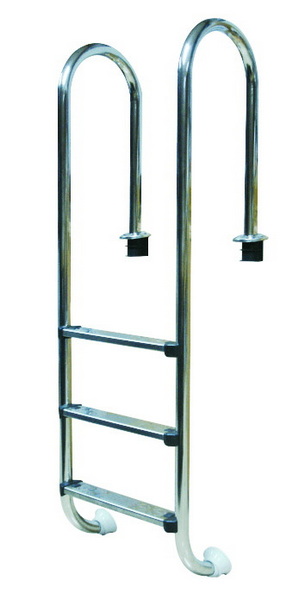
Stabilizer braces and plastic feet help distribute weight and keep the ladder from sinking into soft ground or shifting when someone climbs. Some Coleman ladders use diagonal braces under the steps, while others rely mainly on wide plastic blocks at the bottom of each leg.[5]
- Identify the stabilizer parts (often labeled 8A, 8B, 9A, 9B in the diagram) and match them with their correct positions under the rails.[5]
- Attach each brace with the specified screws or pegs, ensuring that any arrows or directional markings align as shown in the manual.[6]
- Push or slide foot caps or plastic blocks firmly onto each ladder leg; these should sit flat and fully cover any metal edges.[5]
- Once all braces and caps are installed, re‑check that the ladder stands with all feet touching the ground evenly.[4]
Proper placement on the pool wall is critical to safe use and to avoid damage to both the ladder and pool liner. Coleman and Bestway manuals repeatedly stress using a solid, level base and aligning the ladder strictly for entry and exit only.[10][1]
- Lift the fully assembled ladder and place it so one side is inside the pool and the other side is outside, straddling the top rail or frame.[4]
- Confirm that the ladder height matches the pool wall so that the top platform sits just above the rail without excessive gap or compression.[3]
- Make sure the ground under the outer feet is solid and level; add pavers or a small platform if the area is soft or uneven.[4]
- Some models allow anchoring or straps; if available, follow the manual to secure the ladder to the pool frame for added stability.[10]
A 48 inch pool ladder must be used according to safety rules to reduce the risk of drowning, entrapment, or serious falls. Manufacturers emphasize supervision, correct use, and routine inspection as part of normal pool maintenance.[12][8][1][4]
- One person on the ladder at a time; never allow multiple users climbing together or playing on the ladder.[1][4]
- Always face the ladder when entering or exiting the pool; never jump or dive from the top platform.[9][1]
- Remove and secure the ladder away from the pool when it is not in use, especially when children are present and unsupervised.[13][1]
- Do not swim under, through, or behind the ladder to avoid entrapment between the steps and pool wall.[13][1]
- Observe weight limits (typically around 150 kg / 330 lb for standard Bestway/Coleman ladders) and never exceed them.[9]
- Inspect all nuts, bolts, and steps regularly; tighten hardware immediately if you notice movement, noise, or flexing beyond normal.[4]
Good maintenance extends the life of your Coleman 48 pool ladder and helps your pool environment stay safer and cleaner. A simple maintenance routine at the start, during, and after the swimming season can prevent corrosion and plastic damage.[3][4]
- Rinse the ladder regularly with fresh water, especially if you use salt water systems or high chlorine levels, to reduce corrosion on metal frames.[3]
- Examine plastic steps for cracks or UV damage at least once a month during the season; replace any damaged pieces before further use.[4]
- In winter or when storing the pool, fully remove the ladder, rinse and dry it, then store it in a shaded, dry area away from direct sun.[4]
- Refer to the original Coleman/Bestway ladder manual for any model‑specific maintenance notes and recommended cleaning products.[8][1]
If you manage commercial pools, resell above‑ground pool sets, or operate as an OEM brand, a reliable ladder partner is as important as your filters and pumps. Professional manufacturers in China can provide customized pool ladders, filtration systems, pumps, and LED lights that match your private‑label requirements and safety standards in different markets.[2][9][3]
- OEM factories can design ladders tailored to specific wall heights, weight ratings, and regional standards (such as EN16582 in Europe).[9][4]
- Coordinating ladders with matching sand filter systems, pumps, and lighting under one brand helps distributors and retailers offer complete pool solutions.[2][3]
- Bulk manufacturing with automated equipment ensures consistent step spacing, hole alignment, and anti‑corrosion treatments for metal frames.[3]
Assembling a Coleman 48 pool ladder becomes straightforward when you first organize all parts, correctly build each side frame, and then connect them with the top platform and handrails. Paying close attention to orientation, hardware tightening, and proper placement on a solid base ensures that the ladder is stable and ready for safe daily use. With regular inspections, cleaning, and seasonal storage, your ladder will remain reliable for many swimming seasons, supporting a safer and more enjoyable above‑ground pool experience for every user.[2][1][3][6][4]
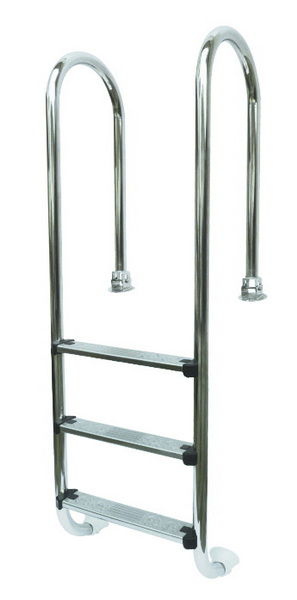
A Coleman 48 inch ladder is designed for pools with walls up to about 48 inches (1.22 m) high and should not be used on taller or much shorter pools. Always confirm that your pool wall height matches the ladder specifications listed in the manual before installation.[10][1][3]
Manufacturers specify that only one person should be on the ladder or stairs at a time, regardless of the ladder's maximum weight rating. Allowing multiple people on the steps increases the risk of tipping, structural damage, or falls.[9][1][4]
It is never safe to jump or dive from a pool ladder or platform because above ground pools are not deep enough for safe diving. Doing so can result in severe injuries, including broken bones, paralysis, or drowning.[8][9]
Yes, Coleman and Bestway manuals clearly instruct owners to remove and secure the ladder away from the pool when it is not in use, especially around children. Removing the ladder helps prevent unauthorized or unsupervised entry that could lead to drowning accidents.[12][13][1]
All nuts, bolts, and step connections should be checked regularly, ideally before each swimming day or at least once a week during heavy use. If any part feels loose or shows corrosion or cracks, tighten or replace components before allowing anyone to use the ladder again.[4]
Many Bestway/Coleman ladders are rated around 150 kg (approximately 330 lb), though some regions use higher standards such as 305 kg depending on safety regulations. Always verify the exact rating printed on your ladder label or in the product manual for accurate information.[9]
[1](https://bestwayusa.com/media/pdf_files/Coleman_Pool_Ladder_90392E_2024.pdf)
[2](https://www.poolkingfilter.com/how-to-put-together-a-coleman-pool-ladder.html)
[3](https://bestwayusa.com/bestway-above-ground-pool-ladder-48-58336e)
[4](https://www.intexsales.com/b2cmnl/B2CMNLServlet?instantiate=B2cMnldownloadApp&action=pub_mnl&filnam=330IO_A0_1805_EN.pdf)
[5](https://www.youtube.com/watch?v=ham2QiY9M7M)
[6](https://www.youtube.com/watch?v=HMZp6vdZ1nI)
[7](https://www.youtube.com/watch?v=JJkG7vsan1E)
[8](https://bestwayusa.com/media/pdf_files/Coleman_Pool_Ladder_90393E_2024.pdf)
[9](https://m.bestwaycorp.ca/Product/Item?id=1090553CAX25)
[10](https://images.thdstatic.com/catalog/pdfImages/18/18ef8250-9b9a-46b4-8c0d-8d7853dc9aca.pdf)
[11](https://www.tiktok.com/discover/how-to-set-up-a-coleman-pool-ladder)
[12](https://bestwayusa.com/media/pdf_files/Power_Steel_90481E_2023.pdf)
[13](https://images.thdstatic.com/catalog/pdfImages/b2/b2d6088b-3c9f-4409-9b49-281e51235eed.pdf)
[14](https://www.facebook.com/groups/637529959937311/posts/2595606737462947/)
[15](https://content.syndigo.com/asset/77256caf-03f0-4ffd-af3d-250998e24d3f/original.pdf)


