


Content Menu
● Typical Pool Filter Price Ranges
● Factors That Decide “How Much”
>> 2. Filter Brand and Build Quality
>> 3. Installation Labor and Accessories
>> 4. Maintenance and Media Costs
● Residential vs Commercial and OEM Costs
>> Commercial and High‑Capacity Systems
>> OEM and Bulk Pricing for Brands
● How to Choose the Right Filter for Your Budget
● Cost‑Saving Tips for Homeowners and Buyers
>> 1. Why do pool filter prices vary so much?
>> 2. Is it cheaper to repair or replace a pool filter?
>> 3. How often will I pay for sand, cartridges, or DE media?
>> 4. Are OEM pool filters reliable compared with big retail brands?
>> 5. How can a homeowner estimate a fair installed price for a new filter?
>> 6. What if I have a saltwater pool—does the filter cost more?
A typical residential pool filter costs between 200 and 1,500 USD for the filter unit alone, while complete replacement with installation usually ranges from about 250 to 1,700 USD in 2025. Sand filters are usually the most affordable, cartridge filters sit in the middle, and DE filters are the premium option with the highest purchase and installed prices.[1][2][3]
As a professional Chinese factory manufacturing premium sand filters, cartridge filters, DE filters, pumps, LED pool lights, and accessories, this guide explains how much pool filters cost and how to choose the right option for homeowners, brands, wholesalers, and OEM buyers. The article also highlights how OEM sourcing from a specialized factory can reduce cost and improve product quality for international partners.
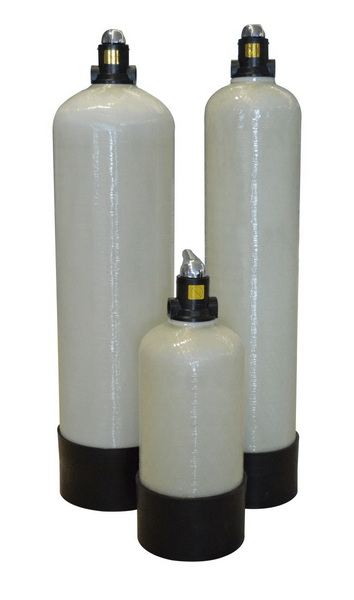
A pool filter's job is to remove suspended dirt, leaves, sunscreen, algae, and fine particles from the water so chemicals can work correctly and swimmers stay comfortable. Clean, properly filtered water reduces eye irritation, improves clarity, and protects your pool surface and equipment from long‑term damage.
- The filter works together with the pool pump, which pushes water through the filter tank and back to the pool.
- For OEM and project buyers, filtration performance, flow rate, and tank design are key technical parameters when evaluating suppliers and planning budgets.[4]
New pool filter systems for residential pools generally cost 200–1,500 USD for the filter unit, with total replacement cost including installation averaging 250–1,700 USD. Installation labor often falls in the 50–200 USD range depending on region and difficulty.[1]
- Some cost studies report typical installation ranges of around 105–744 USD, depending on filter type, pool size, and location.[2]
- A separate dataset shows average installed costs by filter type where sand units are typically 500–1,200 USD, cartridge 700–1,600 USD, and DE 1,200–2,500 USD for many residential situations.[3]
Different filter types deliver different water clarity, maintenance needs, and price points. Below is a concise comparison you can adapt for both consumer education and B2B product pages.
| Filter type | Typical unit price (materials only) | Typical installed cost | Key notes |
|---|---|---|---|
| Sand filter | ~200–800 USDhomeguide+1 | ~500–1,200 USDangi | Most affordable, easy to maintain, filters larger particles. |
| Cartridge filter | ~200–1,000+ USDhomeguide+2 | ~700–1,600 USDangi | Good balance of cost vs. clarity, no backwash, higher efficiency. |
| DE filter | ~400–1,200+ USDangi+1 | ~1,200–2,500 USDangi | Sharpest clarity and finest filtration, highest purchase and maintenance cost. |
- Some commercial or oversized residential systems can reach 2,000 USD or more depending on brand and configuration.[5]
- Sand filters generally carry the lowest upfront price tag, while DE filters often cost the most because of their complex internals and top‑tier performance.[6][1]
Larger pools need larger filters, and larger filters cost more.
- Cost tables show that filters sized for higher flow rates (e.g., 100–125 GPM) can reach 1,150–1,300 USD for the filter alone, compared with 100–400 USD for small 25 GPM models.[1]
- For OEM orders, sizing is usually matched to common pool volumes (e.g., 10,000–40,000 gallons), which allows brands and wholesalers to build a tiered product lineup at different price points.[2]
Brand and construction quality strongly affect price.
- Entry‑level above‑ground filters from popular brands can start around 200–350 USD, while professional‑grade inground filters may cost 400–1,500 USD or more.[2][1]
- DE and premium cartridge models from leading manufacturers can exceed 1,400–1,800 USD for top‑end commercial‑style filters.[6]
Working with an experienced OEM factory allows foreign brands and wholesalers to source high‑quality fiberglass tanks, heavy‑duty valves, and corrosion‑resistant components at more competitive prices than many branded equivalents.
Even if the filter itself is affordable, installation and extras add to the bill.
- Typical installation labor for a residential filter is often estimated in the 50–200 USD range, though some regional price calculators show project totals that can exceed 2,000 USD in complex replacements.
- Valves, unions, pressure gauges, bases, plumbing modifications, and electrical work (when combined with new pumps or control systems) can push the overall project cost higher.[7]
The initial filter price is only one part of the long‑term cost.
- Sand replacement typically costs 50–350 USD per service, depending on how many pounds of sand (100–600 lb) are required.[5][1]
- For sand media, 50‑lb bags often cost around 20–25 USD, and a typical inground sand filter may use 300–500 lb.[5][6]
- Cartridge elements may cost 50–100 USD per element to replace and are replaced more frequently than sand, while DE requires periodic purchase of DE powder and occasional grid replacement priced around 100–150 USD for a full grid set.[6][5]
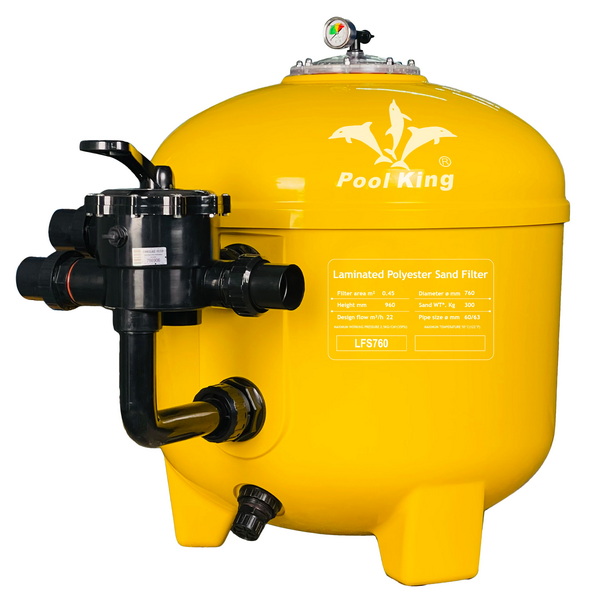
Homeowners buying a single filter through retail channels pay full consumer pricing.
- For typical residential pools, filter systems plus installation usually fall between about 250 and 1,700 USD in many 2025 cost surveys.[7][1]
- In some markets, installation packages for in‑ground, above‑ground, and saltwater pools fall broadly between about 250 and 2,140 USD depending on size and filter type.[2]
Commercial pools, resorts, water parks, and aquatic centers need larger, more complex filtration.
- Commercial filters often feature larger fiberglass or steel tanks, multi‑cell designs, and higher flow rates, which can increase equipment cost significantly beyond typical residential ranges.[8]
- These systems usually integrate with automated backwash, chemical dosing, and monitoring, adding control valves, sensors, and panels to the final budget.[8]
For foreign brands, wholesalers, and manufacturers, OEM cooperation with a specialized Chinese factory can dramatically improve pricing, consistency, and customization.
- OEM buyers typically negotiate tiered pricing based on order quantities, shared tooling, and long‑term contracts, so unit prices per filter may be substantially lower than retail in exchange for volume commitments.
- A professional factory that produces sand filters, DE filters, cartridge filters, pumps, and LED pool lights on automated lines can integrate multiple products into one container shipment, cutting logistics cost per unit and supporting private‑label and customized designs.
When customers ask “how much for a pool filter,” they really mean “how much for the right filter for my situation.” The “best” choice balances purchase price, maintenance cost, energy use, and water clarity.
- Sand filters are ideal for budget‑focused buyers and rental or commercial environments where easy backwashing and robust construction are critical.
- Cartridge filters suit homeowners who want finer water clarity, lower water waste, and less frequent service visits, accepting higher cartridge replacement costs.
- DE filters are best for luxury pools, commercial venues, or demanding users who want the clearest possible water and understand the higher purchase and maintenance price.
For brands and OEM partners, offering a full portfolio (sand, cartridge, and DE) with consistent design language and shared component platforms can cover every segment from entry‑level to premium.
- Size the filter correctly: Sizing too small increases maintenance and replacement risk; oversizing too much wastes money with little performance gain.[5]
- Combine filter upgrades with pump upgrades: Choosing an efficient pump together with a modern filter often reduces total energy and operating cost versus replacing one component at a time.[5]
- Maintain media on schedule: Timely backwashing, sand replacement, cartridge cleaning, and DE grid inspections extend equipment life and avoid costly emergency repairs.[1][6]
- Use OEM or compatible replacement parts: For brands and wholesalers, sourcing compatible cartridges, valves, and accessories from a reliable OEM factory reduces cost and supports long‑term customer satisfaction.
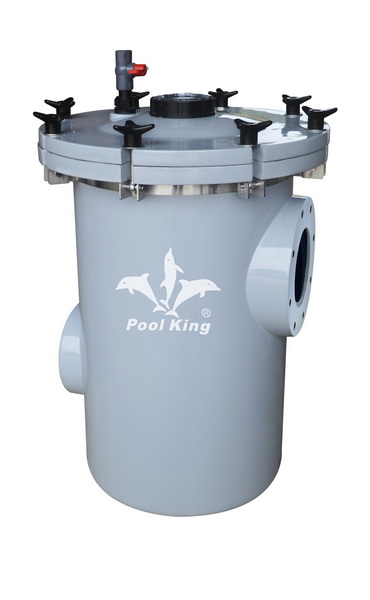
Pool filter prices vary because of filter type, size, brand, materials, and whether labor is included. Sand filters are usually cheapest, cartridge filters are mid‑range, and DE filters are highest in both unit and installed costs.[3][1]
Minor repairs like replacing O‑rings, gauges, or valves are usually cheaper than a full replacement, but major tank damage or severe internal corrosion often makes a new filter more economical over time. When media and parts are heavily worn, replacing the complete system can restore efficiency and reduce recurring service calls.[1][5]
Sand generally lasts 3–7 years depending on usage and water quality, and replacing it can cost around 50–350 USD per service, plus labor. Cartridge elements often need replacement every 1–3 years, while DE powder is replaced after each backwash and grid sets may need renewal after several seasons.[6][1][5]
High‑quality OEM pool filters from specialized factories often meet or exceed the performance of branded products because they use similar fiberglass, valves, and internal components and follow strict pressure testing and quality control procedures. Many international brands and wholesalers already rely on Chinese OEM manufacturers for sand filters, DE filters, cartridge filters, pumps, LED lights, and accessories under private labels.
Homeowners can combine the expected unit cost range (for example 200–1,500 USD depending on type and size) with local labor estimates (often around 50–200 USD) to set a realistic budget. Online cost calculators and regional surveys suggest total replacement costs commonly fall between about 250 and 1,700 USD, with higher numbers for large or complex systems.[7][2][1]
Saltwater pools usually use similar sand, cartridge, or DE filters, but filters and valves must be corrosion‑resistant, which may slightly increase equipment pricing. The main added cost for salt systems often comes from the salt chlorination cell and control electronics rather than the filter itself.[3][2]
A new pool filter typically costs 200–1,500 USD for the unit alone and roughly 250–1,700 USD installed for most residential pools in 2025, with sand filters at the budget end, cartridge filters in the middle, and DE filters at the premium end. When lifetime media, maintenance, and energy are included, the “cheapest” filter is usually the one correctly sized for the pool and supported by consistent maintenance rather than simply the lowest purchase price.[3][1][5]
For brands, wholesalers, and manufacturers, partnering with a professional Chinese OEM factory that builds sand, cartridge, and DE filters alongside pumps, LED pool lights, and accessories offers a powerful way to control costs, customize designs, and maintain stable quality for global markets. Whether you are equipping a single backyard pool or planning a full product line, understanding how filter type, size, and sourcing strategy affect price is the key to choosing the right filtration solution.
[1](https://homeguide.com/costs/pool-filter-replacement-and-installation-cost)
[2](https://homegnome.com/blog/cost/pool-filter-installation-price/)
[3](https://www.angi.com/articles/what-is-the-cost-of-pool-filter.htm)
[4](https://lesliespool.com/pool-filters/)
[5](https://shastapoolsupply.com/blogs/news/sand-filter-vs-cartridge-filter-real-maintenance-costs-compared)
[6](https://intheswim.com/blog/best-pool-filter-type-de-sand-or-cartridge.html)
[7](https://www.homeadvisor.com/cost/swimming-pools-hot-tubs-and-saunas/pool-filters/)
[8](https://www.poolsupplyunlimited.com/pool/commercial-pool-filtration-systems/72s1)
[9](https://poolpurefilter.com/blog/pool-filter-brands-price-comparison/)
[10](https://www.homedepot.com/b/Outdoors-Pool-Supplies-Pool-Filters-DE-Pool-Filters/N-5yc1vZ1z18gpz)
[11](https://www.alibaba.com/product-detail/OEM-ODM-Commercial-Home-pool-filter_1600113585696.html)
[12](https://www.allpoolfilters4less.com)
[13](https://www.thepoolfactory.com/collections/pool-filter-systems)
[14](https://www.pikespool.com/pikes-swimming-pool-fiberglass-sand-filter-oem-factory-filtration-circulation_p316.html)
[15](https://www.homewyse.com/services/cost_to_replace_pool_filter.html)
[16](https://www.filtersolution.com/poolco-100-oem-replacement-pool-filter.aspx)
[17](https://www.homedepot.com/b/Outdoors-Pool-Supplies-Pool-Filters/N-5yc1vZcfz1)
[18](https://www.vitafilters.com/collections/de-pool-filters)
[19](https://www.pentair.com/en-us/products/residential/pool-spa-equipment/pool-filtration/clean_and_clear_pluscartridgefilters.html)
[20](https://intheswim.com/c/filters/)


