
Views: 222 Author: Tina Publish Time: 2025-12-19 Origin: Site


Content Menu
● Why Owners Consider Extension Cords
● Electrical Code Rules Around Pools
● Main Safety Risks of Extension Cords
● Correct Cord Type If You Must Use One
● GFCI Protection Is Mandatory
● Distance Requirements and Why They Matter
● Manufacturer Warranties and Instructions
● A Safer Alternative: Dedicated Pool Pump Circuit
● OEM Pump and Filter Solutions for Safer Installations
● Practical Tips if You Currently Use an Extension Cord
● FAQs About Pool Pumps and Extension Cords
>> 1. Is it ever legal to run a pool pump on an extension cord?
>> 2. What gauge extension cord should be used for a small above‑ground pool pump?
>> 3. Does my pool pump need GFCI protection if it is hardwired?
>> 4. Can using an extension cord void the pump warranty?
>> 5. What is the safest way to power a pool pump?
>> 6. Why do codes require a receptacle 6–20 feet from the pool?
>> 7. How can OEM equipment help reduce unsafe extension cord use?
Plugging a pool pump into an extension cord is sometimes possible for a small, temporary above‑ground pool, but it is never the preferred or safest long‑term solution and may violate local electrical codes and manufacturer warranties. The safest practice is to power your pump from a dedicated, code‑compliant, GFCI‑protected circuit and weather‑rated outdoor receptacle located at the correct distance from the pool.[1][2][3][4][5]
As a professional Chinese manufacturer of premium sand filters, DE filters, cartridge filters, pool pumps, LED lights, and accessories, supplying OEM services to international brands, wholesalers, and manufacturers, the focus is always on safe, reliable operation rather than risky “work‑around” wiring. This article explains when an extension cord might be used, why experts generally advise against it, and how to power a pool pump safely for long‑term, trouble‑free filtration.[3][6]
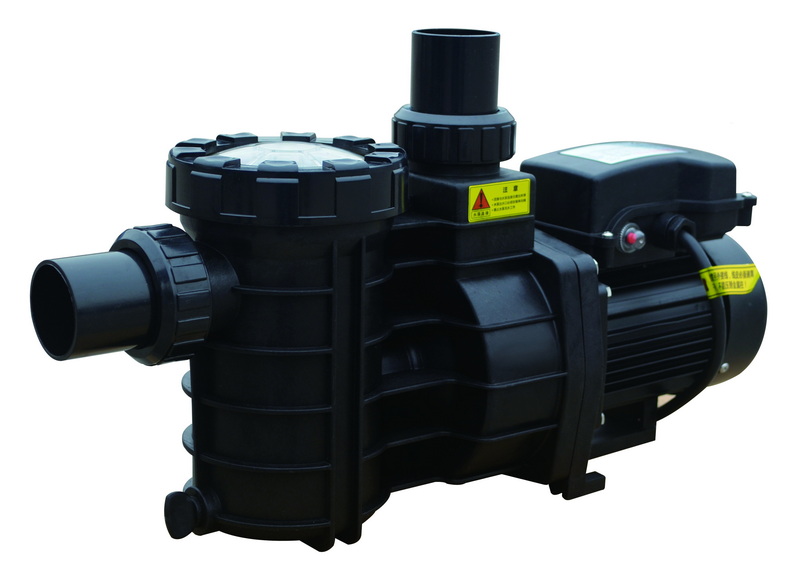
Many above‑ground pool owners discover the pump cord is a bit too short to reach the nearest outlet, especially when the pool is placed in a different location than originally planned. In these cases, using a household extension cord can seem like the fastest and cheapest solution.[7][3]
However, standard light‑duty cords were never designed for continuous outdoor use with motors and can overheat, trip breakers, or contribute to shock hazards near water. For permanently installed pools, codes are written specifically to reduce extension cord use by requiring a correctly located permanent receptacle.[3][4][1]
Modern electrical codes (such as the NEC in the United States) require at least one general‑purpose receptacle between 6 and 20 feet from the pool, and separate rules for the receptacle or outlet serving the pool pump circuit. The pump outlet must be at least 6 feet from the inside wall of the pool and must be GFCI‑protected to reduce shock risk.[2][4][5]
These requirements were introduced specifically because extension cords near pools are dangerous, especially when run across decks or grass where people walk barefoot and surfaces can be wet. In addition, many codes limit the flexible cord on a pump itself to a maximum length (often about 3 feet), clearly signaling that long cord runs are not intended.[4][8][6]
Using an extension cord on a pool pump introduces three big risks: overheating and fire, shock and electrocution, and physical damage or tripping.[1][3]
- Overheating and fire: If the cord's wire gauge is too small or the run is too long, voltage drop and heat build‑up can damage both the cord and the pump motor.[3][1]
- Shock and electrocution: A damaged or undersized cord, especially if not GFCI‑protected, can energize wet surfaces or pool water if a fault occurs.[9][6]
- Physical and water damage: Cords lying on the ground, crossing walkways, or passing through puddles are easily cut, crushed, or soaked, compromising insulation and connections.[10][1]
Pool safety organizations and experienced electricians strongly stress that water and temporary cords are a bad combination, particularly around children and public pools.[11][12]
Some experienced pool professionals note that an extension cord can be used temporarily for a small, storable, above‑ground pool when all safety conditions are strictly met. In these situations, the pump is usually low‑power (around 2–10 amps), and the cord can be sized and routed carefully for short‑term use.[7][1][3]
Even then, it should be treated as a short‑term workaround while a permanent, code‑compliant outlet is installed near the pool equipment pad. For permanently installed or in‑ground pools, experts and codes effectively treat extension cords as unacceptable for powering circulation equipment.[8][2][4][3]
If a temporary extension cord is absolutely unavoidable for a small above‑ground pool, it must be a heavy‑duty, outdoor‑rated product sized correctly for the pump's current and the distance to the outlet.[1][3]
- Wire gauge: Many professionals recommend 12 AWG or even 10 AWG cords for pool pumps, avoiding thin 14–16 AWG household cords.[1]
- Length limit: Best practice is to keep the total length under about 100 feet to limit voltage drop and overheating, with shorter being safer.[3][1]
- Outdoor rating: The cord should be rated for outdoor use, with robust insulation and a plug suitable for wet environments.[1]
Even with the right gauge and length, manufacturers may still consider this misuse, and the pump should only be operated when no one is in the water, with the cord unplugged during swimming.[7][1]
For modern codes, all outlets supplying pool equipment motors up to 150 V to ground and 60 A must have Class A GFCI protection. This includes both new pool installations and replacement pump motors on existing systems.[5][9]
GFCI devices rapidly trip when they detect small leakage currents to ground, dramatically reducing the risk of fatal shock in wet environments like pools. If you ever use an extension cord, it must either plug into a GFCI receptacle or include an in‑line GFCI device designed for outdoor use.[13][6][9][1]
The required distance of receptacles from the pool—typically at least 6 feet for pump receptacles and 6–20 feet for general‑purpose outlets—is designed so cords and plugs stay away from splashing and direct contact with swimmers. By placing outlets at this distance, codes achieve two goals: they keep dangerous live parts away from the water edge and reduce the temptation to stretch cords right up to the pool.[6][2][4]
For the pump itself, local codes often allow equipment to be closer than the receptacle as long as it is properly bonded, grounded, and connected via permanent wiring or a short, factory cord to the dedicated outlet. Extension cords do not meet the same level of mechanical and environmental protection as fixed wiring systems in conduit or approved cable.[2][8]
Many pump manufacturers clearly state in their manuals that extension cords must not be used with their products. This is partly for safety and partly because long cords can contribute to low voltage conditions that overheat or damage motors.[3][1]
If a pump fails while connected via an extension cord, warranty claims may be denied on the basis that the unit was not installed according to instructions. OEM buyers and professional installers should always follow the manufacturer's electrical connection recommendations to avoid liability and maintain coverage.[6][1]
The recommended solution is to install a dedicated circuit from the main or sub‑panel to a weather‑resistant, GFCI‑protected receptacle or disconnect located at the pool equipment pad. This circuit is typically sized specifically for the pump's voltage and amperage, with conductors, breaker rating, and wiring method chosen to meet code.[4][2]
Such a setup may include a timer or automation system to control run times efficiently, saving energy and ensuring consistent filtration. For brands and wholesalers working with a Chinese OEM factory producing sand filters, DE filters, cartridge filters, pumps, and LED lights, providing clear installation guidelines and wiring diagrams helps downstream installers avoid unsafe temporary cord use.[13][6]
A high‑quality pump and filtration system designed for international markets will often be compatible with both 120 V and 240 V supplies, with clear labeling for full‑load current, recommended breaker size, and wiring method. Matching pumps with correctly sized sand, DE, or cartridge filters ensures proper flow rates at reasonable power consumption, reducing the temptation to move equipment further away with long cords.
As a professional OEM partner, it is possible to offer pumps with factory‑molded short cords for above‑ground pools as well as hard‑wire‑ready units for permanent installations, each type accompanied by precise instructions that discourage unsafe extension cord use. Clear documentation and support help foreign brands and distributors market safer, code‑compliant systems in their own regions.
If a pool pump is currently running on an extension cord, several steps can reduce risk while a permanent solution is planned.[3][1]
- Ensure the cord is heavy‑duty, outdoor‑rated, with at least 12 AWG copper conductors.[1]
- Plug the cord only into a GFCI‑protected outlet, and test the GFCI monthly.[9][5]
- Route the cord away from walkways, sharp edges, and standing water, and protect connections with suitable weatherproof covers.[10][6]
Even with these precautions, the goal should be to replace the extension cord with permanent wiring as soon as possible, especially for larger or in‑ground pools.[2][4]
Plugging a pool pump into an extension cord is technically possible for some small, temporary above‑ground pools, but it is never the safest or recommended long‑term approach. Electrical codes, safety experts, and pump manufacturers strongly favor permanent, GFCI‑protected circuits and correctly located outdoor receptacles that keep cords away from the pool.[5][2][4][3][1]
For both residential and commercial installations, a dedicated pump circuit, proper grounding and bonding, and high‑quality filtration equipment from a professional OEM factory help ensure reliable performance and protect swimmers from electrical hazards. By following code requirements and manufacturer instructions instead of relying on extension cords, pool owners, brands, and installers safeguard people, property, and long‑term equipment life.[9][4][6]
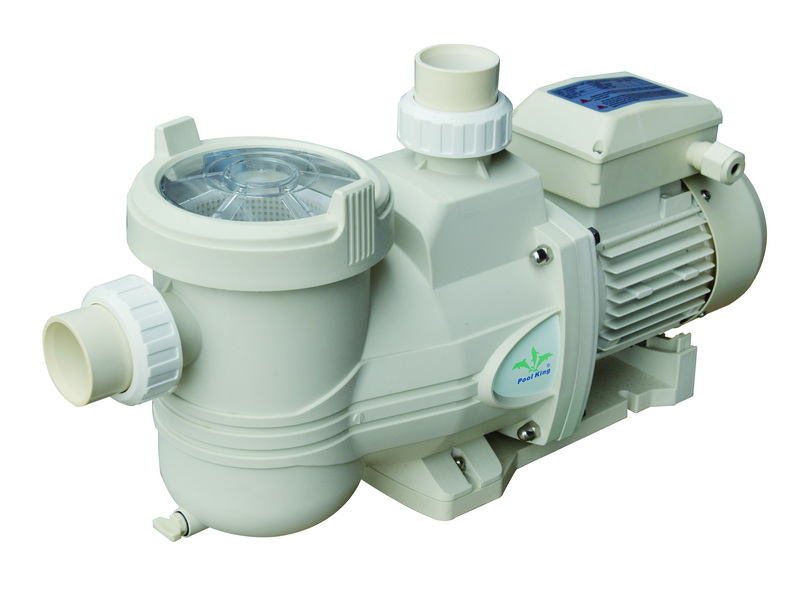
In many jurisdictions, codes for permanently installed pools effectively rule out extension cords by requiring fixed wiring and specific receptacle locations, but some small, storable above‑ground pools may allow temporary use when other rules are met. Always check local regulations and manufacturer instructions before considering an extension cord.[2][4][6][1]
For a low‑power above‑ground pump, many pool professionals recommend a 12 AWG or 10 AWG outdoor‑rated extension cord with a maximum length of about 100 feet to limit voltage drop. Thinner 14–16 AWG cords sold for light household appliances are generally considered unsafe for continuous motor loads outdoors.[3][1]
Yes, modern electrical codes require GFCI protection for all outlets supplying pool motors up to 150 V to ground and 60 A, including replacement pump motors on existing systems. This applies whether the pump is cord‑and‑plug connected or hardwired from a sub‑panel.[9][13][5][6]
Many manufacturers specify in their manuals that extension cords must not be used, and they may treat damage occurring under such conditions as misuse, voiding warranty coverage. OEM brands and distributors should ensure their installation instructions clearly communicate any such limitations to end users.[3][1]
The safest method is to install a dedicated branch circuit from the panel to a weather‑resistant, GFCI‑protected receptacle or disconnect at the equipment pad, using appropriately sized conductors and wiring methods approved for outdoor, wet locations. The pump should then be wired or plugged in exactly as the manufacturer specifies, with proper grounding, bonding, and overcurrent protection.[5][9][4][6][2]
The 6–20‑foot general‑purpose receptacle rule was added to ensure there is always a nearby outlet so people do not drag long extension cords to the pool edge for tools, lights, or stereos. By placing the outlet at least 6 feet away, the risk of cords and plugs contacting water and swimmers is reduced.[4][6][2]
By supplying pumps and filtration systems with clear electrical specs, wiring diagrams, and recommended installation layouts, OEM manufacturers help installers place equipment and outlets correctly so extension cords are unnecessary. Offering both plug‑in solutions for storable pools and hard‑wire‑ready systems for permanent pools further aligns with international codes and safety expectations.
[1](https://abovegroundpoolbuilder.com/can-you-use-an-extension-cord-for-a-pool-pump/)
[2](https://captaincode2017.leviton.com/node/166)
[3](https://ownthepool.com/extension-cords-for-pool-pumps/)
[4](https://www.electricallicenserenewal.com/Electrical-Continuing-Education-Courses/NEC-Content.php?sectionID=170.0)
[5](https://www.electricallicenserenewal.com/Electrical-Continuing-Education-Courses/NEC-Content.php?sectionID=958)
[6](https://electricaleducator.com/for-homeowners/pool-heaters-gfci-protection/)
[7](https://www.reddit.com/r/pools/comments/ns6ydj/is_it_safe_to_run_a_pool_with_an_extension_cord/)
[8](https://forums.mikeholt.com/threads/pool-motor.2562824/)
[9](https://captaincode2020.leviton.com/node/278)
[10](https://twistandseal.com/products/twist-and-seal-pool-safety-pack-poolside-extension-cord-connection-protection)
[11](https://www.familyleisure.com/support-videos/Pool-School/Extension-Cord/)
[12](https://www.youtube.com/watch?v=32XjZmpnFWA)
[13](https://www.youtube.com/watch?v=J-c-XPFOREs)
[14](https://forum.allaboutcircuits.com/threads/pool-pump-and-extension-cord-safety.169461/)
[15](https://www.youtube.com/watch?v=9AkB6lsQEjc)
[16](http://www.poolhelpforum.com/viewtopic.php?t=520)
[17](https://www.nespapool.org/Portals/0/08_nj_nec_electrical_code.pdf)
[18](https://forums.mikeholt.com/threads/question-about-swimming-pool-nec-680-22-a-1.2555189/)
[19](https://forums.mikeholt.com/threads/gfci-breaker-required-for-in-ground-pool-pumps-and-other-equipment.2576003/)
[20](https://www.livewireelectricalcharlotte.com/2021/04/electrical-requirements-you-need-to-know-for-above-ground-pools/)


