
Views: 222 Author: Tina Publish Time: 2025-07-11 Origin: Site


Content Menu
● Understanding Olympic Pool Standards
>> Lane Markings and Anti-Wave Lines
>> Bulkheads and Movable Floors
>> Water Level and Overflow Systems
● Competition Accessories and Technologies
>> Swimwear
>> Swim Caps
>> Goggles
● Spectator and Support Infrastructure
>> Technical and Support Rooms
>> 1. What are the exact dimensions of an Olympic swimming pool?
>> 2. Why is water temperature so important in Olympic pools?
>> 3. What technology is used for timing and scoring in Olympic swimming?
>> 4. How is water quality maintained in Olympic pools?
>> 5. What safety features are included in Olympic swimming pools?
Olympic swimming pools stand as icons of precision, engineering, and athletic achievement. Behind every world record and breathtaking race lies a complex system of equipment and technology that ensures fair competition, athlete safety, and optimal performance. This comprehensive article explores every aspect of the equipment required for an Olympic swimming pool, from the pool structure itself to the high-tech accessories that define modern aquatic competitions. Along the way, you'll find detailed explanations, visual illustrations, and embedded videos to enhance your understanding of this fascinating subject.

The International Swimming Federation, now World Aquatics, sets strict standards for Olympic pools to ensure consistent and fair competition across all major events, including the Summer Olympics and World Aquatics Championships.
Olympic pools are designed to be long and wide enough to accommodate multiple swimmers competing simultaneously, with a depth sufficient to reduce turbulence and ensure safety. The pool length is measured precisely between the electronic touchpads at each end, ensuring uniformity across venues. The width allows for multiple lanes, each wide enough to accommodate a swimmer comfortably while minimizing interference from adjacent lanes.
Water temperature is carefully maintained within a range that supports optimal athlete performance and comfort. This temperature range helps prevent muscle fatigue and injuries while providing a consistent environment for all competitors. Lighting levels are also regulated to provide clear visibility for athletes, officials, and spectators alike.
The pool volume is substantial, holding millions of liters of water, which requires sophisticated systems to maintain water quality and temperature consistently throughout competitions.
The foundation of an Olympic pool is a reinforced concrete structure designed to withstand the immense pressure of the water it contains. This robust construction ensures the pool remains stable and durable over many years of use.
Waterproofing membranes and insulation layers are applied meticulously to prevent leaks and protect the surrounding infrastructure from water damage. The interior surface of the pool is typically finished with smooth, chemical-resistant ceramic tiles or high-quality vinyl linings. These surfaces provide durability, ease of maintenance, and a visually appealing finish while incorporating lane markings and turn indicators essential for competition.
Lane lines serve multiple purposes: they separate swimmers, reduce wave interference, and assist athletes in maintaining their course.
These lane lines are specially designed floating ropes with anti-wave technology. Their construction allows them to absorb and dissipate waves generated by swimmers, minimizing turbulence between lanes. The lane ropes are anchored securely at each end of the pool to maintain tension and position.
The pool floor features continuous dark lines centered in each lane, providing swimmers with a visual guide to swim straight. Additionally, flags are suspended above the pool near each end to signal backstroke swimmers when they are approaching the wall, aiding in timely turns.
False start ropes are positioned above the water at a set distance from the pool walls. These ropes can be dropped into the water to signal an invalid start, stopping the race and ensuring fairness.
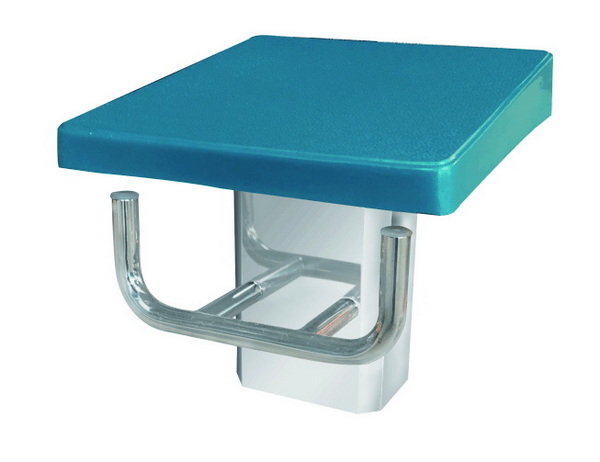
Starting blocks are engineered to provide swimmers with a secure and powerful platform from which to launch their races.
They feature a non-slip surface to prevent accidents and are elevated above the water to allow swimmers to dive efficiently. Many modern starting blocks include adjustable wedges or heel rests that swimmers can use to optimize their push-off power.
Backstroke starts require handles on the starting blocks, positioned to give swimmers a firm grip. Each starting block is clearly numbered for easy identification during competitions.
The pool deck surrounding the water is designed with safety and functionality in mind. Non-slip materials are used to prevent falls, and drainage systems are installed to quickly remove splashed water, maintaining a dry surface.
Overflow gutters are integrated into the pool design to capture water displaced by swimmers, reducing wave reflection and contributing to calmer water conditions.
Some Olympic pools feature movable bulkheads that allow the pool to be divided into smaller sections. This flexibility enables simultaneous use for different events or training sessions.
Movable floors are another advanced feature, allowing the pool depth to be adjusted to accommodate various aquatic sports, from swimming to water polo or synchronized swimming.
Maintaining pristine water quality and optimal temperature is paramount for competitive swimming.
Sophisticated filtration systems continuously remove debris and microscopic impurities from the water, ensuring clarity and safety. Powerful pumps circulate the water evenly throughout the pool, preventing currents that could affect race fairness.
Chemical treatments, such as chlorine or ozone, sanitize the water, keeping it free from harmful bacteria and algae. Automated monitoring systems constantly check water quality parameters and adjust treatment levels as needed.
Water temperature is controlled through advanced heating systems that maintain the pool within the ideal range for athlete performance. In warmer climates or during intense competition periods, cooling systems may be employed to prevent overheating.
Overflow gutters capture surface water and pollutants, creating a "waveless" edge that minimizes wave reflection back into the pool. Automated water level control systems ensure consistent depth, which is critical for accurate timing and fair competition conditions.
Modern Olympic pools integrate cutting-edge technology to enhance competition, officiating, and spectator experience.
Electronic touchpads installed at both ends of each lane record swimmers' finish times with extreme precision. These touchpads are connected to central computers that process and display results instantly on large digital scoreboards.
Starting systems include speakers mounted near each starting block to ensure all swimmers hear the starting signal simultaneously, regardless of their position.
Underwater cameras provide officials with visual evidence to review starts, turns, and finishes, helping resolve any disputes or infractions.
Powerful LED lighting systems illuminate the pool and surrounding areas, ensuring excellent visibility for athletes, officials, and broadcasters.
Comprehensive sound systems deliver clear announcements, music, and starting signals, contributing to the event's atmosphere and coordination.
Backstroke ledges attach to starting blocks, allowing swimmers to place their feet higher for a more powerful start.
Removable headwalls enable rapid reconfiguration of the pool for different events or training needs.
Air cushions provide safe landing zones for divers practicing complex maneuvers.
Pool gratings and ladders provide safe access points for swimmers and staff.
While not part of the pool infrastructure, athlete equipment is integral to Olympic swimming.
Competitive swimsuits are made from advanced materials designed to reduce drag and enhance hydrodynamics. Compression technology supports muscles and reduces fatigue. Regulations govern the amount of body coverage to ensure fairness.
Swim caps made from latex or silicone streamline the head, reduce drag, and protect hair from chlorine. They often display national flags or team logos during competitions.
Goggles with anti-fog coatings and UV protection maintain clear vision and protect swimmers' eyes from chlorine and sunlight.
Kickboards, pull buoys, resistance bands, and paddles are used during training to improve technique and strength.
Towels, water bottles, and personal gear bags support athlete comfort and preparation.
Olympic swimming events require extensive infrastructure to support all participants and audiences.
Grandstands accommodate thousands of spectators, offering clear views of the pool.
VIP and media areas provide specialized facilities for dignitaries and broadcasters.
Locker rooms offer changing and shower facilities.
Medical and first aid stations are on-site for emergencies.
Equipment storage areas house maintenance tools and athlete gear.
Doping control facilities ensure competition integrity.
Warm-up and cool-down pools allow athletes to prepare and recover without interfering with the main competition.
Ramps, elevators, and lifts provide access for individuals with disabilities throughout the venue.
Olympic swimming pools are marvels of modern engineering, combining rigorous standards, advanced technology, and athlete-focused design. Every detail, from the reinforced concrete shell to the electronic timing pads, plays a crucial role in ensuring fair, safe, and record-breaking competition. The equipment required goes far beyond the pool itself, encompassing sophisticated filtration systems, precision-engineered starting blocks, advanced lane lines, and a host of supporting infrastructure. Understanding these elements not only deepens appreciation for the sport but also highlights the incredible teamwork and innovation behind every Olympic swimming event. The meticulous adherence to World Aquatics standards ensures that these pools are not just places for competition, but true stages for human aquatic achievement.

Olympic pools are designed to be fifty meters long and twenty-five meters wide, with a depth sufficient to reduce turbulence and ensure safety. They feature ten lanes, each wide enough to accommodate swimmers comfortably, with the outermost lanes often left unused during competition to minimize wave interference.
Water temperature is maintained within a specific range to optimize athlete performance, prevent muscle fatigue, and reduce injury risk. A consistent temperature also ensures fairness across all competitors.
Electronic touchpads at each lane's end record finish times with extreme precision, feeding data to central computers that display results instantly. Underwater cameras assist officials in reviewing critical moments during races.
Continuous filtration, circulation, and chemical treatment keep the water clear, clean, and safe. Automated systems monitor water quality and adjust treatment levels as needed.
Safety features include non-slip surfaces, overflow gutters to manage water displacement, clearly marked lanes and depth indicators, medical stations, and accessibility accommodations for individuals with disabilities.


