
Views: 222 Author: Tina Publish Time: 2026-01-25 Origin: Site


Content Menu
● What Does “#20 Silica” Mean?
● Is HTH Pool Filter Sand 20 Silica?
● Why the Correct Sand Grade Matters in a Pool Filter
● How Pool Filter Sand Works Inside a Sand Filter
● The Role of Backwashing in Sand Pool Filter Performance
● Benefits of Using 20 Silica Sand Such as HTH in Pool Filters
● Recommended Applications of 20 Silica Pool Filter Sand
● How Often Should 20 Silica Sand Be Replaced?
● 20 Silica Sand Compared with Other Pool Filter Media
>> Glass media
● Practical Guidelines for Using HTH 20 Silica in Pool Filters
>> Follow the manufacturer's sand capacity
>> Rinse after adding new sand
>> Monitor pressure and backwash when needed
>> Maintain balanced water chemistry
● How a Professional Factory Integrates 20 Silica Sand into Complete Pool Filter Solutions
● Choosing Between Different Pool Filter Types When You Prefer Sand Media
● FAQ
>> 1. What does #20 silica mean for pool filter sand?
>> 2. Can HTH pool filter sand be used in any sand pool filter?
>> 3. How often should I replace 20 silica sand in my pool filter?
>> 4. Is 20 silica sand better than glass media or zeolite for pool filters?
>> 5. How much 20 silica sand does my pool filter need?
As a professional factory in China specializing in high-end sand filters and filtration solutions, understanding pool filter media is essential for delivering reliable systems to global OEM brands, wholesalers, and manufacturers. For many swimming pools, #20 silica sand remains the most popular and cost-effective filtration media, and HTH pool filter sand is one of the well-known products in this category.
Pool owners, engineers, and brand owners often ask whether HTH pool filter sand is truly “20 silica” and whether it is suitable for their sand pool filter designs. By clarifying what #20 silica means, how it performs, and how it fits into a complete pool filter system, you can make smarter choices when selecting, designing, or sourcing complete filtration packages that include filters, pumps, and accessories.
In the swimming pool industry, “#20 silica” is a technical description that refers primarily to the grain size and composition of the sand used inside a sand filter.
- It is usually composed mostly of high-purity quartz (silicon dioxide), which is chemically stable and resistant to pool chemicals.
- The grains are washed and graded so that they fall within a specific size range, typically around 0.4–0.5 mm effective size, with controlled uniformity.
- This size range is fine enough to trap many common contaminants in pool water, yet coarse enough to allow water to flow through the pool filter with acceptable resistance.
Because #20 silica has become a standard in the pool filtration field, many sand filters are engineered around this media specification. When a product or manual states “use #20 silica sand,” it means the filter bed has been designed and tested for that grain size distribution and material type.
For practical use, HTH pool filter sand is recognized and sold as a pool filter sand that meets #20 grade silica characteristics. It is formulated for swimming pool filter systems that specify or expect 20 silica sand media.
This means:
- It is suitable for use in most pool filter tanks designed for standard #20 silica sand.
- It aims to provide consistent grain size and cleanliness, supporting effective filtration and stable water clarity.
- When installed correctly in a compatible sand filter, it performs as a typical 20 silica pool filter sand, making it a straightforward choice for many residential and light commercial pools.
For distributors and OEM customers, this alignment with #20 silica standards is crucial, because it simplifies design, compatibility, and after-sales service for pool filter systems.
The grade of sand you choose directly affects how well the pool filter works and how long the equipment lasts. Using the wrong sand can cause multiple operational problems.
- Fine debris, dust, and small organic particles pass straight through the pool filter.
- The pool may appear hazy or cloudy even when the pump runs for long periods every day.
- More chemicals and clarifiers may be required to compensate for poor mechanical filtration.
- The pool filter becomes clogged quickly because the media bed is overly restrictive.
- Filter pressure rises sharply, the flow rate drops, and the pump must work harder.
- There is a higher risk of damaging the internal laterals and valve components, shortening the service life of the pool filter.
#20 silica pool filter sand represents a balanced solution. It sits in the “sweet spot” between fine filtration and acceptable pressure, which is why so many manufacturers specify 20 silica sand as the default media for their sand filters.
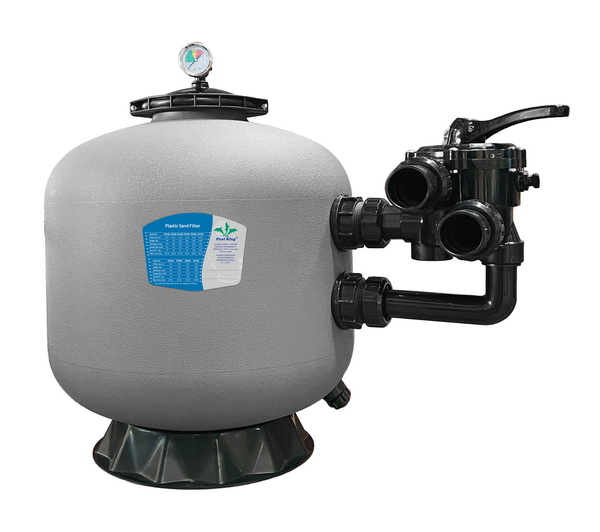
A sand pool filter is essentially a pressure vessel filled with a carefully graded bed of 20 silica sand. The internal hydraulic design forces water to pass through this bed, where particles are trapped.
1. Water is drawn from the pool through skimmers and main drains by the pump.
2. The water enters the pool filter tank through the multiport valve or top-mounted valve assembly.
3. It is distributed over the surface of the 20 silica sand bed and flows down through the sand.
4. Suspended impurities are captured between the sand grains as the water travels through the tight pathways.
5. Cleaner water reaches the laterals or underdrain at the bottom of the pool filter and returns to the pool through the return lines.
Over time, trapped contaminants build up within the sand bed. This increases resistance to flow, which shows up on the pressure gauge as a rising reading. Once pressure climbs a set amount above the clean starting pressure, the pool operator performs a backwash to flush out the accumulated debris.
Backwashing is a key maintenance operation for any sand pool filter using 20 silica sand. During backwash:
- The flow direction is reversed by the valve, sending water up through the sand bed instead of down.
- The sand is gently agitated and expanded, which shakes loose trapped dirt and debris.
- Dirty water exits the pool filter to waste, carrying away the contaminants.
Regular and proper backwashing keeps the 20 silica sand bed open and effective. If backwashing is neglected:
- The filter can become severely compacted, leading to channeling inside the bed.
- Water may find a few “shortcuts” through the media, reducing the effective filtration area.
- Even if pressure is high, the actual filtration efficiency of the pool filter can be poor.
Thus, using good quality 20 silica sand like HTH pool filter sand is only part of the story. Correct operation and maintenance of the pool filter are equally important.
Selecting a reliable 20 silica pool filter sand provides several advantages for pool owners and OEM clients:
- Consistent water clarity
Standard #20 silica sand captures typical pool debris, body oils, hair, pollen, and other suspended solids when combined with correct filtration time and chemical balance.
- Predictable pressure behavior
Because the grain size distribution is tightly controlled, filter pressure tends to change in a consistent way as the sand bed loads with dirt. This makes it easier for technicians to decide when to backwash and when to inspect the system.
- Protection for pumps and valves
Proper 20 silica sand places the intended amount of hydraulic load on the circulation pump and multiport valve. This helps extend service life and reduces unexpected failures, especially in busy swimming seasons.
- Compatibility with many filter brands
Since #20 silica is a common standard, a pool filter designed for sand media can usually accept multiple brands of 20 silica sand, including HTH, without major adjustment or redesign.
For OEM brands working with a professional factory, using a standard 20 silica specification simplifies product documentation, training, and warranty handling because the media behavior is well-understood.
20 silica pool filter sand is well suited for:
- Residential in-ground pools with sand filter systems.
- Above-ground pools using compact pool filter and pump sets.
- Small commercial pools, hotel pools, and villa pools where sand filters are preferred for their simplicity.
- Some water features, spa pools, and landscaping ponds when the filter is designed for 20 silica media.
For large commercial aquatics facilities, water parks, or heavily loaded public pools, engineers may specify larger pressure filters with layered media, but #20 silica often remains part of the design, sometimes combined with gravel support layers or specialized media.
Even the best 20 silica sand slowly wears down and changes shape inside a pool filter. This process is influenced by water flow rate, pressure, backwash intensity, and chemical conditions.
Typical guidelines suggest:
- For normal residential use, replace 20 silica sand every 3–5 years.
- For pools that operate all year or experience heavy bather loads (hot climates, holiday resorts, training facilities), more frequent replacement may be beneficial.
- Signs that it is time to change the pool filter sand include:
- Persistent cloudiness even with correct chemistry and filtration time.
- A requirement for very frequent backwashing with only short-term improvements.
- Evidence of channeling or hardened clumps when inspecting the media.
When replacing, technicians must carefully remove the old sand, avoiding damage to laterals, standpipes, and internal components. Only after a thorough inspection should new 20 silica sand be added to the pool filter to the specified level.
Although 20 silica is the traditional choice for a sand pool filter, it is not the only option. Alternative media types exist, each with its own advantages and trade-offs.
- Manufactured from recycled glass, processed into granular shapes compatible with pool filter designs.
- Often promoted for finer filtration and reduced backwash volumes.
- Usually more expensive than 20 silica, and performance can depend strongly on correct sizing and installation.
- Derived from natural volcanic minerals with a porous structure.
- Can provide some adsorption of ammonia and other compounds, potentially reducing chlorine demand in certain conditions.
- Requires strict adherence to startup and backwashing protocols to avoid clumping and issues inside the pool filter.
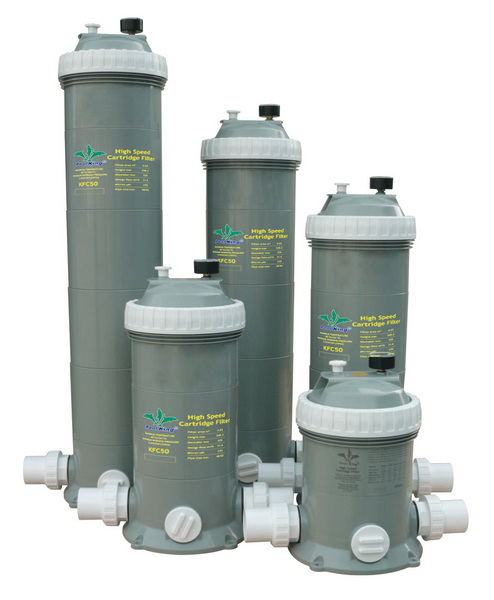
- Cartridge filters use pleated fabric elements instead of sand.
- DE (diatomaceous earth) filters use a fine powder coating on grids to trap very small particles.
- These filters can achieve higher clarity than many standard sand filters but require different maintenance habits and often higher labor input.
For many private pool owners and for standard OEM packages, a sand pool filter using #20 silica sand remains the most widely accepted solution due to its balance of cost, robustness, and user-friendly operation.
To maximize the performance of a sand pool filter using HTH pool filter sand or any equivalent 20 silica media, pool professionals and owners should follow several best practices.
- Every sand pool filter has a rated sand capacity, usually printed on the label or in the manual.
- Overfilling the pool filter can cause excessive pressure and poor backwash.
- Underfilling reduces bed depth, which allows water to short-circuit through the top of the media.
- After installing new 20 silica sand, always start with a backwash and rinse sequence before sending water back to the pool.
- This helps flush out fine dust and ensures the sand bed settles in a uniform way inside the pool filter.
- Record the “clean” starting pressure on the gauge right after a thorough backwash.
- When pressure rises approximately 8–10 psi above this baseline, perform a backwash cycle.
- Avoid backwashing too frequently, since some slight loading of the sand can actually improve filtration efficiency.
- Unbalanced pH and alkalinity can promote scale or corrosion, both of which can affect the sand and the internal components of the pool filter.
- Biofilm and algae can also coat the sand grains if sanitization is inadequate, reducing effective filter performance.
- Keeping water balanced reduces strain on the pool filter and prolongs the life of the 20 silica sand.
As a dedicated manufacturer of pool filtration systems, a factory does more than just fill tanks with sand. Instead, it designs entire systems around the known behavior of 20 silica pool filter sand.
Typical offerings can include:
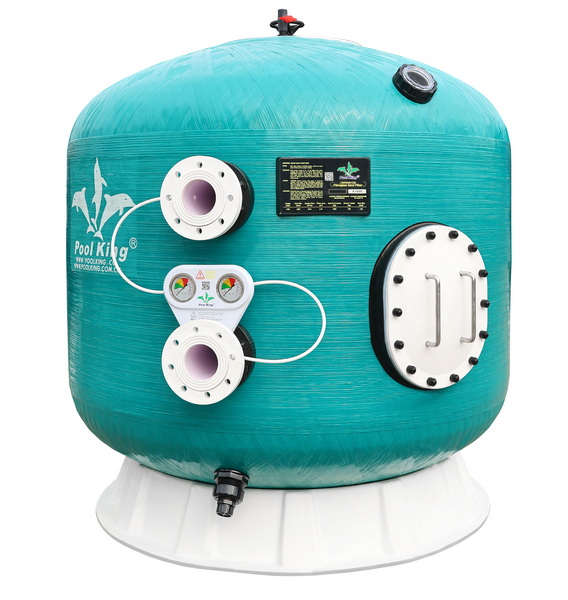
- Fiberglass or injection-molded pool filter tanks designed to work with specific sand capacities and flow rates.
- Matching circulation pumps with optimized head and flow characteristics to work efficiently with sand filter resistance.
- Complete sets including valves, gauges, unions, and accessories, configured for different market standards.
- Optional LED lighting, plumbing kits, and control components that create an integrated solution.
For OEM customers, branding and customization can be added:
- Private label printing, custom colors, and logos on pool filters and pumps.
- Custom configuration of filter size and sand capacity to match regional preferences and pool sizes.
- Technical support materials, manuals, and training resources adapted to local languages and regulations.
In all of these configurations, #20 silica sand such as HTH pool filter sand or other equivalent 20 silica products remains a core element of the filtration performance.
Pool owners and project designers often must choose among several pool filter types. Even when they focus on sand technology, there are still configuration decisions to make.
Key considerations include:
- Pool size and shape
- Anticipated bather load and debris level (trees nearby, windy areas, commercial vs residential use)
- Available installation space for the pool filter and pump set
- Local water quality and chemical regulations
- Budget for initial equipment and ongoing maintenance
For many mid-size residential pools, a sand pool filter with #20 silica media offers a good balance of simple controls, relatively low maintenance, and robust operation under varied conditions. HTH pool filter sand, used as a #20 silica media, fits well into this standard scenario.
HTH pool filter sand is widely treated as a #20 grade silica sand specifically manufactured for use in standard sand pool filter systems, making it a practical choice wherever a filter is designed for 20 silica media. By selecting the correct 20 silica sand, properly filling the pool filter tank, and following recommended backwash and water balance procedures, pool owners and professionals can achieve clear, attractive water and stable system performance. For OEM brands, distributors, and project contractors, integrating reliable 20 silica pool filter sand with high-quality filters, pumps, LED lighting, and accessories allows the creation of complete, competitive filtration solutions suitable for diverse markets around the world.
Contact us to get more information!
#20 silica refers to a standardized grain size range and material type (mostly quartz) used for pool filter sand. The grains are fine enough to trap typical pool debris yet coarse enough to allow efficient water flow through a sand pool filter without excessive pressure or frequent clogging.
HTH pool filter sand is designed as a 20 silica media compatible with most sand pool filters that specify #20 silica sand. However, each pool filter model has its own design limitations, so you should always confirm in the manual that the filter is intended for standard 20 silica sand and follow the recommended sand capacity during installation.
Under normal residential conditions, 20 silica pool filter sand is typically replaced every 3–5 years. If the pool filter is used heavily, runs year-round, or shows symptoms such as persistent cloudiness, rapid pressure increases, or visible channeling in the sand bed, an earlier replacement may be necessary to restore optimal filtration.
20 silica sand remains the most widely used and cost-effective media for sand pool filters, offering predictable performance and easy sourcing. Glass and zeolite media can provide additional benefits such as finer filtration or ammonia reduction, but they are often more expensive and may require stricter installation and maintenance practices. The best choice depends on budget, water quality goals, and local maintenance capabilities.
The required amount of 20 silica sand depends entirely on the size and model of the pool filter tank. Each filter is designed with a specified sand capacity, usually indicated on a label or in the installation manual. Filling the pool filter with the correct weight or volume of 20 silica sand ensures that the bed depth, flow pattern, and filtration performance match the engineer's original design.
1. https://hthpools.com/products/hth-pool-care-pool-filter-sand
2. https://www.acehardware.com/departments/outdoor-living/swimming-pools-spa-and-supplies/swimming-pool-equipment/83029
3. https://brinkmannhardware.com/p/pool-filter-sand-20-grade-silica-sand-pounds-855106001006


