
Views: 222 Author: Tina Publish Time: 2025-12-21 Origin: Site


Content Menu
● Safety Rules Before Adding Weight
● Method 1: Use Built‑In Water Chambers
● Method 2: Fill Integrated Sand Compartments
● Method 3: Sandbags at the Base
● Method 4: PVC Pipe Weight Tubes
● Method 5: Concrete or Dumbbell Weights (With Caution)
● How Much Weight Does Your Ladder Need?
● Where to Position Weights for Maximum Stability
● Protecting the Pool Liner Under the Ladder
● Seasonal Removal, Cleaning, and Re‑Installation
● Integrating Ladder Weights Into a Complete Safety System
● When to Upgrade or Replace the Ladder
● How OEM and Professional Suppliers Can Help
● FAQs About Weighing Down a Pool Ladder
>> 1. What is the safest way to weigh down a pool ladder?
>> 2. How much weight do I need to keep my ladder from floating?
>> 3. Can I use concrete blocks or bricks to hold my ladder down?
>> 4. Will sandbags or weights damage my pool liner?
>> 5. How often should I check my ladder weights?
>> 6. Are commercial ladder weight systems better than DIY options?
Keeping a pool ladder firmly on the pool floor is essential for safe entry and exit, especially in above‑ground pools where lightweight plastic ladders tend to float or shift. With the right weighting method, your ladder will stay stable, comfortable to use, and compliant with common pool safety expectations.[1][2][3]
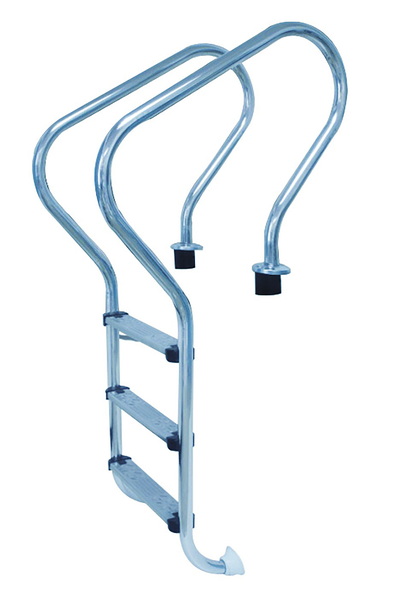
Most modern pool ladders are made of hollow plastic or resin, which traps air and makes them buoyant in water. When the upward buoyant force is stronger than the ladder's own weight and any built‑in ballast, the ladder will rise, tilt, or rock when swimmers use it.[2][3][1]
Unstable ladders increase the risk of slips, falls, and difficulty exiting the pool, especially for children, seniors, and anyone with limited mobility. In some regions, codes and insurers require that steps and ladders be securely anchored or weighted to minimize these hazards.[3][1][2]
Before weighing down a pool ladder, always consider safety first. The goal is to stabilize the ladder without introducing sharp, corroding, or entangling objects that could harm swimmers.[1][3]
Key safety rules:
- Only use weights designed for underwater use (or DIY options that are fully sealed, smooth, and non‑corrosive).[4][1]
- Avoid exposed metal bricks, rebar, or loose stones that can damage liners or cause cuts.[5][1]
- Ensure all weights are tied close to the ladder and do not become tripping or entrapment hazards.[3][1]
Many modern steps and ladders are designed with hollow chambers that naturally fill with water once the air is released. This is often the simplest, cleanest way to weigh the ladder down.[6][1]
Basic process:
- Submerge the ladder slowly, rocking it back and forth to let trapped air escape through factory‑drilled holes so the chambers fill with water.[6]
- Check for continuous bubbles while submerging; when bubbles stop, the chambers are usually full and the ladder will rest more firmly on the pool floor.[6]
Some pool steps and ladders include dedicated sand compartments or fill holes specified by the manufacturer. Filling these with sand adds significant ballast and is a standard method for keeping large resin steps on the floor.[2][1]
How to use sand chambers:
- Review the manufacturer's instructions for the exact sand weight (for example, some deluxe steps require around 70 lbs of sand split between multiple fill points).[2]
- Use dry play sand and a funnel to fill lower holes first, shaking the panel to settle the sand and ensure the lower cavity is completely full before topping off upper chambers.[2]
If your ladder has no built‑in chambers, sandbags placed around the base are a versatile solution. Purpose‑made ladder sand weights and DIY sandbags both work well when sized correctly and positioned carefully.[1][3]
Options:
- Commercial ladder weights: Heavy‑duty PVC bags designed to be filled with sand and placed at the base of the steps or tied to the frame.[7][8]
- DIY sandbags: Triple‑layer contractor bags or waterproof pouches filled with 20–50 lbs of sand each, tightly sealed and tied with nylon rope or zip ties.[3][1]
PVC weight tubes are a popular DIY method because they are inexpensive, neat, and easy to position.[9][10]
Basic design:
- Use 1.5–3 inch PVC pipes cut into convenient lengths, cap both ends, and fill them with sand or gravel as ballast.[10][11][9]
- Drill small holes to allow water circulation (if recommended) and tie the tubes securely to the ladder's frame or place them under the steps.[11][10]
Many pool owners report good results using several PVC tubes filled with sand and positioned along the back or underside of the stairs.[12][9][11]
Some pool owners use concrete blocks, dumbbells, or similar heavy objects to hold stairs down, but these must be handled with extreme care to avoid liner damage and entrapment risks.[14][5]
If used at all:
- Place weights inside waterproof covers or protective mats so no sharp edges touch the liner.[5][1]
- Use plastic‑coated dumbbells or encase blocks in thick vinyl sleeves, then secure them tightly to the ladder so they cannot shift or trap a foot.[14][1]
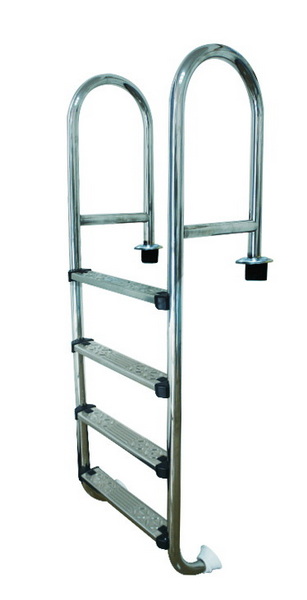
The exact amount of weight depends on ladder design, material, size, and water depth. Some manufacturers specify ballast requirements in their instructions, such as 50–70 lbs of sand distributed across built‑in chambers for certain curved steps.[3][2]
If no guideline is provided:
- Start with a moderate load (for example, 40–60 lbs) evenly distributed at the base and test stability by having an adult climb the ladder while observing movement.[1][3]
- Add additional weight gradually until the ladder does not lift, twist, or rock during normal use, but avoid over‑ballasting to the point that moving or removing the ladder becomes unsafe.[1][3]
Weight placement is just as important as weight amount. Proper distribution ensures the ladder stays flat, stable, and comfortable to use.[3]
Best practices:
- Focus on the lowest step area so ballast pulls the ladder straight down toward the pool floor.[1][3]
- Distribute weights symmetrically left and right to prevent tilting or rotating when someone climbs on one side.[3]
Any weighted ladder system should address liner protection to avoid long‑term damage. Heavy loads concentrated on small points can stretch, puncture, or wear the liner.[1][3]
Simple liner protection measures:
- Use a purpose‑made ladder pad or mat under the ladder base, made of thick, non‑slip rubber or vinyl.[15][1]
- Avoid sliding weights directly on the liner; instead, place them on top of the pad and check regularly for abrasion or discoloration.[3][1]
Weighing down a ladder is not a once‑and‑done job; seasonal maintenance keeps everything safe and hygienic.[3]
For closing and opening the pool:
- Before winterizing, remove sand or water from internal chambers or sandbags if required by the manufacturer to prevent cracking or algae buildup.[3]
- Inspect PVC tubes, bags, and ties for wear or algae, clean them with a mild pool‑safe cleaner, and replace any damaged components before reinstalling.[3]
Stabilizing the ladder is only one piece of overall pool safety. For households, commercial facilities, or rental properties, combining ladder stability with other measures significantly reduces accident risk.[3]
Recommended measures to pair with a properly weighted ladder:
- Perimeter fencing, self‑latching gates, and pool alarms to control unauthorized access.[3]
- Bright LED lighting around the pool and under the water to improve visibility at night, plus clearly marked steps and grab rails.[3]
Sometimes no amount of weighting can fully compensate for a poor or damaged ladder design. In such cases, upgrading is a better long‑term solution than constantly adding more ballast.[3]
Consider replacement if:
- The ladder frame is cracked, sun‑brittle, or significantly warped, making it flex or twist under load even when weighted.[3]
- The design lacks proper contact points with the pool floor or wall, or cannot be stabilized without using unsafe weights.[3]
Professional pool equipment manufacturers and OEM suppliers often design ladders, steps, and accessories as part of an integrated safety and circulation system. Matching high‑quality ladders with effective filtration, pumps, and LED lighting ensures both water clarity and safe, stable access for operators and swimmers.[3]
For overseas brands, wholesalers, and manufacturers, partnering with a specialized factory allows customization of ladder designs, ballast options (water chambers, sand compartments, or dedicated weight bags), and accessory packages to suit different pool types and regional standards. This makes it easier for distributors and installers to provide complete, safe pool solutions to customers.[3]
Weighing down a pool ladder is a critical step in creating a safe, comfortable, and professional pool environment. By choosing the right method—water‑filled chambers, sand compartments, sandbags, PVC weight tubes, or carefully protected alternative weights—and positioning ballast correctly, you can prevent floating, wobbling, and sudden movement that leads to accidents.[2][1][3]
Combining stable ladders with liner pads, regular maintenance, strong filtration, and effective lighting yields a complete system that serves families, guests, and commercial users with confidence. For brands and wholesalers, working with an experienced OEM pool equipment manufacturer makes it possible to offer ladder solutions that are not only stable and safe, but also engineered to match advanced sand, DE, and cartridge filtration systems, pumps, and LED accessories in one cohesive package.[1][3]
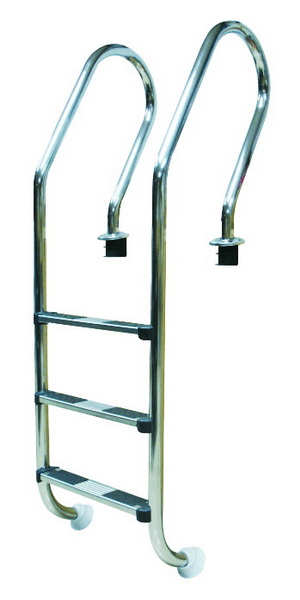
The safest methods rely on built‑in sand or water chambers, commercial ladder weight bags, or sealed PVC tubes filled with sand that are securely attached and positioned so they cannot shift or create entrapment hazards.[7][1][3]
The required weight varies by ladder model, but some above‑ground steps need around 50–70 lbs of sand distributed between multiple compartments, while smaller ladders may need less; start with manufacturer guidance and test stability under load.[2][3]
Concrete blocks and bricks are sometimes used, but they pose liner damage and safety risks if not fully covered and secured; if used at all, they must be encased in protective sleeves or mats and tied tightly so they cannot move.[5][1]
Unprotected bags or hard weights can rub and puncture liners, so always place them on a dedicated ladder pad or mat and ensure surfaces are smooth, with no sharp corners or exposed metal.[15][1]
Check ballast, attachment points, and liner contact at least once a month during the swimming season, and always before and after major storms or heavy use; clean and inspect weights at closing and re‑opening each year.[3]
Commercial systems designed for ladders usually offer more consistent materials, shapes, and attachment features, while DIY PVC or sandbag solutions can work well if built carefully with pool‑safe materials and inspected regularly.[7][15][3]
[1](https://www.homesandgardens.com/gardens/how-to-weigh-down-pool-steps)
[2](https://www.thepoolfactory.com/blogs/equipment/how-prevent-pool-steps-from-floating)
[3](https://www.poolkingfilter.com/how-to-weigh-down-a-pool-ladder.html)
[4](https://www.poolspaforum.com/forum/index.php?%2Ftopic%2F1059-weighing-pool-steps-downalternative-for-sand%2F)
[5](https://www.facebook.com/groups/637529959937311/posts/2293986627624961/)
[6](https://www.youtube.com/watch?v=pacoHDlvEAE)
[7](https://coolcoalition.org/view/Ladder-Weights-Sand-Fillable-500D-PVC-Bags-For-Above-Ground/504515)
[8](https://www.homedepot.com/p/Main-Access-Universal-Anchors-Swimming-Pool-Ladder-Step-Sand-Weights-3-x-200888/310623840)
[9](https://www.facebook.com/groups/637529959937311/posts/1986136135076680/)
[10](https://www.reddit.com/r/pools/comments/1ceiey7/best_way_to_weigh_down_these_stairs/)
[11](https://www.reddit.com/r/pools/comments/v0lhxh/what_sand_weights_do_you_use_to_hold_down_your/)
[12](https://www.facebook.com/groups/637529959937311/posts/2578471772509777/)
[13](https://www.youtube.com/watch?v=Xta4kZy7n9M)
[14](https://www.facebook.com/groups/637529959937311/posts/2202923233397968/)
[15](https://www.familypoolfun.com/shop/above-ground-pool-steps-32/easy-step-weight-system-above-ground-pool-steps/ne1129)
[16](https://www.youtube.com/watch?v=-qkS06U4SC0)
[17](https://www.reddit.com/r/pools/comments/wubcro/how_to_keep_stairs_down_on_floor_instead_of/)
[18](https://www.ravecommercial.com/Weights-2-Pack-Keep-Your-Above-Ground-Pool-Steps-From-Floating/250133)


