
Views: 222 Author: Tina Publish Time: 2025-11-09 Origin: Site


Content Menu
● Why Is Correct Pump Sizing Essential?
>> How to Calculate Pool Volume
>>> Circular Pools
>>> Oval Pools
>>> Free-Form or Irregular Pools
● Determining Required Flow Rate
● Assessing Total Dynamic Head (TDH)
● Choosing the Right Pump Size
>> Using the Pump Performance Curve
>> Horsepower: Bigger Isn't Always Better
● Step-by-Step Pool Pump Sizing Example
>> Step 1: Calculate Pool Volume
>> Step 2: Determine Required Flow Rate
>> Step 3: Estimate Total Dynamic Head
>> Step 4: Match With Pump Performance Chart
● Additional Factors to Consider
● FAQ
>> 1. What happens if my pool pump is too large?
>> 2. How often should pool water be turned over?
>> 3. Can I use a variable-speed pump for any pool size?
>> 4. Does the filter size matter when choosing a pump?
>> 5. How do I calculate Total Dynamic Head (TDH)?
Choosing the right pump size for your swimming pool is crucial for maintaining water clarity, optimizing filtration efficiency, and reducing energy costs. Oversized or undersized pumps can lead to poor water quality, equipment damage, and unnecessary expenses. This comprehensive guide will walk you through the pool pump sizing process, provide practical formulas, and answer the most common questions about pool pump sizing.[1][2]
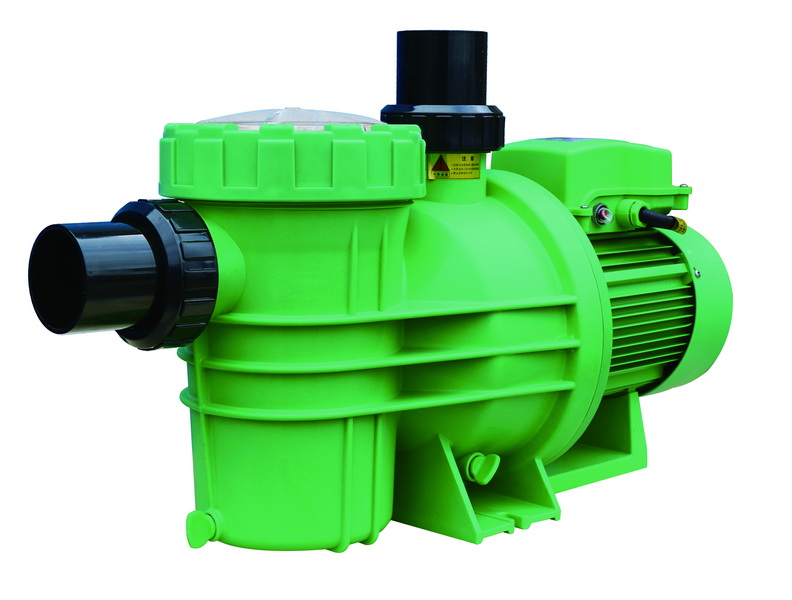
Selecting the proper pump size ensures that your pool's water is properly circulated, filtered, and sanitized. A correctly sized pump:
- Maintains optimal chemical balance and water clarity[2]
- Reduces energy consumption and operational costs[1][2]
- Prevents strain and premature wear on filters and plumbing
- Supports long-term equipment reliability
Before you can select the correct pump, you need to calculate your pool's water volume. The pool volume directly affects the required pump flow rate.
- Formula:
Length ×× Width ×× Average Depth ×× 7.5 = Gallons
Example: 32′×16′×6′×7.5=23,04032′×16′×6′×7.5=23,040 gallons[1]
- Formula:
Diameter⊃2; ×× Average Depth ×× 5.9 = Gallons
Example: 24′×24′×5′×5.9≈16,99224′×24′×5′×5.9≈16,992 gallons[3][1]
- Formula:
Longest Diameter ×× Shortest Diameter ×× Average Depth ×× 6.7 = Gallons[3][1]
- Formula:
((WidthA+WidthB)×Length×0.45)×AverageDepth×7.5 = Gallons
Example: (10+16)×30×0.45×5×7.5≈13,200 gallons[1]
- Sketch the pool, divide the area into smaller geometric shapes, calculate the volume for each, and add them together.[1]
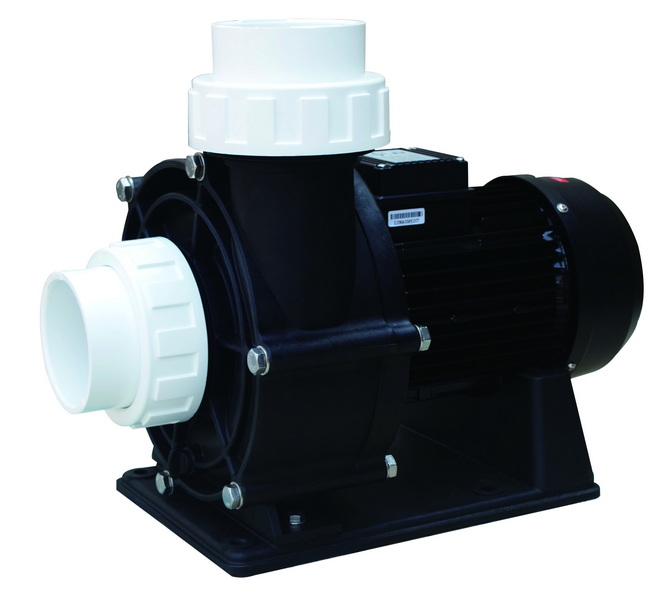
The “turnover rate” is the time needed for your pool pump to circulate all pool water through the filtration system one time. For residential pools, the standard turnover period is typically 8 hours. Commercial codes may require faster turnovers.[4][1]
- Gallons ÷ Hours ÷ 60 = Gallons Per Minute (GPM)
Example: A 24,000-gallon pool requiring a complete turnover in 8 hours
24,000 ÷ 8 ÷ 60 = 50 GPM[5][4][1]
The Total Dynamic Head measures the resistance the pool pump must overcome to circulate water. It includes factors like piping length, number of turns, elevation changes, and equipment like filters and heaters.[5][1]
- Calculate the total length of piping (suction + return)
- Include resistance from fittings (elbows, valves, etc.)
- Add equipment resistance (filters, heaters, chlorinators)
- Convert pressure (psi) to head: 1 psi ≈ 2.312.31 feet of head[1]
Each pool pump comes with a performance curve chart. After determining your required flow rate (GPM) and calculated TDH (feet), find the model whose curve crosses your calculated point in the middle of its operating range.[5]
- Stay within the recommended pipe flow limits:
- 1.5" PVC: up to 45 GPM
- 2" PVC: up to 80 GPM[1]
- Select a pump that matches electrical specs and space
- A 1 HP pump with the wrong specs could be less efficient than a properly selected 3/4 HP pump
- Variable-speed pumps often deliver the best energy efficiency and flexibility[2][1]
Suppose you have a rectangular pool:
- Length: 32 ft
- Width: 16 ft
- Average Depth: 6 ft
Pool Volume = 32 × 16 × 6 × 7.5 = 23,040 gallons[1]
23,040 ÷ 8 (hour turnover) = 2,880 gallons/hour
2,880 ÷ 60 = 48 GPM
Suppose after tallying all pipe lengths, fittings, filter and equipment resistance, your TDH is 45 feet.
Look for pumps rated at 48 GPM at 45 feet of head. Select the model whose midpoint operating curve covers these values for best efficiency.
- Pool Accessories: Waterfalls, spas, heaters, and features may require higher flows
- Filtration: The filter's flow rating must match or exceed the selected pump flow[6][1]
- Regional Climate: Hotter or windier climates may demand more turnover
- Energy Efficiency: Today's variable-speed pumps are preferred for savings
Smart pool management systems, such as those manufactured by leading Chinese OEM suppliers, enable automated control of pumps, filters, and accessories. This ensures peak performance, reliability, and energy efficiency.
Properly sizing your swimming pool pump is essential to maintaining water clarity, reducing energy costs, and extending equipment life. Follow the step-by-step method to measure your pool volume, determine the required flow rate, estimate total dynamic head, and use performance curves to select the best pump for your setup. Partner with a reputable OEM supplier to integrate smart, efficient pool filtration solutions for residential or commercial needs.
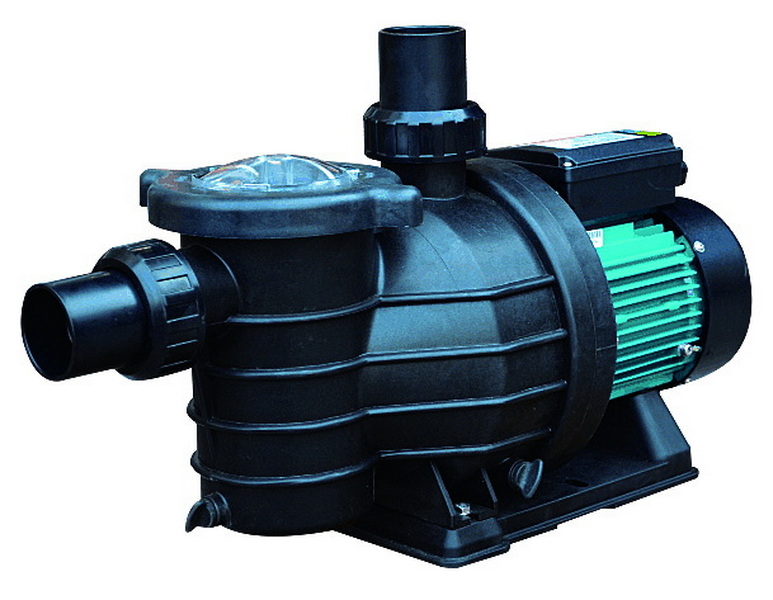
Oversized pumps waste energy, can damage plumbing and filters, and create excessive circulation that disrupts pool chemicals.[2][1]
A standard turnover period is 8 hours, but for commercial pools or hot climates, a 6-hour turnover may be recommended.[4][1]
Variable-speed pumps are suitable for all pool sizes and offer the best energy efficiency by allowing precise adjustment of flow rates.[2]
Absolutely. The filter's flow rating must match or exceed the pump's flow. An undersized filter strains the pump and reduces system life.[6][1]
TDH is calculated by adding the length of plumbing, number of fittings, equipment resistance, and elevation, then converting pressure (if needed) to feet of head using the conversion $$1$$ psi ≈ $$2.31$$ feet of head.[5][1]
[1](https://blog.royalswimmingpools.com/blog/what-horse-power-pump-should-i-get-for-my-pool)
[2](https://www.pentair.com/en-us/education-support/water-education-center/pool-and-spa-education/pool-pump-information-guide.html)
[3](https://hyclor.com.au/what-size-pool-pump-do-i-need-guide/)
[4](https://www.poolandspacentre.co.uk/knowledge-base/swimming-pool-pumps/calculating-a-pool-size-and-pump.html)
[5](https://www.youtube.com/watch?v=cqBaDmKrPGI)
[6](https://www.astralpool.com.au/pool-and-spa-guides/what-size-pump-do-I-need-for-my-pool)
[7](https://www.youtube.com/watch?v=oZu2xtUROG4)
[8](https://www.youtube.com/shorts/larpyJRjpD0)
[9](https://www.youtube.com/watch?v=P7aptIXRN3U)
[10](https://www.youtube.com/watch?v=LyrPr-FyDlM)
[11](https://www.hayward-pool.co.uk/article/configurators/pump-configurator)
[12](https://www.poolsuppliescanada.ca/images/companies/1/howto/guides/PSC-Sizing-Guide.pdf)
[13](https://pool.dreametech.com/blogs/blog/what-size-pool-pump-do-you-need-an-easy-sizing-guide)
[14](https://www.inyopools.com/HowToPage/how_to_size_a_pool_pump_for_your_in_ground_pool_.aspx?CommentPage=10)
[15](https://www.energy.gov/energysaver/choosing-installing-and-operating-efficient-swimming-pool-pump)
[16](https://www.youtube.com/watch?v=HLo9st89JsQ)
[17](https://www.reddit.com/r/swimmingpools/comments/1cod332/pool_pump_size/)
[18](https://www.dabpumps.com/sites/default/files/2017-10/60118741_QUICK%20GUIDE%20FOR%20PUMP%20SELECTION_ENG.pdf)
[19](https://www.youtube.com/watch?v=2pTGtKRGOmA)
[20](https://www.aquagem.com/news/pool-pump-sizing-guide-for-your-swimming-pool)


