
Views: 222 Author: Tina Publish Time: 2025-12-08 Origin: Site


Content Menu
● How to Set Up a Bestway Pool Ladder
● Safety Rules Before You Begin
● Unboxing and Identifying Ladder Parts
● Installing the Top Platform and Handrails
● Setting Up a Bestway Safety Ladder (Flip‑Up Outer Side)
● Positioning the Ladder at the Pool
● Final Safety Checks and First Use
● Routine Maintenance and Seasonal Storage
● OEM and Branding Opportunities for Bestway‑Type Ladders
● FAQs About Setting Up a Bestway Pool Ladder
>> 1. How do I know which Bestway ladder height I need?
>> 2. Why does my Bestway ladder feel wobbly after assembly?
>> 3. Is it safe to leave the ladder in the pool all the time?
>> 4. Can I use a Bestway ladder with any above ground pool brand?
>> 5. How should I maintain my Bestway pool ladder over time?
How to set up a Bestway pool ladder correctly means checking the parts, assembling the A‑frame or safety ladder in the right order, and then positioning it on a solid, level base next to your Bestway pool so entry and exit are safe and stable. When done properly, the ladder will feel firm underfoot and help protect swimmers from slips and accidents throughout the season.[1][2][3][4]
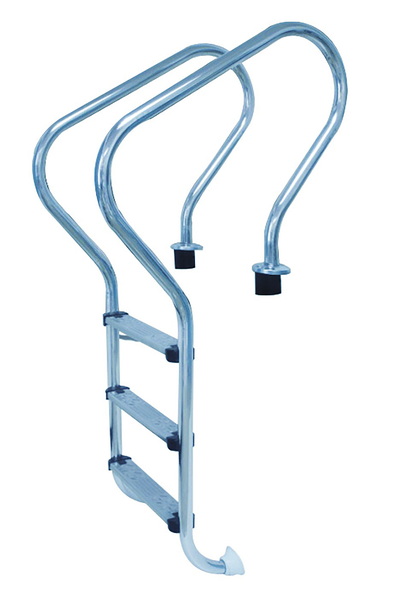
A Bestway pool ladder is designed for above ground pools and uses a corrosion‑resistant metal frame with heavy‑duty plastic steps or a safety barrier system. Before setup, always confirm the ladder height matches your pool wall height (for example 42 in or 48 in) and read the model‑specific owner's manual supplied with the product.[5][2][3]
High‑quality OEM ladders and accessories from professional factories can further improve stability, durability, and safety, especially for brands and wholesalers serving family pools and commercial projects. For OEM buyers, consistent production, strict quality control, and compatible accessories like sand filters, pumps, and LED lights help create a complete, premium pool package around the ladder.[3]
Always start by reviewing the Bestway safety instructions that come with the ladder, paying attention to weight limits, warnings, and the “one person on the ladder at a time” rule. The ladder is for entering and exiting the pool only; users should not dive, jump, or play on or around the ladder structure.[6][2][4]
Select a flat, solid base for the ladder so that all feet sit evenly with no rocking or twisting when weight is applied. Keep the ladder area clear, and teach children not to swim behind or between the legs of the ladder to avoid entrapment or impact injuries.[2][3][6]
Open the carton carefully and lay all ladder components on a flat surface near the pool, separating metal legs, plastic steps, platform pieces, support braces, and hardware into small groups. Compare each part to the exploded diagram in the Bestway owner's manual, checking that all pieces and fasteners are present before starting assembly.[7][1][6][2]
Many Bestway ladders mark legs and rungs with “A” and “B” so that each step side matches the correct leg side. Taking time to match these labels prevents misalignment, reduces assembly mistakes, and avoids having to disassemble the ladder later.[8][7]
Start by assembling the two side frames of the ladder, which usually means connecting steps to legs marked A and B using plastic brackets or clips. Slide each step down from the top so that its labeled side (A or B) engages the matching leg and the notches or grooves lock securely into the connectors.[1][8][7]
After inserting each step, press firmly or tap gently with a rubber mallet to ensure the treads are fully seated and level. Repeat this process for all rungs on both sides, periodically checking that the steps are parallel and that the frame does not twist.[8][1][7]
Once both ladder sides are assembled, bring them together with the top rail or platform that connects the two frames. Insert the top handles or platform piece into the upper openings of each side frame and align the bolt holes for the connector bar.[9][1][7]
Use the supplied bolts, nuts, and washers to fasten the top rail and any cross braces, starting all fasteners loosely and then tightening them evenly with a screwdriver and wrench. When complete, the top should feel rigid, with no wobble when gently pushed from different directions.[3][1][9]
Some Bestway models include a safety ladder design with a flip‑up outer section that can be raised when the pool is not in use to help prevent unsupervised child access. In these models, you assemble the inner and outer sides separately, then connect them through hinges or a sliding mechanism that locks into place.[10][3][2]
Follow the manual carefully to attach the safety barrier, bolts, and locking components, verifying that the outer steps move smoothly but can be secured firmly in the raised position. Demonstrate to adult users how to lift and lock the outer section after each swim session to maintain proper safety practice.[6][10][2]
Place the ladder so the inner steps rest inside the pool and the outer steps rest on the ground or deck, ensuring the pool wall fits comfortably under the top platform. The base must be on a hard, level surface; if the ground is soft or uneven, add a concrete paver, plastic pad, or pre‑formed ladder base under each foot.[11][5][3][6]
Check that the inner feet do not press too hard on the liner, and that the ladder top does not dig into the pool wall frame. If necessary, adjust the ladder's position or use protective pads to reduce wear on the liner and metal wall.[12][3][11]
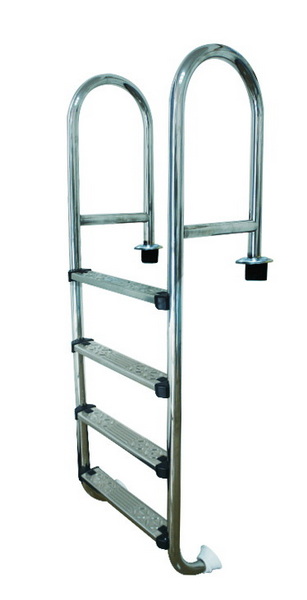
Before allowing anyone to use the ladder, perform a full inspection of the structure and hardware. Confirm that all bolts and clips are tight, that steps are fully seated and non‑slip surfaces are clean, and that the ladder does not rock when someone steps on the bottom rung.[6][2][3]
Teach swimmers to face the ladder when entering and exiting the pool, hold the handrails, and avoid carrying heavy objects or pushing others on the steps. Children should be supervised at all times, and the safety ladder's flip‑up function or other access control methods should be used whenever the pool is not in active use.[4][6][10]
Regularly inspect the metal frame for corrosion and the plastic steps for cracks, sharp edges, or excessive flexing. If any part is damaged or significantly rusted, replace it immediately using compatible original or OEM‑supplied components to maintain structural integrity.[13][5][3]
During the off‑season or winter, remove the ladder from the pool, rinse and dry all parts, and store it in a dry place away from direct sunlight and children. Proper storage reduces fading and corrosion, extending the life of the ladder so it can be safely reused in upcoming swimming seasons.[13][12][3]
For overseas brands, wholesalers, and pool manufacturers, partnering with a professional OEM ladder and filtration factory makes it possible to supply complete pool packages with coordinated equipment. This can include branded pool ladders, sand filters, DE filters, cartridge filters, pumps, LED lights, and matching accessories that share the same design language and packaging.
Working with an experienced OEM supplier using intelligent production lines ensures consistent quality, fast delivery, and support for custom colors, private labels, and tailored safety features to meet local market regulations. These complete solutions help importers and brands differentiate their Bestway‑type and compatible pools while improving safety and user satisfaction.
Setting up a Bestway pool ladder successfully is about more than simply snapping parts together; it requires careful assembly, correct positioning, and ongoing maintenance for safe, stable use. By following the manufacturer's instructions, checking all hardware, using a solid base, and removing or securing the ladder when the pool is unsupervised, pool owners can protect their families and extend the ladder's service life.[1][3][6][13]
For brands, wholesalers, and pool manufacturers, partnering with a professional OEM factory for ladders, filtration systems, pumps, and LED lights is an effective way to deliver complete, high‑quality pool packages to global markets. To discuss custom ladder designs, compatible filters, and OEM solutions tailored to your market, feel free to reach out for technical support and quotation details.
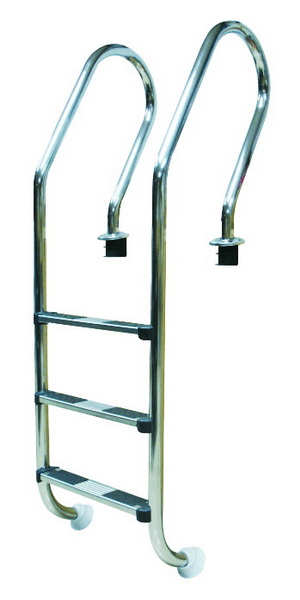
Choose a ladder height that matches or slightly exceeds the pool wall height, such as 42 in or 48 in models for common above ground pools. The correct height ensures the top platform rests securely over the wall while both sets of feet sit firmly on their bases.[14][5][3]
A wobble usually means the base is not level, steps are not fully seated, or some bolts are still loose. Re‑check all hardware, tap each step fully into its notches, and place the feet on a firm pad or paver until the ladder feels stable.[11][7][8][6]
Many owners leave the ladder in place during the season, but it should be removed or secured when the pool is unsupervised, especially if children are present. For safety ladder models, flipping up the outer steps is a key part of preventing unauthorized access.[3][6][13][10]
In most cases, Bestway ladders can be used with many above ground pool brands as long as the wall height and frame type are compatible. Always confirm the ladder's specifications, weight rating, and base requirements against the pool manufacturer's recommendations.[5][2][12][3]
Inspect the ladder frequently for rust, loose screws, UV‑damaged plastic, and slippery treads, and replace worn parts promptly. At the end of the season, remove, dry, and store the ladder indoors or in a dry shed to minimize corrosion and extend its lifespan.[12][13][3]
[1](https://www.youtube.com/watch?v=AcVIHFSLCTY)
[2](https://manuals.plus/bestway/58331-1-22m-48-inch-pool-ladder-manual)
[3](https://www.bestwaystore.de/en/pool-accessories/pool-accessories/pool-ladders/)
[4](https://bestwayusa.com/blog/5-pool-safety-tips-to-follow.html)
[5](https://bestwayusa.com/bestway-above-ground-pool-ladder-48-58336e)
[6](https://bestwayusa.com/media/pdf_files/Coleman_Pool_Ladder_90392E_2024.pdf)
[7](https://www.youtube.com/watch?v=7kl3jaOPnnw)
[8](https://www.youtube.com/watch?v=JJkG7vsan1E)
[9](https://www.youtube.com/watch?v=ANV4WKmQTxI)
[10](https://www.youtube.com/watch?v=ofBp-RbwJCs)
[11](https://www.facebook.com/groups/637529959937311/posts/2586520505038237/)
[12](https://www.1stdirectpools.com/blog/post/caring-for-your-bestway-pool-a-beginners-guide)
[13](https://manuals.plus/qa/5922583/How-to-properly-maintain-and-store-the-Bestway-Pool-Ladder)
[14](https://bestwayusa.com/bestway-above-ground-pool-ladder-42-58335e)
[15](https://www.youtube.com/watch?v=1keTaAzgBVU)
[16](https://www.facebook.com/groups/637529959937311/posts/2250476905309267/)
[17](https://www.facebook.com/groups/637529959937311/posts/1994407434249550/)
[18](https://www.poolkingfilter.com/how-to-put-a-bestway-pool-ladder-together.html)


