
Views: 222 Author: Tina Publish Time: 2025-11-29 Origin: Site


Content Menu
● Understanding Your Bestway Pool Ladder
● Tools, Parts, and Preparation
● Step 1: Lay Out and Identify All Parts
● Step 2: Assemble the Ladder Side Frames
● Step 3: Install the Steps/Rungs
● Step 4: Attach the Top Rails and Handrails
● Step 5: Install Cross Braces and Stability Supports
● Step 6: Final Tightening and Safety Checks
● Step 7: Positioning the Ladder at the Pool
● Step 8: Using and Locking a Safety Ladder
● Essential Pool Ladder Safety Tips
● Maintenance and Seasonal Storage
● OEM Pool Ladders and Accessories From China
● FAQs About Assembling a Bestway Pool Ladder
>> 1. Do I need special tools to assemble a Bestway pool ladder?
>> 2. How long does it take to put together a Bestway ladder?
>> 3. Why are the legs and steps marked A and B?
>> 4. How can I make my Bestway ladder more stable?
>> 5. Is it safe to leave the ladder in the pool all the time?
>> 6. How often should I check or maintain my Bestway pool ladder?
Assembling a Bestway pool ladder is straightforward if you follow the steps in the correct order and pay close attention to safety details. This guide walks through the entire process, from unpacking parts to final safety checks, and includes ideas for photos and videos you can add to make your content more engaging.[1][2][3][4]
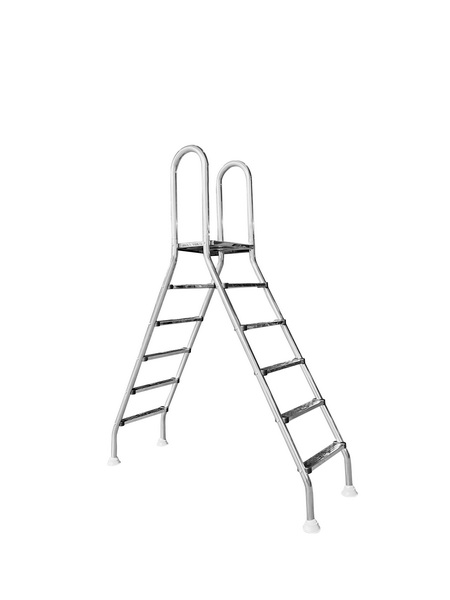
Bestway above‑ground pool ladders are designed to provide safe entry and exit for pools, usually in heights like 33 in, 42 in, or 48 in. They typically use a corrosion‑resistant metal frame with heavy‑duty plastic steps and may include a safety feature allowing the outer ladder to flip up to block access when the pool is not supervised.[5][6][7][8]
To assemble a Bestway pool ladder correctly, you need to identify the A and B legs, match them to the A and B markings on the steps, and secure everything with bolts, nuts, and retention clips. Most models come with an illustrated manual and require only basic tools such as a Phillips (crosshead) screwdriver and an adjustable wrench.[2][9][10][11]
Before starting, clear a flat working area near the pool so you can lay out all parts and hardware. Having a solid, level surface helps keep the ladder square during assembly and prevents wobbling later.[10][3][2]
Typical items you will need include:
- Ladder kit (legs, steps, top rails, braces, connectors, hardware).[9][11]
- Crosshead screwdriver and adjustable wrench or socket.[2][10]
- Optional rubber mallet to fully seat the steps into the side rails without damaging the plastic.[11][9]
Open the box carefully and place every component on the ground where you can see it clearly. Most Bestway ladders label the legs and steps with “A” and “B” so you can match them correctly.[9][11]
Check that you have:
- Two A legs and two B legs.[11][9]
- Several steps/rungs with A and B markings on each side.[9][11]
- Top handles/rails and cross braces.[11][9]
- Connectors or step clips for each rung, plus bolts, nuts, and retention clips.[3][9]
Start by building the two side frames that will hold the steps. It is easier to prepare all the A and B legs with their connectors before sliding the steps into place.[9][11]
- Take one A leg and one connector; orient the connector so the larger opening points down toward the bottom of the leg.[11][9]
- Repeat for all connectors on both A legs, then do the same on both B legs.[9][11]
- Make sure the connectors are aligned so the grooves will line up with the slots in the steps.[11][9]
With the side frames prepared, you can begin installing the steps from the bottom up.[1][9]
- Take one step and locate its A side and B side markings.[9][11]
- Position the step above the bottom connectors on the A and B legs, matching A to A and B to B.[11][9]
- Slide the step down so the ends fit into the notches or grooves on the connectors until fully seated.[1][9]
- Continue installing the remaining steps one level at a time.[1][11]
If a step feels tight, gently tap the top with a rubber mallet to ensure it is seated completely without cracking the plastic. Once done, visually confirm that all steps sit level and are fully engaged in the side rails.[2][1][9][11]
After the step section is complete, you can install the top platform or top rails and connect the handrails.[4][1]
- Position the top rail over the top ends of both ladder sides.[4][11]
- Slide it down until the holes in the top rail line up with the leg holes.[4][11]
- Insert the supplied bolts through the top holes from the outside and thread the nuts onto the inside.[10][1]
If your model uses separate handrail pieces, attach them to the top rail with bolts and nuts, following the manual's orientation diagrams. Tighten hardware with your screwdriver and wrench, but avoid overtightening, which could deform plastic components.[10][2]
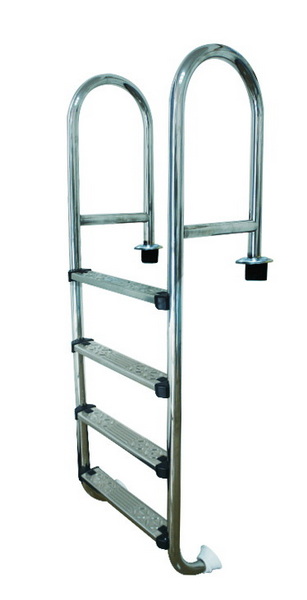
Some Bestway ladders include cross braces that connect the front and back legs below the waterline. These braces greatly improve the ladder's rigidity and reduce wobbling during use.[9][11]
- Locate each brace and confirm its orientation as shown in the manual.[2][10]
- Slide the brace over the leg where indicated and secure it using the corresponding bolts and nuts.[11][9]
- Repeat on all sides, then snug all bolts so the frame feels solid and square.[9][11]
Before you move the ladder to the pool, inspect the entire structure.[3][2]
Check that:
- Every step is fully seated and does not shift when you press down.[1][2]
- All bolts, nuts, and retention clips are installed and tightened, with no sharp edges protruding.[10][2]
- The ladder sits evenly on the ground, without rocking from side to side.[3][2]
Bestway and other safety guidelines also advise ensuring the steps have a non‑slip surface and that handrails are secure enough for users, including children, to grip easily. Confirm maximum weight limits in the manual and never exceed them.[12][8][3][2]
Place the ladder on a firm, level base next to the pool wall. Both the inside and outside feet should be stable so users can climb without the ladder sinking or shifting.[3][2]
- For soft ground, consider using paving stones or a small platform to create a solid foundation.[2][3]
- Adjust the ladder position so the inner legs rest properly on the pool floor and the top rail rests securely on the pool edge.[4][9]
Follow the manual's instructions for any hooks or clamps that fix the ladder to the pool frame, which helps prevent accidental movement. For safety ladders with a flip‑up outer section, confirm that the pivot mechanism works smoothly.[7][8][10][2]
Many Bestway safety ladders allow the outside portion to lift or lock so children cannot enter the pool unsupervised. This design helps meet safety recommendations that ladders should be inaccessible when the pool is not in use.[13][8][12][7]
- Flip up or secure the outer ladder when no adult supervision is present.[7][13]
- Teach all family members how to lock and unlock the ladder correctly.[14][12]
This simple habit significantly reduces unauthorized access and complements other layers of pool safety, such as fences and self‑latching gates.[12][14]
Pool ladders can be a source of injury if used incorrectly, so safety best practices are critical. The U.S. Consumer Product Safety Commission notes thousands of emergency‑room visits each year related to pool equipment, including ladders, underscoring the need for caution.[14][12]
Key tips include:
- Always face the ladder when entering or exiting the pool.[10][2]
- Allow only one person on the ladder at a time to avoid tipping or structural overload.[3][2]
- Keep steps dry and free of slippery contaminants when possible, and ensure non‑slip surfaces are intact.[8][12]
- Remove or secure the ladder when the pool is not in use, especially where children are present.[13][2]
Regular maintenance extends the life of your Bestway pool ladder and keeps it safe. Corrosion‑resistant metal frames and UV‑resistant plastics still need basic care, especially in harsh climates.[5][8][13]
- Rinse the ladder periodically to remove pool chemicals and debris.[8][13]
- Inspect screws, clips, and steps for rust, wear, or cracks, and replace damaged parts promptly.[13][3]
- During the off‑season, remove the ladder from the pool, clean it thoroughly, and store it in a dry, sheltered place out of children's reach.[8][13]
If you operate or source from an OEM factory in China, combining Bestway‑style ladder functionality with custom branding can support your pool package solutions. Many overseas brands and wholesalers look for complete filtration and access systems that include sand filters, pumps, LED lights, and matching ladders.[5][8]
A professional OEM supplier can:
- Customize ladder dimensions, colors, and packaging for different above‑ground pool heights.[8]
- Bundle ladders with sand, DE, or cartridge filters and pool pumps to provide full kit solutions for international partners.[5]
Putting together a Bestway pool ladder mainly requires organizing parts, matching the A/B markings, and carefully tightening all hardware according to the manual. When combined with correct positioning, safety‑ladder locking, and regular maintenance, your ladder will provide reliable, secure entry and exit for your above‑ground pool for many seasons.[12][7][13][1][2]
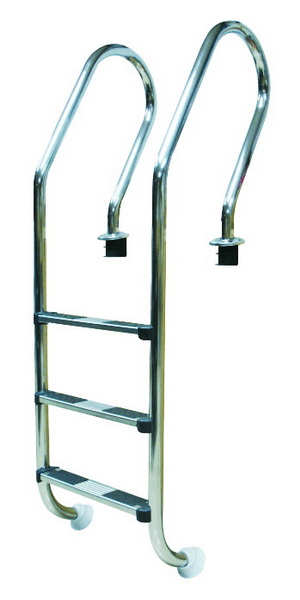
Most Bestway pool ladders only require a crosshead screwdriver and an adjustable wrench or similar tool to tighten bolts and nuts. A rubber mallet can be helpful but is optional, mainly used to fully seat plastic steps in the side rails.[2][10][11][9]
For someone assembling the ladder for the first time, the process typically takes around 20–40 minutes, depending on the model and personal experience with DIY projects. Laying out all parts first and following the manual's sequence step by step helps keep the assembly time short.[15][1][2][11]
The A and B markings ensure the steps and legs are oriented correctly and that the grooves and connectors line up as designed. Mixing A and B sides can result in misaligned steps, poor stability, or difficulty seating the rungs fully.[11][9]
Ensure the ladder sits on a firm, level surface, and confirm that all cross braces and hardware are properly installed and tightened. If the ground is soft, place pavers or pads under the feet and verify that the ladder is correctly hooked or supported on the pool frame.[4][3][2][9]
Many owners leave the ladder in place during the swimming season, but safety guidelines recommend removing or securing it when the pool is not supervised. For safety ladder models, flipping up and locking the outer section is a good practice to prevent unsupervised access, especially for children.[7][12][13][2]
It is wise to visually inspect the ladder before each swimming day and perform a more thorough check every few weeks. During these checks, look for loose hardware, worn non‑slip surfaces, cracks in steps, or any signs of corrosion so you can repair or replace parts as needed.[13][8][3]
[1](https://www.youtube.com/watch?v=AcVIHFSLCTY)
[2](https://manuals.plus/bestway/58331-1-22m-48-inch-pool-ladder-manual)
[3](https://device.report/manual/5191139)
[4](https://www.youtube.com/watch?v=1keTaAzgBVU)
[5](https://bestwayusa.com/bestway-above-ground-pool-ladder-48-58336e)
[6](https://bestwayusa.com/bestway-above-ground-pool-ladder-42-58335e)
[7](https://www.youtube.com/watch?v=ofBp-RbwJCs)
[8](https://www.bestwaystore.de/en/pool-accessories/pool-accessories/pool-ladders/)
[9](https://www.youtube.com/watch?v=7kl3jaOPnnw)
[10](https://bestwayusa.com/media/pdf_files/Coleman_Pool_Ladder_90392E_2024.pdf)
[11](https://www.youtube.com/watch?v=JJkG7vsan1E)
[12](https://www.poolfencediy.com/blogs/blog/pool-ladder-safety)
[13](https://manuals.plus/qa/5922583/How-to-properly-maintain-and-store-the-Bestway-Pool-Ladder)
[14](https://bestwayusa.com/blog/5-pool-safety-tips-to-follow.html)
[15](https://www.youtube.com/watch?v=ANV4WKmQTxI)
[16](https://www.facebook.com/groups/637529959937311/posts/2586520505038237/)


