
Views: 222 Author: Tina Publish Time: 2025-11-29 Origin: Site


Content Menu
● Understanding your Intex pool ladder
● Tools, safety rules and preparation
● Step 1: Unpack and identify all parts
● Step 2: Assemble the J‑shaped legs and lower sleeves
● Step 3: Install steps on the pool side frame
● Step 4: Assemble the outside leg frame and steps
● Step 5: Attach the top platform
● Step 6: Install the U‑shaped top rails and handrails
● Step 7: Position and secure the ladder at the pool
● Step 8: Safety checks, testing, and maintenance
● Using removable steps on Intex safety ladders
● FAQs about assembling an Intex pool ladder
>> 1. How long does it take to put together an Intex pool ladder?
>> 2. Can I use an Intex ladder with a different brand above‑ground pool?
>> 3. Why do the steps and legs have A and B markings?
>> 4. How often should I check ladder screws and clips?
>> 5. What is the typical weight limit for an Intex pool ladder?
Assembling an Intex pool ladder is straightforward if you follow the correct sequence: sort the parts, build the two leg frames, slide on the steps, add the top platform and handrails, and then secure and test the ladder beside your pool. Doing each step in order keeps the ladder stable and safe for swimmers, especially children.[1][2][3]
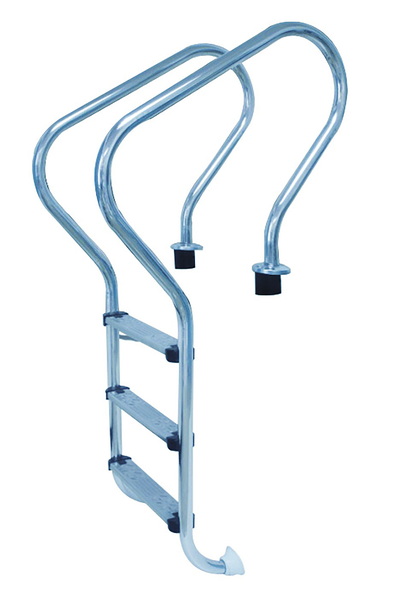
Intex produces several ladder styles for 42 in, 48 in, and 52 in pool wall heights, including standard and safety ladders with removable steps. Each model has similar core parts: J‑shaped legs for the pool side, straight or slightly angled legs for the outside, plastic steps, step anchor sleeves, a top platform, and fasteners.[4][5][6][1][2]
Safety versions add removable front steps and safety clasps so you can block access when the pool is unsupervised, helping to prevent accidental entry by children. Most modern Intex ladders are designed to support up to about 300 lb (136 kg) and meet common strength standards when assembled correctly.[7][8][9][1]
Intex manuals usually recommend assembling the ladder on a flat, solid surface close to the pool area but not directly in the water. Basic tools may include a Phillips screwdriver and pliers or a small adjustable wrench, although some models use mainly snap‑fit connections and limited screws.[3][1][2]
Key safety rules include: assembly and disassembly must be done by an adult, only one person should use the ladder at a time, never dive or jump from the ladder, and always supervise children using it. The ladder is designed for a specific pool wall height, so it must not be used on pools of different heights or brands unless the manual explicitly permits this.[1][2][3]
Start by opening the carton and laying out all components where you can see them clearly. Intex ladders typically include:[10][1]
- Two J‑shaped lower legs for the pool side, often marked A and B.[2][1]
- Two straight or gently curved outer legs, also marked to match the steps and platform.[10][1]
- Multiple plastic steps, each labeled with A and B ends to match the leg markings.[11][12]
- Step anchor sleeves or “clips” that fit over the metal tubes and lock the steps at each height.[12][7]
- One or two top platforms with pre‑drilled holes.[1][10]
- U‑shaped upper handrails or top rails that connect both sides of the ladder.[7][2]
- Screws, nuts, washers, and sometimes plastic caps.[2][1]
Compare each item to the illustrated parts list in the manual to confirm nothing is missing and to understand how A‑side and B‑side pieces pair together. Do not skip this step, because some parts look similar but are not interchangeable, and mixing them can cause an unstable or crooked ladder.[10][1]
Place the two J‑shaped legs marked A and B on the ground with the curved ends oriented so they will point outward from the pool wall when installed. Many manuals emphasize ensuring the J‑legs are pointing outward before installing any steps, because incorrect orientation can cause the ladder to lean improperly.[1][2]
Slide the first pair of step anchor sleeves over the lowest indents on each J‑leg, with the arrows printed on the sleeves pointing upward. Rotate each sleeve slightly until it drops into the detent or groove on the leg; this locks the sleeve so that it cannot slide once the step is in place.[11][12][7]
At this stage, you effectively create the “lower support” for your first step on both the A and B sides. Repeat the same step for the next positions up the legs if your ladder requires all anchor sleeves to be installed before adding steps.[12][11][1]
Each composite plastic step is marked with A and B ends that must match the A and B legs or the step will not sit level. Start with the lowest step: slide the A end onto the sleeve on leg A and the B end onto the sleeve on leg B, pressing firmly until each end clicks into the locking ridge inside the sleeve.[11][12]
Once the first step is fully seated, slide the next pair of sleeves into position above it, rotate them into the leg indents, and then fit the second step. Continue this pattern until you have installed all steps on the pool side of the ladder, usually four steps for common 48–52 inch models.[7][12][11][1]
Make sure every step is fully snapped in and that each sleeve arrow still points upward, because improperly seated steps can tilt or pop out under load. Press down hard on each installed step with your hands or body weight to confirm that it does not move or rattle excessively.[3][12][7]
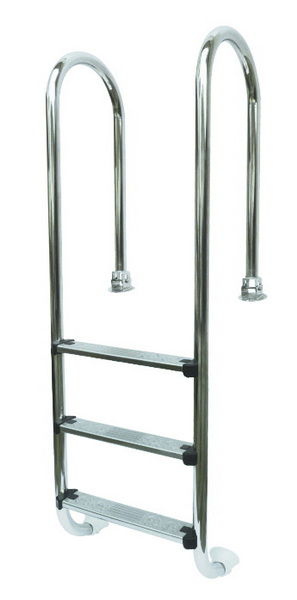
Repeat the same sleeve‑and‑step process for the outer straight legs, which form the outside of the ladder that rests on the ground. As before, match A and B markings between steps and legs, and ensure the legs are oriented so that they angle away from the pool to give a stable stance.[12][11][1]
Install the sleeves on the lowest indent first, rotate them into place, then slide on the first step, working upwards until all steps are installed to mirror the pool‑side frame. When finished, both the inner and outer frames should have the same number of steps at the same heights, forming two parallel stairways.[11][12][1]
If your Intex model is a safety ladder with removable steps, the outer frame may be built as a separate removable section that clips into a base under the top platform. In that case, follow the specific instructions for building this removable assembly, as it includes extra safety latches and clasps.[9][7]
Most Intex ladders use one or two plastic top platforms that sit across both sets of legs and provide a flat standing surface. Each corner of the platform is labeled with A or B holes that must slide over the corresponding A and B legs to align the structure correctly.[10][1]
Slide the platform down over the legs until the small side holes line up with the lower holes in the legs. Use the longer screws, washers, and nuts supplied with the ladder to fasten the platform to each leg, typically with the screw heads on the outside of the ladder for easier inspection.[7][2][1]
Do not fully tighten the screws until all corners are loosely attached, which allows small adjustments so the platform sits level. Once alignment is correct, tighten all platform fasteners evenly, being careful not to over‑tighten and crack the plastic.[3][1]
Next, locate the U‑shaped top rails that connect and stabilize the two sides of the ladder at the top. Slide the open ends of a U‑rail over the protruding legs on one side of the platform and align the screw holes.[2][7]
Insert screws with washers through the outside of each rail and secure them with nuts on the inside, again hand‑tightening first and then fully tightening once all screws are in their correct positions. Repeat the process for the other side until both U‑rails are firmly attached and the ladder feels rigid when gently rocked.[3][7][2]
Some premium safety ladders include integrated handgrips or safety clasps near the top platform to hold removable steps or lock them when raised. Ensure all clasps move freely and latch correctly, as they are critical for blocking ladder access when needed.[9][7]
Before placing the ladder on the pool, double‑check that the ground where the outer legs will rest is level, solid, and free of sharp debris. Uneven or soft surfaces can make the ladder wobble or sink, increasing the risk of falls.[1][3]
Lift the ladder upright and move it so the inner J‑shaped legs hook over the top rail of the pool wall, with the curved parts pointing outwards on the water side. The bottom pads or feet of the inner legs should rest flat against the pool floor near the wall, and the external legs should stand firmly on the ground.[2][1]
If your Intex kit includes brackets or straps to lock the ladder to the pool frame, attach them now following the manual. Securing the ladder reduces tipping when users climb and also discourages kids from moving or dragging the ladder away from the pool.[3][2]
When the ladder is fully assembled and positioned, apply firm downward pressure to each step to ensure it is fully anchored and does not pop out or flex excessively. Shake the handrails gently to confirm that all screws and connections are tight and that there is no significant wobble.[7][3]
Regular maintenance includes checking all nuts, bolts, steps, and step anchor sleeves to confirm they remain secure, especially at the beginning of each swimming season or after heavy use. Inspect the ladder for signs of rust, cracks in the plastic steps or platform, and worn feet pads that could damage the pool liner.[1][3]
Safety guidelines recommend always supervising children on or near the ladder, keeping only one person on the ladder at a time, and never allowing anyone to dive or jump from it. For night swimming, the area around the ladder and pool entry points should be illuminated with artificial lighting so users can clearly see steps and warning signs.[3][1]
If you own an Intex safety ladder with removable outer steps, use the safety mechanism whenever the pool is not in use. Typically, you open both clasps, press buttons at the top of the removable legs, and pull the entire outer step assembly upward and away from the support base.[9][7]
The removable section is then inserted into storage openings above the top platform or on the inner frame, where it clicks into place until the pool is ready for use again. To resume use, you release a safety latch, pull the stored assembly free, and drop it back into the outer base until you hear it lock with an audible click.[9][7]
This design prevents unsupervised children from climbing into the pool, especially when combined with a pool cover and surrounding barrier or fence. Regularly test the removable mechanism to ensure the clasps and latches move smoothly and lock solidly.[9][7]
Putting together an Intex pool ladder is a manageable project when broken down into clear stages: sorting parts, assembling both frames, locking in the steps, installing the platform and top rails, and then positioning and testing the ladder at the pool. Closely following the owner's manual, respecting load and height limits, and performing regular safety inspections ensure that your ladder remains stable and safe for family use throughout the swimming season.[11][1][3]
Most homeowners can assemble a standard Intex ladder in about 30–60 minutes, depending on familiarity with the parts and whether they watch a video guide alongside the manual. Sorting and identifying components before starting usually saves time and reduces rework.[14][13][10][1]
Intex manuals state that each ladder is designed for a specific pool wall height and for use with compatible pools, so mixing brands or incorrect wall heights is not recommended. Using a ladder on a higher or lower wall than intended can create unsafe angles and step spacing.[2][1]
A and B markings ensure that the molded angle of each step matches the corresponding leg, so the tread sits level when installed. If you reverse A and B, the step can tilt slightly, making the ladder uncomfortable and potentially unsafe.[12][11]
Guides for Intex ladders recommend checking all nuts, bolts, steps, and step anchor sleeves regularly, especially at the start of each season and after heavy use. This routine helps catch loosening hardware or worn parts before they create hazards.[1][3]
Many Intex ladder manuals list a maximum load of around 300 lb (136 kg), though the exact rating can vary by model. Always confirm the weight limit in your specific owner's manual and avoid exceeding it to maintain structural safety.[8][1]
[1](https://manuals.plus/intex/58975-52-inch-pool-ladder-manual)
[2](https://www.intexdevelopment.com/support/downloadmnl?filename=330PO_R0_2212_EN.pdf)
[3](https://manuals.plus/intex/28072-safety-ladder-manual)
[4](https://intexcorp.com/products/above-ground-pools/pool-accessories/ladders/pool-ladder-for-42in-depth-pools-1/)
[5](https://intexcorp.com/products/above-ground-pools/pool-accessories/ladders/pool-ladder-for-48in-depth-pools-1/)
[6](https://intexcorp.com/products/above-ground-pools/pool-accessories/ladders/pool-ladder-for-52in-depth-pools-1/)
[7](https://www.youtube.com/watch?v=br-93CL5yyM)
[8](https://www.intexsales.com/b2cmnl/B2CMNLServlet?instantiate=B2cMnldownloadApp&action=pub_mnl&filnam=331IO_A1_1912_EN.pdf)
[9](https://www.intex.co.il/sysvault/docsfiles2/cdbb1e6620-54e3-4677-9cad-a5df3f0d41bd.pdf)
[10](https://pdf.archiexpo.com/pdf/intex/pool-ladder/61225-116309.html)
[11](https://www.youtube.com/watch?v=BGmJGWkcXr8)
[12](https://www.poolkingfilter.com/how-to-assemble-intex-pool-ladder.html)
[13](https://www.youtube.com/watch?v=bCJ1S1HCEtw)
[14](https://www.youtube.com/watch?v=c0NyjUtAEb8)
[15](https://www.intexsales.com/b2cmnl/B2CMNLServlet?instantiate=B2cMnldownloadApp&action=pub_mnl&filnam=330IO_A0_1805_EN.pdf)
[16](https://intexcorp.com/products/above-ground-pools/pool-accessories/ladders/deluxe-pool-ladder-with-removable-steps-for-48in-depth-pools/)
[17](https://www.youtube.com/watch?v=JJkG7vsan1E)
[18](https://www.intexdevelopment.com/support/downloadmnl?filename=331PO_R1_1912_EN.pdf)
[19](https://intexcorp.com/replacement-parts/above-ground-pools/pool-accessories/ladders/)
[20](https://intexcorp.com/replacement-parts/above-ground-pools/pool-accessories/ladders/48in-pool-ladder/)


