
Views: 222 Author: Tina Publish Time: 2025-11-29 Origin: Site


Content Menu
● Understanding Your Above Ground Pool Ladder
● Step 1: Unpack, Sort, And Identify Components
● Step 2: Assemble The Side Frames With Steps
● Step 3: Attach The Second Leg And Complete The Ladder Body
● Step 4: Install The Top Platform And Handrails
● Step 5: Weighting The Ladder For Stability
● Step 6: Positioning And Securing The Ladder At The Pool
● Step 7: Safety Checks And Final Adjustments
● Safety Tips For Using An Above Ground Pool Ladder
● Maintenance And Troubleshooting Tips
● When To Call A Professional Or Replace The Ladder
● FAQ
>> 1. How long does it take to assemble an above ground pool ladder?
>> 2. What tools are usually required to put together an above ground pool ladder?
>> 3. How can I make my above ground pool ladder more stable?
>> 4. Are above ground pool ladders safe for children?
>> 5. When should I replace my above ground pool ladder?
>> 6. Can I install an above ground pool ladder without a deck?
Assembling an above ground pool ladder is a simple project if you stay organized and follow each step in order. Proper assembly not only makes entry and exit more comfortable, but also greatly improves safety for family and guests.[1][2][3]
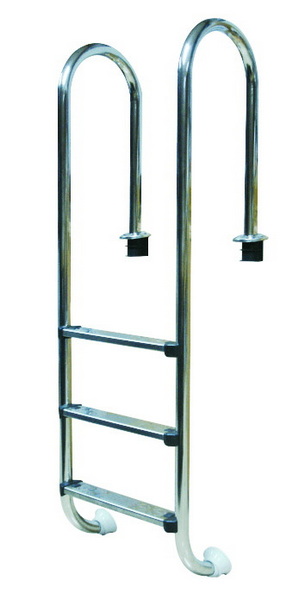
Above ground pool ladders come in a few main styles: A‑frame ladders that sit on the ground on both sides of the pool, deck‑mount ladders that bolt to a deck, and in‑pool step systems that look like wide stairs. Each style has slightly different hardware and installation points, but most share the same basic parts: legs, steps/treads, handrails, and a hardware kit of bolts, nuts, and caps.[2][4][5]
Many ladders and step systems are made from resin or coated metal, designed to resist UV rays and pool chemicals. Most manufacturers also provide built‑in ways to add sand or water as ballast to keep the ladder from floating or shifting once it is in the pool.[5][6][2]
Before starting, gather all tools and components so you do not have to stop mid‑assembly. Typical tools include a Phillips screwdriver, rubber mallet, cordless drill with bits, wrenches or a socket set, measuring tape, and sometimes sealant or a marker for deck installations.[7][2]
Open the ladder box and lay everything out on a clean, flat surface near the pool. Use the parts list in the manual to confirm that all steps, legs, handrails, braces, bolts, nuts, and plastic caps are present and undamaged before you begin.[2][5]
Start by separating parts into groups: ladder legs, steps/treads, handrails, top platform if included, and hardware. Many modern ladders mark the legs and steps with letters such as “A” and “B” or symbols like plus/minus to show which side matches which, so check for markings on the ends of the treads and inside the legs.[8][9][5][2]
Place matching legs parallel to each other and align the steps that correspond to them, ensuring that the “A” side of each step will face the “A” leg and the “B” side faces the “B” leg. Group the bolts and nuts by size so you can quickly identify which hardware goes where during assembly.[8][5]
Lay the first ladder leg flat on the ground with the step openings facing inward. Insert the bottom step into the designated lugs or sockets, making sure the labeled end matches the leg label and that the tread's non‑slip surface is oriented up.[9][5][8]
Use a rubber mallet to gently tap the step into place until it is fully seated in the lugs and there are no visible gaps. Repeat this process for each remaining step moving upward, keeping the spacing consistent and ensuring every tread locks solidly into the leg.[5][9][8][2]
Once one side leg is loaded with steps, position the matching opposite leg parallel to it. Carefully guide each step end into the corresponding lugs on the second leg, starting from the bottom step and working upward so the frame does not twist.[9][8][5]
Tap each step connection with the rubber mallet until all treads are fully seated and the ladder body feels rigid with no rocking. Visually confirm that every step is level and that the A/B or plus/minus markings are matched correctly across both legs.[8][2][5][9]
Many above ground pool ladders include a top platform or crossover piece that ties both sides together and supports the handrails. Position the top rail or platform between the two ladder legs at the designated holes, then secure it with the supplied bolts and nuts without fully tightening yet.[7][9][8]
Next, align the handrails with their mounting points on the top platform and ladder legs, making sure the curved ends face outward for a comfortable grip. Insert the bolts through the handrail brackets and tighten the nuts gradually on both sides so the rails remain symmetrical and stable.[2][7][5][8]
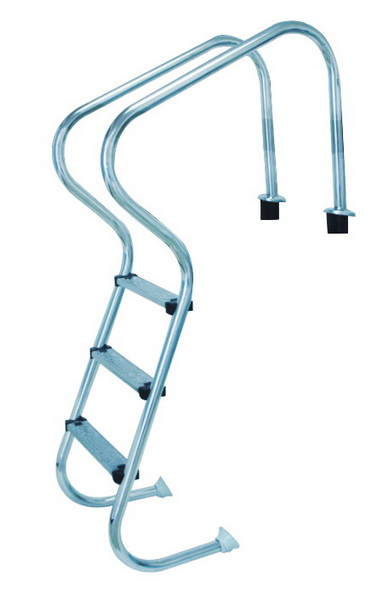
Most in‑pool ladders and step systems must be weighted so they do not float or shift when swimmers climb. Follow your manufacturer's instructions to fill the built‑in chambers with the recommended material, commonly about 40 pounds of sand or water distributed equally in the compartments.[10][6][2]
Place the ladder or steps in the pool and move them side to side so air bubbles can escape and water fills hollow sections. After filling, verify that the ladder sits firmly on the pool floor and that the top hooks or rails still align correctly with the pool wall or deck.[4][6][10]
Place the ladder where swimmers naturally enter and exit, leaving enough room around it for safe movement. For above ground pools without a deck, position an A‑frame ladder so the base is level on the ground and the top rests evenly on the top rail without pinching the liner.[3][4][7][2]
If you have a deck, install the appropriate mounting brackets or anchor flanges on the deck surface and slide the handrails into them, then tighten the screws. Use a level to check that the ladder is straight and adjust the feet or brackets as needed before final tightening.[10][4][7]
Once the ladder is in its final position, perform a full safety inspection before anyone uses it. Confirm that all bolts and nuts are tight, that there are no sharp edges or protruding hardware, and that each step has a non‑slip surface.[11][1][7]
Have an adult slowly climb up and down while another person watches for any wobbling, movement, or flexing of the ladder or pool wall. If you notice instability, adjust the base, add more ballast, or reinforce mounting brackets until the ladder feels solid and secure.[11][7][2]
Safe ladder design and usage are critical, especially when children use the pool. Choose a ladder with steps wide enough to place the whole foot, non‑slip surfaces, and handrails that are easy for kids to grip.[1][3][11]
When the pool is not in use, make sure the ladder is inaccessible: some models lock, flip up, or can be removed entirely to prevent unsupervised access. Never allow more than one person to climb on the ladder at a time, and always supervise children closely whenever they are using it.[3][1][11]
Regular checks extend the life of your above ground pool ladder and keep it safe. Inspect the ladder weekly for cracks, UV damage, rust, or loose hardware, and replace worn treads or caps according to manufacturer guidance.[6][7][11]
Keep the ladder clean by rinsing off sunscreen, oils, and debris that can make steps slippery, and lightly brushing non‑slip surfaces if biofilm develops. If your ladder rocks or drifts over time, verify that the weighting compartments are still full and that any deck brackets remain tight.[12][6][11][2]
If your pool ladder shows structural cracks, severe rust, or cannot be stabilized even after adding ballast and tightening hardware, it may be time for replacement. A damaged ladder can cause falls, cuts, or difficulty exiting the pool, increasing the risk of injury or drowning.[6][7][11]
For complex deck installations or if you are unsure about drilling into your deck or pool coping, hiring a professional installer can ensure correct bracket placement and safe mounting. Professional installers can also recommend ladders with suitable weight capacity and accessibility features for your family's needs.[12][7][11][6]
Putting together an above ground pool ladder is straightforward when you organize parts, follow the sequence of assembling legs, steps, top platform, and handrails, and then carefully weight and position the ladder. Taking extra time to secure the ladder and follow safety guidelines helps prevent slips, falls, and instability, ensuring that swimmers of all ages can enter and exit your pool confidently.[1][3][8][2]
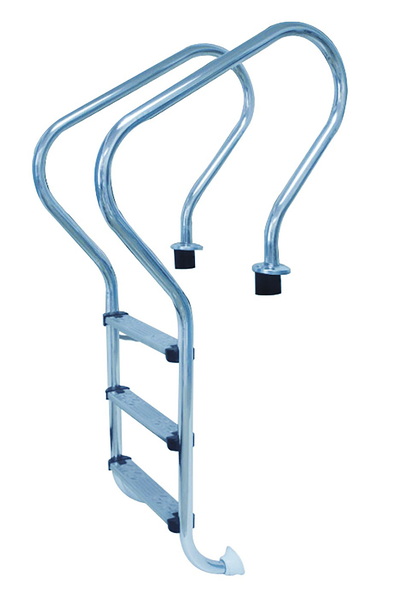
Most homeowners can assemble a typical above ground pool ladder in about 30–60 minutes, depending on the model and their experience with basic tools. More complex step systems with ballast compartments or deck‑mounted hardware may take slightly longer because of filling, positioning, and drilling steps.[4][10][7][2]
Common tools include a Phillips screwdriver, rubber mallet, cordless drill with bits, wrenches or a socket set, measuring tape, and sometimes a pencil or marker for layout. Some deck‑mounted ladders also benefit from a level to ensure straight installation and may require sealant or additional hardware as specified by the manufacturer.[7][2]
To improve stability, ensure the ladder's weight chambers are filled with the recommended amount of sand or water and that it sits flat on the pool floor. For deck ladders, firmly tighten all mounting brackets and periodically check them, and for A‑frame ladders, verify the ground beneath the base is level and compact.[4][11][6][2]
Above ground pool ladders are designed to be safe when properly assembled, anchored, and used under supervision. Choose models with non‑slip steps, sturdy handrails, and locking or removable features, and always keep the ladder inaccessible when the pool is not in use to prevent unsupervised entry.[3][11][1]
Replace your ladder if you see cracks in the structure, loose or missing steps, severe rust, or damage that cannot be repaired or stabilized. Any sign that the ladder flexes excessively, wobbles even after adjustments, or no longer supports weight safely is a clear reason to invest in a new unit.[11][6][7]
Yes, A‑frame ladders are designed specifically for pools without decks and rest on the ground outside the pool while providing steps inside. Make sure the ladder's height matches your pool wall and that the top rests evenly on the top rail without damaging the liner.[2][7]
[1](https://www.poolfencediy.com/blogs/blog/pool-ladder-safety)
[2](https://www.poolkingfilter.com/how-to-install-pool-ladder-above-ground.html)
[3](https://sternsbackyard.com.au/blogs/news/safety-tips-for-installing-and-using-above-ground-pool-ladders)
[4](https://www.mavaquadoc.com/blogs/pool-maintenance-blog/installing-pool-steps-a-step-by-step-guide)
[5](https://www.familypoolfun.com/pdf/ne1222_manual.pdf)
[6](https://poolfence.com/pool-ladders-a-step-toward-safety/)
[7](https://blog.watsons.com/blog/install-above-ground-pool-ladder)
[8](https://www.youtube.com/watch?v=JJkG7vsan1E)
[9](https://www.youtube.com/watch?v=ioYl-25dDXY)
[10](https://poolpartstogo.com/blogs/pool-equipment/how-to-fit-a-ladder-to-your-above-ground-pool-the-right-way)
[11](https://blog.watsons.com/blog/make-above-ground-pool-ladder-stable)
[12](https://www.thepoolfactory.com/blogs/equipment/make-your-pool-safer-simple-steps)
[13](https://www.youtube.com/watch?v=AcVIHFSLCTY)
[14](https://www.facebook.com/groups/637529959937311/posts/2635564603467160/)
[15](https://www.youtube.com/watch?v=qpJDdgZaclQ)
[16](https://www.youtube.com/watch?v=kstTbJYtypE)
[17](https://www.facebook.com/groups/637529959937311/posts/2579369582419996/)
[18](https://www.youtube.com/watch?v=ham2QiY9M7M)
[19](https://www.youtube.com/watch?v=qb_u48dTL0M)
[20](https://www.youtube.com/watch?v=xdSVGLKnaJ8)


