
Views: 222 Author: Tina Publish Time: 2025-11-26 Origin: Site


Content Menu
● Understanding Your Pool Ladder Type
● Tools And Safety Preparation
● How To Put An Above‑Ground Pool Ladder In The Pool
● How To Put An In‑Ground Pool Ladder In The Pool
● Positioning And Stabilizing The Ladder
● Step‑By‑Step Basic Installation Workflow
● Safety Checks After Ladder Installation
● Maintenance Tips For Long‑Lasting Ladders
● How Your OEM Pool Equipment Supports Ladder Installation
● FAQs About Putting A Pool Ladder In The Pool
>> 1. Do I need anchors to install an in‑ground pool ladder?
>> 2. How do I keep my pool ladder from floating?
>> 3. How often should I check the bolts and wedges?
>> 4. Is one ladder enough for my pool?
>> 5. Can I let children use the ladder alone?
>> 6. What material is best for a pool ladder?
Installing a pool ladder correctly keeps swimmers safe and protects your pool structure from damage. Whether you own an above-ground or in-ground pool, a stable, well-positioned ladder makes entering and exiting the water easier and more comfortable.[1][2]
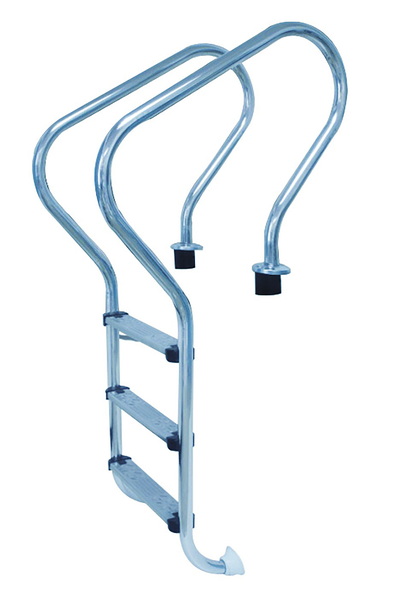
Pool ladders come in different styles depending on pool design, including above-ground A‑frame ladders, in‑pool drop‑in ladders, and built‑in step units. Materials range from stainless steel and resin to heavy‑duty plastic, each chosen for corrosion resistance and durability in chlorinated or saltwater environments.[3]
Above‑ground pools often use A‑frame ladders that straddle the wall, while in‑ground pools typically rely on rail‑style ladders anchored into cups or sockets set into the deck. Some systems combine steps and handrails, especially in “wedding cake” or wide step configurations, to improve accessibility for children and seniors.[4][5]
Before installing, gather basic tools such as a wrench or socket set, screwdriver, tape measure, rubber mallet, and any hardware provided by the ladder manufacturer. For new in‑ground installations, installers may also need a core drill and setting cement or epoxy to install anchors in the pool deck.[5]
Safety preparation is essential: clear the deck, ensure the pool pump is off, and keep children away during installation to avoid accidents. Inspect the ladder for sharp edges, missing caps, or cracks, and verify all steps have non‑slip surfaces and secure handrails before placing it in the pool.[6][2]
For above‑ground pools, start by assembling the ladder frame and steps according to the product manual, ensuring each step locks into its clips or side rails fully. Many A‑frame ladders use interlocking notches and caps; press these together firmly so the steps do not twist or wobble when weight is applied.[7]
Once assembled, position the ladder so that the inside section rests against the inner wall and the outside section sits on a level, firm surface next to the pool. Adjust the ladder height so the top platform sits securely over the top rail without stressing the pool wall.[2]
To keep the ladder from floating, fill any built‑in ballast cavities with water or sand bags as specified by the manufacturer. If the ladder is designed to be removable for safety, confirm you can lift it out and lock or store it when the pool is not in use.[8][6]
Most in‑ground pool ladders fit into pre‑installed metal or plastic cups (anchors) embedded in the deck. Before installing, clean these cups thoroughly, removing water, debris, and corrosion so the ladder rails can slide in smoothly.[1]
Inside each cup there is usually a wedge or bolt that tightens against the ladder rail. Make sure these wedges sit correctly against the cup wall, then place any decorative cover rings over the cups if your system uses them.[1]
Lower the ladder so the bottom bumpers rest against the pool wall and the rails slide into the deck cups. Once aligned, tighten the wedge bolts evenly with a wrench until the ladder is secure, checking that it does not rock or twist when you pull on it.[9][5]
Correct positioning improves both safety and comfort. Place the ladder where swimmers enter and exit most often, but away from sharp edges, skimmers, or return fittings that could interfere with movement. For above‑ground pools, keep enough space around the outside feet so users do not collide with walls or obstacles when climbing.[2]
Stability often depends on weight and contact points. Many plastic ladders need additional weight at the base, such as integrated sand chambers or external sand bags, to prevent floating or movement. Check that all ladder feet or pads sit flat on the pool floor or deck to distribute load evenly and protect liners or finishes.[10][8]
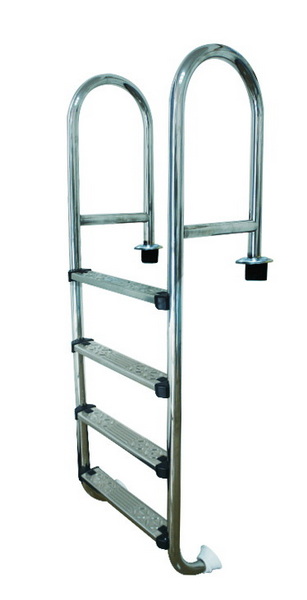
Although specific details vary by brand, the core process typically follows these steps for an already‑equipped pool:
1. Inspect and assemble the ladder, confirming all parts match the manual and no components are damaged.[7]
2. Clean and prepare the mounting area—ladder cups, deck surface, or pool wall—removing debris that could interfere with a snug fit.[1]
3. Place the ladder into position and slide rails into cups or rest legs against the pool wall, ensuring proper orientation and depth.[9]
4. Tighten wedges, bolts, or clamps according to instructions, alternating sides to keep the ladder straight.[5]
5. Add required weights or secure brackets, then gently climb the first steps to test for any movement or looseness.[3]
For new pool builds where anchors are not yet installed, professionals typically drill holes in the deck, set anchors flush, bond them to reinforcing steel, and secure them with high‑strength cement or epoxy. After curing, the ladder can be installed into these anchors in the same way as a retrofit ladder.[5]
Once the ladder is in place, perform a complete safety check. Verify that each step is wide enough, has a non‑slip surface, and supports weight without flexing excessively. Handrails should be easy for children to grip and free of burrs or exposed bolt ends.[6]
Only one person should use the ladder at a time, because multiple users increase the risk of slipping or overloading steps. Adults must supervise children when they climb in or out, especially on wet surfaces or when swimmers are tired.[2]
For above‑ground pools, consider ladders that can be locked, removed, or raised when the pool is not in use to prevent unsupervised access. Regularly inspect the ladder throughout the season for rust, cracks, or loose hardware and correct any issues immediately.[10][6]
Routine maintenance extends ladder life and keeps it safe. Rinse metal ladders with fresh water periodically, especially in saltwater or heavily chlorinated pools, to reduce corrosion. Inspect rail connections, bolts, and plastic joints at least once a month during the swimming season.[3][10]
If you notice rust or pitting on stainless steel, address it quickly and consider replacing severely affected components to avoid structural failure. For plastic or resin ladders, watch for discoloration and hairline cracks, which can indicate UV degradation or stress damage.[10][3]
Before winterizing, remove removable ladders, store them in a dry location, and cap any open deck anchors as recommended by the manufacturer. This prevents water accumulation, freezing damage, and debris buildup in cups and fasteners.[5][1]
Using a well‑designed filtration and circulation system helps maintain clear water around the ladder, reducing algae growth on steps and improving traction. High‑quality sand filters, DE filters, or cartridge filters keep dirt and biofilm from building on ladder surfaces as quickly, making cleaning easier.[10]
Reliable pumps and lighting also improve user experience. Strong, consistent circulation reduces dead zones near ladder bases, while LED pool lights around the ladder area improve visibility at night and support safer entry and exit. For OEM customers, matching ladders with compatible filtration systems and accessories creates a complete, branded pool package that is easier to market and install.[3][10]
Putting a pool ladder in your pool safely requires understanding your ladder type, preparing the mounting area, and following a careful step‑by‑step installation process. By positioning the ladder correctly, securing anchors or brackets, adding necessary weights, and performing regular safety checks, you offer swimmers a stable, comfortable way to enter and exit the water while extending the life of your ladder.[2][5][3][1]
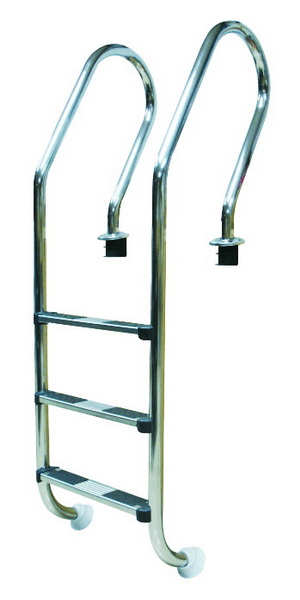
Most in‑ground ladders require deck anchors or cups embedded in the concrete to hold the ladder rails securely. If your deck does not have anchors, a professional can drill and set them using rated cement or epoxy according to local codes.[5]
Many plastic ladders include weight chambers that you fill with water or sand, or you can place approved weight bags at the base as instructed by the manufacturer. Proper weighting keeps the ladder seated on the pool floor and prevents it from lifting or shifting when swimmers use it.[8]
Inspect ladder hardware at least once a month during the swimming season and after storms or heavy pool use. Tighten any loose bolts or wedges immediately, and replace damaged parts to maintain a secure, stable ladder.[3][10]
Most residential pools use a single ladder or step system, usually placed near the shallow end or primary entry area. Larger or commercial pools may need multiple access points to comply with safety guidelines and to manage swimmer traffic.[10][3]
Children should never use a pool ladder without adult supervision, because wet steps and rails increase slip risk and kids may not recognize hazards. For above‑ground pools, choose ladders that can be locked, removed, or raised when adults are not present to prevent unauthorized access.[6][2]
Stainless steel and UV‑resistant resin or plastic are popular because they resist corrosion and withstand pool chemicals and sunlight. The best choice depends on your pool type, water chemistry, climate, and desired look.[3]
[1](https://blog.linerworld.com/2011/01/14/swimming-pool-ladder-installation/)
[2](https://sternsbackyard.com.au/blogs/news/safety-tips-for-installing-and-using-above-ground-pool-ladders)
[3](https://cincinnatipoolandpatio.com/choosing-pool-ladders/)
[4](https://www.mavaquadoc.com/blogs/pool-maintenance-blog/installing-pool-steps-a-step-by-step-guide)
[5](https://mrpoolman.com.au/blogs/news/easily-install-or-replace-your-pool-ladders-and-rails)
[6](https://www.poolfencediy.com/blogs/blog/pool-ladder-safety)
[7](https://www.youtube.com/watch?v=AcVIHFSLCTY)
[8](https://poolfence.com/pool-ladders-a-step-toward-safety/)
[9](https://www.youtube.com/watch?v=6lg8kCHO0m0)
[10](https://www.thepoolfactory.com/blogs/equipment/make-your-pool-safer-simple-steps)
[11](https://news.poolandspa.com/how-to-replace-and-install-an-inground-pool-ladder/)
[12](https://www.youtube.com/watch?v=y3wBgeEd6xM)
[13](https://www.youtube.com/watch?v=kBZZrt8Gop4)
[14](https://www.youtube.com/watch?v=z2tjyznDJek)
[15](https://www.youtube.com/watch?v=qpJDdgZaclQ)
[16](https://www.facebook.com/groups/637529959937311/posts/2656993104657643/)
[17](https://www.youtube.com/watch?v=km3NlOGvjD0)
[18](https://www.facebook.com/groups/637529959937311/posts/2663144890709131/)
[19](https://www.youtube.com/watch?v=JJkG7vsan1E)
[20](https://www.reddit.com/r/pools/comments/mxs3qa/ladder_anchors_installing_after_the_fact/)


