
Views: 222 Author: Tina Publish Time: 2025-11-20 Origin: Site


Content Menu
● Step 1: Unpack and check all components
● Step 2: Assemble the ladder side frames
● Step 3: Install the first set of steps
● Step 4: Connect the top rails and platform
● Step 5: Build the opposite side of the ladder
● Step 6: Add cross braces and warning boards
● Step 7: Position the ladder on the pool
● Step 8: Final safety checks and load testing
● Maintenance and seasonal care
● OEM and branding advantages for foreign buyers
● FAQ
>> 1. How long does it take to assemble a Coleman‑style pool ladder?
>> 2. What tools are normally required?
>> 3. Can this ladder be used with any above‑ground pool?
>> 4. How many people can be on the ladder at once?
>> 5. When should the ladder be removed from the pool?
As a professional Chinese factory specializing in top‑grade sand filter tanks and complete pool filtration solutions, installing and using ladders safely is just as important as choosing the right pump or filter. This detailed guide explains how to put a Coleman pool ladder together step by step, with practical tips from an OEM perspective for foreign brands, wholesalers, and manufacturers.[2][4]
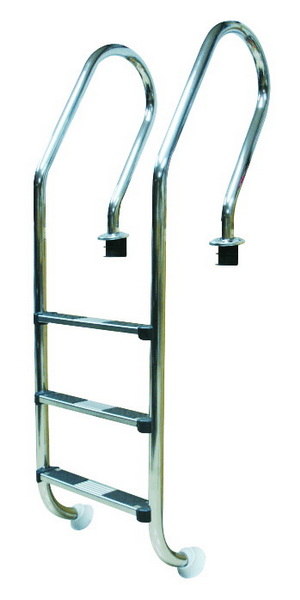
Before assembling a Coleman pool ladder, prepare the following tools and working conditions.[2]
- Coleman pool ladder kit (all parts and hardware)
- Pool wall and frame fully installed and level
- Flat working area near the pool with enough clearance
- Phillips or crosshead screwdriver and adjustable wrench
- Rubber mallet (optional, for tight plastic joints)
- Measuring tape and non‑slip shoes for safety
Most Coleman above‑ground pool ladders use a similar structure even if the exact shape or color is different.[4][2]
Typical components include:
- Inner and outer side rails (tubes or molded rails, often marked A/B or Left/Right)
- Steps (plastic anti‑slip treads, usually 4–6 per side)
- Top platform or bridge that rests over the pool wall
- Cross braces or support bars between the rails
- Foot pads or bottom caps for ground contact
- Retention clips, pegs, bolts, nuts, and washers
Good preparation prevents rework and complaints later. Carefully unpack the ladder kit and confirm everything is present and undamaged.[5][2]
1. Open the carton on a clean, flat surface.
2. Lay out all plastic and metal pieces, grouping similar parts together.
3. Compare each part against the packing list or exploded diagram in the manual.
4. Inspect for cracks, bent tubes, or missing hardware; contact the seller if anything is wrong before assembly.
For OEM brands, clearly printing part codes on the diagram (A, B, C, etc.) makes this step much easier for end users and reduces after‑sales issues.[4][2]
The side frames form the backbone of the ladder and must be assembled in the correct orientation.[6][2]
1. Identify which rails belong to the pool‑inside side and which to the pool‑outside side. Many systems mark them with “A” and “B” or use pictograms.[7][3]
2. Slide or push the foot pads or bottom caps onto the ends of each lower rail. They protect the pool liner and distribute weight on the ground.
3. If your model has base connectors or lower spreaders that must be fitted before steps, install them now following the drawing.
A rubber mallet can be used to gently tap tight plastic joints until they are fully seated, but avoid metal hammers that can crack the plastic edges.[8]
The steps tie the two rails together and must match the correct A‑to‑A and B‑to‑B orientation.[8][3]
1. Lay two matching side rails parallel to each other on the ground.
2. Identify the bottom step, usually indicated in the diagram or slightly shaped differently.
3. Align each end of the step with the pre‑formed holes in the rails, matching the letters or arrows.
4. Push the step firmly into place until it snaps or locks, or install the specified bolts and nuts if your model uses fasteners.
5. Repeat for the next 1–2 steps, moving upward to create a stable partial frame.
Ensure the textured surface of each tread faces upward and that the step is fully inserted, otherwise it may flex excessively under load.[6][2]
The top section links the inner and outer parts of the ladder and rests over the pool wall.[2][3]
1. With one or both step assemblies prepared, attach the U‑shaped or straight top rails following the A‑to‑A and B‑to‑B markings.
2. Align the holes and insert the bolts, then loosely thread on the nuts; final tightening will come later.[6]
3. Place the top platform or bridge piece across the rails, ensuring any warning labels are facing outward and readable.[5][3]
4. Secure the platform according to the instructions, using screws or snap‑locks as specified.
The platform is designed to spread the load over the wall and often carries safety labels such as “No Diving” or maximum weight ratings.[2][6]
Once the top section is stable, you can complete the steps on the second side.[3][7]
1. Attach the remaining steps to the other pair of rails, again carefully matching the lettered ends and positions from bottom to top.
2. With both step assemblies ready, connect them to the top rails and platform, aligning all matching marks.
3. Install any retention brackets or pegs that lock the steps to the rails; ensure arrows on the brackets line up where indicated.[7][8]
4. When everything is in place, go back and tighten all the hardware, working from the top down so that the frame remains square.[6]
At this stage, your ladder should stand on its own on level ground and all steps should appear parallel and evenly spaced.[2]
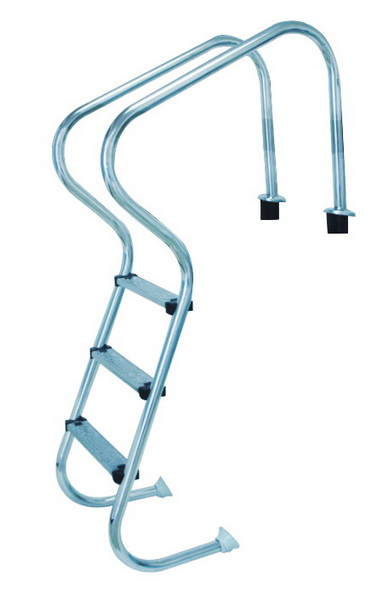
Many Coleman‑style ladders include cross braces and safety panels to improve stability and communicate risks.[6][2]
1. Locate the cross braces that span between the outer rails, often near mid‑height or close to the feet.
2. Attach each brace with the provided screws or bolts, keeping any pre‑printed side (such as a logo) facing outward.
3. Install warning boards or panels onto or near the top platform as shown in the instructions, typically snapping them into place.[8]
These braces significantly reduce side‑to‑side sway, and the safety panels usually display messages like “No Diving” and general safety icons.[2][6]
With the ladder fully assembled, it is time to install it onto the pool wall.[5][2]
1. Lift the ladder and place it so that one set of steps is inside the pool and the other set is outside, straddling the wall.[6]
2. Adjust the position until the top platform sits flat on the pool edge and the ladder stands nearly vertical but with a slight, comfortable angle.
3. Make sure all feet are in firm contact with a solid, level base; use boards or pads if the ground is soft.[6]
4. If the kit includes straps or attachment brackets, fix them to the pool frame as directed to prevent movement.[2]
For above‑ground pools at 42–52 inches wall height, manufacturers design specific ladder sizes to match; using a ladder with a different rated wall height is unsafe.[2][6]
Before anyone uses the ladder, perform a thorough safety inspection.[6][2]
- Verify every nut, bolt, and screw is fully tightened but not over‑tightened (which could deform plastic).
- Press strongly on each step to ensure it is fully anchored and does not pop or shift.[8][6]
- Gently rock the ladder side to side and front to back; slight movement is normal, but excessive wobble indicates loose parts or soft ground.
- Confirm that only one person uses the ladder at a time and that the maximum load rating printed in the manual is always respected.[2][6]
For nighttime swimming, keep the area well lit, especially the ladder, pool floor, and nearby walkways, to prevent accidents.[6]
Proper maintenance keeps a Coleman‑style pool ladder safe and attractive for many seasons.[2][6]
- Rinse the ladder with fresh water occasionally to remove pool chemicals and debris.
- Inspect all steps, rails, and connectors regularly for UV aging, cracks, or rust on metal hardware.[2]
- Re‑tighten hardware at the start of each swimming season and after any severe storm or impact.[6]
- Remove and store the ladder in a cool, dry place when the pool is closed for winter, following the disassembly tips in the manual.[2]
For OEM buyers, including a simple seasonal maintenance chart and QR code linking to a video guide can reduce warranty claims and improve user satisfaction.[4]
As a Chinese factory offering sand filter tanks, pool filters, pumps, LED lights, and accessories, integrated ladder and filtration packages are attractive for global brands and wholesalers.[4]
Main OEM benefits for pool ladders and related products:
- Consistent use of corrosion‑resistant metals and UV‑stabilized plastics to match harsh outdoor pool environments.[6][2]
- Smart manufacturing with precise molding and tube forming that ensures smooth assembly and strong snap‑fit joints.[4]
- Customizable ladder height, color, step design, and branded safety labels to match each market segment.
- Matching ladders with sand filters, pumps, and lighting into one complete pool solution to simplify purchasing and logistics for distributors.[5][4]
By providing detailed assembly content with photos and videos, OEM partners can white‑label this guide style into their own manuals, websites, and social media for better customer education.
Putting a Coleman pool ladder together becomes a simple and safe task when handled step by step: check components, build the side frames, install steps and braces, connect the top platform, position the ladder on the pool wall, and finish with careful safety checks. Following the manufacturer's load limits and maintenance advice ensures that the ladder remains stable and comfortable for daily use across many swimming seasons.[3][2][6]
For foreign brands, wholesalers, and OEM partners, combining high‑quality ladders with professional sand filters, pumps, and LED lighting from a specialized Chinese factory creates a complete, reliable above‑ground pool package that is easier to market and support worldwide.[5][4]
Most users can assemble a standard Coleman‑style pool ladder in around 20–40 minutes, assuming all parts are present and tools are ready. Experienced installers may complete the process faster once familiar with the A‑to‑A and B‑to‑B alignment system.[3][1]
Typical ladders only need a crosshead (Phillips) screwdriver and a small adjustable wrench to tighten bolts and nuts. Some models also benefit from a rubber mallet to seat tight plastic joints, but heavy metal hammers should be avoided.[2][6]
The ladder must match the pool wall height it is designed for, such as 42 inch or 48–52 inch walls; this information appears on the packaging and manual. Using a ladder with a wall height outside its design range can cause unsafe step angles and poor support on the top rail.[6][2]
Pool ladder manuals specify that only one person should be on the ladder or stairs at a time to stay within the rated maximum load. Ignoring this warning increases the risk of deformation, step failure, or loss of stability, especially with children playing on the ladder.[2][6]
Manufacturers advise removing and securing the ladder whenever the pool is not in supervised use, particularly to prevent unsupervised children from entering. During winter or long off‑season periods, the ladder should be removed, dried, and stored indoors to protect it from weather damage.[6][2]
[1](https://www.youtube.com/watch?v=JJkG7vsan1E)
[2](https://bestwayusa.com/media/pdf_files/Coleman_Pool_Ladder_90392E_2024.pdf)
[3](https://www.youtube.com/watch?v=HMZp6vdZ1nI)
[4](https://www.poolkingfilter.com/news/Coleman-Pool-Ladder-Assembly-Instructions.html)
[5](https://manuals.plus/asin/B01IDENENO)
[6](https://www.intexsales.com/b2cmnl/B2CMNLServlet?instantiate=B2cMnldownloadApp&action=pub_mnl&filnam=330IO_A0_1805_EN.pdf)
[7](https://www.youtube.com/watch?v=1OWK8pF9y14)
[8](https://www.youtube.com/watch?v=ham2QiY9M7M)
[9](https://www.tiktok.com/discover/how-to-setup-a-ladder-for-the-52-inch-pool-coleman)
[10](https://bestwayusa.com/media/pdf_files/Coleman_Power_Steel_90495E_2023.pdf)


