
Views: 222 Author: Tina Publish Time: 2025-11-10 Origin: Site


Content Menu
● Why Build Your Own Swimming Pool Ladder?
>> Choosing the Right Material
● Step-By-Step Guide: Building Your Pool Ladder
>> Step 1: Measure Your Pool for Perfect Fit
>> Step 2: Select and Prepare Materials
>> Step 3: Prepare and Assemble Ladder Frame
>> Step 4: Secure Ladder Feet and Handrails
>> Step 5: Safety Enhancements
>> Step 6: Installation and Final Checks
● Pool Ladder Design Best Practices
>> 1. What are the best materials for a pool ladder?
>> 2. How do I prevent my pool ladder from being slippery when wet?
>> 3. Will my ladder interfere with sand, DE, or cartridge filters?
>> 4. How many steps should my pool ladder have?
>> 5. What's the most important regular maintenance?
Making your own swimming pool ladder is a practical, rewarding project that gives you full control over ladder size, durability, safety features, and style. Whether your pool uses sand, DE, or cartridge filtration—like those integrated in commercial pools—building your own swimming pool ladder ensures compatibility with key pool equipment, provides cost savings, and is a great opportunity to enhance poolside safety.[1]
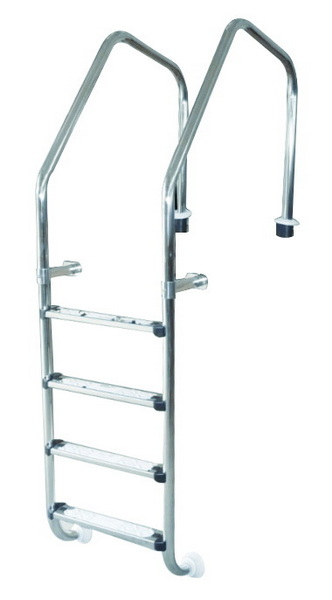
- Customization: Tailor the ladder height, width, step count, and materials.
- Integration: Ensure the ladder fits seamlessly with pool filters, pumps, lights, and deck layouts.
- Cost-Efficiency: DIY ladders are far more affordable than many off-the-shelf models.[1]
- Pressure-Treated Wood: Easy to work with, highly customizable, and affordable. Must be well-sealed against water.
- Aluminum: Lightweight, rust-resistant, long-lasting, and easy to maintain—excellent for sheet metal fabrication.
- Stainless Steel: Premium commercial look and high resistance to corrosion but more complex to fabricate.
- Heavy-Duty Resin or Plastic: Used mainly for pre-molded kits; robust and weather resistant.[2][3][4][5]
- Hand saw or power saw
- Measuring tape and carpenter's square
- Power drill, drill bits, driver bits
- Sandpaper or deburring tool
- Stainless steel screws/bolts, waterproof wood glue (for wood)
- Level, marker, safety gear
- Ladder feet caps or rubber pads
- Non-slip tape or tread covers, protective sealer/paint (for wood)
- Measure the pool wall height from the ground to the top rail.
- Ensure ladder extends 6–12 inches above the deck for secure grip.
- Measure ladder width—typically 18–20 inches between side rails.[1]
- Decide between wood and aluminum for DIY, based on your skills and desired aesthetics.
- Cut two side rails to required length (pool height + extra for handgrip).
- Cut 3–5 treads (steps) at 15–20 inches wide, based on pool and user needs.[1]
- Sand wood edges or deburr metal cuts for safety.
- Drill pilot holes in side rails and treads to prevent splitting (wood) or damage (metal).
- Attach treads evenly along the rails at 10–12 inch spacing; use stainless fasteners and waterproof glue for wood.[1]
- Add rubber pads or feet caps to prevent pool liner damage and slippage.
- Attach handrails or extend rails above the top step for safer entry/exit.
- For aluminum, bolt handrails securely at the required angle.
- Apply non-slip treads or tape to each step.
- Double check all joints for stability and ensure no steps are loose.
- Test the assembled ladder on flat ground with adult weight, then install at the pool.[1]
- Place the completed ladder at the pool edge.
- Check that the feet are stable both inside and outside the pool.
- Ensure that the ladder is not blocking filters, pump lines, or lighting fixtures.[1]
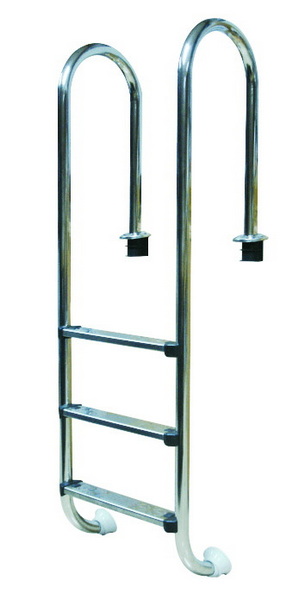
- Adjustable steps for pools with varying water levels.
- Ladder colors/finishes to match pool décor.
- Add removable security gates for child safety.[6][7]
- Weekly checks for loose fittings or wear; promptly tighten or replace as needed.
- Wash steps using mild detergent; clean and reapply non-slip surfaces as required.
- Re-seal or repaint any wood annually.
- Store indoors or cover to protect from harsh weather when not in use.[1]
| Material | Pros | Cons |
|---|---|---|
| Pressure-Treated Wood | DIY-friendly, customizable, cost-effective | Requires sealing, can rot without care |
| Aluminum | Lightweight, corrosion-resistant, modern look | Requires precision fabrication |
| Stainless Steel | Strong, highly durable, commercial appeal | Expensive, may require professional help |
| Resin/Plastic | Rustproof, pre-molded, easy installation | Limited DIY customization |
Building a swimming pool ladder yourself allows you to tailor safety, durability, and aesthetics specifically for your unique pool environment. Proper material selection (such as pressure-treated wood or corrosion-resistant aluminum), adherence to safety measures, and regular maintenance will ensure your DIY ladder enhances pool accessibility for years, working perfectly even with advanced filtration systems, water pumps, and integrated LED pool lights. If you want a cost-effective, fully integrated solution—especially as a pool owner with specific equipment needs—making your own swimming pool ladder is the best way forward.[1]
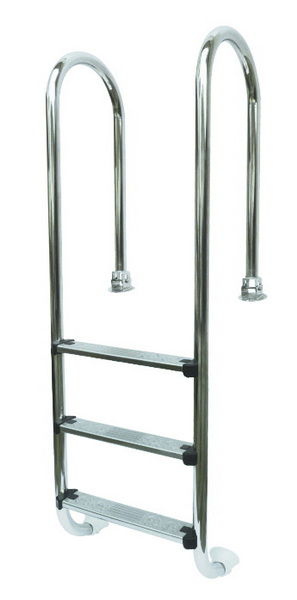
Pressure-treated wood is affordable and customizable, aluminum is light and rustproof, and stainless steel is durable and professional in style. For most, aluminum offers the best balance of cost, longevity, and ease.[5][2][1]
Install quality non-slip treads or tape on each step. Resin, aluminum, and wood ladder treads can all be upgraded in this way for user safety.[4][1]
If the ladder is measured and placed correctly, it will not block access to these filtration systems. Choose a location that leaves your filtration equipment clear and easy to maintain.[1]
Most pool ladders have 3 to 5 steps, spaced about 10–12 inches apart, but this depends on the pool's height and user comfort.[1]
Weekly inspection for loose bolts and cracks, cleaning non-slip surfaces, re-sealing wood annually, and prompt replacement of worn or rusted components keeps your ladder safe over time.[1]
[1](https://www.poolkingfilter.com/how-to-build-above-ground-pool-ladder.html)
[2](https://medleypool.com/blog-details/best-materials-for-swimming-pool-ladders-pros-and-cons-of-stainless-steel-resin-and-plastic)
[3](https://www.vevor.com/diy-ideas/heavy-duty-above-ground-pool-ladder/)
[4](https://www.mavaquadoc.com/blogs/pool-maintenance-blog/different-types-of-pool-ladders)
[5](https://www.svadonpoolcn.com/the-ultimate-guide-to-choosing-the-perfect-inground-pool-ladder/)
[6](https://www.youtube.com/watch?v=UOszx5_q0s4)
[7](https://www.facebook.com/groups/637529959937311/posts/2649656582057962/)
[8](https://100things2do.ca/diy-above-ground-pool-ladder-stairs/)
[9](https://www.facebook.com/groups/637529959937311/posts/2618273518529602/)
[10](https://www.reddit.com/r/AboveGroundPools/comments/1jaauys/pool_step_plans/)
[11](https://images.thdstatic.com/catalog/pdfImages/84/84e8528b-b5e0-4efe-8b32-df809eb190ee.pdf)
[12](https://www.practicalmachinist.com/forum/threads/ot-swimming-pool-ladder-step-material.143973/)
[13](https://www.youtube.com/watch?v=JJkG7vsan1E)
[14](https://www.youtube.com/watch?v=o8YWk10ONVU)
[15](https://www.youtube.com/watch?v=AcVIHFSLCTY)
[16](https://www.youtube.com/watch?v=kBZZrt8Gop4)
[17](https://cincinnatipoolandpatio.com/choosing-pool-ladders/)
[18](https://www.youtube.com/watch?v=H9LWSksoefU)
[19](https://www.facebook.com/groups/637529959937311/posts/2656993104657643/)
[20](https://www.tiktok.com/@krazygirl.80/video/7248810623243455790?lang=en)


