
Views: 222 Author: Tina Publish Time: 2025-11-10 Origin: Site


Content Menu
● Why Choose a PVC Pool Ladder?
● Essential Tools and Materials
● Step-by-Step: Building a PVC Pool Ladder
>> Step 2: Sketch Your Ladder Design
>> Step 3: Cut PVC Pipes to Size
>> Step 5: Secure Steps and Rails
>> Step 6: Add Non-Slip Protection
>> Step 7: Add Weights or Anchors
>> Step 8: Final Assembly and Testing
● Maintenance and Cleaning Tips
● Enhancing Stability and Longevity
>> 1. How thick should the PVC pipes be for a pool ladder?
>> 2. Can I add more steps to the PVC pool ladder if needed?
>> 3. How do I keep my PVC pool ladder stable in the water?
>> 4. What's the best way to clean a PVC pool ladder?
>> 5. Is a PVC pool ladder safe for children?
Creating a durable, safe, and cost-effective PVC pool ladder is a practical DIY project for both above-ground and in-ground pools. By using readily available materials and basic tools, you can craft a reliable pool access solution, improve pool safety, and customize the design to fit your preferences. This article offers a comprehensive step-by-step guide, enriched with visual aids, maintenance tips, safety considerations, and expert advice to help you construct your own PVC pool ladder.[3][6][1]
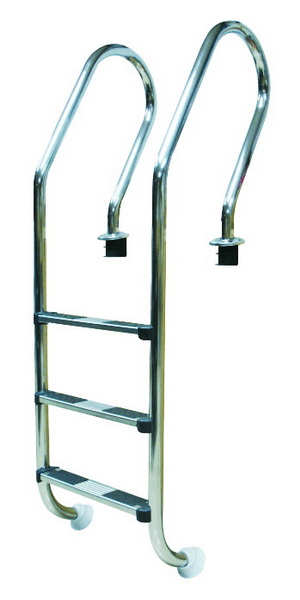
PVC pool ladders are gaining popularity among pool owners for several compelling reasons:
- Cost-Effective: PVC pipes and connectors are significantly less expensive than commercial pool ladders.
- Corrosion-Resistant: PVC is impervious to water damage and pool chemicals, unlike metal alternatives.[7]
- Customizable: You can adjust the height, width, and step spacing to fit any pool design.[3]
- Lightweight and Easy to Clean: The ladder can be easily handled, moved, and washed as needed.[7]
Before starting your project, gather the following items:
- Schedule 40 PVC pipes (recommended diameter: 1.25"–2")[1][3]
- PVC T-joints and 90-degree elbows
- 45-degree elbows for top rail comfort (optional)[3]
- End caps
- PVC primer and heavy-duty PVC cement
- Measuring tape and pencil
- Pipe cutter or fine-tooth saw
- Waterproof grip tape or anti-slip pads
- Stainless steel screws or bolts (for extra stability)[1]
- Weights or anchor materials (sand, gravel for base)[4]
- Safety goggles and gloves
- Measure the height from the ground to the top edge of the pool wall or deck.
- Choose step spacing (usually 10–12 inches apart).[1][3]
- Draw a simple plan based on your measurements, including side rails, step widths (recommended: 18–24 inches), and the number of steps.[1]
- Design for at least one handrail per side for added safety.[6][3]
- Cut two long pipes for the main rails.
- Cut shorter segments for the steps (typically 18 inches each).[2][3][1]
- Prepare extra short pipes for connecting between T-joints.
- Start with a 90-degree elbow for the bottom rung; connect both elbows with an 18" pipe.[3]
- Insert upright side pipes and secure with T-joints.
- Repeat for each step, stacking T-joints and pipe sections, gluing and assembling as you go.[3][1]
- Use 45-degree elbows or 90-degree bends for the top handles for comfort.
- Dry-fit all parts to ensure proper alignment before gluing.
- Apply PVC primer and heavy-duty cement to each joint for watertight strength.[1][3]
- Reinforce each step with stainless steel screws if extra stability is desired.[1]
- Attach waterproof grip tape or anti-slip pads to each rung to prevent slips.[6][3]
- Ensure no sharp edges or protruding bolts are left exposed.
- For added stability, install capped PVC pipes filled with sand or gravel as ladder weights, attaching these to the ladder base.[9][4]
- For above-ground pools, secure the ladder to the pool deck or frame using brackets or clamps.[6][1]
- Assemble all glued and dried components.
- Place the completed ladder into the pool, checking for proper fit, stability, and ease of use.[1]
- Test by gently stepping up and down, ensuring the ladder doesn't slip or wobble.
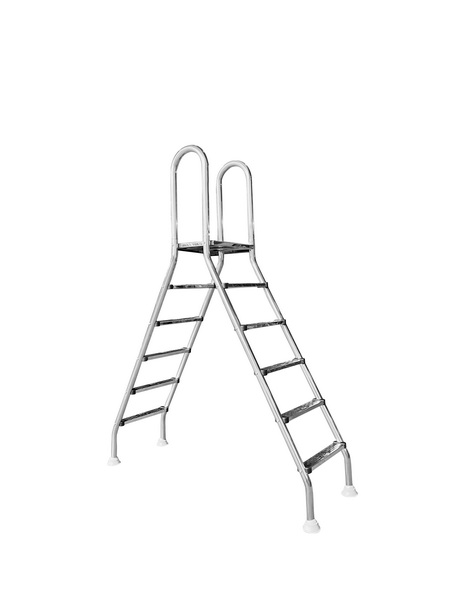
- Ensure ladder steps are at least 3 inches wide to support adults and children.[6]
- Handrails should be present on both sides and easy for a child to grasp.[6]
- Regularly inspect for loose joints, wear, or slippery areas.
- Avoid allowing children to use the ladder unsupervised or carrying heavy objects while climbing.[10][6]
- Consider a removable or lockable design if the pool will be unattended.[6]
- Rinse the ladder regularly to remove chlorine, dirt, and debris.[7]
- Use a mild soap or diluted vinegar for cleaning, avoiding harsh chemicals or abrasive pads.[11][7]
- Dry thoroughly and check for cracks, loose fittings, or mold.[7]
- Apply a UV-protectant spray to extend the life of your PVC pool ladder.[7]
- Store the ladder indoors during the off-season or extreme weather to prevent structural damage.[7]
- Not securing the ladder properly to the pool deck, resulting in a slippery or unstable experience.[12]
- Inadequate step width or spacing, making the ladder uncomfortable or dangerous.
- Using slippery surfaces on rungs—always use non-slip tape or padding.[3]
- Improper or rushed gluing, which can lead to leaks or weak joints.
- Reinforce base sections with PVC weights or sandbags.[4][9]
- Upgrade step surfaces with non-corrosive reflective tape for visibility.[6]
- Routinely tighten or replace stainless steel screws and inspect joints.[7][1]
Building a PVC pool ladder is an accessible, affordable, and rewarding DIY project that significantly enhances pool safety and convenience. With careful planning, precise assembly, and regular maintenance, your homemade PVC pool ladder will last for many seasons, providing reliable access for all swimmers.
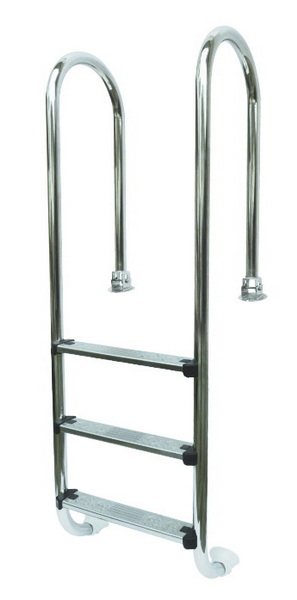
For strength, use Schedule 40 PVC pipes with a diameter of 1.25 inches or more. This thickness supports most adults and resists water pressure over time.[3][1]
Yes, the design is modular—simply add more T-joints and cut additional step segments to adjust to your pool's height.[3][1]
Add PVC weights filled with sand or gravel to the base, or use brackets/clamps to secure the ladder to the pool deck/frame.[12][4]
Rinse weekly, scrub with mild soap or vinegar, avoid bleach/abrasives, and apply a UV-protectant spray after cleaning.[11][7]
Yes, if built with proper handrails, wide non-slip steps, and used under adult supervision. Ensure no sharp edges and perform regular safety inspections.[10][6]
[1](https://www.poolkingfilter.com/how-to-make-a-pool-ladder.html)
[2](https://www.youtube.com/watch?v=H9LWSksoefU)
[3](https://www.budget101.com/do-it-yourself/6038-diy-pvc-pool-ladder-plans/)
[4](https://www.facebook.com/groups/949201185854730/posts/1898912867550219/)
[5](https://www.youtube.com/watch?v=BPzpxi47X58)
[6](https://www.poolfencediy.com/blogs/blog/pool-ladder-safety)
[7](https://www.poolkingfilter.com/how-to-clean-plastic-pool-ladder.html)
[8](https://www.youtube.com/watch?v=h0d8-jKVffI)
[9](https://www.reddit.com/r/AboveGroundPools/comments/1kyl2ay/ive_seen_a_lot_of_making_pool_ladder_weights_out/)
[10](https://sternsbackyard.com.au/blogs/news/safety-tips-for-installing-and-using-above-ground-pool-ladders)
[11](https://georgiapoolcleaning.com/how-to-clean-and-maintain-pool-ladders-and-rails/)
[12](https://blog.watsons.com/blog/make-above-ground-pool-ladder-stable)
[13](https://www.youtube.com/watch?v=JJkG7vsan1E)
[14](https://www.youtube.com/watch?v=o8YWk10ONVU)
[15](https://www.facebook.com/groups/949201185854730/posts/1913746026066903/)
[16](https://www.facebook.com/groups/637529959937311/posts/2656993104657643/)
[17](https://100things2do.ca/diy-above-ground-pool-ladder-stairs/)
[18](https://www.facebook.com/groups/637529959937311/posts/1937179789972315/)
[19](https://www.srsmith.com/en-us/blog/archive/how-to-clean-your-pool-ladders-rails/)
[20](https://www.youtube.com/watch?v=AcVIHFSLCTY)


