
Views: 222 Author: Tina Publish Time: 2025-08-29 Origin: Site


Content Menu
● Understanding Pool Ladder Installation on Pavers
● Tools and Materials Checklist
>> Determining Ladder Placement
>> Paver Layout Considerations
● Step-by-Step Installation Guide
>> 4. Pouring Concrete Footings
>> 5. Bonding and Grounding (Critical Safety Step)
>> 6. Cutting and Preparing Pavers
>> 7. Drilling Through Pavers (if Required)
>> 9. Grout and Cosmetic Finishing
>> 10. Final Adjustment and Safety Check
>> 11. Cleaning and Maintenance After Installation
● Enhancing Ladder Stability: Advanced Tips
● Frequently Asked Questions (FAQ)
>> 1. Can I drill anchor sleeves straight through pavers and secure with epoxy alone?
>> 2. Is grounding really necessary for stainless steel ladders?
>> 3. Can I reposition a ladder if I change my pool's layout?
>> 4. My ladder feels loose after a few months. What should I check?
>> 5. What's the best ladder style for a deck with uneven or unusually shaped pavers?
Pool ladders are essential for both safety and convenience, providing secure access into and out of a pool. When a pool is surrounded by pavers—a premium choice for durability and aesthetics—installing a ladder becomes a specialized task that demands careful planning, proper tools, and mastery of anchoring methods. This comprehensive guide walks through every step of the process, complete with practical images and video references, so pool owners, contractors, and DIY enthusiasts can ensure a stable, safe, and attractive ladder installation.
Paver decks are popular for their visual appeal, slip resistance, and ease of repair. However, unlike traditional concrete decks, pavers are not inherently strong enough to anchor hardware like pool ladders without careful reinforcement. The gaps between pavers, the loose nature of the base, and the risk of cracking or movement over time make specialized methods essential for lasting safety and durability.[7][10]
A successful installation begins with thorough preparation. Gather the following:
- Pool ladder kit (rails, steps/treads, fasteners)
- Stainless steel ladder anchor cups or sleeves
- Two-part expandable concrete or high-strength ready mix
- Drill with masonry and metal bits
- 1-1/2 inch hole saw
- Flat pry bar, mallet, trowel, and utility knife
- Shovel for digging footings
- Level, measuring tape, and non-permanent marker
- Bonding wire, ground clamp (for electrical safety)
- Grout (non-shrink, color-matched)
- Wet saw or angle grinder with a diamond blade
- Rubber boots for ladder feet
- Wrenches, socket set, and Phillips screwdriver
- Safety goggles and gloves
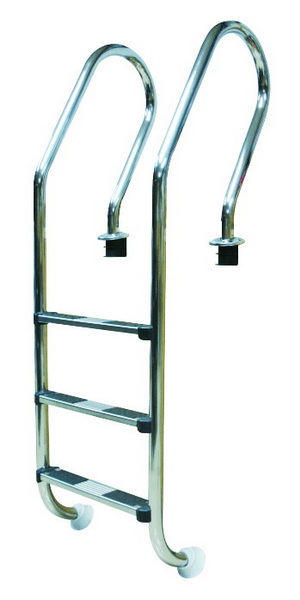
- Handrails: The arched grips usually made of polished steel or resin.[6][11]
- Step Treads: Structural elements, slip-resistant, often grooved.[11]
- Anchor Sleeves (Cups): Stainless or brass cups set into the deck to receive the legs of the ladder.[9][12][7]
- Expansion Wedges: Mechanisms to secure the ladder rails inside the anchor sleeves.[9]
- Base Boots: Soft, weatherproof caps fitted to the bottom of ladder feet for extra grip and to protect paver surfaces.[13]
- Choose a section of the pool perimeter that's easily accessible, not obstructing pool traffic, and far from skimmers or returns.[2][14]
- Mark anchor locations according to ladder manufacturer's specifications—center-to-center spacing is commonly 18–24 inches but varies by model.[5][11]
- Position anchor cups so they fall on paver seams if possible, rather than splitting a stone, to minimize cuts and preserve the strength of the deck.[7]
- Lift the relevant pavers gently, taking care not to crack them. Use a broad, flat tool or dedicated paver puller.

- Lift the target pavers and mark your anchor locations on the bedding sand. Verify the spacing with a dry fit of the assembled ladder.
- If necessary, sweep away joint sand and temporarily store lifted pavers safe from damage.[7]
- Dig a footing hole at each anchor location, at least 8–12 inches in diameter and 10–12 inches deep. The depth should reach through the sand bed and into undisturbed ground for best support.
- For decks over compacted base, ensure a substantial portion of the footing is set well below the paver layer.[2][7]
- Place the anchor cups in the center of each footing, using a makeshift jig or the actual ladder rails to confirm precise alignment.
- The top lip of each anchor cup must be flush with the future paver surface.
- Mix high-strength concrete to a creamy consistency. Pour into the holes, encapsulating each anchor cup, while ensuring no concrete enters the anchor sleeve itself.
- As the concrete begins to set, continually check that the cup remains in perfect alignment.
- Allow to cure for at least 24–48 hours—or as product directions advise—before further handling.[2][7]
- Attach bonding wire to the anchor cup lug, then integrate with the pool's bonding grid or ground bar according to local codes.
- National codes require any metallic element within 5 feet of the pool to be bonded, reducing shock risk.[7]
- If an anchor cup interferes with paver replacement, use a wet saw or grinder to trim the edges so the paver sits snugly around each cup.
- Test-fit pieces to ensure surface remains even, minimizing trip hazards.[5][7]
- For select installations, drill a hole in the paver (above the cup) to let the ladder rail pass completely through. Use a hole saw for a neat finish, working slowly to avoid fracturing the stone.[6][7]
- Insert the ladder rails into the anchor cups. Most cups use a wedge or expansion bolt—tighten these with the included tool to secure each rail.[4][12][9]
- Attach the rubber boots to the bottom of the rails—this isolates metal from stone, prevents wobble, and reduces corrosion risk.[13]
- Secure each step or tread as instructed, checking each fastener for proper torque.[11][5]
- Fill any gaps between anchor cups and trimmed pavers with non-shrink, color-matched grout.
- For a finished look, many kits include decorative escutcheon plates to hide joints and screws.
- Use a level to verify both the anchor and ladder rails are plumb.
- Physically push and pull the ladder to check for instability.
- Inspect each fastener, wedge, and screw. Confirm the bonding wire is securely attached and inspect for exposed wire.
- Test the ladder's steps for comfort, coldness, and non-slip surface.
- Sweep away dust or debris created by cutting or drilling pavers, and reapply joint sand as needed.
- After seven days, check ladders and bolts for signs of settling or loosening.
- Monthly: Inspect all visible hardware for loose fasteners, corrosion, and signs of wobble.
- Annually: Remove ladder at the end of the swim season—aboveground models should be stored away from weather.
- Regularly clean handrails and steps to prevent buildup of oils and algae, especially in marine climates.[11]
- Periodically reseal or regrout any gaps for longer-lasting paver integrity.
- Use heavy-duty anchor sleeves or stainless upgrade kits for saltwater pools, since salt is more corrosive than chlorine.
- Consider epoxy anchoring compounds for maximum hold in sandy or shifting soils.
- In high-wind areas, check that the anchor flange includes a locking system or customizable fasteners to prevent ladder theft or movement.
- For swim spas or uneven decks, adjustable or telescoping base designs are available.
Installing a pool ladder in pavers is a straightforward but methodical process that rewards careful attention to detail. By cutting precise anchor points, pouring robust concrete footings, ensuring full code compliance for bonding, and finishing with a visually appealing grout repair, pool owners secure both safety and beauty around their pools. Regular inspection and seasonal maintenance will help these installations remain safe, sturdy, and attractive for years to come.

No; while some installers bond anchors with high-strength epoxy, it is always best practice to pour a concrete footing beneath the paver for true structural support.[7]
Yes; all metallic parts within 5 feet of the pool must be bonded (connected to the grounding grid) by law in most jurisdictions, to reduce the risk of electric shock.[9][7]
Yes, but you will need to lift and (often) cut new pavers and pour new concrete anchor footings at the desired spots. Old anchor holes may need to be filled and disguised with matching pavers or caps.
Inspect the anchor cup fasteners and expansion wedges for loosening. Also look for movement or settling of pavers around the cups, which may require regrouting or (in rare cases) resetting the anchor.[4][12]
Choose a model with height-adjustable or telescoping feet, and use rubber base boots to ensure maximum contact and grip even on irregular surfaces.
[1](https://www.thorntoncodeckbuilders.com/how-to-attach-pool-ladder-to-deck/)
[2](https://www.poolkingfilter.com/how-to-install-a-pool-ladder-on-a-deck.html)
[3](https://www.youtube.com/watch?v=CimNMezhRbU)
[4](https://mrpoolman.com.au/blogs/news/easily-install-or-replace-your-pool-ladders-and-rails)
[5](https://mag.pioneerfamilypools.ca/media/mageworx/downloads/attachment/file/h/0/Snap-Lock-Deck-Ladder-Installation-Manual.pdf)
[6](https://alohapoolsusa.com/wp-content/uploads/main-access-easy-incline-deck-ladder-1.pdf)
[7](https://aquacreekproducts.com/anchor-installation-for-paver-applications/)
[8](https://images.inyopools.com/cloud/documents/2008dl-installation-instructions.pdf)
[9](https://www.srsmith.com/media/126979/rail-installation-guide-10_2017-lr.pdf)
[10](https://westerninterlock.com/designing-paving-stones-around-a-pool-key-tips-and-ideas/)
[11](https://about.arebos.de/shared-files/3051/?Poolleiter-3-Stufen_EN.pdf)
[12](https://www.youtube.com/watch?v=kBZZrt8Gop4)
[13](https://www.youtube.com/watch?v=6lg8kCHO0m0)
[14](https://www.youtube.com/watch?v=UOszx5_q0s4)
[15](https://australianpaving.com/knowledge-centre/pool-coping-pool-pavers/)
[16](https://www.tiktok.com/discover/laying-pavers-for-a-pool-ladder-base)
[17](https://www.youtube.com/watch?v=JJkG7vsan1E)


