


Content Menu
● Why Grounding a Pool Ladder Is Essential
● Key Terminology: Grounding vs. Bonding
>>> Comparison Table
● Pool Ladder Types and Their Requirements
● National Code Compliance: Global Perspectives
>> United States – NEC requirements
● Tools, Materials, and Preparations
>> Safety Gear
● Step-by-Step Guide: How to Ground Your Pool Ladder
>> Step 1: Inspect Existing Socket or Attachment
>> Step 3: Extend to Bonding Grid
>> Step 5: Test for Continuity
● Installation for Commercial and Residential Pools
● Integrating Grounding with Pool Lighting and Accessories
● Testing, Verification, and Electrical Safety Checks
● Maintenance, Troubleshooting, and Professional Tips
>> Maintenance
>> Common Problems and Solutions
>> 1. What happens if I don't ground my pool ladder?
>> 2. Is pool ladder grounding required for above-ground pools?
>> 3. Can I use aluminum wire for pool bonding/grounding?
>> 4. How often should pool ladder grounding be checked?
>> 5. What if my ladder doesn't have a bonding lug?
>> 6. What's the difference between bonding and grounding?
>> 7. Can grounding prevent corrosion?
>> 8. Who should inspect my pool's grounding system?
Swimming pools are places of leisure and recreation, but they also present serious safety challenges when it comes to electricity. Grounding and bonding pool ladders is an essential part of pool safety infrastructure, often overlooked but critical for protecting swimmers, meeting international standards, and ensuring long-term durability of pool components.
Whether for private homes, luxury resorts, or public aquatics centers, the procedure for grounding a pool ladder remains rooted in best practices, rigorous safety standards, and meticulous workmanship. This extensive guide provides everything you need: technical and practical explanations, detailed installation steps, code compliance notes, troubleshooting, visuals, professional advice, and updated maintenance checklists. By the end, you'll be able to approach pool ladder grounding projects with confidence and thorough knowledge.
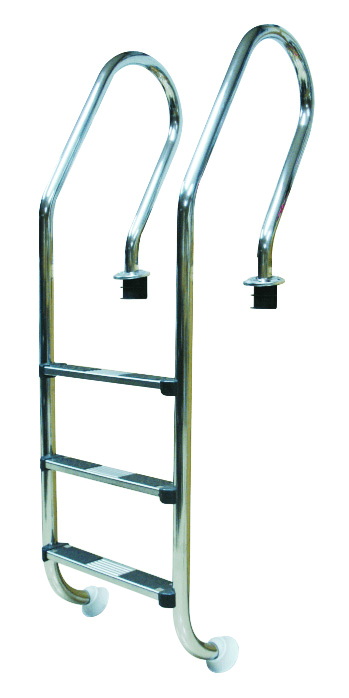
Swimming pool locations blend water, electricity, and metal—often in close quarters. Without proper grounding and bonding, even minor electrical faults can turn metal ladders and railings into dangerous conductors. Below are the fundamental reasons why comprehensive grounding is required:
- Prevents Electric Shock & Electrocution: Proper grounding routes stray currents away from pool areas, making the environment safe for children, adults, and pets.[1]
- Code Compliance: Electrical safety codes (such as NEC, IEC, BS) universally require all metal fixtures in and around pools to be bonded and grounded.
- Longevity of Pool Components: By eliminating stray currents, proper grounding reduces corrosive damage to metallic parts, extending the lifetime of ladders, rails, lighting, and pumps.
- Legal Liability: In the event of an accident, ungrounded ladders constitute code violations, invalidating insurance and exposing owners to legal risk.
- Peace of Mind: Bonded and grounded pools let everyone relax, knowing their swim is as safe as possible.
Understanding the different terms used in pool electrical safety is critical for proper installation and compliance.
Bonding refers to the *interconnection* of all metal components in and around your pool. This includes ladders, handrails, pumps, lighting fixtures, bridges, and any metallic structure within 1.5m (5ft) of the water. Bonding ensures every metal element shares the same electrical potential, eliminating possible voltage differences that could cause a shock if contacted simultaneously.[1]
Grounding is the connection of the bonded system to the earth through an approved ground-fault circuit interrupter (GFCI), electrical panel, or ground rod. It diverts unsafe electricity away from pool areas, protecting swimmers from direct contact with live currents. The grounding wire is typically larger (#8 gauge copper or heavier) and connects directly to the earth or main panel.
| Aspect | Bonding | Grounding |
|---|---|---|
| Purpose | Equalize potential among pool metals | Route electrical faults to earth |
| Includes | Ladders, rails, pumps, lighting, etc. | Bonded grid to ground (panel or rod) |
| Code Section | NEC 680.26, IEC 60364-7-702 | NEC 680.23, IEC 60364-4-41 |
| Safety Role | Prevents voltage differences (shocks) | Protects from direct faults (electrocution) |
Typically installed in sockets embedded in pool decks; must always include a bonding lug, typically copper or brass. For public/commercial installations, double bonding points are often code-mandated.
May be bolted onto pool walls or placed directly into the ground. Metal above-ground ladders still require bonding, often more challenging due to accessibility and mobility. Always connect to existing bonding grid when installing metallic ladders.[2]
Non-conductive plastics and composites do not require bonding. However, verify with specific codes and manufacturer notes as newer hybrid ladders may contain internal metal rods for extra support.
The National Electrical Code (NEC) Section 680 requires all metallic pool components within 1.5m (5ft) of the pool be bonded with #8 gauge copper wire, joined to the grounding system, and inspected regularly. Commercial pools require annual bond verification.
European standards (IEC 60364-7-702) demand a protective equipotential bonding grid encompassing all accessible metallic structures. Ground connection is typically made through the house electrical panel and protected by residual current devices (RCD).
British codes reinforce IEC requirements, but expand periodic inspection intervals and set requirements for both public and private pools (e.g., private pools must be inspected every 3 years for bond continuity).
Check with local codes. Most follow IEC guidelines but may differ in required wire gauge and schedule of inspections.
- #8 gauge solid copper wire (UL-listed)
- Bonding lugs (copper/brass, water-resistant)
- Stainless steel screws/bolts/clamps
- Electric drill & metal bits
- Nut driver and wire strippers/cutters
- PVC cement/sealant (if relevant)
- Multimeter/continuity tester
- Ground rod & connectors (as required)
- Insulated gloves
- Goggles
- Rubber-soled footwear
- Turn off all pool power circuits before starting
- Read manufacturer and local code instructions
- Lay out the existing bonding grid and identify all bonding points

Identify if your ladder is set into sockets, bolted to the deck, or attached to the pool wall. For sockets, look for a visible bonding lug. Clean the connection area thoroughly with a wire brush.[3][4]
1. Strip #8 copper wire for 1–2 inches.
2. Loosen the socket's bonding lug or connection clamp.
3. Loop wire under the lug and tighten securely.
4. For bolt-on ladders, drill a small pilot hole, attach a bonding lug, and secure wire.
Bonding must form a single loop around the pool, interconnecting all metallic components (ladders, rails, lights, pumps). Run the copper wire to the next closest metal device; use wire ties and anchors to secure exposed runs. Maintain neat, protected wiring.[2]
From the main bonding grid, connect copper wire to either the main electrical panel's ground bus or a dedicated ground rod (per code). Use waterproof connectors and periodically inspect for rust.
Use a multimeter or dedicated pool continuity tester:
1. Probe between ladder and other bonded items (rails, lights, pumps).
2. Verify a closed circuit with near-zero resistance.
3. Probe between the grid and earth ground—confirm connection.
- Double-ladder bonding points often required
- Routine log of bond grid inspections
- Bond all metallic furniture within 1.5m (5ft) of pool
- Emergency inspection and repair protocol
- Inspect bond and ground connections before pool opening each season
- Install GFCI breaker with visible indicator light in pool shed or house panel
- Reseal all deck penetrations after installation
Increasingly, pool ladders are installed alongside underwater lights, water pumps, and digital controllers. Integrated grounding ensures all devices are at the same electrical potential and safely routed to earth.
LED pool lights must also be bonded as they contain metal housings. Run bonding wire from ladder, handrails, pump casings, light housings, and connect all within the grid before heading to earth or panel. Use only waterproof lugs and gel-filled wire nuts inside pool niches.[1]
- Test continuity with meter between all bonded elements
- Inspect wire insulation for cracking/weathering
- Confirm tightness of all lugs and clamps
- Check ground rod for corrosion/integrity
- Review local code updates and file inspector reports
Licensed electricians can provide advanced testing, including earth potential measurements and simulation of fault conditions for code compliance.
- Replace any corroded bonding lugs or wires immediately
- Annually inspect and tighten all connections
- Reseal pool deck after any repairs
- Loose Lugs: Tighten immediately; loose connections can break the grounding path.
- Wire Corrosion: Use only copper and water-resistant connectors. Consider dielectric grease for extra protection.
- Unbonded Items: Add them to the grid! Even a single missed item (e.g., furniture, railings) creates a risk.
- Ground Faults: Install/upgrade to the latest GFCI breakers and inspect at least annually.
- Always turn off power before any electrical work
- Keep all wire runs as short and direct as possible
- If in doubt, consult an electrician, especially for commercial projects
Properly grounding and bonding pool ladders is non-negotiable for safety, durability, and compliance in any modern pool installation. From luxurious resorts to residential backyards, following rigorous grounding procedures ensures that every swim is as safe as technology and codes allow. Always treat the bonding and grounding grid as a critical part of pool infrastructure, not an afterthought.
By following this guide, selecting quality materials, adhering to national standards, and performing annual checks, you will provide years of safe swimming experiences for everyone in your pool environment.

Without grounding, you risk severe electrical shock or even fatal electrocution. Stray voltage could energize the ladder, especially if electrical faults occur elsewhere in the system.[1]
Yes. All metallic ladders must be bonded and grounded, irrespective of pool type, to comply with safety codes and protect swimmers.[2]
No. Only #8 or larger copper wire should be used, as it is corrosion-resistant and approved for wet environments.
Inspect annually, with visual checks for corrosion. Commercial pools should follow a rigorous inspection and record-keeping schedule.
You can install a copper bonding lug directly onto the ladder with a stainless steel self-tapping screw; location must allow for strong metal-to-metal contact and easy access for inspection.
Bonding connects all metallic components to raise them to the same electrical potential, preventing shocks. Grounding takes any fault current from the bonded grid and safely routes it into the earth.
Yes, but only if combined with high-quality materials and water-resistant connectors. Stray voltage accelerates corrosion, so proper grounding is part of effective pool maintenance.
For residential pools, any qualified electrician. For commercial pools, a licensed inspector familiar with local codes and regulations for aquatic facilities.
[1] https://www.dreiym.com/2021/12/21/why-grounding-and-bonding-are-crucial-for-pool-safety/
[2] https://www.youtube.com/watch?v=NiurYY5Oq0w
[3] https://forums.mikeholt.com/threads/best-way-to-bond-pool-ladder.2553919/
[4] https://www.youtube.com/watch?v=kBZZrt8Gop4
[5] https://www.youtube.com/watch?v=7KkR0omehVE
[6] https://www.youtube.com/watch?v=nFNmXY98mFU


