
Views: 222 Author: Tina Publish Time: 2026-01-15 Origin: Site


Content Menu
● Tools, Parts, and Safety Prep
>> Essential tools you will need
>> Check ladder type and compatibility
● Step‑By‑Step Assembly Instructions
>> Step 1 – Lay out and identify all parts
>> Step 2 – Assemble the ladder sides
>> Step 3 – Attach the second side and handrails
>> Step 4 – Adjust height for your pool
>> Step 5 – Add ballast (sand or water)
>> Step 6 – Position the ladder in the pool
>> Step 7 – Secure to deck, wall, or top rail
>> Step 8 – Final safety and stability checks
>> Routine inspection and care
>> Q1: How long does it usually take to assemble an above ground pool ladder?
>> Q2: Do I really need to fill the ladder with sand or water?
>> Q3: Can an above ground pool ladder damage my pool liner?
>> Q4: How often should I check the ladder's hardware and brackets?
>> Q5: Is it safe to leave the ladder in the pool all winter?
>> Q6: What is the safest type of above ground ladder for homes with children?
How to assemble an above ground pool ladder safely and correctly starts with sorting all parts, following the manufacturer's instructions step by step, and double‑checking stability and safety features before anyone uses the pool. Adding ballast (water or sand) and securing the ladder to the pool wall or deck are essential to prevent movement, tipping, or damage to your pool liner.[1][2][3][4]
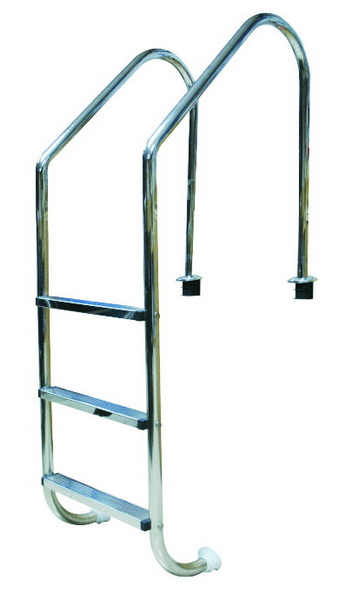
Before starting, gather tools and check the parts list so you do not have to stop halfway through assembly. Proper preparation also reduces the risk of damaging the pool wall or liner during installation.[3][4][5][2]
- Phillips screwdriver for tightening ladder screws and hardware.[5][3]
- Rubber mallet to tap treads and rails into place without cracking plastic components.[4][5]
- Cordless drill with Phillips bit or drill bit (typically 1/4–5/16 inch) for mounting brackets and deck anchors.[4][5]
- Tape measure and level to match the ladder height to the pool wall or deck and ensure the ladder sits evenly.[3]
- Pencil or marker to mark bracket positions on the pool wall or deck surface.[3]
- Confirm that your ladder is designed for above ground pools and the correct height (for example 48–54 inches wall height).[2][3]
- Verify the ladder type: A‑frame free‑standing ladder, inside‑only step system, or deck‑mounted ladder, because each has different anchoring methods.[6][1]
- Review the manufacturer's weight rating and usage warnings such as “do not dive,” “do not jump,” and “do not swim through or behind the ladder.”[7][4]
Most above ground pool ladders follow the same basic sequence: assemble side rails and steps, adjust height, add ballast, and secure the ladder to the pool or deck. Always follow the specific manual for your model, but the general process below will closely match many popular ladders on the market.[8][1][5][3]
- Unpack the ladder kit and lay everything on a flat surface, separating treads, rails, hardware, and any platforms or handrails.[5][4]
- Use the parts list in the manual to make sure no components are missing before starting assembly.[8][5]
- Many ladders mark rails or treads with letters or symbols (such as A/B or + marks) that show which side or direction they belong.[9][4]
- Place one ladder side rail flat on the ground, then insert the first tread into the matching lug openings, ensuring any directional marks are oriented correctly.[8][4]
- Tap each tread gently with a rubber mallet until it seats fully in the lugs without gaps.[4][8]
- Repeat for each step from bottom to top, keeping spacing consistent and checking that lugs are not cracked or misaligned.[8][4]
- Set the second rail over the opposite ends of the treads and tap it down with a rubber mallet until all treads lock into both sides.[5][4]
- Insert and tighten the provided screws or bolts to secure each tread or panel according to the manual.[5][8]
- Attach handrails or top platform pieces using the pre‑drilled holes, tightening fasteners enough to prevent wobble without overtightening into plastic.[7][5]
- Many ladders have cut lines or adjustable legs indicating how to trim them for 48‑inch or 52‑inch pools.[8][5]
- If cutting is required, measure carefully and cut all legs at the same marked line using a hacksaw or suitable cutting tool so the ladder remains level.[8]
- Recheck height by holding the ladder against the pool; the top platform should rest level on the top rail or deck surface.[7][3]
- To prevent floating or shifting, many A‑frame and step‑style ladders must be filled with water or sand through openings at the top or side panels.[1][4]
- Typical instructions call for about 20 pounds of sand per leg or per side, or filling hollow rails completely with water via a garden hose.[1][4][5]
- After filling, gently rock the ladder to release trapped air and confirm that all legs or steps feel noticeably heavier and stable.[1][4]
- Place the inside legs or steps gently over the pool wall, protecting the vinyl liner by avoiding sharp edges and not dragging the ladder.[2][4]
- For step systems placed entirely inside the pool, set them on a level area where the base rests flat on the floor and does not press hard against the wall.[6][1]
- Ensure there is enough clearance between the ladder and the wall (often around 2 inches) to prevent liner abrasion while limiting entrapment spaces.[2][7]
- If your ladder includes mounting brackets, place them over the handrail posts and adjust height to sit flush with the deck or top rail.[3][1]
- Mark and drill pilot holes, then fasten brackets to the pool deck or top rail with the supplied screws, tightening until the ladder does not shift when shaken.[3][5]
- For some A‑frame designs, additional straps pass under the pool top rail and buckle on the platform to keep the ladder from moving or lifting.[7][5]
- Test the ladder by having an adult slowly climb up and down while someone else watches for flexing, rocking, or movement at the feet and brackets.[10][3]
- Make sure all fasteners are tight, the platform is level, and the base is in full contact with the ground or pool floor inside and outside.[7][3]
- Check that safety features such as flip‑up outside sections, roll‑guard gates, or locking panels operate smoothly and can be secured when the pool is not in use.[4][5]
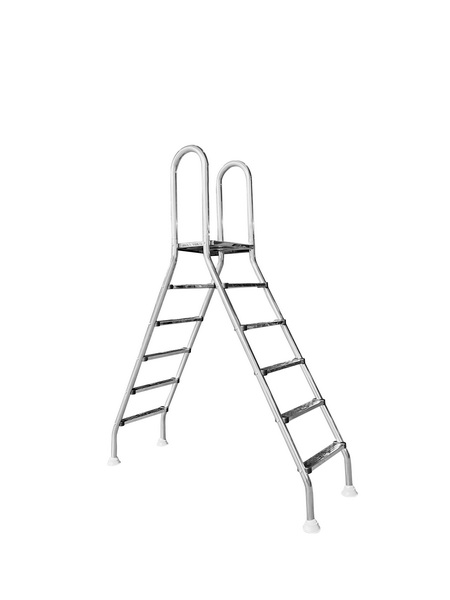
Good maintenance ensures your ladder remains safe season after season and also protects the pool structure and liner. Simple periodic checks reduce the risk of corrosion, cracks, or loose fittings causing accidents.[10][2]
- Never allow anyone to jump or dive from the ladder, and discourage climbing on the sides or playing underneath the steps.[10][7]
- Keep the ladder area clear of toys, floats, and obstructions that could cause tripping or entrapment.[10]
- When the pool is unsupervised, close and lock any roll‑guard, gate, or flip‑up section to limit unsupervised access, especially for children.[4][10]
- Inspect treads, handrails, and joints regularly for cracks, UV damage, or sharp edges and replace damaged parts immediately.[2][10]
- Check mounting brackets, bolts, and straps at least every few weeks during the season to ensure they remain tight and rust‑free.[3][10]
- At season's end, many ladders should be removed, drained of water or sand if recommended, cleaned, and stored in a dry place out of direct sunlight.[2][4]
Assembling an above ground pool ladder safely requires careful preparation, accurate height adjustment, and secure anchoring to the pool wall or deck. By following the step‑by‑step process outlined here and adding ballast, stability checks, and regular maintenance, you create a solid, secure entry point that protects swimmers and your pool structure for many seasons.[1][2][3][4]
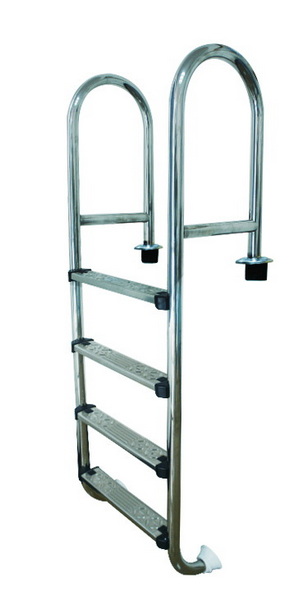
Most homeowners can assemble and install a typical above ground pool ladder in about 30–60 minutes if all tools and parts are ready and the instructions are followed carefully. More complex step systems or ladders with gates and roll‑guards may take longer because of additional safety hardware and ballast filling.[5][1][3][4]
Yes, filling hollow legs or steps with sand or water is crucial for stability and prevents the ladder from floating or shifting when swimmers use it. A properly ballasted ladder also reduces stress on the pool wall and helps keep the base in full contact with the floor.[1][7][4]
A ladder can damage a vinyl liner if it rubs directly against the wall or has sharp edges or unpadded feet. Keeping a small gap from the wall, using protective pads if recommended, and making sure the feet sit flat and smooth will greatly reduce liner wear.[2][7]
During the swimming season, it is wise to check bolts, screws, and mounting brackets every few weeks, especially after heavy use or storms. Tightening loose hardware and looking for corrosion or cracks early helps prevent sudden ladder failure.[10][3]
Many manufacturers recommend removing the ladder before winter closing to avoid ice damage and UV aging while not in use. Removing and storing the ladder in a dry, sheltered area extends its service life and keeps it looking and performing like new.[4][2]
A ladder with a lockable gate, roll‑guard, or flip‑up outside section combined with a proper fence and self‑closing gate provides higher protection against unsupervised access. Choosing a model with non‑slip treads, sturdy handrails, and clear safety labeling further reduces accident risks for families.[7][10][4]
[1](https://poolpartstogo.com/blogs/pool-equipment/how-to-fit-a-ladder-to-your-above-ground-pool-the-right-way)
[2](https://blog.linerworld.com/2011/01/14/swimming-pool-ladder-installation/)
[3](https://blog.watsons.com/blog/install-above-ground-pool-ladder)
[4](https://www.youtube.com/watch?v=ioYl-25dDXY)
[5](https://www.royalswimmingpools.com/NE1162manual.pdf)
[6](https://www.mavaquadoc.com/blogs/pool-maintenance-blog/installing-pool-steps-a-step-by-step-guide)
[7](https://www.youtube.com/watch?v=UOszx5_q0s4)
[8](https://www.familypoolfun.com/pdf/ne1222_manual.pdf)
[9](https://www.youtube.com/watch?v=JJkG7vsan1E)
[10](https://blog.watsons.com/blog/make-above-ground-pool-ladder-stable)
[11](https://www.youtube.com/watch?v=AcVIHFSLCTY)
[12](https://www.youtube.com/watch?v=qpJDdgZaclQ)
[13](https://www.facebook.com/groups/637529959937311/posts/2635564603467160/)
[14](https://www.youtube.com/watch?v=kstTbJYtypE)
[15](https://www.clubpiscine.ca/index.php?dispatch=attachments.getfile&attachment_id=5478)


