
Views: 222 Author: Tina Publish Time: 2025-10-31 Origin: Site


Content Menu
● Understanding Pool Pump Power Consumption
>> The Core Metrics: Wattage, Horsepower, and Run Time
>> Annual Pool Pump Electricity Usage
● Factors Affecting Pool Pump Electricity Consumption
● How to Calculate Your Pool Pump's Electricity Usage
● Reducing Pool Pump Electric Costs
>> 1. Upgrade to Variable-Speed Pumps
>> 2. Run Pump at Off-Peak Hours
>> 4. Maintain and Clean Filters
● Additional Energy-Saving Tips
● FAQ: Pool Pump Electricity Usage
>> 1. How many watts does a standard pool pump use?
>> 2. How much does running a pool pump cost monthly?
>> 3. Are variable-speed pumps worth it for energy savings?
>> 4. Can I reduce costs by running my pump at night?
>> 5. How long should I run my pool pump each day?
Swimming pools provide relaxation and entertainment, but maintaining water quality comes with substantial energy costs. Pool pumps play a pivotal role in water circulation and filtration, but their continuous operation can drive up electricity bills—especially during peak swimming seasons.[1][2]
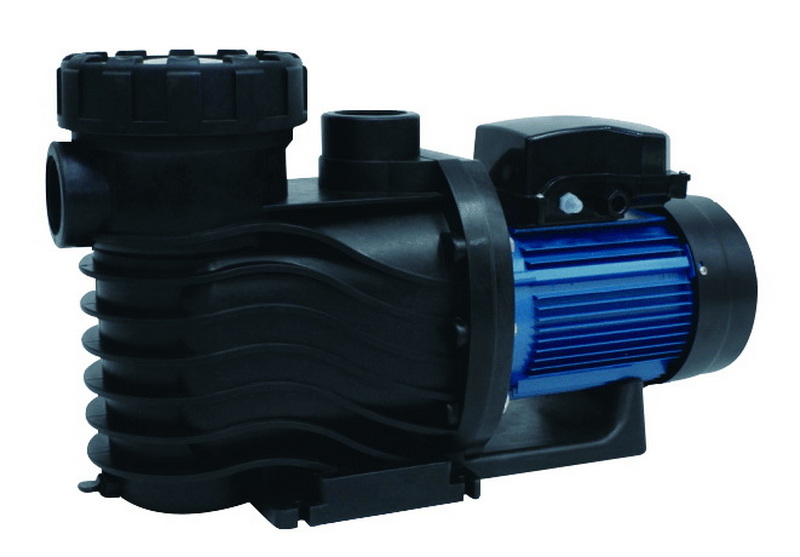
Three critical factors determine how much electric a pool pump uses:
- Wattage: The power rating of a pump, measured in watts or kilowatt-hours (kWh). Pool pump watts typically range from 500 to 2,500 depending on the brand, size, and horsepower.[3][4]
- Horsepower (HP): Most residential pumps fall between 0.75 HP (small pools) to 2.5 HP (large pools). More horsepower means more electric usage.
- Run Time: The daily hours your pump operates. Pools usually require one full turnover per day—around 8 hours.[2][1]
Suppose your single-speed pump is rated at 2,000 watts and operates for 8 hours daily:
- 2,000 watts × 8 hours = 16,000 watt-hours = 16 kWh per day
- Over 30 days: 16 kWh × 30 = 480 kWh per month
- At $0.12 per kWh (typical electricity cost): 480 × 0.12 = $57.60/month.[2]
| Pump Type | Watts Used | Daily (8h) | Monthly | Annual (12 mo) |
|---|---|---|---|---|
| Single-Speed (2HP) | 1500-2500W | 12–20 kWh | 360–600 kWh | 3,000-4,800 kWh |
| Dual-Speed | 600–2400W | 4.8–9.6 kWh | 144–288 kWh | 1,200-2,400 kWh |
| Variable-Speed | 150–1,500W | 1.2–6 kWh | 36–180 kWh | 600-1,500 kWh |
Bigger pumps draw more amperage and thus consume more electricity. A standard 1HP pump uses about 1,000W per hour, while 2HP units may require up to 2,400W.[4][3]
- Single-Speed Pumps: Always run at full RPM, using maximum power.
- Variable-Speed Pumps: Adjust speed based on need, often using 80% less electricity.[5][2]
- Energy-Efficient Motors: Reduce amperage draw by up to 25%, cutting costs and environmental impact.[7]
Most pools need the water circulated once a day; over-running the pump increases energy use unnecessarily.[8][1]
“Head” is the friction inside your piping—affected by pipe length, fittings, valves, and the distance between pool and pump. More friction means higher required horsepower and thus higher electric usage.[1]
1. Find Your Pump's Wattage: Check the label or multiply voltage × amperage.
2. Calculate Daily Usage: Watts × hours used per day ÷ 1000 = Daily kWh.
3. Calculate Monthly or Annual Cost: Multiply daily kWh by days in month, then by the electricity rate (¢/kWh).[4][2]
You have a 2,000W pump running 8 hours/day at $0.12/kWh:
- Daily: 2,000W × 8 = 16 kWh
- Monthly: 16 × 30 = 480 kWh × $0.12 = $57.60[2]
- Annual: 480 × 12 = 5760 kWh × $0.12 = $691.20
- Reduce consumption by up to 80%
- Use programmable timers for optimized run schedules[2]
- Most units pay for themselves within a few years via electricity savings[8]
If your utility offers free nights or weekends, schedule pump operation during those times for significant savings.[2]
Don't over-filter — most pools require only one turnover per day. Reduce daily run time to match pool size and usage.[1]
Clean filters and wider pipes reduce flow resistance, minimizing pump effort and energy consumption.[1]
A pool cover helps retain heat and reduces the pump's workload by minimizing debris.[1]
- Replace older pumps with ENERGY STAR® certified models, saving up to 65% in energy.[9]
- Use pool automation systems to schedule and control run times, optimizing efficiency.
- Consider solar-powered pool pumps if available in your region.
Pool pumps are essential for maintaining clean, safe swimming pools, but they represent one of the highest electricity uses in homes with pools. By understanding your pump's wattage, run time, and efficiency—and upgrading to modern variable-speed units—you can dramatically lower your monthly bills and environmental impact. Regular maintenance, strategic scheduling, and energy-efficient technologies are your best strategies for long-term savings.[8][5][1][2]
A typical pool pump uses between 1,500 and 2,500 watts per hour depending on size and horsepower.[4][5][2]
For a standard single-speed pump (8 hours/day), expect $30-$150/month depending on electricity rates and pump size.[7][2]
Yes; they consume up to 80% less electricity than standard single-speed pumps.[9][5][2]
Yes, especially if your energy provider offers free or discounted off-peak rates; a scheduling system or timer is required.[2]
Usually 6–8 hours suffices for one full turnover; larger pools or heavy use may require more.[6][8][1]
[1](https://www.agwayenergy.com/blog/how-much-electricity-does-a-pool-pump-use/)
[2](https://electricityplans.com/variable-speed-pool-pump-vs-standard-pool-pump/)
[3](https://www.jackery.com/blogs/knowledge/how-much-it-costs-to-run-a-pool-pump)
[4](https://www.energybot.com/energy-usage/pool-pump.html)
[5](https://poolloan.net/pool-pumps-electricity-use/)
[6](https://www.chooseenergy.com/energy-resources/pool-pump-settings-for-energy-savings/)
[7](https://intheswim.com/blog/costs-of-running-a-pool-pump.html)
[8](https://www.energy.gov/energysaver/choosing-installing-and-operating-efficient-swimming-pool-pump)
[9](https://natural-resources.canada.ca/energy-efficiency/energy-star/pool-pumps-infographic)
[10](https://stock.adobe.com/search?k=swimming+pool+pump)
[11](https://www.youtube.com/watch?v=hlz48dkxwAc)
[12](https://www.youtube.com/watch?v=Ayk3co2KetE)
[13](https://www.youtube.com/watch?v=SPOzgmXgTlk)
[14](https://www.youtube.com/watch?v=ou61sf90M_M)
[15](https://docs.nrel.gov/docs/fy12osti/54242.pdf)
[16](https://castawaypoolservice.com/pool-pump-electricity-consumption/)
[17](https://www.aquagem.com/news/how-much-energy-does-a-pool-pump-use)
[18](https://www.facebook.com/groups/1407260559603442/posts/3986325715030234/)
[19](https://www.reddit.com/r/swimmingpools/comments/1bhciz1/watts_used_by_regular_pool_pump_versus_variable/)
[20](https://www.energystar.gov/sites/default/files/tools/Pool%20Pump%20Marketing_Materials_2021.pdf?16f6-f81c)


