
Views: 222 Author: Tina Publish Time: 2025-12-22 Origin: Site


Content Menu
● What “Run Time” Really Means
● Typical Daily Run Time Recommendations
● How to Calculate Your Ideal Pump Run Time
>> Step 1: Calculate Pool Volume
>> Step 2: Find Pump Flow Rate
>> Step 3: Use the Turnover Formula
● Single‑Speed vs Variable‑Speed Pump Run Time
● Seasonal and Climate Adjustments
● Best Time of Day to Run the Pump
● Signs You Need to Run the Pump More
● Example Run Schedules (Single‑Speed & VS)
>> 1. Can I run my pool pump for less than 8 hours?
>> 2. Is it better to run the pool pump at night or during the day?
>> 3. Do variable‑speed pumps need to run longer?
>> 4. How do I know if my pump run time is too short?
>> 5. Should my pool pump run 24/7?
Most residential pool pumps need to run about 8–12 hours per day to keep the water clear, safe, and well‑circulated, depending on pool size, climate, pump type, and bather load. The smart way is to run the pump long enough to achieve at least one full water turnover per day, and often closer to 1.5–2 turnovers in hot weather or heavy use.[1][2][3][4][5]
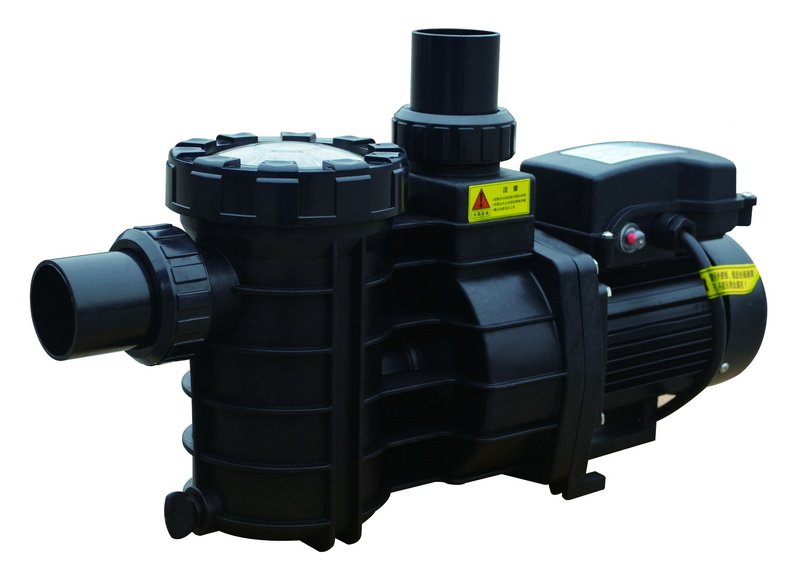
Your pool pump's main job is to circulate water through the filter, so debris, algae spores, and bacteria are removed and chemicals are evenly distributed. The key concept is “turnover rate,” which is how long it takes for all the water in the pool to pass through the filter once.[3][4][6]
- Many experts recommend at least one full turnover per day, and up to two turnovers for optimal clarity and sanitation.[4][3]
- For most residential pools with correctly sized equipment, this translates to roughly 8 hours of run time per 24‑hour period.[2][6]
Actual run time depends on season, water temperature, and usage, but there are widely used guidelines.[7][3]
- In warm summer conditions, many professionals advise 8–12 hours per day to prevent algae and cloudy water.[2][4]
- In cooler winter conditions, 4–6 hours can be enough in many climates because biological activity slows down.[7][4]
Some service companies summarize this as:
- 8–10 hours per day in summer for average residential pools.[4][7]
- Around 4–6 hours per day in winter when the pool is covered or lightly used.[7]
If your water gets hazy, holds chlorine poorly, or develops algae, that is a sign the pump may need to run longer, the filter may be dirty, or the chemistry is off.[8][3]
The most accurate approach is to calculate the turnover time for your specific pool and pump.[1][5]
You need an estimate of your pool's water volume in gallons (or liters). This depends on pool shape, but the basic idea is to multiply length × width × average depth, then convert to gallons using the appropriate factor.[5][7]
- Knowing the true volume is essential because all later calculations (chemicals and run time) rely on it.[5][7]
Your pump's flow rate is usually given in gallons per minute (GPM) or gallons per hour (GPH), based on the pump model, plumbing, and filter resistance.[1][5]
- Manufacturers publish performance curves showing how many gallons per minute the pump moves at different system pressures.[1][5]
- A typical residential system might operate in the 30–60 GPM range, depending on horsepower and plumbing size.[9][10]
Once you know volume and flow, use:
- Total pool volume ÷ GPH = turnover time in hours.[5][1]
Example from industry guidance:
- 40 GPM × 60 = 2,400 GPH
- 20,000 gallons ÷ 2,400 GPH ≈ 8.3 hours for one turnover.[1][5]
If you want 1.5–2 turnovers, simply multiply that base time accordingly.[3][4]
The type of pump you use significantly affects how long it should run and how much energy it consumes.[11][12][8]
Single‑speed pumps run at one fixed high speed whenever they are on, so owners usually limit run time to control electricity costs.[2][4]
- Common guidance: run a properly sized single‑speed pump 8 hours per day for at least one turnover.[6][2]
- In very hot climates or heavy‑use periods, this can increase to 10–12 hours per day.[3][4]
If a single‑speed pump is undersized, you may need to run it longer (8–10+ hours) to achieve full turnover; if oversized, you might be wasting power by running too long.[9][3]
Variable‑speed (VS) pumps can run at low speed for long periods and use much less energy per gallon moved.[12][8][11]
- Many pool owners run VS pumps around 12 hours per day, with about 3–4 hours on higher speed for cleaning and 8–9 hours on lower speed for filtration.[8][11][12]
- VS pumps are often programmed for near‑continuous but very low‑speed operation to maximize energy efficiency and water quality.[13][10][12]
Certain equipment, such as saltwater chlorine generators and heaters, may need a minimum flow rate to activate, which can require higher pump speeds for part of the day.[10][13][11]
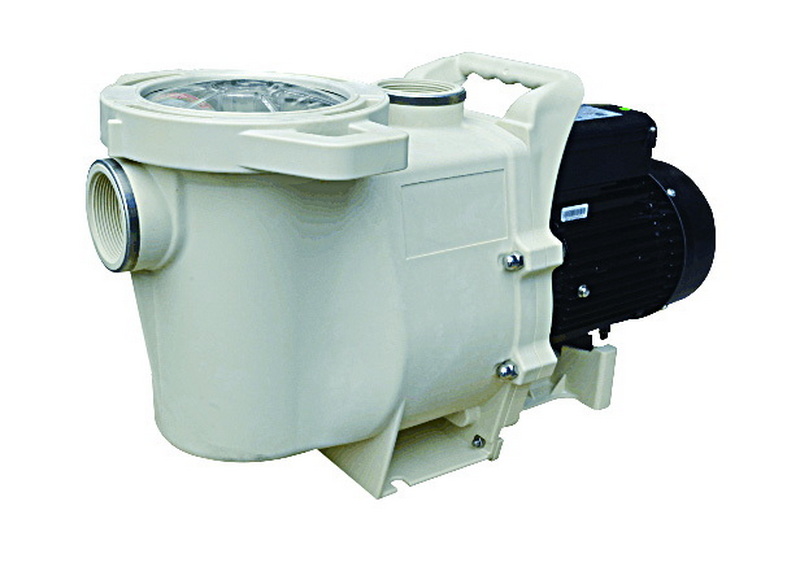
Run time is not static all year; it should be adjusted for temperature and season.[13][3]
- In hot summer weather, higher temperatures accelerate algae growth and chlorine consumption, so longer run times (8–12 hours) are beneficial.[13][4][3]
- In cooler months, biological activity slows, allowing safe reductions in run time (often 4–6 hours) if water stays clear and chemistry is stable.[4][7]
Some industry rules of thumb suggest running the pump roughly 1 hour for every 10 degrees of air temperature (for example, 90 °F air temperature ≈ 9 hours of run time).[14][13]
Choosing when to run the pump affects both water quality and energy costs.[15][6][2]
- Many experts prioritize running the pump during the warmest part of the day to support chemical circulation and filtration when the sun is strongest.[14][6][13]
- For cost savings, a common strategy is to split the total daily run time across off‑peak electricity hours, as long as the total daily run time target is met.[6][15][2]
Modern timers and smart controllers make it easy to schedule multiple shorter cycles, such as 3 hours in the morning, 3 hours in the afternoon, and 2 hours at night, still totaling 8 hours.[15][2]
Even after doing the math, observation is important. Several indicators show that current run time is not enough.[3][4]
- Water becomes hazy or cloudy, even with correct chlorine and pH levels.[4][3]
- Persistent algae spots appear on walls or steps, or there is trouble maintaining free chlorine.[13][3]
If these issues appear:
- First, check filter cleanliness and backwash or clean cartridges as needed.
- Then, increase daily run time in 1–2 hour increments while monitoring clarity and test results.[3][4]
Below is a simplified look at typical daily run times for different setups based on industry guidance.[11][2][13]
| Pool setup | Typical daily run time | Notes |
|---|---|---|
| Single‑speed, temperate | ~8 hours | One full turnover; adjust for clarity.swimuniversity+1 |
| Single‑speed, hot climate | 8–12 hours | Higher temps and bather load.californiapools+1 |
| Variable‑speed, standard use | ~12 hours | 3–4 h high, 8–9 h low.youtube+1escapepools |
| Winter operation | 4–6 hours | Cooler water, slower algae growth.jimspoolcare+1 |
| Heavy commercial use | Often near‑continuous | Multiple turnovers and strict codes.californiapools |
Actual run time should always be verified against turnover calculations and water quality.[5][1][3]
A pool pump does not need to run 24 hours a day, but it must run long enough to achieve at least one full water turnover every 24 hours—often 8 hours or more—and sometimes up to 12 hours in hot or heavy‑use conditions. By calculating pool volume, understanding actual pump flow, and adjusting for climate, season, and pump type (single‑speed vs variable‑speed), pool owners can keep water sparkling clean while still controlling electricity costs.[2][11][6][4][3][1][5]
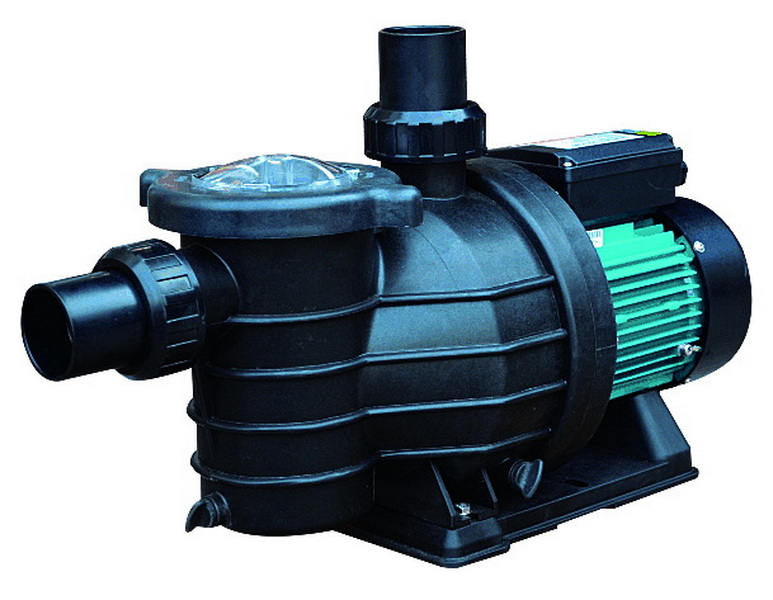
Yes, but only if your pump and filter can complete at least one full turnover in fewer than 8 hours and the water stays clear and balanced. If clarity declines or algae appears, increase daily run time or review your filtration and chemistry.[9][3][1][5]
From a water‑quality perspective, running the pump during the hottest daylight hours helps support sanitation when sunlight is strongest. From a cost perspective, many owners shift some or all run time into off‑peak electricity periods as long as total daily run time targets are met.[14][15][6][2][13]
Variable‑speed pumps typically run longer each day, but at much lower speeds, which significantly reduces energy use per gallon moved. A common pattern is about 12 hours per day, with a few hours on high speed for cleaning and several hours on low speed for filtration.[12][8][11]
Cloudy water, recurring algae, or difficulty maintaining sanitizer levels are strong signs that circulation is insufficient. If chemistry is correct and the filter is clean, gradually increase pump run time until the water remains consistently clear.[4][3]
Running 24/7 maximizes circulation but is usually unnecessary and often too expensive for residential pools. For most properly designed systems, 8–12 hours per day with at least one full turnover is adequate when combined with correct filtration and chemical maintenance.[15][6][2][3][4]
[1](https://lesliespool.com/blog/how-to-calculate-pool-pump-run-time.html)
[2](https://www.swimuniversity.com/run-pool-pump/)
[3](https://www.californiapools.com/blog/california-pools-blog/pool-maintenance-care/how-long-should-you-run-your-pool-pump-/)
[4](https://www.1stopfilter.com/blogs/academy/are-pool-filter-pump-supposed-to-run-all-the-time)
[5](https://www.doheny.com/help/calculate-pool-pump-run-time)
[6](https://home.howstuffworks.com/swimming-pool-pumps-run-all-the-time.htm)
[7](https://www.jimspoolcare.com.au/news-pool-cleaning/how-long-should-i-run-the-pool-pump-for-each-day/)
[8](https://www.youtube.com/watch?v=u4ExnupI26o)
[9](https://mrpoolman.com.au/blogs/news/how-long-should-i-run-my-pool-pump-every-day)
[10](https://www.youtube.com/watch?v=i44bmptMGgU)
[11](https://www.youtube.com/watch?v=Oppm1lT94ps)
[12](https://escapepools.com/optimum-length-and-time-of-day-to-run-a-pool-pump/)
[13](https://www.aquagem.com/news/when-to-run-the-pool-pump-in-summer)
[14](https://www.reddit.com/r/pools/comments/153sq0a/should_my_pool_pump_be_on_8_hoursday/)
[15](https://www.aquagem.com/news/how-many-hours-a-day-should-run-a-pool-pump)
[16](https://www.youtube.com/watch?v=9ToRTbckeOw)
[17](https://www.reddit.com/r/pools/comments/pbcz27/how_long_should_i_run_my_pool_pump_each_day_i/)
[18](https://www.reddit.com/r/pools/comments/dhrbrx/misleading_guidance_on_vs_pump_speed_and_turnover/)
[19](https://www.swimmingpool.com/maintenance/pump&filter/how-long-to-run-pool-pump/)
[20](https://www.reddit.com/r/pools/comments/csj0s1/rule_of_thumb_for_pool_turnover_8hrs_10hrs_1_day/)


