
Views: 222 Author: Tina Publish Time: 2025-12-24 Origin: Site


Content Menu
● What Can I Use as a Pool Ladder?
● Standard Pool Ladders You Can Use
>> A‑Frame Above‑Ground Pool Ladders
>> Deck‑Mounted In‑Pool Ladders
● Safer Alternatives to Traditional Pool Ladders
>> Built‑In Steps and Tanning Ledges
>> Pool Ramps and Accessible Lifts
● DIY and Temporary Pool Ladder Alternatives
>> Horse Mounting Blocks as Steps
>> Modular Plastic Platforms and Step Stools
>> Cinder‑Block and Lumber Stairs
● Key Safety Guidelines for Any Ladder Alternative
>> Stability, Non‑Slip Surfaces, and Anchoring
>> Handrails, Barriers, and Supervision
>> Weight Ratings and User Needs
● OEM Pool Ladder and Accessory Solutions
>> Why Brands Choose OEM Ladder Solutions
>> Customization and Safety Compliance
● FAQs About Pool Ladder Alternatives
>> 1. Can I use regular household furniture as a pool ladder?
>> 2. Are DIY cinder‑block stairs safe for pool access?
>> 3. What is the safest alternative to a standard ladder for seniors?
>> 4. How do I know if my pool ladder alternative is stable enough?
>> 5. Do I still need a fence or barrier if I remove the ladder after swimming?
>> 6. Can above‑ground pool steps be used in inground pools?
You can use purpose‑built pool ladders, wide entry steps, ramps, pool decks with built‑in stairs, or even carefully designed DIY platforms, as long as they are stable, non‑slip, and meet basic safety guidelines. For temporary solutions, horse mounting blocks, modular platforms, and cinder‑block‑and‑timber steps are sometimes used, but they must be tested thoroughly before regular use.[1][2][3]
A pool ladder, steps, or ramp is essential to enter and exit the pool safely, especially for children, elderly users, and anyone with limited mobility. When a standard ladder is missing, damaged, or uncomfortable, safe alternatives can give better stability and accessibility without compromising safety.[4][5][6][3]
- Always prioritize safety over low cost or appearance when choosing any ladder alternative.[6][3]
- Ensure every solution is stable, corrosion‑resistant, and compatible with your above‑ground or inground pool design.[7][1]
Even if you are looking for “alternatives”, many situations are best solved with a correctly selected pool ladder that matches your pool type.[3][6]
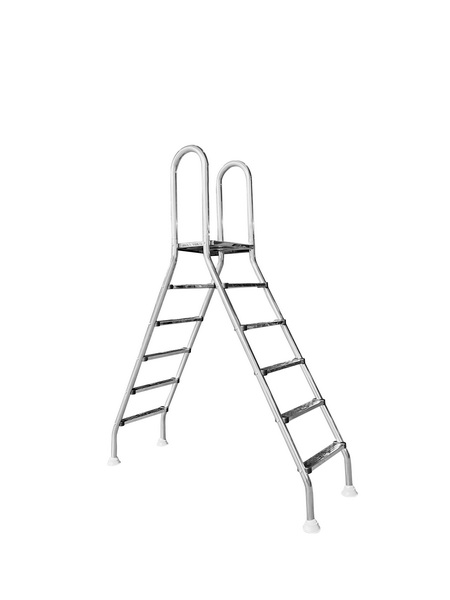
A‑frame ladders are designed for standalone above‑ground pools without decks and offer steps on both sides of the pool wall.[1]
- Usually support up to around 300 lb and include non‑slip treads and handrails.[6][1]
- Some models can be locked or removed when not in use to prevent unsupervised access by children.[3][1]
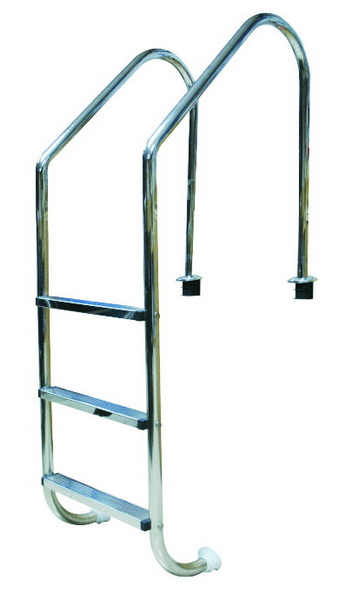
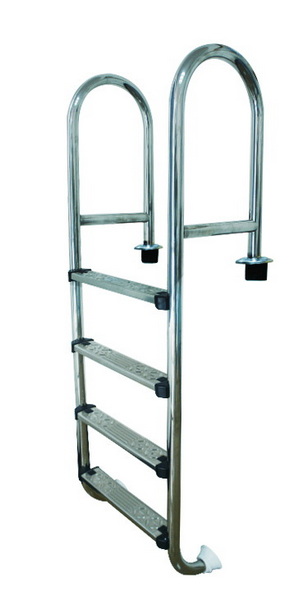
Deck‑mounted ladders bolt into the pool deck and curve down into the water, making them popular for inground and decked above‑ground pools.[6]
- Metal or resin rails with narrow rungs, often with rubber bumpers at the base to protect the pool wall or liner.[3][6]
- Best used in combination with a solid, non‑slip deck surface and properly sized handrails.[6][3]
If you dislike narrow rungs, have mobility issues, or simply want a more comfortable entry, several alternatives can replace or supplement standard ladders.[5][1]
Full stair entry systems are large plastic or resin stairs that sit in the water, sometimes combined with an outer ladder or platform.[1]
- Provide wide, flat steps, handrails, and high weight capacity—ideal for seniors, kids, and plus‑size swimmers.[9][1]
- Many systems can be weighted with sand or water to prevent floating and reduce movement.[10][1]
In inground pools, built‑in steps, benches, and tanning ledges can act as permanent entry points.[5]
- Provide a broad platform to stand, sit, or rest while entering/exiting, which is more comfortable than narrow ladder rungs.[5]
- Often integrated with handrails or grab rails to meet accessibility and pool code requirements.[3]
For users with limited mobility or wheelchair users, ramps and lifts are often the safest and most inclusive options.[11][1]
- Sloped ramps with handrails allow gradual entry and work well for therapy or public pools.[1]
- Pool lift chairs use hydraulic or electric mechanisms to lower and raise the user into the water safely.[4][1]
When your existing ladder breaks mid‑season or you are waiting for a replacement, temporary or DIY solutions can help—but they must be designed and tested carefully.[12][1]
Durable horse mounting blocks can serve as temporary pool steps next to low pool walls or decks.[1]
- Typically made from molded plastic with non‑slip surfaces and multiple steps.[1]
- Should be positioned on level ground and, if used in water, securely weighted and tested for buoyancy and stability.[1]
Some pool owners repurpose heavy‑duty plastic step stools or modular platforms, especially in shallow kiddie pool setups.[13]
- Can be stacked or tied together and weighted underneath to stay submerged, for example using zip‑tied weights under the lowest step.[13]
- All edges must be smooth, and surfaces should be non‑slip to avoid injuries.[3]
Simple garden‑style stairs built with cinder blocks and timber can give sturdy access to an above‑ground pool deck or raised edge.[2][12]
- Typical builds use stacked 8x8x16 concrete blocks and 4x6 lumber planks cut to length for each step.[2]
- For long‑term use, blocks should be leveled, glued with construction adhesive, and the wood treated against moisture.[2]
Whether you use a standard ladder, steps, or a DIY platform, safety essentials remain the same.[6][3]
Stability is the top priority for any entry system.[7][1]
- Ensure the base sits level on the floor or ground; use shims, ladder mats, or step pads to prevent rocking and protect liners.[7][6]
- Look for non‑slip treads and rails, and consider adding grip tape or textured mats on smooth surfaces.[7][3]
Handrails and barriers reduce the risk of falls and unsupervised access.[6][3]
- Regulations and safety experts recommend handrails on both sides of ladders or steps, sized so even children can grip them easily.[3]
- For above‑ground pools, consider ladders or entry systems that lock, remove, or sit behind a gate or pool fence when the pool is not in use.[7][3]
Every ladder or DIY solution must match the weight and mobility needs of users.[9][1]
- Plus‑size swimmers, seniors, and people with joint issues typically benefit from wide steps, high weight capacity, and strong handrails.[9][1]
- Always check the manufacturer's maximum load rating, and test DIY constructions with caution before everyday use.[7][1]
As a professional pool equipment factory, offering a full package of ladders, steps, pumps, and filtration maximizes value for overseas partners.
OEM pool ladder and step manufacturing allows foreign brands and wholesalers to combine customized appearance with reliable engineering.[7][1]
- You can provide tailored color, logo printing, and packaging to match each customer's brand image.[1]
- With intelligent production for sand filters, DE filters, cartridge filters, pumps, LED lights, and accessories, integrated systems are easier to market and maintain.
International partners often require products that satisfy local pool safety codes and insurance requirements.[3][7]
- Offering ladders, steps, and entry systems with documented load ratings, UV‑resistant materials, and anti‑slip surfaces helps partners pass inspections.[3][7]
- By integrating filter systems, pumps, and LED lighting with compatible entry equipment, OEM customers can position their product lines as complete pool packages.
Finding the right answer to “what can I use as a pool ladder” depends on your pool type, user needs, and safety priorities. From A‑frame ladders and built‑in stairs to ramps, pool lifts, and carefully engineered DIY platforms, every solution must be stable, non‑slip, and correctly anchored, with proper handrails and child‑safety measures. For overseas brands, wholesalers, and manufacturers, partnering with a professional Chinese OEM that supplies ladders, wide steps, filters, pumps, LED lights, and accessories ensures consistent quality and a complete, safe pool system for end users.[5][6][7][1][3]
Using standard indoor furniture, such as chairs or wooden stools, as a pool ladder is unsafe and strongly discouraged. These items are not designed for wet environments, may become slippery, and can collapse or tip over unexpectedly, causing serious injury.[1][3]
DIY cinder‑block and timber stairs can be stable if blocks are level, properly stacked, and secured with construction adhesive, and if the wood is thick and moisture‑resistant. However, they should only be used on solid, flat ground and tested cautiously, and they may not meet building codes or pool regulations in some regions.[2][3]
Full stair entry systems with wide, flat steps, sturdy handrails, and high weight capacity are generally safer for seniors than narrow ladders. In public or therapy pools, ramps and pool lifts may provide even better accessibility and support.[11][9][1]
Check that the base does not rock, all steps feel solid under full body weight, and the structure does not flex excessively when used. Adding step pads, weights, and cross‑bracing can improve stability, but if any movement remains, replace or redesign the system immediately.[7][3]
Yes. Removing or locking the ladder is only one layer of protection; a code‑compliant pool fence and self‑closing gate are still recommended to prevent unsupervised access, especially by children. Safety experts advise combining barriers, alarms, supervision, and safe ladders or steps for best protection.[15][3]
Some freestanding step systems are compatible with both above‑ground and shallow inground pools, but not all designs are interchangeable. Always check manufacturer recommendations for water depth, wall style, and anchoring requirements before cross‑using steps in a different pool type.[7][1]
[1](https://www.poolkingfilter.com/what-can-i-use-instead-of-a-pool-ladder.html)
[2](https://www.youtube.com/watch?v=mvT1GMwOkK8)
[3](https://www.poolfencediy.com/blogs/blog/pool-ladder-safety)
[4](https://www.bestbonny.com/what-can-i-use-instead-of-a-pool-ladder/)
[5](https://happyhideouts.co.uk/blogs/news/above-ground-pool-ladder-alternatives)
[6](https://sternsbackyard.com.au/blogs/news/safety-tips-for-installing-and-using-above-ground-pool-ladders)
[7](https://www.poolkingfilter.com/how-to-secure-above-ground-pool-ladder.html)
[8](https://www.youtube.com/watch?v=5Pmrovo8ybU)
[9](https://www.reddit.com/r/AboveGroundPools/comments/1dmbjtp/pool_ladder_for_fatties/)
[10](https://www.youtube.com/watch?v=Xta4kZy7n9M)
[11](https://storables.com/articles/what-are-good-alternatives-to-using-a-pool-ladder/)
[12](https://www.allsands.com/diy-pool-ladder/)
[13](https://www.facebook.com/groups/637529959937311/posts/1969303416759952/)
[14](https://blog.watsons.com/blog/make-above-ground-pool-ladder-stable)
[15](https://www.thepoolfactory.com/blogs/equipment/make-your-pool-safer-simple-steps)
[16](https://www.facebook.com/groups/637529959937311/posts/2266199583736999/)
[17](https://www.reddit.com/r/needadvice/comments/o8ltv0/my_family_got_an_above_ground_pool_i_want_to_be/)
[18](https://www.facebook.com/groups/1099475564141008/posts/1950028172419072/)
[19](https://sternsbackyard.com.au/blogs/news/safety-tips-for-installing-and-using-above-ground-pool-ladders?srsltid=AfmBOoqOBpeJlvjLlTBJq5XoD3oeU-NdKh_X6mUWHwSxL8E-O27VenGl)
[20](https://www.poolfencediy.com/blogs/blog/pool-ladder-safety?srsltid=AfmBOoo8BanlFx1kA9JAHEna5KzWsYzDNpiwYgB6d1tb-5gB7OnSsUsl)


