
Views: 222 Author: Tina Publish Time: 2025-10-26 Origin: Site


Content Menu
● Understanding the Role of a Pool Pump
● The Science of Pool Filtration
● Benefits of Running the Pump During the Day
● Benefits of Running the Pump at Night
● Why a Hybrid Schedule Works Best
● Pump Operation and Maintenance Essentials
● Understanding Seasonal Adjustment
● FAQs
>> 1. How long should a pool pump run daily?
>> 2. Can running the pump only at night cause algae?
>> 3. Do variable-speed pumps justify their price?
>> 4. Can I use solar panels for my pool pump?
>> 5. What happens if the pump runs dry?
Maintaining a healthy swimming pool is not just about adding chlorine; it's about using your pool pump correctly. The pump plays a critical role in circulating water, removing contaminants, and distributing chemicals evenly. Deciding whether to run your pool pump during the day or night can significantly affect water quality, energy bills, and overall system performance.
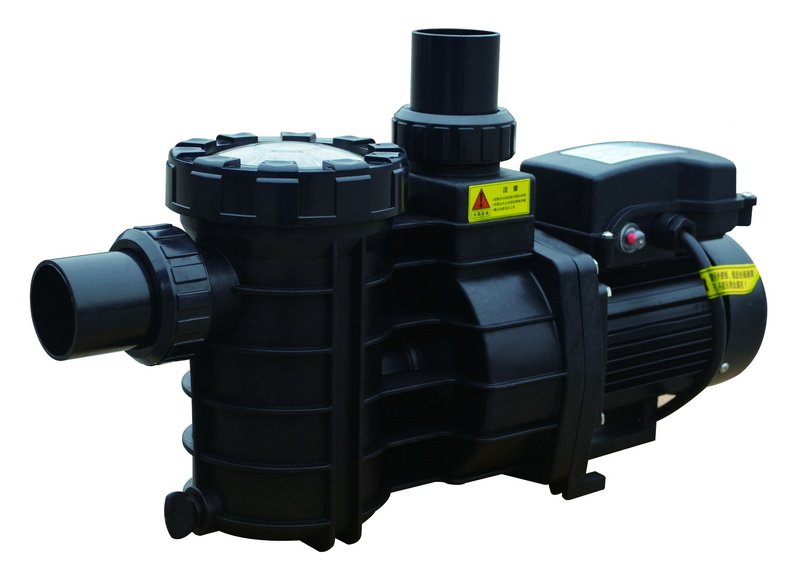
The pool pump is the heart of the filtration system. It pulls water from the pool, pushes it through a filter to remove debris, and returns clean water back to the pool. Its continuous circulation inhibits bacteria and algae growth by ensuring proper chemical distribution. Without enough run time, dead zones form, leading to cloudy or unsanitary water.[1][9]
Water circulation controls the health of your pool. During filtration, the pump draws water through the skimmer and main drain, forcing it through media such as sand, diatomaceous earth (DE), or cartridge filters. These elements trap fine contaminants before sending the water back.[3]
Optimal pump operation ensures your entire pool volume gets filtered at least once or twice per day—a concept known as “turnover rate.” The right turnover time maintains a hygienic pool without overworking your equipment.[6]
Running your pump in daylight hours ensures that filtration coincides with heavy use and sunlight exposure.
- Algae control: Direct sunlight promotes algae growth; daytime circulation helps prevent it.[10]
- Effective chemical dispersion: Daytime filtration supports chlorine activation while counteracting UV breakdown.[11]
- Improved swimmer hygiene: When the pool is in use, oils, sunscreen, and debris require immediate filtration.[12]
- Photo-oxidation of waste: Sunlight assists chemical disinfectants in oxidizing organic matter.[13]
However, electricity costs peak during daytime hours. If your local utility uses time-based rates, you may pay substantially more for daytime operation.[14]
Nighttime operation offers economic and chemical advantages.
- Energy savings: Electricity prices typically drop after 10 PM, making night operation the cheapest time.[15]
- Better chlorine retention: Chlorine works most effectively without UV exposure, allowing it to sanitize overnight.[16]
- Reduced evaporation: Cooler night air reduces chemical and water loss.[11]
- Less equipment strain: Lower ambient heat helps pumps and seals operate longer without thermal stress.[4]
The downside is limited circulation during active hours. Leaves or oils introduced during the day may linger until the next night cycle.[12]
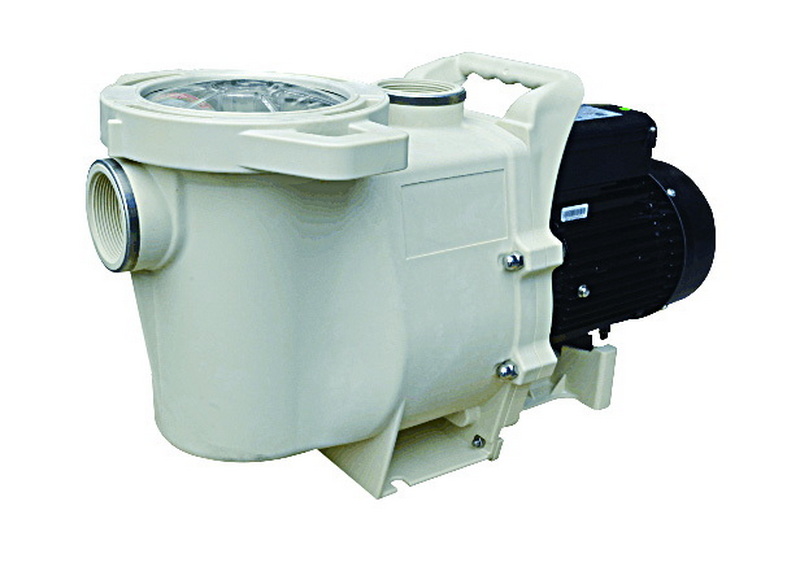
Most experts favor a split schedule—running partly during the day and partly at night. A variable-speed pump might operate 10 AM–2 PM for heat and algae control, then 1 AM–5 AM for chemical optimization.[17]
This dual schedule balances both sanitation and cost.
Many modern smart pumps let you program multiple run intervals using digital interfaces or Bluetooth control. You can also sync operation with energy provider off-peak periods.[5]
To get optimal results, daily circulation must be matched with proper maintenance.
- Daily tasks: Skim the surface and confirm the water level is halfway up the skimmer.[3]
- Weekly checks: Clean the strainer basket and inspect seals for leaks.[3]
- Monthly care: Backwash filters or clean cartridges to ensure steady pressure.[3]
- Seasonal needs: Winterize pumps in cold climates and inspect wiring or freeze protection sensors.[5][6]
Neglected maintenance can cause the impeller to clog, reducing efficiency or burning out the motor.[7]
Before operation, ensure the pump is properly primed—filled with water in the strainer pot—to prevent running dry. Operating a dry pump can damage the impeller or seals.[6][5]
Steps:
1. Fill the pump housing with water.
2. Close the lid tightly.
3. Open the air relief valve until a steady flow of water emerges.
4. Start the pump and confirm consistent water movement through the return jets.[5]
If your pump has an auto-prime function, it will run at full speed initially, then drop to the programmed RPM once optimal pressure is reached.[5]
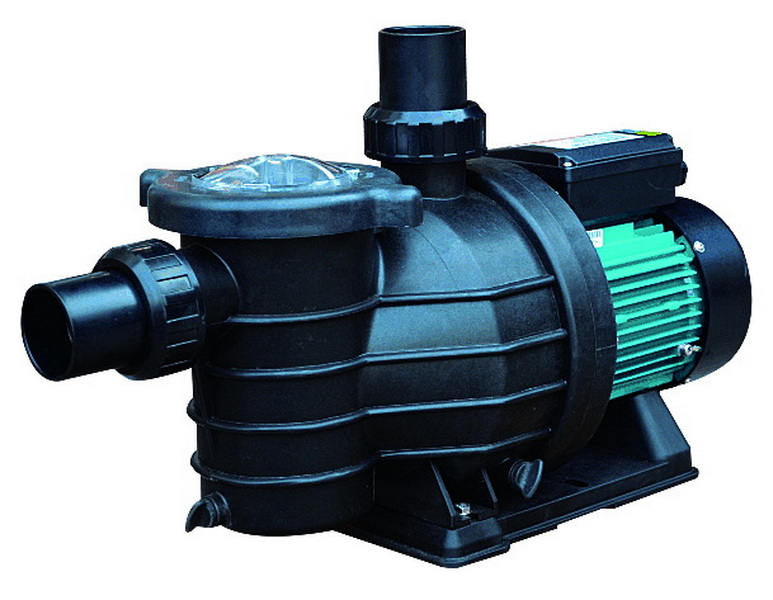
Modern pools typically use one of three pump types:
| Pump Type | Description | Ideal Use | Power Efficiency |
|---|---|---|---|
| Single-Speed | Fixed-rate motor, runs constantly at high RPM | Small residential pools | Low |
| Dual-Speed | Switches between high for vacuuming and low for circulation | Medium-size pools | Moderate |
| Variable-Speed | Programmable RPMs for efficiency | Large or commercial pools | High swimuniversity |
Variable-speed models, controlled via digital panels or apps, can cut annual energy costs by up to 70% while extending equipment life.[18][4]
In summer, higher temperatures and sunlight intensity accelerate algae reproduction—thus the pump should run longer (10–12 hours).[13]
In winter, cooler air suppresses microbial growth, allowing for shortened cycles (6–8 hours).[19]
However, in freeze-prone regions, consider brief overnight runs to prevent pipe damage.[5]
- Install a timer or smart controller to automate operation during discounted-rate periods.[15]
- Clean filters regularly to maximize efficiency.
- Inspect for air leaks—a hissing sound often indicates suction-side air entry, increasing energy use.[3]
- Consider solar panels for daytime-offset electricity.[14]
- Pair pumps with LED lights to reduce auxiliary energy draw during night swimming.
Running your pool pump at night is generally more cost-effective and enhances chlorine efficiency, while daytime operation ensures circulation during active hours. The ideal strategy is a hybrid schedule—split the runtime between daylight and night to preserve clarity, balance chemicals, and minimize expenses. With the right variable-speed pump and regular maintenance, you'll maintain crystal-clear, balanced water year-round while saving energy and extending equipment life.
Usually 8–12 hours depending on pool size, temperature, and bather load, ensuring one full water turnover.[13]
Yes, if the pool is in heavy sun exposure or high temperature zones, partial daytime operation is necessary.[10]
Absolutely—they reduce energy costs drastically and allow precise programming for filtration and heating.[4]
Yes, solar-powered or grid-tied systems can offset or eliminate electricity costs.[14]
Running dry can damage seals, housing, or impeller; always ensure proper priming before operation.[6][5]
[1](https://poolicons.com/pool-maintenance/complete-beginners-guide-to-pool-pump-operation/)
[2](https://www.youtube.com/watch?v=Ayk3co2KetE)
[3](https://lesliespool.com/blog/the-ultimate-pool-pump-maintenance-guide.html)
[4](https://www.swimuniversity.com/variable-speed-pool-pumps/)
[5](https://leisurepools.com.au/wp-content/uploads/2020/10/Equipment-Accessory_INSNRG_Variable_Speed_Pump_OwnersManual.pdf)
[6](https://images.thdstatic.com/catalog/pdfImages/00/0041a500-400c-4a0f-aa1b-19977d904111.pdf)
[7](https://poolpartstogo.com/blogs/articles/installation-and-maintenance-tips-for-pool-pump)
[8](https://www.capitolpool.com/service/operating-instructions)
[9](https://www.pentair.com/en-us/education-support/water-education-center/pool-and-spa-education/pool-pump-information-guide.html)
[10](https://mrpoolman.com.au/blogs/news/is-it-better-to-run-the-pool-pump-during-the-day-or-night)
[11](https://lesliespool.com/blog/whats-the-best-time-to-run-your-pool-pump.html)
[12](https://www.aaronpoolsandspas.com/pool-pumps-the-best-time-to-run-your-pump/)
[13](https://www.aquagem.com/news/when-to-run-the-pool-pump-in-summer)
[14](https://www.zodiac.co.nz/pool-and-spa-guides/16-tips-for-reducing-your-pool-running-costs)
[15](https://www.chooseenergy.com/energy-resources/pool-pump-settings-for-energy-savings/)
[16](https://intheswim.com/blog/what-is-the-best-time-to-run-your-pool-pump.html)
[17](https://escapepools.com/optimum-length-and-time-of-day-to-run-a-pool-pump/)
[18](https://www.youtube.com/watch?v=i44bmptMGgU)
[19](https://www.reddit.com/r/pools/comments/189whkt/pool_pump_suggested_runtime_in_winter/)
[20](https://www.reddit.com/r/swimmingpools/comments/1dg029t/pros_and_cons_or_running_the_pump_at_night/)


