
Views: 222 Author: Tina Publish Time: 2025-12-14 Origin: Site


Content Menu
● Why ladder stability matters
● Common causes of a wobbly frame pool ladder
● Tools and materials you may need
● Step 1: Check and tighten all hardware
● Step 2: Level and support the base
● Step 3: Add anti‑slip feet and contact pads
● Step 4: Use built‑in ballast or add ladder weights
● Step 5: Anchor the ladder to a deck or frame
● Step 6: Reduce buoyancy and water drag
● Step 7: Upgrade to wider steps or staircase‑style units
● Ongoing inspection and maintenance
● Stabilization methods overview
● Integrating professional filtration and lighting with ladder stability
● FAQs about stabilizing a frame pool ladder
>> 1. Why does my frame pool ladder keep wobbling even after tightening bolts?
>> 2. How can I stop my frame pool ladder from floating up in the water?
>> 3. Is it safe to drill holes in the ladder legs to let water in?
>> 4. Should I anchor a frame pool ladder to my deck?
>> 5. When should I replace my existing frame pool ladder?
>> 6. How often should I inspect and maintain the ladder for stability?
How to stabilize a frame pool ladder mainly involves tightening all hardware, leveling the ladder on a firm base, anchoring or weighting the legs, and adding non‑slip contact surfaces so the ladder does not rock, float, or slide when swimmers use it. Regular inspections, rust control, and replacing worn feet or pads keep the ladder stable and safe throughout the season.[4][6][7][12]
A frame pool ladder is usually a lightweight A‑frame or deck‑mounted structure that sits on the ground outside the pool and on the liner or floor inside the pool. Because the frame is often hollow metal or plastic, it can wobble, flex, or float if it is not assembled, leveled, and anchored correctly.[6][7][4]
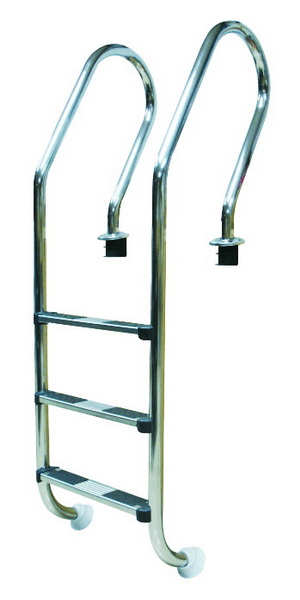
A wobbly ladder increases the risk of slips, falls, and entrapment, especially for children and older swimmers who rely heavily on the handrails. Instability can also damage the pool wall or liner when moving legs rub against the surface or strike the frame.[18][6]
Stable access equipment is part of basic above‑ground pool safety guidelines, which recommend secure handrails, non‑slip treads, and firm attachment to decks or pool structures where possible. Creating a solid, well‑anchored ladder improves confidence and encourages safer, more controlled entry and exit.[9][16][6][21]
Many frame pool ladders become unstable because nuts and bolts gradually loosen during use and under repetitive loading. Over time, small gaps in the joints translate into noticeable rocking when someone climbs up or down.[7][10][6]
Other typical causes include uneven or soft ground under the outer legs, buoyancy inside hollow ladder tubes, and worn or missing rubber feet that reduce friction. Rust, corrosion, and cracked plastic components can also weaken the structure so it flexes instead of staying rigid.[10][12][7]
Before stabilizing a frame pool ladder, prepare basic tools such as a screwdriver set, adjustable wrench, and a level so you can tighten hardware and check alignment accurately. A tape measure helps verify equal spacing and consistent height on both sides of the ladder.[4]
For anchoring and anti‑float solutions, owners commonly use pool‑specific ladder weights or sandbags, rubber pads or ladder mats, foam pool noodles, and sometimes ground stakes or deck anchor kits. Silicone sealant and rust‑resistant replacement hardware may also be useful when restoring older ladders.[3][5][4]
Start by shaking the ladder gently from side to side and front to back to feel where movement is coming from. Then inspect every connection point, including step brackets, side rails, handrails, and any mounting plates at the top of the ladder.[12][6][4]
Use the correct size wrench or screwdriver to tighten each nut, bolt, and screw until snug, taking care not to overtighten plastic parts. Many safety guides note that loose hardware is one of the most common and easily fixable sources of ladder wobble.[7][10]
Even a well‑assembled ladder will feel unstable if the ground under the feet is uneven or soft. Use a 4‑foot level or a smartphone level app across the ladder steps to verify that the structure is not leaning or twisted.[6][4]
If the soil is spongy or sloped, re‑pack the area, add pavers, or install a solid pad beneath the outer legs so the base sits fully flat without rocking. Inside the pool, placing a dedicated ladder mat under the feet both protects the liner and enhances friction for better stability.[6]
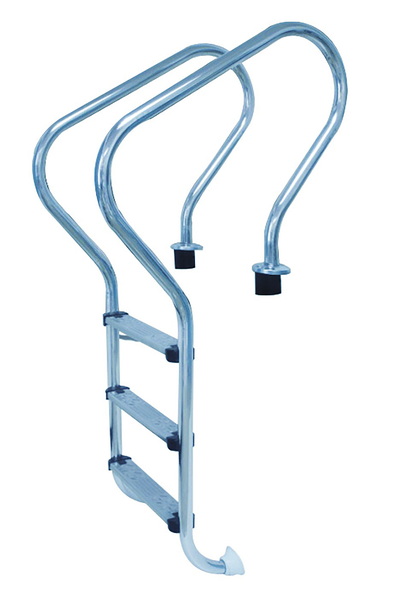
Many frame ladders rely on rubber or plastic feet to grip the ground and liner; once these wear out, the ladder can slide or shift. Inspect each foot and replace any that are cracked, hardened, or missing with compatible non‑slip replacements.[18][6]
Adhesive grip pads, rubber mats, or textured step covers further reduce the risk of slipping and help absorb small movements. Non‑slip contact surfaces are widely recommended in pool safety guidance because they make wet environments more forgiving.[16][9][6][21]
Many modern frame pool ladders include hollow chambers in the legs or steps that can be filled with water or sand to counteract buoyancy and prevent floating. Check the manufacturer's manual for fill ports or removable plugs that indicate built‑in ballast design.[22]
If the ladder still tends to float or lift, add external ladder weights specifically designed for pool steps or ladders; these are usually PVC bags that can be filled with sand and hung or placed over the lower rungs. Purpose‑built ladder sandbags are preferred over improvised weights because they use durable, pool‑safe materials and shapes that distribute load evenly.[3]
Where a deck or rigid pool frame is available, mechanical anchoring gives the most reliable stability. Deck‑mounted ladders often include brackets or flanges that bolt directly to wooden or composite deck boards, and every bolt hole should be used for maximum stiffness.[4]
For freestanding A‑frame ladders around frame pools, some owners add straps or brackets connecting the top of the ladder to the metal pool frame, which reduces side‑to‑side sway. In some cases, users also secure ladder legs to the deck with screws or ground stakes where local codes allow it, making sure not to damage pool components.[2][14][6]
Frame pool ladders often trap air inside the legs and rails, especially when they are sealed plastic designs; this can make them want to float up when nobody is standing on them. Some users carefully open factory‑provided plugs or vents so the tubes fill fully with water, which increases stability.[13][22]
In online communities, a common DIY tactic is drilling small vent holes along underwater portions of the ladder legs so water can enter and air can escape, allowing the frame to sink more firmly. Any modifications should be done cautiously and may void warranties, so checking the manufacturer's guidance first is recommended.[13][22]
If the ladder still feels unstable after tightening, leveling, weighting, and anchoring, the design itself may be too light or narrow for heavy use. Wider step ladders or full staircase units distribute body weight across larger contact areas, which greatly improves stability for frame pools.[6][12][21]
When choosing upgrades, look for models with robust handrails on both sides, non‑slip treads, and clear weight ratings that match your users and pool type. While the upfront cost is higher, a more substantial access system can reduce accidents and wear on the pool structure over time.[21]
Ladder stability is not a one‑time project; bolts loosen and surfaces wear under constant use and water exposure. Regularly shake‑test the ladder, walk up and down it, and listen or feel for any new movement or creaking.[12][6]
Schedule checks every week during the swimming season to tighten hardware, clean off algae or debris, and inspect for rust or cracks, replacing damaged parts promptly. At the end of the season, many owners remove the ladder, dry it thoroughly, and store it indoors to slow corrosion and UV damage.[7][6]
| Stabilization method | Main benefit | Best situation |
|---|---|---|
| Tightening hardware | Eliminates play at joints and flexing. | First step for any wobbly ladder.poolkingfilter |
| Leveling base and using mats | Stops rocking and protects liners.watsons | Uneven ground or soft soil.poolkingfilter |
| Adding ballast or ladder weights | Prevents floating and shifting.walmart | Buoyant plastic or hollow frame ladders.poolkingfilter |
| Anchoring to deck or frame | Maximum rigidity with minimal movement. | Pools with surrounding deck or rigid frame.poolzilla |
| Upgrading to wider steps/stepset | Distributes load and boosts user confidence. | Heavy use, seniors/children, tall pools.poolkingfilter |
Frame pool owners often upgrade ladders at the same time as adding better filtration and lighting, since all three systems work together for comfort and safety. A stable ladder makes routine tasks like testing water, adjusting return jets, or cleaning filters safer and easier.[4][6][21]
High‑quality sand filters, cartridge or DE filters, efficient circulation pumps, and LED pool lights help keep water clear and visibility high around the ladder area, reducing tripping and missteps at night. OEM suppliers who provide matching ladders, filters, pumps, and lighting can deliver complete pool packages that appeal strongly to international brands and wholesalers.[6][21]
Stabilizing a frame pool ladder is a combination of good assembly, solid support, and smart anchoring rather than one single trick. By tightening all hardware, leveling the base, adding non‑slip feet, using ballast or ladder weights, and anchoring to a deck or frame where possible, pool owners can transform a shaky ladder into a secure access point for every swimmer.[3][5][12][6]
Regular inspection and maintenance keep that stability over time by catching loose bolts, worn feet, and early corrosion before they become hazards. For heavy‑use frame pools or households with children and seniors, upgrading to wider steps or staircase‑style units and pairing them with reliable filtration and LED lighting systems offers the safest, most comfortable long‑term solution.[7][21]
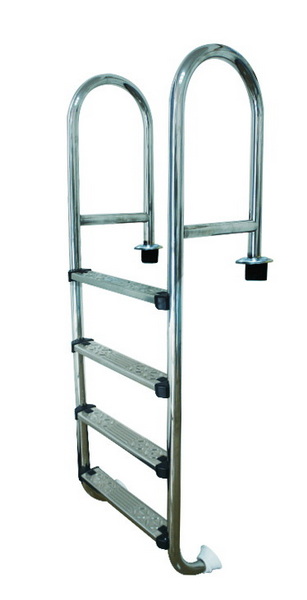
Persistent wobbling usually indicates that multiple factors are involved: slightly uneven ground under the feet, worn rubber pads, or flex in lightweight components. Combining leveling (with pavers or pads), new feet or mats, and moderate weighting often solves the problem more effectively than tightening alone.[12][6]
Check for built‑in ballast chambers in the legs or steps and fill them with water or sand according to the manual so the structure can sink and stay put. If buoyancy is still an issue, add purpose‑made ladder weights or sandbags designed for use in pools and position them on or around the lower rungs.[5][19][6]
Some pool owners drill small vent holes in hollow legs so water can enter and displace trapped air, significantly reducing floating. However, any modification should be done carefully, may void the warranty, and must not weaken structural areas, so consulting the manufacturer first is advisable.[19][23]
Deck anchoring is one of the most effective ways to stabilize a ladder because it ties the structure into a rigid surface rather than relying only on friction and weight. Use manufacturer‑approved brackets, corrosion‑resistant hardware, and all pre‑drilled holes so the connection is strong and compliant with safety guidance.[4]
Replace the ladder if the rails are bent, steps are cracked, or rust has significantly thinned metal parts, since these conditions can lead to sudden failure even if the ladder feels stable. Upgrading is also wise when weight ratings are too low for your users or when you want wider, non‑slip steps and stronger handrails for children, seniors, or frequent use.[10][18][7]
Weekly quick checks during the swimming season are recommended to spot loosened hardware, worn feet, or fresh rust early. A more thorough inspection at opening and closing time, including cleaning, tightening, and protective storage, helps keep the ladder solid and extend its service life.[6][4]
[1](https://www.homedepot.com/p/Main-Access-Universal-Anchors-Swimming-Pool-Ladder-Step-Sand-Weights-3-x-200888/310623840)
[2](https://www.facebook.com/groups/637529959937311/posts/2595635454126742/)
[3](https://www.martinispa.com/Weights-50LB-Total-PVC-Sand-Bags-To-Stop-Floating-Fits-Most/501739)
[4](https://blog.watsons.com/blog/stabilize-above-ground-pool-ladder)
[5](https://www.walmart.com/ip/Swimming-Pool-Ladder-Stabilizing-Weights-Heavy-Duty-Construction-Sandbags-for-Secure-Inground-Step-Anchoring/18586718400)
[6](https://www.poolkingfilter.com/how-to-make-an-above-ground-pool-ladder-more-stable.html)
[7](https://www.poolking.co/a-news-why-is-my-pool-ladder-wobbly.html)
[8](https://clinicadentalrociomontero.com/Weights-2-Pack-10L-Sand-Bags-For-Above-Ground-Pools-r-348791)
[9](https://sternsbackyard.com.au/blogs/news/safety-tips-for-installing-and-using-above-ground-pool-ladders)
[10](https://www.thisoldhouse.com/tools/21019252/fast-fix-for-loose-ladders)
[11](https://www.reddit.com/r/pools/comments/v0lhxh/what_sand_weights_do_you_use_to_hold_down_your/)
[12](https://blog.watsons.com/blog/make-above-ground-pool-ladder-stable)
[13](https://www.facebook.com/groups/637529959937311/posts/2564006880622933/)
[14](https://www.facebook.com/groups/637529959937311/posts/2642320976124856/)
[15](https://www.youtube.com/watch?v=Jlj82ZOTU2I)
[16](https://brightwaterpools.com/your-easy-8-step-guide-to-above-ground-pool-safety/)
[17](https://www.reddit.com/r/pools/comments/1ch0rk9/should_i_just_let_this_go_new_pool_install_issues/)
[18](https://poolzilla.com/blogs/blog/the-simple-guide-selecting-the-right-pool-steps-and-ladders-for-your-swimming-pool)
[19](http://www.poolforum.com/pf2/showthread.php/194-Pool-ladder-won-t-stay-down-in-pool)
[20](https://www.facebook.com/groups/637529959937311/posts/2243011319389159/)
[21](https://www.perplexity.ai/search/35968eef-859b-4d4f-a6fa-14bbc8d63d29)
[22](https://www.perplexity.ai/search/ebd1d84c-9438-431c-a6a6-1bb33494a160)
[23](https://www.perplexity.ai/search/472f0ee5-7146-421c-9f11-590884f57699)


