
Views: 222 Author: Tina Publish Time: 2025-08-01 Origin: Site


Content Menu
● Understanding Pool Ladder Construction
>> Stainless Steel and Steel Ladders
>> Hybrid Ladders: Resin and Steel Combination
● Common Weight Limits by Ladder Type
● Factors Affecting Ladder Weight Capacity
>> 1. Material Quality and Thickness
>> 2. Ladder Design and Engineering
● How to Properly Install an Above Ground Pool Ladder
>> Step 1: Review Manufacturer's Instructions
>> Step 2: Assemble the Ladder Frame and Steps
>> Step 3: Position and Secure the Ladder
>> Step 5: Add Safety Accessories if Available
● Maintenance Tips for Safety and Durability
● Additional Safety Features and Innovations
>> 1. What happens if the ladder's weight limit is exceeded?
>> 2. Are there ladders designed for heavier swimmers over 400 pounds?
>> 3. Can above ground pool ladders be used for in-ground pools?
>> 4. Do children require special pool ladders?
>> 5. How often should pool ladder safety be checked?
Above ground pools are popular choices for many homeowners due to their affordability, flexibility, and ease of installation. One crucial component that directly affects the safety and usability of these pools is the ladder that provides access in and out of the water. Understanding how much weight an above ground pool ladder can support is essential for ensuring user safety, selecting the correct ladder model, and maintaining long-term structural integrity.
This article offers a detailed examination of above ground pool ladders' weight capacities, construction materials, installation techniques, maintenance tips, and factors affecting their load-bearing capability. Included are illustrations, practical examples, and guidance suited for individual users, wholesalers, foreign brand distributors, and OEM manufacturers. By the end, you will have a comprehensive understanding of what makes a reliable pool ladder and how to choose or produce one tailored to your needs.

The durability of an above ground pool ladder and its weight capacity heavily depend on its design and materials. Commonly used materials include:
Plastic or resin ladders are generally lightweight and cost-effective, making them accessible for many residential pools. These ladders are molded with slip-resistant steps and provide reasonable corrosion resistance. However, plastics have natural strength limitations, and exposure to UV rays and pool chemicals can cause them to weaken or crack over time. Thus, while plastic ladders serve well for light to moderate use, their weight capacity usually maxes out between 250 to 275 pounds.
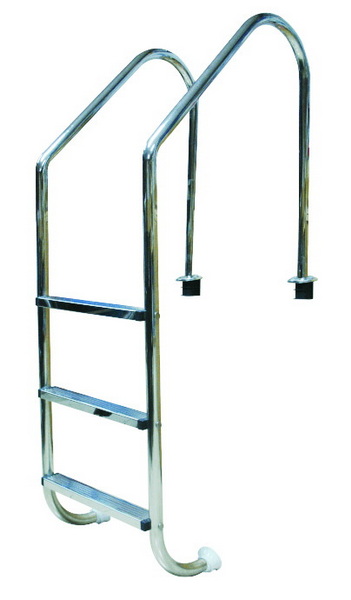
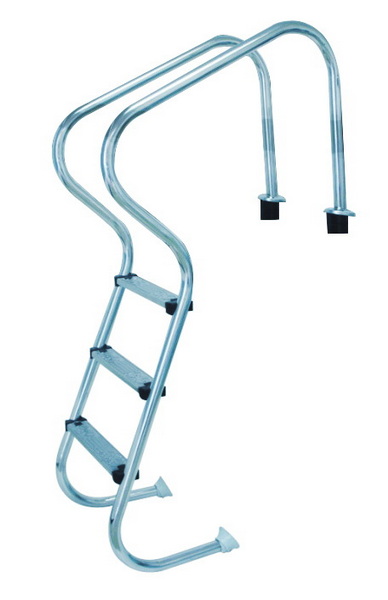
Steel ladders, especially those made from stainless steel, provide superior strength and longevity. Stainless steel is highly resistant to rust and environmental damage, ensuring consistent structural integrity for years. These ladders are often chosen for commercial installations or pools with heavier users. They typically have weight capacities ranging from 300 to 672 pounds, depending on thickness, weld quality, and added reinforcements.
Some ladders combine resin frames and stainless steel handrails or steps to balance cost, weight, and strength. These hybrids usually perform better than all-plastic ladders regarding weight capacity, often supporting up to 400 pounds while maintaining corrosion resistance in critical areas.
The type of ladder can greatly influence weight capacity. Here is a breakdown of popular ladder styles available in the market:
| Ladder Type | Material | Typical Weight Capacity | Example Brands and Models |
|---|---|---|---|
| Entry Step System | Heavy-duty Resin | 350-400 pounds | Confer, Main Access |
| A-Frame Ladder | Steel/Resin Combo | 300-400 pounds | Intex, Bestway, XtremepowerUS |
| Drop-in Ladder | Plastic/Resin | 250-275 pounds | Lower-cost or budget models |
| Commercial Ladder | Stainless Steel | Up to 672 pounds | Bestway Flowclear, Commercial lines |
- Intex Steel Frame Ladder supports up to 300 pounds, suitable for light commercial or heavy residential use.
- Confer Entry Step System is designed for enhanced stability and supports up to 400 pounds.
- Bestway Flowclear Commercial Ladder is one of the strongest options, holding up to 672 pounds to accommodate a wide range of users.
Many variables influence the actual weight a ladder can support safely:
High-quality stainless steel or reinforced systems significantly outperform basic plastics. Material thickness and weld strength add additional load-bearing reinforcement.
A wide base, slip-resistant steps, handrails, and supporting braces reduce wobble and increase capacity. A-frame ladders spread weight evenly across the pool deck and pool walls.
Correct installation using manufacturer-recommended hardware, secure mounting to the pool frame or deck, and proper anchoring ensure the ladder handles weight stresses effectively.
Heat, UV rays, and pool chemicals degrade plastics and metals gradually. Frequent inspection and environmental protection can prolong the service life and safety threshold of the ladder.
Regular cleaning, inspection for cracks or rust, and avoiding exceeding weight limits preserve ladder integrity. Overloading or neglect accelerates wear and risk of failure.
Proper installation is critical to maximize safety and weight capacity. Below is an expert-recommended step-by-step guide:
Before assembly, carefully read and understand your ladder's specific manual. Each model may have unique mounting mechanisms and recommended attachments.
Fit together the ladder parts, ensuring all screws, bolts, or snaps are secure. For an A-frame ladder, confirm that the base is stable, and steps align perfectly.
Place the ladder over the pool rim and use included brackets or clamps to affix firmly to the pool structure or deck. For above ground pools, a secure connection prevents movement when users climb.
Apply pressure evenly on the steps and handrails to verify no excessive flexing or shaking occurs. Adjust and tighten bolts as necessary.
Optional handrails, safety locks on wheels (for rolling ladders), or childproof gates increase ladder usability and reduce accidents.
Ongoing care helps ladders maintain peak load capacity and prevents accidents:
- Regular Inspection: Check for loose bolts, rust on metal parts, and any cracks or chips in steps.
- Consistent Cleaning: Remove algae, dirt, and chemical residues using mild detergent and fresh water — avoid harsh abrasives.
- Avoid Weight Overloading: Always respect the manufacturer's weight limits. Never permit more than one person on the ladder simultaneously.
- Seasonal Storage: Remove and store in a covered, dry location during colder months to prevent freeze damage or corrosion.
- Replace Damaged Components: Promptly exchange any weakened or broken parts with manufacturer-approved replacements.
Modern above ground pool ladders incorporate safety advancements:
- Slip-Resistant Steps: Textured or rubber-coated surfaces reduce slipping even when wet.
- Locking Wheels and Brakes: For portable ladders, these features stabilize the ladder when in use.
- Child Safety Gates: Prevent unsupervised ladder access by young swimmers.
- Extended Handrails: Provide better grip and confidence, especially for elderly or impaired users.
- Anti-Corrosion Treatments: Specialized coatings on metal parts enhance longevity.
Selecting a ladder with these features is especially important for public or commercial pools serving diverse user groups.
The weight capacity of above ground pool ladders varies widely between 250 pounds to as much as 672 pounds, based on construction materials, design engineering, and proper installation. Poly-resin ladders suit lightweight household use, steel and hybrid ladders address heavier demand and commercial applications.
To maximize safety, ladder users and distributors should focus on selecting ladders that meet or exceed their specific needs, install them strictly according to manufacturer instructions, and maintain them with regular inspections. Gatekeeping ladder weight limits protects users and extends ladder service life. For OEMs and wholesalers, partnering with reputable manufacturers delivering high-quality, tested products is essential for customer satisfaction and brand credibility.
Ultimately, an informed choice and conscientious upkeep transform a simple pool ladder from a necessity into a reliable safety feature that ensures enjoyable swimming experiences for everyone.
Exceeding the ladder's weight capacity can lead to bending, cracking, or even collapse, posing serious injury risks. Always adhere strictly to published weight guidelines to avoid accidents.
Yes, commercial-grade ladders built using thick stainless steel can support weights up to 672 pounds or more. Confirm specifications when purchasing and consider custom OEM solutions for specialized needs.
No, above ground pool ladders are designed specifically to fit the rim of above ground pools and may not install properly or safely on in-ground pools. Always choose the ladder type suited for your pool design.
Children should use ladders with enhanced safety features such as anti-slip steps, handrails, and safety gates. Adult supervision is mandatory when children use any pool ladder.
Inspect ladders at the start of each swim season and monthly during heavy use periods. Replace or repair damaged components immediately.


