
Views: 222 Author: Tina Publish Time: 2025-11-29 Origin: Site


Content Menu
● Understanding Summer Waves Pool Ladders
● Tools, Parts, and Preparation
● Step‑by‑Step: How to Put Together Summer Waves Pool Ladder
>> Step 1: Identify ladder sides and steps
>> Step 2: Slide brackets or clips onto the rails
>> Step 3: Install the first step on one ladder side
>> Step 4: Add remaining steps and seat them fully
>> Step 5: Assemble the second ladder side
>> Step 6: Attach the top platform or top rails
>> Step 7: Install handrails and cross braces (if included)
>> Step 8: Final tightening and wobble check
● Installing the Ladder in Your Summer Waves Pool
● Safety Tips When Using a Summer Waves Ladder
● Maintenance and Troubleshooting
● FAQs About Summer Waves Pool Ladders
>> 1. How long does it take to put together a Summer Waves pool ladder?
>> 2. Can I use a Summer Waves ladder with other above‑ground pool brands?
>> 3. What is the weight limit for a typical Summer Waves pool ladder?
>> 4. Should the ladder be installed before or after filling the pool?
>> 5. How often should I check bolts and connections on my ladder?
>> 6. Is it necessary to remove the ladder when the pool is not in use?
Summer Waves pool ladders are lightweight above‑ground pool access systems made from corrosion‑resistant metal frames with molded plastic steps and handrails. They are designed to match specific pool wall heights and usually include a maximum user weight rating and safety warnings on the box and in the manual.[2][3][4][5]
Common features include:
- Double‑sided A‑frame design for pools without decks.[5][2]
- Textured, anti‑slip treads and side rails with handgrips for secure climbing.[2][5]
- Clip‑in step brackets and T‑shaped connectors for quick assembly.[6][5]
For visuals, you can add:
- A front‑view photo of the fully assembled ladder next to a Summer Waves pool.
- A close‑up shot of the textured step surface showing anti‑slip design.
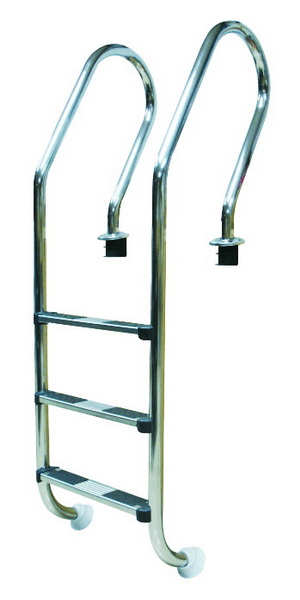
Before you start, clear a flat work area near the pool and lay out all parts to match the parts list in the Summer Waves or pool ladder manual. Check that all steps, side rails, connectors, hardware packs, and safety labels are present and undamaged.[7][3]
Typical items you will need:
- Phillips screwdriver and small adjustable wrench for bolts and nuts.[8][6]
- Rubber mallet to fully seat plastic steps and connectors without cracking them.[9][6]
- Soft ground protection (cardboard or foam) to avoid scratching painted rails during assembly.[9]
Most above‑ground ladders, including Summer Waves models, use labeled side rails and step ends (for example, “A” and “B” stamped or molded into the plastic). Pair the correct rail with the matching side of each step to ensure the locking tabs and notches line up later.[6][9]
Many Summer Waves‑style ladders require plastic clips or step brackets to be slid onto each leg before the steps are attached. Orient these clips so that the tabs or notches face inward toward the center of the ladder, where the steps will lock into place.[9][6]
Start with the lowest step and one pair of rails (one “A” and one “B”) laid on the ground. Slide the step down from the top so that each end snaps or seats firmly into the plastic clips or molded openings on the rails.[6][9]
To illustrate:
- Diagram‑style image with arrows showing the step moving down into the clips.
- Short video title idea: “How to seat the first Summer Waves ladder step correctly.”
Repeat the same process for the second, third, and any additional steps, working your way up the ladder frame. After all steps are in place, press firmly or use a rubber mallet to ensure each tread is fully seated in the clips so there are no loose or rocking steps.[9][6]
Build the second side of the ladder in exactly the same way, again matching the labeled rails and steps. Double‑check that all steps are at the same heights on both sides so the assembled ladder will sit level when finished.[8][6][9]
You can show:
- Split‑frame image comparing side 1 and side 2 alignment.
- Time‑lapse video assembling all steps on the second side.
Most Summer Waves pool ladders use a top platform or pair of top rails that connect the two step assemblies. Position the top part over the open ends of both ladder sides, align the pre‑drilled holes, and secure using the specified bolts, washers, and nuts.[6][9]
Key points to highlight:
- Tighten hardware evenly on both sides so the top rail pulls both frames square.[8][6]
- Make sure the walking surface or platform is level and does not flex excessively.[3][4]
Some Summer Waves ladders include additional upper handrails and lower cross braces or stabilizer bars. Attach these according to the instructions, because they reduce wobble and help the ladder keep its shape under load.[4][10][8][6]
Once everything is connected, go back over all screws and nuts and snug them firmly by hand tools—never rely on finger‑tight hardware. Place the ladder upright on a hard, flat surface and rock it gently in all directions to check for flex or looseness; re‑tighten connections if you feel movement at any joint.[10][3][4]
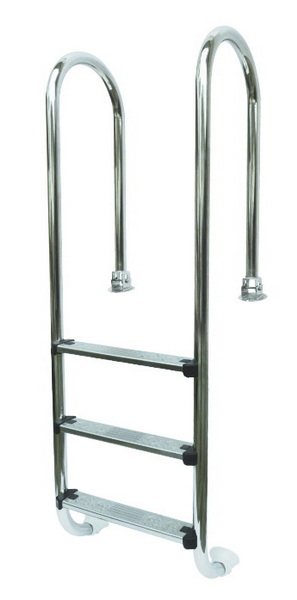
Before installation, ensure the pool is set up on level ground and the top rail or pool wall is stable. The ladder should always sit on a solid, non‑slippery base such as a patio, pavers, or a firm, protected ground pad.[11][3][4][10]
Basic placement steps:
- Position the ladder with one side inside the pool and the other side outside, centered on a straight pool wall section.[4][11]
- Confirm the steps extend deep enough inside the pool for comfortable entry, but do not press hard against the liner or wall panels.[11][4]
Recommended visuals:
- Wide shot of the ladder straddling an above‑ground Summer Waves pool wall.
- Over‑the‑shoulder photo from the pool interior showing how far the steps extend.
If your ladder includes hooks, clips, or straps to secure it to the pool frame, install them now according to the manual, as they help prevent tipping and shifting.[7][11]
Pool ladder safety is critical, especially with children or guests unfamiliar with the pool. Manufacturers and safety organizations consistently stress that ladders should never be used as toys or climbing structures for anything other than pool entry and exit.[12][13][3]
Key safety guidelines:
- Allow only one person on the ladder at a time to stay within the specified weight limit.[3][4]
- Always face the ladder when climbing up or down and keep hands on the rails.[12][3]
- Do not swim through, behind, or around the ladder to avoid entrapment or injury.[14][3]
- Remove and secure the ladder when the pool is not in use to help prevent unsupervised access by children.[13][14]
Suggested safety content:
- Infographic‑style image summarizing “Top 5 Summer Waves ladder safety rules.”
- Short vertical video for social media explaining why you should remove the ladder when the pool is unattended.
A well‑maintained Summer Waves ladder will last longer and stay safer over multiple seasons. Regular inspections catch early signs of rust, UV damage, or loose hardware before they become hazards.[14][5][2][3]
Maintenance best practices:
- Inspect all nuts, bolts, and plastic joints at least once per month during the swim season and tighten any that have loosened.[10][3]
- Rinse metal parts with fresh water if they have been exposed to concentrated pool chemicals or saltwater systems.[4][11]
- Check for cracked or chalky steps and sun‑damaged handrails; replace damaged components according to the manufacturer's recommendations.[5][2]
For winter or long‑term storage, remove the ladder from the pool, let it dry completely, and store it in a clean, dry, sheltered place. This reduces corrosion, keeps plastic from becoming brittle, and ensures the ladder is ready for the next season.[14][11][4]
Putting together a Summer Waves pool ladder is straightforward when you identify the parts, assemble each ladder side step by step, and then connect everything with the top platform, handrails, and braces. The most important aspects are seating each step fully, tightening all hardware, placing the ladder on a solid base at the pool wall, and following safety and maintenance recommendations throughout the season.[3][14][9][6]
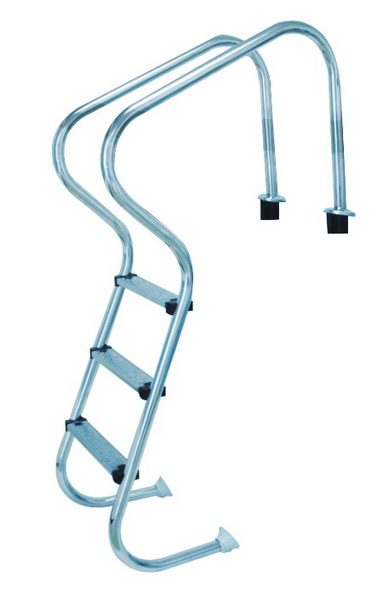
Most homeowners can assemble a Summer Waves‑style above‑ground pool ladder in about 30–60 minutes, depending on experience and whether all tools are ready. Filming the process for a tutorial may take longer, but it also helps you document each step for future reference or customer support content.[1][15][9][6]
Many Summer Waves ladders are compatible with other frame or ring‑style above‑ground pools as long as the wall height, weight limit, and mounting style match the ladder's specifications. Always verify pool wall height and check the manual to make sure the ladder is rated for that application before use.[10][3][4]
Typical above‑ground pool ladders used with Summer Waves pools are commonly rated around 150 kg (approximately 330 lb), though the exact rating can vary by model. The safe practice is to allow only one person on the ladder at a time and never exceed the labeled maximum load.[12][3][4]
A Summer Waves ladder can usually be installed either before or after filling, but many installers prefer to place it once the pool is mostly filled and the walls are stable. If you need to enter the pool early to adjust the liner or smooth wrinkles, you may temporarily position the ladder and then finalize its placement after the water level is correct.[16][11][4]
Manufacturers recommend checking all nuts, bolts, and plastic connections regularly—at the beginning of the season and at least once per month during heavy use. Loose or corroded hardware should be tightened or replaced immediately to maintain structural integrity and minimize accident risk.[3][14][10]
For safety and liability reasons, it is strongly recommended to remove and secure the ladder whenever the pool is not supervised, especially if children are present nearby. Even ladders with locking features can sometimes be climbed, so taking the ladder away and covering the pool adds an important additional barrier.[13][14][12]
[1](https://polygroupstore.com/videos/pool-products-videos/summer-waves-ladder-setup/)
[2](https://summerwavesusa.com/summer-waves-pool-ladder-safe-entry-and-exit-solutions/)
[3](https://www.ileisure.co.uk/wp-content/uploads/2022/03/Metal-FRAME-IM-with-list-of-parts-.pdf)
[4](https://www.habitatetjardin.com/files/comptes_fournisseurs/1313/techniques/Manual%20of%20Elite%20Frame%20Pool_EU_EN.pdf)
[5](https://summerwavesshop.com/summer-waves-pool-ladder/)
[6](https://www.youtube.com/watch?v=AcVIHFSLCTY)
[7](https://static1.squarespace.com/static/59de8c6b8a02c786614bcc2c/t/5e28d35775cc185216ff069f/1579733850978/09C3A4USA024+Pool+Ladder_EN_SP.pdf)
[8](https://www.youtube.com/watch?v=ham2QiY9M7M)
[9](https://www.youtube.com/watch?v=JJkG7vsan1E)
[10](https://images.thdstatic.com/catalog/pdfImages/a2/a270d3e3-c78a-44f8-a2c3-3d09c6f5d990.pdf)
[11](https://manuals.plus/m/a1a8c7a14e6c45ff563f7bf8adba0cce3329fb65a273f0e1415c9ced66581b3a)
[12](https://www.polygroup.com/poolsafety)
[13](https://polygroupstore.com/pages.php?a=Pool-Safety-Tips---id--dM0Xo1zHQlWosDcWgWv5JQ&pageid=37)
[14](https://images.thdstatic.com/catalog/pdfImages/fb/fbc9ce2e-44ef-4113-b668-9935aec9cd06.pdf)
[15](https://www.polygroupstore.com/support/product-help-center/)
[16](https://www.facebook.com/groups/3577422705639686/posts/9845008955547665/)
[17](https://www.facebook.com/groups/637529959937311/posts/2656993104657643/)
[18](https://www.tiktok.com/@methodstothemadness/video/7508928961515408686)
[19](https://izerwaren.com/images/file/73121615012.pdf)
[20](https://fcc.report/FCC-ID/2AABT-LUMALIGHT/2819607.pdf)


