
Views: 222 Author: Tina Publish Time: 2025-11-29 Origin: Site


Content Menu
● Understanding Your Coleman Pool Ladder
● Safety Checks Before Assembly
● Step 1: Sort and Prepare Ladder Parts
● Step 2: Assemble the Side Frames
● Step 3: Install Steps on the First Side
● Step 4: Build the Second Ladder Side
● Step 5: Attach the Top Platform
● Step 6: Install Handrails and Stabilizers
● Step 7: Final Tightening and Inspection
● Step 8: Positioning the Ladder at the Pool
● Ongoing Ladder Safety and Maintenance
● Using Photos and Videos During Assembly
● How This Fits Your Pool Equipment Business
● FAQ
>> 1. What tools are needed to assemble a Coleman pool ladder?
>> 2. Can one person assemble the ladder alone?
>> 3. How do I know if the ladder is the right height for my pool?
>> 4. When should the ladder be removed from the pool?
>> 5. What maintenance does a Coleman pool ladder require?
Assembling a Coleman pool ladder is straightforward if you organize the parts, follow the manufacturer's sequence, and pay close attention to the “A” and “B” labels on the legs and steps. Proper assembly is critical for safety, so always combine these steps with the official ladder manual that comes with your specific Coleman pool set.[1][2][3][4]
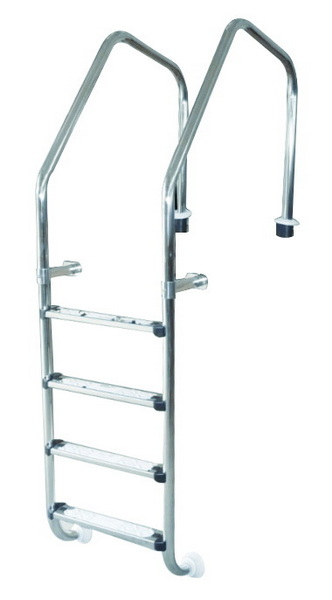
Before you start, unpack everything, lay out the parts on a flat surface, and identify each component using the instruction sheet or diagram. Most Coleman above‑ground pool ladders include two side frames, multiple steps, a top platform, handrails, fasteners, and small plastic clips or brackets that hold the steps in place.[2][3][1]
Many Coleman ladders use an “A” and “B” labeling system to ensure that each step and leg are aligned correctly. Matching A‑to‑A and B‑to‑B prevents twisting or misalignment that can make the ladder unstable and unsafe during use.[5][6][2]
Choose a level, solid base next to your above‑ground pool so the ladder feet sit flat and do not wobble under load. Keep small components like screws, nuts, and plastic pegs out of children's reach and verify that no parts are missing or damaged before you begin.[3][4][1]
Read through the entire ladder section of the Coleman or Bestway pool manual at least once to understand the order of assembly, weight limits, and any model‑specific warnings. Authorities and safety organizations also recommend non‑slip steps, dual handrails, and the ability to secure or remove the ladder when the pool is not supervised.[4][7][1]
Spread out the ladder components and group them into categories: side rails, steps, top platform, handrails, hardware (bolts, nuts, screws), and plastic brackets or clips. Use the parts list in the manual to tick off each item so you confirm everything is present before you begin putting pieces together.[8][1][2][3]
Locate the markings stamped or printed on the legs and steps, usually indicating “A” and “B”, and separate those into two matching sets. Having the labeled parts organized in advance will save time and reduce mistakes once you start building each side of the ladder.[6][2][5]
Start with one side of the ladder by placing the two vertical legs on the ground with their curves facing outward and the correct end (top vs. bottom) clearly identified from the manual diagrams. Many designs use plastic or metal step brackets that slide or clip onto the legs at pre‑drilled positions to support each step.[9][2][3][5]
Attach the brackets for the lowest step first, sliding them into position so the notches or arrows align with the designated holes or grooves on the legs. Repeat the process for the remaining bracket locations, working from the bottom up so the spacing between steps remains even and the overall side frame stays square.[9][2][5]
Take a step panel labeled “A” and align the “A” side of the step with the “A” leg of the ladder, then seat the ends into the corresponding brackets until they click or lock into place. Press firmly so the step sits fully in the notches; a partial engagement can cause flexing or unexpected movement when someone climbs the ladder.[2][5][9]
Install the “B” side of the same step onto the “B” leg, again making sure the labeling matches and the step is level across both rails. After confirming that the first step is secure, repeat for the remaining steps on that side until you have a complete side frame with all treads installed.[5][9][2]
Using the same method, attach brackets to the legs of the second side, checking that their positions mirror the first frame so both sets of steps will line up when the ladder is joined. Maintaining the same orientation of curves and labels prevents a twisted ladder and ensures that the top platform will fit correctly later.[3][6][2]
Install each step on the second side, aligning “A” to “A” and “B” to “B” and pressing them into the notches until they seat completely. Once done, visually compare both side assemblies to confirm that step spacing, bracket positions, and overall height are identical.[2][5]
Position the top platform above one completed side assembly, aligning the pre‑drilled holes in the platform with those on the tops of the legs or handrail stubs as shown in the manual. Insert the specified bolts or screws (often labeled with codes like M6x43 or similar) through the holes and loosely secure them with nuts so there is still some play for final alignment.[8][9][2]
Next, bring the second side of the ladder into position under the opposite edge of the platform and insert the remaining bolts or screws through the matching holes. Once everything is aligned and square, tighten each fastener evenly, taking care not to overtighten nylon lock nuts which can strip or crush plastic parts if forced too hard.[1][9][8][2]
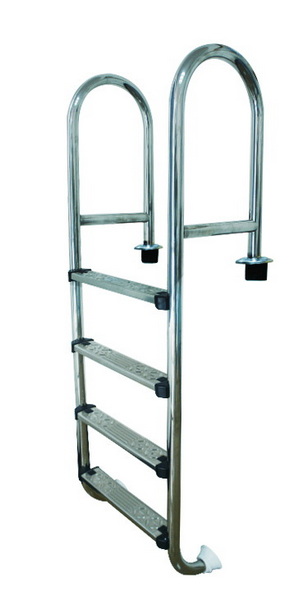
Many Coleman ladders include curved handrails and additional support tubes that attach to the upper section of the steps. Fit these handrails into their sockets or over the tops of the legs, then secure them with the designated hardware as described in the instructions.[8][2]
Some models also use bottom stabilizer bars or plastic feet that spread the load and prevent the legs from sinking into soft ground. Install these stabilizers at the base of the ladder, ensuring that any anti‑slip pads or blocks are facing downward and sit flat on the ground.[4][3][8]
With the full frame assembled, go back and tighten all bolts, nuts, and screws by hand tool, stopping once they are snug and the components are firmly clamped without deforming plastic brackets. Check each step to confirm it does not rock or slide, and ensure that every bracket is locked and no retaining pegs or clips are missing.[9][1][5]
Shake the ladder gently from side to side and front to back to test stability before placing it into the pool. If the ladder twists, creaks loudly, or feels loose, recheck alignment and hardware tightness before allowing anyone to climb.[7][1][4]
Place the ladder so that one set of steps is inside the pool and the other is outside, with the top platform centered over the pool wall. Ensure that the inner legs rest securely on the pool floor and that the outer legs stand firmly on solid, level ground or a prepared base.[10][1][4]
The ladder must sit flush against the outside of the pool wall with no large gaps that could trap feet or cause instability. If the ground is uneven or soft, use pavers or a small deck platform to provide a stable foundation and prevent the legs from sinking under weight.[11][7][1][4]
Only one person should be on the ladder at a time, and all users should face the ladder going up or down as recommended by pool safety guidelines. Running, jumping, or diving from the ladder or nearby objects into the pool should always be prohibited.[7][1][4]
Regularly inspect the ladder for loose hardware, rusted components, cracked steps, or worn non‑slip surfaces, and replace any damaged parts immediately. When the pool is not in use or there is no adult supervision, remove the ladder or secure it in a way that children cannot access the water unsupervised.[10][1][7]
High‑quality photos and step‑by‑step videos are extremely helpful when assembling a Coleman pool ladder for the first time. Video guides visually show how brackets clip into place, how the platform connects to each side, and how tight the fasteners should be without damaging plastic parts.[9][2][8]
Consider watching an above‑ground ladder assembly video on a phone or tablet next to your work area and pausing at each step to match your progress. Many pool and ladder manufacturers also provide PDF manuals with clear diagrams and exploded views that can be zoomed in on for small details.[1][3][8][9]
For overseas brands and wholesalers sourcing OEM pool equipment from a professional Chinese factory, clear, illustrated ladder assembly content adds value to every pool kit. Supplying detailed, multilingual guides and video links along with your sand filter systems, pumps, and LED lights helps end‑users install equipment correctly and safely, reducing support calls and warranty issues.[6][3]
Well‑designed ladders combined with reliable filtration and lighting solutions make your complete above‑ground pool package more competitive in global markets. Emphasizing safety, ease of assembly, and durable materials will appeal to retailers and importers who want to maximize customer satisfaction and minimize returns.[12][3][7]
Putting together a Coleman pool ladder mainly requires organizing the components, carefully matching labeled parts, and following the manufacturer's order for assembling side frames, steps, platform, and handrails. Once assembled, correct positioning at the pool, regular inspection, and strict safety rules ensure that the ladder provides secure access for swimmers while reducing the risk of accidents and unauthorized entry.[3][4][1][2]
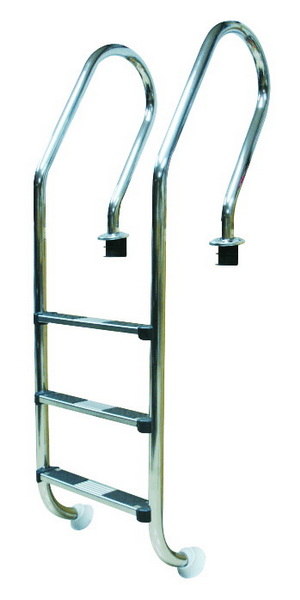
Most Coleman pool ladders can be assembled with basic hand tools such as one or two screwdrivers and a small wrench or socket set that match the supplied nuts and bolts. Always check the ladder manual's parts and tools section, as some models use specific bolt sizes or include their own simple wrench in the package.[1][2][3]
One person can usually assemble the ladder by following the step‑by‑step instructions, especially if the components are lightweight plastic and steel tubes. However, having a second person hold the frame steady when attaching the top platform or moving the completed ladder to the pool can make the process easier and safer.[5][2][8]
Coleman and Bestway ladders are typically designed for specific pool wall heights such as 42, 48, or 52 inches, and this height range is indicated on the packaging or in the manual. The ladder should extend over the top rail comfortably with the inner feet resting on the pool floor and the outer feet firmly on the ground without excessive tilt.[12][4][2][1]
The ladder should be removed or locked whenever the pool is not in use, especially when children are present or when adult supervision is not guaranteed. Many safety guidelines recommend making the ladder inaccessible during off‑hours to reduce the risk of accidental drowning.[4][7][1]
Inspect the ladder regularly for loose bolts, worn or slippery steps, rust on metal parts, and any cracks in plastic components. Clean the steps and handrails with mild detergent and water, and replace any damaged hardware or parts immediately following the manufacturer's recommendations.[7][3][1]
[1](https://bestwayusa.com/media/pdf_files/Coleman_Pool_Ladder_90392E_2024.pdf)
[2](https://www.youtube.com/watch?v=HMZp6vdZ1nI)
[3](https://www.poolkingfilter.com/how-to-put-a-coleman-pool-ladder-together.html)
[4](https://manuals.plus/coleman/coleman-90458e-power-steel-user-manual)
[5](https://www.youtube.com/watch?v=AcVIHFSLCTY)
[6](https://www.poolkingfilter.com/news/How-To-Put-Together-Coleman-Pool-Ladder.html)
[7](https://www.poolfencediy.com/blogs/blog/pool-ladder-safety)
[8](https://www.youtube.com/watch?v=ham2QiY9M7M)
[9](https://www.youtube.com/watch?v=JJkG7vsan1E)
[10](https://images.thdstatic.com/catalog/pdfImages/18/18ef8250-9b9a-46b4-8c0d-8d7853dc9aca.pdf)
[11](https://refusingtoforget.org/355694/Steps-For-Above-Ground-Pool-For-Heavy-Person)
[12](https://bestwayusa.com/coleman-power-steel-16-x-10-x-42-above-ground-pool-set-90481e)
[13](https://www.facebook.com/groups/637529959937311/posts/2520076091682679/)
[14](https://content.syndigo.com/asset/77256caf-03f0-4ffd-af3d-250998e24d3f/original.pdf)
[15](https://www.tiktok.com/discover/how-to-setup-a-ladder-for-the-52-inch-pool-coleman)
[16](https://www.facebook.com/groups/637529959937311/posts/2002416523448641/)
[17](https://www.facebook.com/groups/637529959937311/posts/2567954630228158/)
[18](https://www.reddit.com/r/AboveGroundPools/comments/12k6pft/coleman_power_steel_agp/)


