
Views: 222 Author: Tina Publish Time: 2025-11-26 Origin: Site


Content Menu
● Understanding Coleman Pool Ladder Types
● Safety Warnings Before Assembly
● Unpacking and Identifying Parts
● Step 1: Assemble the Side Frames
● Step 2: Install the Steps on Each Side
● Step 3: Attach the Top Platform and Rails
● Step 4: Add Braces and Bottom Supports
● Step 5: Positioning the Ladder on the Pool
● Step 6: Tightening, Inspection, and Test Use
● Practical Safety Tips for Everyday Use
● Maintenance and Troubleshooting
● When to Upgrade Your Pool Ladder
● Promoting Your OEM Pool Equipment Solutions
● FAQs About Assembling a Coleman Pool Ladder
>> 1. Do all Coleman ladders assemble the same way?
>> 2. Why are my ladder steps loose after assembly?
>> 3. How can I make my Coleman ladder more stable?
>> 4. When should I remove the ladder from the pool?
>> 5. How often should I inspect the ladder?
>> 6. Can I use a different brand ladder with a Coleman pool?
A properly assembled Coleman pool ladder is essential for safe and comfortable entry and exit from your above ground pool. When building SEO content around “how to put coleman pool ladder together,” it also helps to show clear visual steps, embed tutorial videos, and highlight safety rules from the official manuals.[2][3][4][1]
You can use this article not only as a helpful DIY guide for homeowners but also as an opportunity to introduce your own pool filtration, pump, and accessory solutions as value-added recommendations.
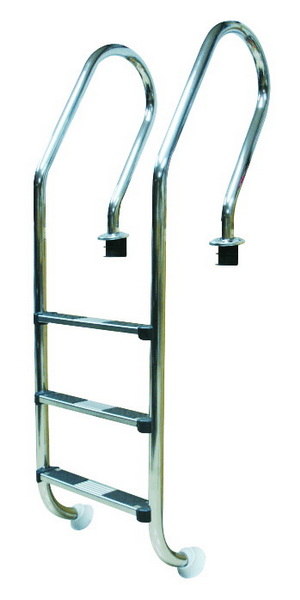
Coleman above ground pool sets typically include a steel-framed ladder sized for 42–52 inch wall height pools. The ladder is designed specifically for soft‑sided above ground pools and must match the pool wall height indicated in the manual.[3][5][2]
Most Coleman ladders share a similar structure:
- Two side frames with curved top rails.
- Multiple plastic or resin treads.
- A top platform or bridge connecting both sides.
- Hardware kit with bolts, nuts, and clips.[2][3]
Before assembling or using any pool ladder, manufacturers emphasize several critical safety warnings. Only one person should be on the ladder at a time, no running or jumping on or from the ladder, and the ladder must be installed on a firm, level base.[4][2]
To reduce drowning risk, the ladder should be removed or secured when the pool is not supervised so children cannot enter the pool unsupervised. Always check screws, steps, and retention clips before each use and replace any rusted or damaged hardware immediately.[4][2]
Start by opening the ladder carton and carefully removing all components. Spread them out on a clean, flat surface so all parts are visible and easy to identify.[6][1][3][2]
Typical parts include:
- Four vertical legs (labeled A and B).
- Multiple steps with matching A/B markings.
- Two top rails or a top platform section.
- Cross braces and support bars.
- Handrails or curved grab handles.
- Bolts, nuts, washers, and plastic clips.[3][6][2]
Many Coleman and compatible above ground ladders use A and B labels to ensure the steps and legs align correctly. Each step will have an “A” side and a “B” side that must match the legs marked “A” and “B” on each side.[1][6][3]
If steps are installed with A and B reversed, the ladder may twist or the clips may not lock fully, which can reduce stability. Always double‑check that side A on the step is on the rail marked A and side B on the step is on the rail marked B before tightening hardware.[6][1][3]
1. Lay two legs labeled A and B parallel to each other with the curved ends pointing in the same direction they will eventually hang over the pool wall.[1][3]
2. Slide the plastic retention brackets or support sleeves onto each leg, oriented so any arrows or tabs face inward as shown in the manual.[6][1]
3. Repeat for the second pair of legs to build the opposite side of the ladder.[3][1]
These brackets support the steps and help lock them in place once installed. Make sure the brackets are fully seated and correctly oriented before moving to the steps.[1][3][6]
Working on one side frame at a time, start from the bottom step and move upward.[3][6][1]
1. Take a step marked A/B and align the A side with rail A and the B side with rail B.[6][1]
2. Slide the step down between the legs until the notches on the step seat into the retention brackets.[1][3]
3. Press firmly until you hear or feel a click and the step is completely seated.[6][1]
4. Repeat for the remaining steps on that side, maintaining consistent spacing.[3][1]
When all steps are installed on the first side, repeat the same process for the second pair of legs, again matching A to A and B to B on each step.[1][3][6]
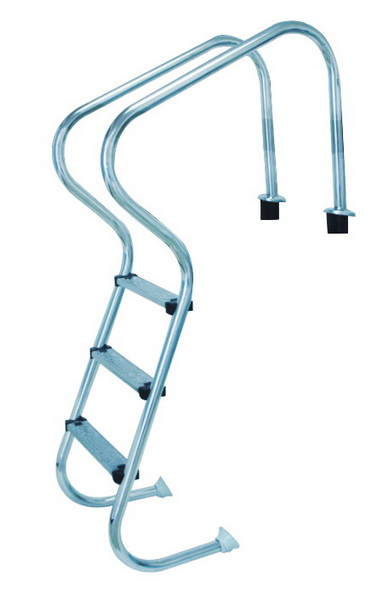
Once both step assemblies are complete, they are joined by the top platform and top rails.[2][3]
1. Position one side of the ladder upright and attach the top platform to that side using the bolts and nuts specified in the manual, leaving them slightly loose for alignment.[3][6]
2. Attach the curved handrails or top bars to the same side, again loosely tightening the bolts.[6][3]
3. Bring the second side assembly into position and slide the top platform and handrails onto its legs so both sides are connected.[3][6]
After all holes are aligned and all bolts are inserted, gradually tighten all hardware, alternating between sides so the ladder remains square and stable.[6][3]
Some Coleman ladder models include bottom braces or stabilizing bars that connect the legs near the ground. These components prevent legs from spreading or wobbling under load.[2][3]
- Locate the lower braces as shown in the manual and connect them between the appropriate legs using the designated hardware.[2][3]
- Confirm that all legs touch the ground evenly and the ladder does not rock when you apply weight.[4][2]
If the pool is installed on uneven ground, adjust the base or use suitable leveling pads under the ladder feet to achieve a stable foundation.[4][2]
Coleman manuals require placing the ladder on a solid surface next to the pool and hooking the curved top section over the top rail. The inside section of the ladder should rest flat against the inner pool wall with the feet firmly on the pool floor.[5][2]
Key positioning tips:
- Ensure the ladder platform is level and the steps are vertical.[4][2]
- Avoid sliding or dragging the ladder along the pool wall to prevent damage to the liner.[7][5]
- Keep the ladder clear of skimmers, returns, or other pool equipment.[5][7]
Before allowing anyone to use the ladder, carry out a full inspection.[2][4]
- Check every bolt and nut, especially around the top platform and braces, and tighten securely using appropriate tools.[2][3]
- Confirm all steps are fully seated in their brackets with no visible gaps.[1][6]
- Carefully step up the ladder yourself, one step at a time, while holding the handrails, to verify there is no flexing, wobbling, or unusual noise.[4]
If you notice any movement, re‑check the hardware and braces until the ladder feels solid and stable.[4][2]
Even a correctly assembled ladder can be dangerous if used incorrectly. Encourage readers to adopt daily safety habits based on recommendations from manufacturers and safety agencies.[2][4]
Practical rules include:
- Always face the ladder when entering and exiting the pool.[2]
- Keep steps dry and free from sunscreen, oils, or algae buildup that increase slipperiness.[4]
- Do not allow children to play, jump, or dive from the ladder or platform.[4][2]
- Remove or lock the ladder when the pool is unsupervised, especially when children are present.[2][4]
Over time, exposure to pool water, chemicals, and weather can affect ladder components. Regular maintenance helps keep the ladder strong and safe.[4]
Simple maintenance plan:
- Inspect and tighten hardware once every few weeks during the swimming season.[2][4]
- Look for cracks in plastic steps, rust on metal parts, or loose clips and replace affected parts promptly.[2][4]
- Rinse the ladder with fresh water to reduce corrosion, especially in saltwater or heavily chlorinated pools.[4]
If the ladder wobbles or creaks, check that the ground is level, the braces are correctly installed, and the A/B sides of every step are matched correctly.[3][1]
In some cases, users may outgrow the stock ladder and look for heavier‑duty or wider models, especially for higher weight capacities. Wider steps, stronger rails, and integrated platforms can improve comfort and safety.[8][4]
If upgrading, confirm:
- Weight rating that meets or exceeds expected use.[8][4]
- Compatibility with soft‑sided Coleman pool walls and height.[8]
- Non‑slip treads and dual handrails meeting recognized safety recommendations.[4]
Readers searching “how to put coleman pool ladder together” are often new pool owners who will soon need reliable filtration, pumps, and lighting solutions. This is an ideal moment to briefly introduce your factory's sand filters, cartridge filters, pumps, and LED pool lights as compatible upgrades for cleaner and safer swimming.[9]
Position your OEM services as:
- A one‑stop solution for brands and wholesalers who need private‑label pool equipment.
- Suppliers of durable ladder‑friendly filtration and circulation systems designed for above ground pools.[9]
Putting a Coleman pool ladder together is a clear, repeatable process when you understand A/B matching, use the right hardware sequence, and follow manufacturer safety instructions. By combining a detailed step‑by‑step guide with helpful images, tutorial videos, and safety tips, your article can help pool owners assemble their ladders correctly and create a safer swimming environment while also discovering your professional OEM pool equipment solutions.[1][3][2][4]
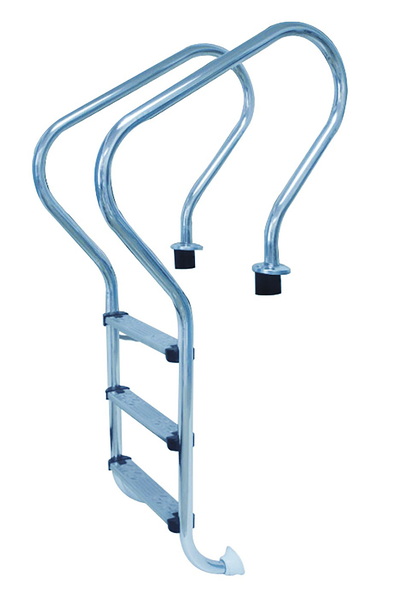
Most Coleman above ground ladders share similar components and A/B labeled steps, but you should always follow the specific instructions in the manual that matches your pool set and ladder model. Differences in height, weight rating, or platform design can change the number of steps, the type of braces, and the correct hardware sequence.[3][2]
Steps often feel loose when they are not fully seated in the brackets or when the A/B sides are mismatched with the legs. Recheck that each step's A side is on the A rail, B side is on the B rail, and that retention clips or brackets are snapped fully into place before tightening all bolts.[6][1]
Start by placing the ladder on a firm, level surface and tightening all hardware according to the manual. For extra stability, some pool owners add pads under the feet, carefully brace the ladder base, or use straps and rail mounts where allowed by the manufacturer, while still keeping the ladder removable for safety when the pool is not in use.[10][11][2][4]
Ladder manufacturers recommend removing or securing the ladder whenever the pool is not actively supervised, especially when children are nearby. Removing the ladder makes it harder for unsupervised children to access the pool and reduces the risk of accidental drowning.[2][4]
Check the ladder at least every few weeks during the swim season and before parties or heavy use. Look for rusted hardware, cracked steps, worn clips, or any wobbling, and replace damaged parts immediately according to the manufacturer's recommendations.[2][4]
It is possible to use a compatible third‑party ladder if it matches the pool height and is designed for soft‑sided above ground pools, but you must follow that ladder's manual and safety instructions. Always confirm weight rating, step width, and handrail design to align with recognized safety guidelines.[10][8][4]
[1](https://www.youtube.com/watch?v=JJkG7vsan1E)
[2](https://bestwayusa.com/media/pdf_files/Coleman_Pool_Ladder_90392E_2024.pdf)
[3](https://www.youtube.com/watch?v=HMZp6vdZ1nI)
[4](https://www.poolfencediy.com/blogs/blog/pool-ladder-safety)
[5](https://content.syndigo.com/asset/77256caf-03f0-4ffd-af3d-250998e24d3f/original.pdf)
[6](https://www.youtube.com/watch?v=ham2QiY9M7M)
[7](https://manuals.plus/coleman/13382-power-steel-rectangular-pools-manual)
[8](https://www.reddit.com/r/HelpMeFind/comments/1lauhuv/looking_for_a_wide_doublesided_pool_ladder_for/)
[9](https://www.poolkingfilter.com/how-to-put-a-coleman-pool-ladder-together.html)
[10](https://www.facebook.com/groups/637529959937311/posts/2639688489721438/)
[11](https://www.facebook.com/groups/637529959937311/posts/2579369582419996/)
[12](https://bestwayusa.com/coleman-power-steel-16-x-10-x-42-above-ground-pool-set-90481e)
[13](https://www.tiktok.com/discover/how-to-keep-my-colman-pool-ladder-from-moving)
[14](https://www.reddit.com/r/AboveGroundPools/comments/12k6pft/coleman_power_steel_agp/)
[15](https://www.poolkingfilter.com/how-to-build-a-coleman-pool-ladder.html)


