
Views: 222 Author: Tina Publish Time: 2025-12-24 Origin: Site


Content Menu
● Understanding pool ladder sizing
● Step‑by‑step: how to measure for the right ladder
>> 1. Measure above ground pool wall height
>> 2. Measure deck height (if you have a deck)
>> 3. Measure water depth for inground pools
>> 4. Check ladder spec sheet carefully
● Height, weight capacity, and safety standards
>> Weight rating and tread size
● Choosing by pool type and layout
>> Above ground pools without a deck
>> Above ground pools with a deck
>> Semi‑inground or sunken pools
● Other key factors when sizing a ladder
>> Number and spacing of steps
>> Compatibility with liners and floors
● When to consider heavy‑duty or commercial ladders
● OEM pool ladder and equipment options (for brands and wholesalers)
● FAQs about pool ladder sizing
>> 1. How do I know what size pool ladder to get?
>> 2. What is the standard height for an above ground pool ladder?
>> 3. Does ladder weight capacity really matter?
>> 4. Do I need a different ladder if I have a deck?
>> 5. Can I use an above ground ladder in an inground pool?
>> 6. How many steps should my pool ladder have?
What size pool ladder you need depends mainly on your pool wall height, whether you have a deck, the pool type (above ground or inground), and the weight capacity required for your swimmers. Choosing the correct ladder height and style ensures safe, comfortable entry and avoids wobbling, floating, or steps that are too deep or too shallow.[1][2][3][4]
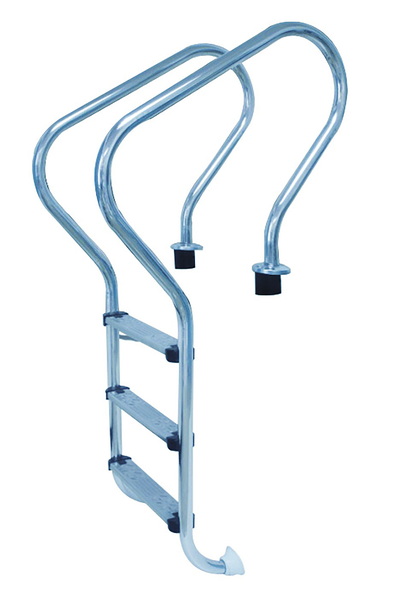
For above ground pools, the ladder must reach from the top rail or deck down to the pool floor so every step is usable and stable. For inground pools, ladders typically span just a few steps from the deck down the wall and do not always touch the deepest floor.[4][5][6]
- Most above ground pool walls are 48–54 inches high, and compatible ladders are sold in matching ranges (for example, “fits 48–52 inch pools”).[7][1]
- A correctly sized above ground ladder should match your pool wall height and often be just a few inches taller so the top handrail sits securely above the edge.[2][3]
- Inground pool ladders are designed to fit standard pool depths (around 36–54 inches) and are chosen based on how many steps are needed and the deck-to-water distance.[6]
Correct measuring is the fastest way to avoid buying the wrong ladder. Follow these steps before you choose any specific model.[3][5]
- Place a tape measure on the outside of the pool and measure from the ground to the top rail at the deepest point of the pool wall.[3][4]
- Common above ground wall heights: 42", 48", 52", and 54".[1][7]
- Record that number and round to the nearest inch.
If your above ground pool has a deck, you may need an in‑pool ladder plus separate deck steps or a combined A‑frame/2‑in‑1 design.[8][7]
- Measure from the deck surface down to the pool floor where the ladder will sit.[4]
- Check that the deck edge clearance and rail size will allow the ladder top to clamp or bolt on securely.[3][4]
For inground pools, the ladder height depends on how many steps you need from the deck into the water.[6]
- Measure from the deck surface vertically down to the pool floor where the ladder feet will land.[6]
- Decide how many steps you want; typical tread depth is at least about 10 inches and widths commonly start at 36 inches or more for steps and 18–27 inches for ladder treads.[9][10][6]
Once you know your wall or water height:
- Match your measurement to ladder ranges such as “42–56 inch,” “48–54 inch,” or “for 36–48 inch water depth.”[11][7]
- Confirm that the ladder is specifically rated for above ground or inground use as appropriate.[5][4]
Beyond basic height, correct ladder capacity and geometry are crucial for safety.
- Above ground ladders should usually be the same height as your pool wall or several inches taller, so the top rail and handrails sit above the pool edge for easy gripping.[12][2][3]
- In above ground setups without decks, the ladder must reach the pool floor and the outside legs must comfortably reach the ground outside the pool.[5][4]
- For inground ladders, the rails should provide a continuous handhold from the deck into the water, often extending 3–5 feet above the deck for slides and more limited heights for standard ladders according to design standards.[13][10]
- Many residential pool ladders are rated for 200–300 lb weight capacity, while heavy‑duty designs may support 400–500 lb or more.[2][9][1]
- Safety guidance for pool slides indicates ladder treads or rungs should withstand a 300‑lb static load without failure or deformation, which is a useful benchmark when choosing robust ladders.[13]
- Some codes and guidance recommend minimum tread depth around 5–10 inches and widths starting from about 14 inches for steps to ensure secure footing.[10][9]
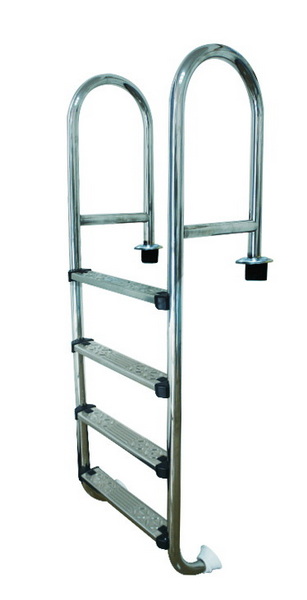
Different pool types require different ladder designs, even when the height is similar.
For free‑standing above ground pools (steel, resin, or soft‑sided) with no surrounding deck, A‑frame or 2‑in‑1 ladders are common.[14][8][7]
- A‑frame ladders have steps inside and outside the pool and are height‑adjustable to match 48–56 inch walls.[7][11][14]
- Some designs let you slide or lock the outer ladder up to block access when the pool is not in use, improving child safety.[14][7]
If the pool is attached to a deck:
- You may use a one‑sided in‑pool ladder or step system that bolts directly to the deck and rests on the pool floor.[8][3]
- Measure deck‑to‑floor height and choose a ladder that fits common 48–54 inch ranges, ensuring the deck overhang and top truss are compatible.[1][3]
Semi‑inground pools can have different wall exposures on each side.[15]
- Owners often choose a standard deck‑mounted ladder or step inside the deeper portion while using steps or pavers on the lower exterior side.[15][14]
- Carefully match ladder leg length to the inner depth so the feet rest firmly on the pool floor.[11][5]
Inground pools typically use stainless or resin/steel ladders that anchor into deck sockets.[6]
- The ladder rail length and bend style must match the pool wall geometry and depth.[16][6]
- Many inground steps have minimum tread depths of about 10 inches and widths of 36 inches or more for comfortable entry.[9][6]
Correct size is more than just total height; several additional details matter.
- Above ground ladders typically have 4–6 steps from the pool floor to the top rail; more steps with closer spacing are best for children or less mobile swimmers.[4]
- The vertical distance between steps varies by brand; smaller spacing makes climbing easier but may slightly increase the overall ladder height.[9][4]
- Wider ladders and steps offer better stability and comfort, with some heavy‑duty designs featuring treads 27 inches wide and 10 inches deep.[9]
- If you have a narrow pool or a tight corner, a slim‑profile ladder or vertical ladder may be better so it does not block swimmers.[17][7]
- Make sure the ladder has non‑marring feet or pads suitable for vinyl liners to avoid damage.[5][11]
- For uneven or sloped floors, choose a model that allows foot height adjustment or includes a broad base platform.[8][14]
If your pool is used by many people, or if some swimmers are heavier or have mobility challenges, upgrading beyond a basic ladder can be a smart choice.
- Heavy‑duty ladders that support 400–500 lb offer improved stability and long‑term durability for families and commercial facilities.[2][1][9]
- Large step systems with broad platforms and handrails resemble small stairs, making access easier for seniors and children.[17][8]
For overseas brands, wholesalers, and manufacturers, working with a specialized OEM factory allows you to customize ladder size and features to your market.
- OEM suppliers can design ladders to match regional wall heights (for example, 48–54 inch above ground pools) and integrate non‑slip treads, child‑proof gates, and heavy‑duty rails.[1][2]
- Experienced pool‑equipment factories often also manufacture sand filters, DE filters, cartridge filters, pumps, LED lights, and accessories, allowing you to buy a full matched equipment package under your own brand.
Choosing the right size pool ladder starts with accurately measuring your pool wall or deck‑to‑floor height and matching that to a ladder specifically designed for above ground or inground use. Consider weight capacity, step size, pool type, and who will be using the pool, and you will end up with a stable, safe ladder that makes every swim more enjoyable.[8][2][3][4][5][1]
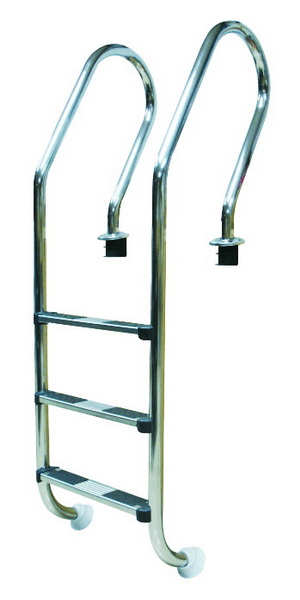
Measure the total height of your above ground pool wall or the deck‑to‑floor depth for inground pools, then choose a ladder that is equal to or slightly taller than that measurement so the steps sit correctly in the water.[3][4]
Most above ground pool ladders are designed for common wall heights around 48–54 inches and are often adjustable within a small range (for example, 48–52 inch or 52–56 inch models).[12][7][1]
Yes, you should always choose a ladder with enough capacity for your heaviest expected swimmer; many ladders are rated for 200–300 lb, while heavy‑duty versions go up to 400–500 lb for added safety.[2][1][9]
If you have a deck, you usually need a deck‑mounted in‑pool ladder or step system sized to the deck‑to‑floor depth, while the outer side is handled by the deck stairs instead of an A‑frame ladder.[4][8][3]
In most cases no, because above ground ladders are designed to hook over a top rail and reach the freestanding wall height, while inground ladders are built to anchor into sockets in the deck and match inground wall geometry.[5][4][6]
Above ground ladders typically have 4–6 steps; more closely spaced steps are helpful for kids and older swimmers, while fewer, taller steps may be acceptable for agile adults.[4][9]
[1](https://www.vevor.com/diy-ideas/heavy-duty-above-ground-pool-ladder/)
[2](https://blog.watsons.com/blog/best-ladder-for-above-ground-pool)
[3](https://blog.watsons.com/blog/install-above-ground-pool-ladder)
[4](https://www.poolsupplies.com/page/ladders-buyers-guide--faq)
[5](https://poolpartstogo.com/blogs/pool-equipment/how-to-choose-the-best-above-ground-pool-ladder-for-you)
[6](https://www.royalswimmingpools.com/inground-pool-ladders-steps.html)
[7](https://m.maygopool.com/n1875533/How-to-Choose-the-Right-Pool-Ladder.htm)
[8](https://www.royalswimmingpools.com/above-ground-pool-ladders-steps.html)
[9](https://www.budgetpools.com/steps-ladders/)
[10](http://reports.oah.state.nc.us/ncac/title%2015a%20-%20environmental%20quality/chapter%2018%20-%20environmental%20health/subchapter%20a/15a%20ncac%2018a%20.2521.pdf)
[11](https://www.poolzoom.com/category/aboveground-pool-ladders.html)
[12](https://www.facebook.com/groups/637529959937311/posts/1702453416778288/)
[13](https://www.law.cornell.edu/cfr/text/16/1207.5)
[14](https://www.thepoolfactory.com/blogs/equipment/scaling-new-heights-above-ground-pool-ladders)
[15](https://www.facebook.com/groups/637529959937311/posts/2657135374643416/)
[16](https://www.srsmith.com/en-us/products/ladders-and-rails/2-bend-stair-rail/)
[17](https://intheswim.com/blog/above-ground-pool-step-buyers-guide.html)
[18](https://www.thepoolfactory.com/blogs/new-pool-buyers/how-to-choose-the-correct-ladder-or-step-for-your-above-ground-swimming-pool)
[19](https://www.poolwarehouse.com/articles/how-to-choose-the-perfect-pool-wall-height-42-48-or-52/)
[20](https://waterthat.com/blogs/news/what-is-the-right-pool-wall-height-for-me)


