
Views: 222 Author: Tina Publish Time: 2025-12-14 Origin: Site


Content Menu
● Understand your ladder and pool type
● Tools and materials you will need
● Step 1: Unpack and organize ladder parts
● Step 2: Choose the safest location around your pool
● Step 3: Assemble ladder frame and steps
● Step 4: Adjust ladder height to match pool wall
● Step 5: Anchor and secure the ladder
● Step 6: Address ladder floating and wobbling
● Step 7: Install safety features (gates, rollguards, straps)
● Step 8: Final safety inspection and testing
● Ongoing maintenance and seasonal care
● Where OEM and replacement ladders fit in your equipment plan
● Frequently Asked Questions (FAQ)
>> 1. How do I keep my above ground pool ladder from floating?
>> 2. How can I make my above ground pool ladder more stable?
>> 3. Can I install an above ground pool ladder by myself?
>> 4. How do I know if the ladder is safe for children?
>> 5. How often should I inspect or maintain my above ground pool ladder?
>> 6. Do I need a specific ladder for soft‑sided above ground pools?
>> 7. When should I replace an above ground pool ladder?
How to set up an above ground pool ladder correctly means choosing the right ladder for your pool type, assembling all parts according to the manual, leveling and anchoring it, and finishing with thorough safety checks before anyone uses it. A stable, properly installed ladder greatly reduces slip and fall risks and protects your pool wall and liner.[1][2][3][4]
Above ground pool ladders are essential for safe entry and exit, especially for children, seniors, and frequent swimmers. A good installation combines correct positioning, firm anchoring, and regular maintenance to keep the ladder stable season after season.[2][3][5][1]
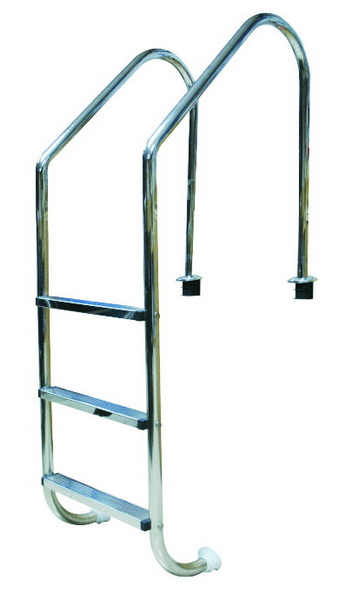
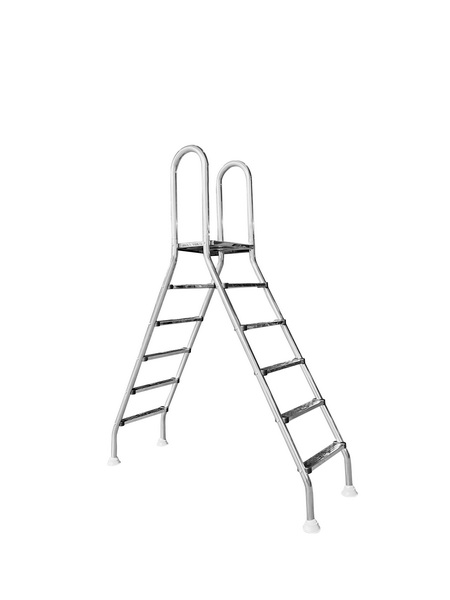
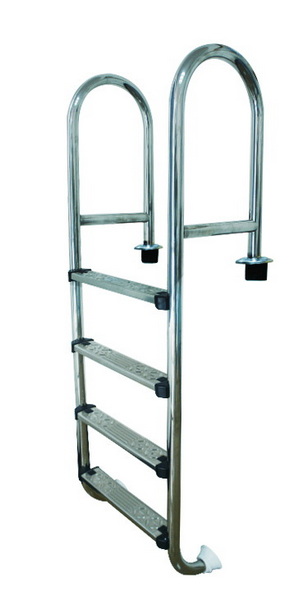
Above ground pool ladders come in several common styles: A‑frame ladders, deck‑mounted ladders, and step‑style entry systems. Each style has different installation requirements and weight distribution, so matching the ladder type to your pool structure is the first safety decision.[6][3][7][1]
- A‑frame ladders straddle the pool wall, with one side inside the water and one side outside on the ground.[3][6]
- Deck‑mounted ladders anchor directly to a wood or composite deck with flanges or brackets.[1][2]
- Step systems resemble small staircases that sit on the pool floor and attach to the wall or deck, often with ballast chambers for sand or water.[8][6]
For soft‑sided or metal‑frame pools, use ladders rated for “soft‑wall” designs; for steel‑wall pools, choose rigid ladders or step units that match your pool's wall height, usually 48–54 inches. Always confirm compatibility in the manufacturer's guidelines before purchase.[7][6][2]
Having the right tools ready will make setup faster and safer. Most ladder kits include hardware, but basic hand tools are still required for proper tightening and leveling.[5][2][3]
Common tools and materials:
- Phillips screwdriver and rubber mallet for step assembly and plastic parts.[2]
- Wrenches or a small socket set for nuts and bolts on handrails and brackets.[3][2]
- Cordless drill with bits if you must drill deck holes or mounting points.[1][2]
- Measuring tape, pencil or marker to align brackets and check height.[2][1]
- Level (preferably 4‑foot) to ensure the ladder sits flat and does not rock.[3]
- Sand or water if the ladder or steps use ballast chambers for added weight.[6][2]
Start by opening the packaging in a clean, open area close to the pool. Lay out all parts on a tarp or deck surface and compare them to the parts list in the manual.[11][5][2]
- Separate ladder legs, steps, treads, platform, handrails, braces, and small hardware bags.[2]
- Identify left and right components if labeled A/B or “+ / –” so they are not reversed during assembly.[5][2]
- Inspect all parts for cracks, sharp edges, or deformities; replace damaged components before continuing.[3]
Correct placement of the ladder is just as important as assembly. A good location maximizes visibility, avoids structural components, and offers firm footing on the outside of the pool.[4][1][3]
- Keep the ladder away from vertical support posts, buttresses, or skimmer openings on the pool wall.[11][1]
- Select a spot that is clearly visible from your house, patio, or any supervising area for better child monitoring.[4][1]
- Ensure the outside ground is level, compact, and free of stones or debris that could cause wobble.[2][3]
If the surface is soft, install pavers or a small concrete pad under the outer legs to create a stable base. For deck‑mounted ladders, verify that joists and boards are in good condition and structurally sound before drilling.[8][1][3]
Follow the manufacturer's order of assembly, usually beginning with the side rails or legs and then adding steps or treads. Proper alignment at this stage prevents squeaking, rocking, or premature wear later.[5][3][2]
- Attach lower and middle steps first, inserting them fully into the leg channels and tapping gently with a rubber mallet if necessary.[2]
- Install upper steps and platform, making sure all locking tabs or fasteners click or bolt into place.[14][2]
- Tighten bolts and screws firmly, but avoid overtightening plastic parts that might crack under stress.[3][2]
Many modern ladders include anti‑slip tread patterns or removable outer steps for safety; confirm that these safety features are correctly oriented. During assembly, frequently set the ladder upright on a flat surface to check that both sides remain symmetrical and square.[14][7][3]
A ladder that is too short or too tall is uncomfortable and unsafe. The top platform should sit securely over the pool top rail or deck, and lower steps should rest evenly on the pool floor or ground.[14][6][1][2]
- Measure from the ground to the top of the pool wall or deck to confirm the target height.[1]
- Use extension legs, adjustable feet, or telescoping tubes provided with the ladder to fine‑tune the height.[14][5]
- Confirm that the top platform is level and the outer legs sit fully on the ground without gaps or rocking.[14][3]
Some A‑frame models include stabilizer bars or braces that attach to the pool ledge; install them according to the specified height positions for your pool wall. Where possible, test height adjustment with a person gently standing on each step while another person checks for flexing or misalignment.[14][3][2]
Anchoring is the key to preventing movement, tipping, and floating. Depending on the ladder type, you may anchor to the pool wall, deck, or ground, and add ballast in dedicated chambers.[6][8][2]
For deck‑mounted ladders:
- Position the rails into deck flanges or mounting brackets and mark drilling holes with a pencil.[1]
- Apply a bead of silicone sealant under brackets to reduce water intrusion and long‑term loosening.[1][3]
- Drill pilot holes and fasten with the recommended stainless steel screws or bolts, tightening all hardware.[3][1]
For A‑frame ladders and step systems:
- Install stabilizer bars or braces that attach to the pool top rail where provided.[14][3]
- Fill built‑in ladder cavities or step chambers with sand or water up to the recommended weight to keep the unit from floating.[6][2]
- On soft ground, place pavers under outer feet or add ground stakes or stabilizer kits designed for A‑frame ladders.[15][8][3]
Even correctly assembled ladders can float or wobble if they are too buoyant or resting on uneven surfaces. This is especially common with hollow plastic steps and soft‑ground installations.[8][6][3]
To minimize floating:
- Ensure all air pockets in steps are released by moving the ladder side to side underwater as it settles.[6]
- Fill ballast compartments fully with sand or water according to the manual, distributing weight evenly across both sides.[6][2]
- Use ladder mats on the pool floor to increase friction and protect the liner from concentrated pressure points.[8]
To reduce wobble:
- Recheck all bolts and nuts with a wrench or socket, tightening loose connections.[3]
- Level the outer legs with pavers, shims, or foam padding where ground is uneven.[8][3]
- If needed, add aftermarket stabilizer bars or cross‑braces recommended for your ladder model.[15][8]
A safe above ground pool ladder not only feels stable but also limits unauthorized access when the pool is unsupervised. Many modern ladders include integrated safety systems such as locking gates, rollguards, or removable outer steps.[17][7][4][14]
- For ladders with gates, attach hinges and latches as instructed and test that the gate closes and locks without sticking.[17][14]
- For rollguard designs, verify that the rollguard fully covers the outside steps and can be padlocked when rolled down.[18][17]
- If straps are included, route them through the top platform and around the pool wall or frame, tightening firmly.[2][14]
Add external safety layers such as pool fencing, alarms, and warning signage to further reduce drowning risks, especially for children. For commercial or rental properties, confirm that the ladder and safety setup meet local codes and insurer requirements.[4]
Before allowing swimmers to use the ladder, perform structured safety checks. This is also a good time to demonstrate safe use to family members or guests.[4][1][3]
- Have an adult slowly climb the ladder while another person watches for flexing, rocking, or shifting at each contact point.[1][3]
- Confirm that every step has anti‑slip texture and remains fully submerged to a comfortable depth.[7][14]
- Check handrails for firm grip; they should not twist or loosen under body weight.[1][3]
Make a simple maintenance schedule, such as monthly checks for loose hardware and seasonal inspections for corrosion or UV damage. Document installation details, including photos, for warranty claims or future ladder upgrades.[16][8]
Regular maintenance extends the life of your above ground pool ladder and keeps it safe across multiple swimming seasons. Outdoor conditions, pool chemicals, and UV exposure all gradually weaken plastics and metals if not monitored.[16][4][8][3]
- Rinse the ladder periodically to remove chemical residues and reduce corrosion or discoloration.[16][4]
- Inspect rubber feet, pads, and mats for wear; replace them if they become slick, hard, or cracked.[8][3]
- Tighten critical fasteners at the start and midpoint of the season, and again before winterization.[3]
If your pool is closed for winter in cold climates, consider removing the ladder, draining ballast chambers, and storing it indoors to prevent cracking or warping. In warm regions where the pool remains open, schedule at least one deep inspection annually and address any visible rust or UV‑damaged plastic promptly.[16][8][3]
For brands, wholesalers, and pool builders, choosing reliable OEM partners for ladders and related accessories is crucial. Coordinating ladder design with pool filters, pumps, and lights creates a complete equipment package that is easier to market and service.[4][8][2]
- OEM ladder production allows custom colors, branding, packaging, and safety features tailored to local regulations.[8][2]
- Matching ladders with compatible filtration systems and accessories simplifies after‑sales support for dealers and installers.[4][8]
Working with specialized factories that also produce sand filters, DE and cartridge filters, pumps, and LED pool lights can streamline purchasing and logistics for global buyers. This approach supports consistent quality levels and provides room for energy‑efficient and safety‑focused product upgrades over time.[16][8][2]
Setting up an above ground pool ladder the right way involves more than just snapping a few parts together; it requires careful site selection, accurate assembly, secure anchoring, and diligent safety checks. By adding ballast, stabilizers, and protective mats, and by using built‑in gates or rollguards correctly, pool owners can drastically reduce the risk of slips, falls, and unauthorized entry.[4][6][8][2][1]
With regular maintenance—tightening hardware, inspecting feet and rails, and storing the ladder properly during the off‑season—your above ground pool ladder will remain stable and comfortable for many years of safe swimming. For brands and wholesalers, integrating well‑designed ladders into complete pool equipment packages helps create safer, more attractive solutions for both residential and commercial buyers worldwide.[16][8][2][3]
Use the built‑in ballast system if your ladder or steps include hollow chambers by filling them with the recommended amount of sand or water to add weight. Also, gently rock the ladder underwater to release trapped air and consider using a ladder mat to increase friction on the pool floor.[6][8][2]
Check that all bolts and screws are fully tightened, the legs sit on level ground or pavers, and any stabilizer bars or braces are properly attached to the pool wall. If wobble remains, add ladder mats, foam supports, or a compatible stabilizer kit to anchor the ladder more firmly.[15][8][2][3]
Many standard A‑frame and deck‑mounted ladders can be installed by a single person with basic tools, provided the instructions are followed carefully. However, having a helper makes lifting, alignment, and safety testing much easier, especially for larger step systems.[2][1][3]
Look for ladders that meet recognized safety standards, feature non‑slip treads, and include a lockable gate, rollguard, or removable outer steps to block access when not in use. Combine these ladder features with fencing, alarms, and active supervision to build multiple layers of protection around your pool.[7][14][4]
Perform a quick visual and physical check every few weeks during the swimming season and a more detailed inspection at least once per year. At each review, tighten hardware, clean off chemical residue, check feet and mats, and replace any worn or sun‑damaged components.[8][16][3]
Yes, soft‑sided or inflatable above ground pools require ladders designed for flexible walls and frames, with wide feet and gentle contact surfaces to prevent damage. Always confirm that the ladder is rated for your pool's diameter, wall height, and type before installation.[7][6][1]
Replace the ladder if you notice deep cracks, severe rust, loose handrails that cannot be tightened, or steps that flex excessively under normal use. Upgrading to a newer design with modern safety features like locking gates and enhanced anti‑slip treads can significantly improve overall pool safety.[14][4][8][3]
[1](https://blog.watsons.com/blog/install-above-ground-pool-ladder)
[2](https://www.poolkingfilter.com/how-to-install-pool-ladder-above-ground.html)
[3](https://blog.watsons.com/blog/stabilize-above-ground-pool-ladder)
[4](https://www.thepoolfactory.com/blogs/equipment/make-your-pool-safer-simple-steps)
[5](https://www.poolkingfilter.com/how-to-adjust-above-ground-pool-ladder.html)
[6](https://poolpartstogo.com/blogs/pool-equipment/how-to-fit-a-ladder-to-your-above-ground-pool-the-right-way)
[7](https://poolpartstogo.com/blogs/pool-equipment/how-to-choose-the-best-above-ground-pool-ladder-for-you)
[8](https://www.poolkingfilter.com/how-to-make-an-above-ground-pool-ladder-more-stable.html)
[9](https://www.youtube.com/watch?v=br-93CL5yyM)
[10](https://www.youtube.com/watch?v=ham2QiY9M7M)
[11](https://blog.linerworld.com/2011/01/14/swimming-pool-ladder-installation/)
[12](https://www.youtube.com/watch?v=JJkG7vsan1E)
[13](https://www.youtube.com/watch?v=AcVIHFSLCTY)
[14](https://www.youtube.com/watch?v=UOszx5_q0s4)
[15](https://www.doheny.com/vinyl-works-stabilizer-for-a-frame-ladder-white)
[16](https://blog.watsons.com/blog/make-above-ground-pool-ladder-stable)
[17](https://www.youtube.com/watch?v=ioYl-25dDXY)
[18](https://www.youtube.com/watch?v=qb_u48dTL0M)
[19](https://www.facebook.com/groups/637529959937311/posts/2579369582419996/)
[20](https://www.facebook.com/groups/637529959937311/posts/2620668984956722/)


