
Views: 222 Author: Tina Publish Time: 2025-11-07 Origin: Site


Content Menu
● Understanding Ladder Types and Stability Needs
● Effective Methods for Preventing Pool Ladder Floatation
>> Drainage Holes: Air Removal from Tubes
>> Deck Anchoring for Maximum Stability
● Selecting the Right Pool Ladder for Your Needs
>> Commercial and Community Pools
>> OEM Solutions for Pool Equipment Brands
● Maintenance and Inspection Routine
● Real-World Implementation: Case Study
● Frequently Asked Questions (FAQ)
>> 1. Why does my above-ground pool ladder keep floating?
>> 2. Is it safe to add concrete blocks or gravel under the ladder?
>> 3. How should I attach my pool ladder to the deck?
>> 4. Are foam noodles and backer rods effective for ladder stability?
>> 5. Can salt bags or water bags temporarily weigh down my pool ladder?
>> 6. Will drilling holes compromise ladder durability?
>> 7. What's the ideal ladder for commercial pools?
>> 8. Do you offer OEM pool ladder solutions?
A floating pool ladder is a common challenge for pool owners, often turning a routine swim into an unsafe or inconvenient experience. This article explores the causes behind floating ladders, and provides exhaustive, step-by-step solutions for above-ground and in-ground pool installations, drawing on practical advice, professional recommendations, and real-world user experiences.[1][10][11]
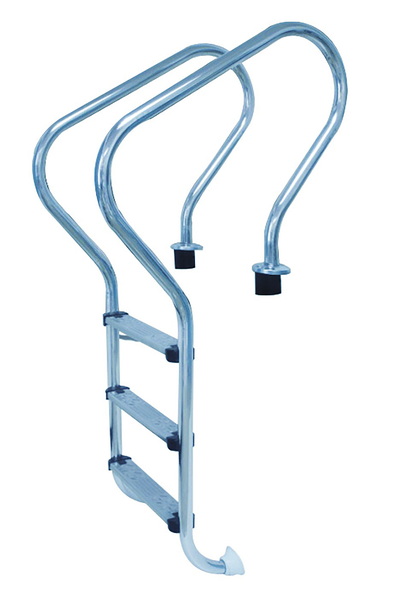
Pool ladders, especially those for above-ground pools, are typically manufactured from lightweight materials like plastic or stainless steel and are designed with hollow tubing to minimize cost and weight. These structural features trap air, creating buoyancy when immersed in water and causing the ladder to float or tilt unexpectedly. Left unchecked, this can result in instability, potential injury, or damage to the pool structure.[8][10][11]
- Trapped Air: Hollow ladder tubes trap air, making the structure buoyant.[11]
- Low Weight: Lightweight construction often lacks sufficient base mass.
- Improper Mounting: Loose deck brackets, absent anchor bolts, or misaligned supports can exacerbate floatation issues.[2][3]
- Water Turbulence: Large waves or swimmers' movements add instability.
Above-ground pool ladders typically come in three main configurations:[1]
- Deck Mounted Ladders: Secured to the pool deck for maximum stability.
- A-Frame Ladders: Free-standing with bases wide enough to span soft surfaces.
- Pool Steps: Designed for high walls, distributing weight over larger areas.
Heavy-duty models, made from reinforced resin or stainless steel, provide greater durability and resist movement. Extra-wide steps and sturdy anchoring hardware further increase stability.[8]
In-ground ladders attach directly to the pool deck using stainless steel bolts and anchors. Proper installation ensures ladder rigidity and prevents floatation. Most in-ground ladders include pre-drilled holes for deck attachment and anti-entrapment barriers for safety.[3][9]
Sand Bags, Gravel Bags, or Dedicated Ladder Weights:
The simplest and most effective solution is to increase the ladder's weight.[10][12][1]
- Sand Fill: During ladder assembly, place weight bags (usually sand) inside hollow steps or tubes, distributing the weight evenly. A good target mass is 70 lbs for step-style ladders.
- Gravel Bags: Use vinyl-coated gravel bags as an alternative to sand for water-resistant weighting.[12]
- Custom Counterweights: Stainless steel or resin blocks, zip-tied to the ladder bottom, can add stability while minimizing damage to pool liners.[6][8]
Strategic Drilling:
Trapped air is the biggest contributor to ladder floating. By drilling small drainage holes at the base of the tubes, water replaces the air and neutralizes buoyancy.[13][11][3]
- Use a water-resistant drill bit to make 3–5mm holes near tube bases, aiming downwards or sideways.
- Make sure to smooth the edges of each hole to prevent sharp surfaces that may cut pool liners.
Deck Connectors and Stainless Hardware:
Mounting a ladder to the pool deck is the gold standard for stability.[9][2][3]
- Stainless steel deck brackets and anchor bolts stay rust-free in chlorinated water environments.
- Ensure the ladder is located at least 1 inch from the pool wall and never in direct contact with the liner.
- Tighten all bolts and periodically check for erosion or loosening.
Placement Mats:
Weighted pool step mats made of dense rubber or filled vinyl can be placed beneath the ladder base, enhancing grip and reducing movement on slippery surfaces.
Some step-style ladders allow users to fill cavities with water, sand, pea gravel, or other materials. Always follow manufacturer instructions and check regularly for leaks and shifting mass.
- Pool Salt Bags: A temporary solution, salt bags can act as ballast for seasonal installations.[14]
- Foam Noodles or Backer Rod: Sliding foam pool noodles or backer rods underneath ladder feet increases ground friction and prevents minor shifts.[1]
Stabilize ladder access points with additional pool fencing, gates, and rescue equipment.[1]
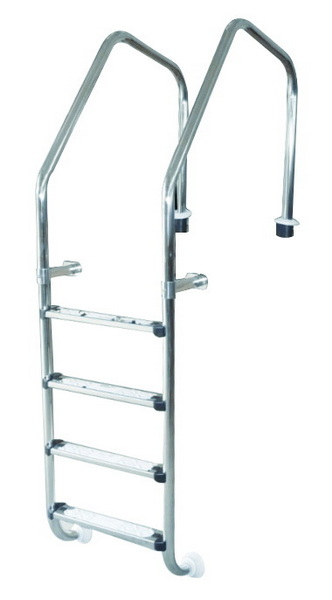
Choose ladders with extra-wide steps, reinforced anchor plates, and corrosion-resistant materials. Deck-mounted or A-frame models offer superior performance for busy family pools.[7][8]
Heavy-duty ladders are best for public or commercial pools. Stainless steel models anchored directly to the deck withstand high traffic and rough use.[9]
As a premier Chinese factory, our OEM production supports international brands with advanced filtration, lighting, and ladder technology:
- Fully automated manufacturing with quality tracking.
- Sand filters (top-mount, dual-stack) for commercial and residential use.[15][16]
- Cartridge and DE filtration solutions.
- Professional-grade stainless steel pool ladders with customizable features for export.
- Inspect for cracks, leaks, loose anchors, and weight attachment points before each season.[10]
- Replace missing or worn-out sandbags, weights, foam pads, and zip ties.
- Maintain balanced pH and chlorine levels to minimize corrosion and prolong ladder life.
- Replace plastic anchors and brackets with stainless steel for durability in harsh chemical environments.
Inspect for any scraping, tearing, or pressure marks caused by shifting ladders—the number-one cause of liner damage in above-ground pools. Use padding materials if in direct contact.
Recently, a hotel installed premium sand filters and commercial-grade pool ladders in newly constructed pool facilities.
- Ladders were anchored with heavy-duty stainless steel brackets, and hollow tubes were filled with certified sand weights during assembly.
- Regular inspection, foam base padding, and deck-mounted rescue equipment ensured zero incidents of floating or instability across busy peak seasons.
Maintaining ladder stability is vital for pool safety and user comfort. The combination of weighted materials, drainage holes, professional-grade mounting hardware, and routine maintenance provides long-term solutions for both above-ground and in-ground pools. Drawing from expert manufacturer insights and user experiences, these techniques ensure safe pool access and preserve the integrity of pool liners, steps, and decks. For those seeking cutting-edge OEM solutions, our factory offers commercial-grade ladders and complete pool filtration systems designed for demanding international standards.
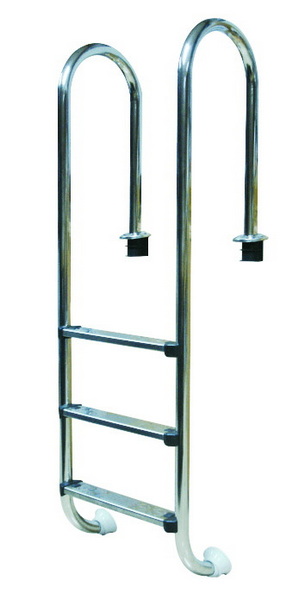
Air trapped within hollow tubes and lightweight structure causes ladders to float. Drainage holes and weighted sand bags can eliminate buoyancy issues.[11][10]
Yes, provided that blocks are padded and securely fastened. Never use materials that could damage pool liners.[12]
Use stainless steel deck brackets or anchor bolts. Select the appropriate mounting hole location, drill pilot holes, and regularly check for tightness.[2][3]
For minor shifts, yes—these materials improve ground friction and prevent sliding on soft surfaces.[1]
Yes, these are suitable for short-term stabilization. For permanent fixes, use sand or custom weights designed for pool ladders.[14]
No, if performed correctly. Use smooth-edged drill bits and reinforce exposed metal with corrosion-resistant sealant.[11][13]
Choose heavy-duty stainless steel ladders with deck mounting and weight distribution features. Pair with high-performance sand or DE filters.[15][9]
Yes—our factory supplies custom pool ladders, sand filters, pumps, LED lights, and accessories for global equipment brands and wholesalers.[17][18]
[1](https://blog.watsons.com/blog/make-above-ground-pool-ladder-stable)
[2](https://cincinnatipoolandpatio.com/choosing-pool-ladders/)
[3](https://www.vinylworkscanada.com/wp-content/uploads/2025/03/Model-SLA-Installation-Instruction-2024.pdf)
[4](https://www.facebook.com/groups/637529959937311/posts/2626171321073155/)
[5](https://www.thisoldhouse.com/tools/21018433/how-to-set-up-a-ladder)
[6](https://www.facebook.com/groups/637529959937311/posts/2621005414923079/)
[7](https://www.thepoolfactory.com/blogs/equipment/scaling-new-heights-above-ground-pool-ladders)
[8](https://bonnyehome.com/blogs/news/heavy-duty-above-ground-pool-ladder-a-comprehensive-guide)
[9](https://www.pooldesignandbuild.co.uk/article/swimming-pool-ladders-enhancing-safety-and-accessibility)
[10](https://www.thepoolfactory.com/blogs/equipment/how-prevent-pool-steps-from-floating)
[11](https://www.poolkingfilter.com/how-do-i-keep-my-pool-ladder-from-floating.html)
[12](https://www.facebook.com/groups/637529959937311/posts/2601329323557355/)
[13](https://www.youtube.com/watch?v=-qkS06U4SC0)
[14](https://www.pioneerfamilypools.ca/advice/floating-liners-how-to-prevent-them-how-to-fix-them/)
[15](https://emauxgroup.com/zh/products-cn/commercial-filter-cn-2/dual-stack-sand-filter-cn/)
[16](http://www.firsle.com/html/shagang/13.html)
[17](http://www.gdwscl.com/supply/16.html)
[18](https://www.emaux.com.cn/show_list.php?id=8)


