
Views: 222 Author: Poolking Filter Equipment Publish Time: 2026-06-10 Origin: Site


Content Menu
● What "head" really means in pool hydraulics
● High head vs medium head pumps: core definition
>> Practical comparison: medium head vs high head pumps
● When a medium head pump is the smarter choice
● When you genuinely need a high head pump
● How to estimate whether your pool is high head or medium head
>> Step 1 – Calculate your pool's volume
>> Step 2 – Determine the required turnover rate
>> Step 3 – Check the filter's maximum flow rate
>> Step 4 – Evaluate your hydraulic layout
● Pipe sizing and head class: why it matters
● Energy efficiency and lifecycle cost: expert perspective
● Matching pumps to Poolking filtration systems
● Common user mistakes with high head and medium head pumps
● Step‑by‑step checklist to choose between high and medium head
● Why working with a filtration manufacturer matters
● Call to action: get a system‑matched recommendation
● Frequently asked questions (FAQ)
High head and medium head pool pumps both circulate water, but they are engineered for very different hydraulic conditions, and choosing the wrong one can cost you energy, performance, and equipment life. As a commercial pool filtration manufacturer with 20+ years of experience, Guangdong Poolking sees this trade‑off every day in real‑world projects, from compact hotel pools to large water parks. [poolking]
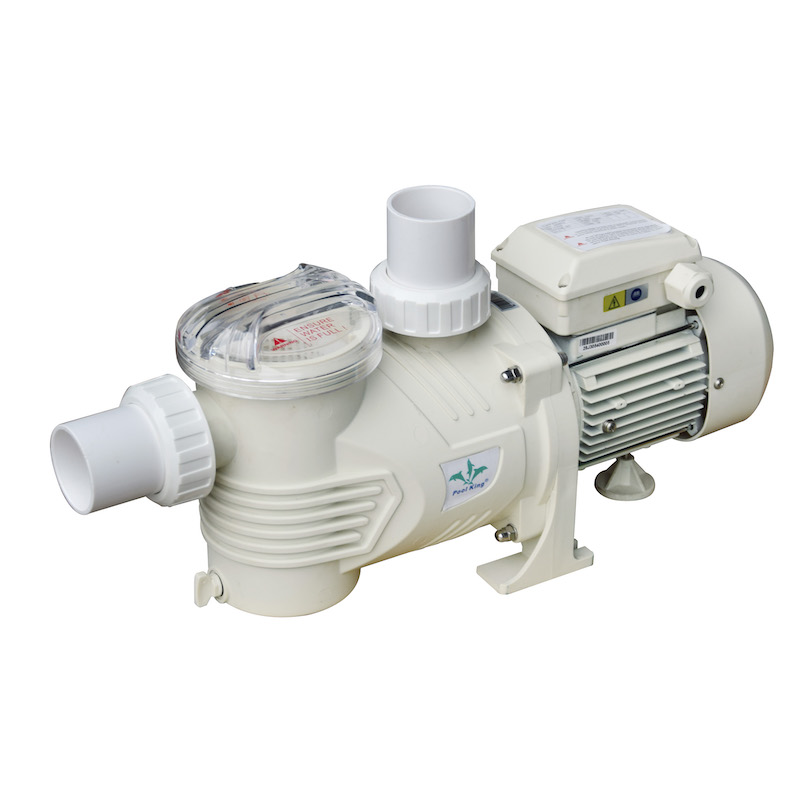
In pump sizing, "head" is the total resistance the pump must overcome to move water through your system. It combines static lift (height differences), friction losses in pipes and fittings, and resistance from filters, heaters, and other equipment. [atlascopco]
Engineers usually talk about Total Dynamic Head (TDH), expressed in feet or meters, as a more reliable indicator of pump performance than pressure alone because it captures what the pump actually has to overcome in your specific system. In simple terms, the higher the head, the harder the pump must work to push water, especially in long runs, tight plumbing, or multi‑level setups. [unitedrentals]
Industry practice commonly distinguishes pump "classes" by the head range they are designed to handle. [diy.inyopools]
- Medium head pool pumps
- Often called "high‑flow" pumps. [diy.inyopools]
- Typically used where TDH is below about 65 feet, such as standard residential pools with short plumbing runs and no elevated spa. [blog.royalswimmingpools]
- Optimized to move more water volume at lower pressure, making them efficient for uncomplicated systems. [swimmingpoolsteve]
- High head pool pumps
- Designed for systems with TDH above roughly 65 feet or where higher pressure at the returns or jets is required. [unitedrentals]
- Common on attached spas, waterfalls, long‑run commercial pools, or complex multi‑level systems. [swimmingpoolsteve]
- Built to deliver more pressure than volume, using larger or specially shaped impellers and higher horsepower motors. [atlascopco]
From a user perspective, think of medium head as "circulation‑focused" and high head as "pressure‑focused." [blog.royalswimmingpools]
| Aspect | Medium Head Pool Pump | High Head Pool Pump |
|---|---|---|
| Typical use case | Standard residential pool circulation | Complex or commercial systems with high resistance |
| Approx. head range | Below ~65 ft TDH (diy.inyopools) | Above ~65 ft TDH or demanding hydraulics (diy.inyopools) |
| Main design focus | Higher flow at lower pressure (diy.inyopools) | Higher pressure at moderate flow (unitedrentals) |
| Common applications | Basic pools, shorter plumbing, no elevated spa (diy.inyopools) | Attached spas, long pipe runs, water features, multi‑level pools (swimmingpoolsteve) |
| Pipe sizing | Often paired with 1½" PVC (max ~42 GPM) (lesliespool) | Often paired with 2"+ PVC (max ~73 GPM or more) (lesliespool) |
| Energy profile | Generally lower power draw for simple systems (lesliespool) | Can be less efficient if "oversized" for the system (blog.royalswimmingpools) |
| Risk if mis‑applied | Under‑circulation on complex systems | Noisy operation, wasted energy, potential filter strain (lesliespool) |
This distinction is crucial when we specify pumps to match Poolking sand filters, cartridge filters, and DE filters in commercial projects. [poolkingfilter]
Medium head pumps are the default choice for many pools, especially where the plumbing layout is relatively simple and equipment is kept close to the pool. [diy.inyopools]
You will typically choose a medium head pump when:
- The pool is residential or light‑commercial with short suction and return lines.
- There is no raised spa or only a modest elevation difference between equipment and water level.
- The system has minimal water features (for example, one standard waterfall or a small fountain loop).
- You want to prioritize energy efficiency and lower upfront cost without sacrificing basic circulation. [lesliespool]
On many of these systems, a medium head pump paired with an appropriately sized Poolking sand filter or cartridge filter delivers stable flow, good turnover, and long filter life without over‑pressurizing the tank. [poolking]
High head pumps come into their own when your system starts to resemble a small hydraulic network rather than a simple loop. [unitedrentals]
You are likely in high head territory if:
- The equipment room is far from the pool, with long suction/return runs and many elbows.
- You have raised spas, infinity edges, rooftop pools, or multi‑level decks creating vertical lift.
- There are multiple water features (deck jets, waterfalls, water slides, interactive play features).
- You are running high‑rate commercial filtration where maintaining a specific flow through large sand filters is non‑negotiable.
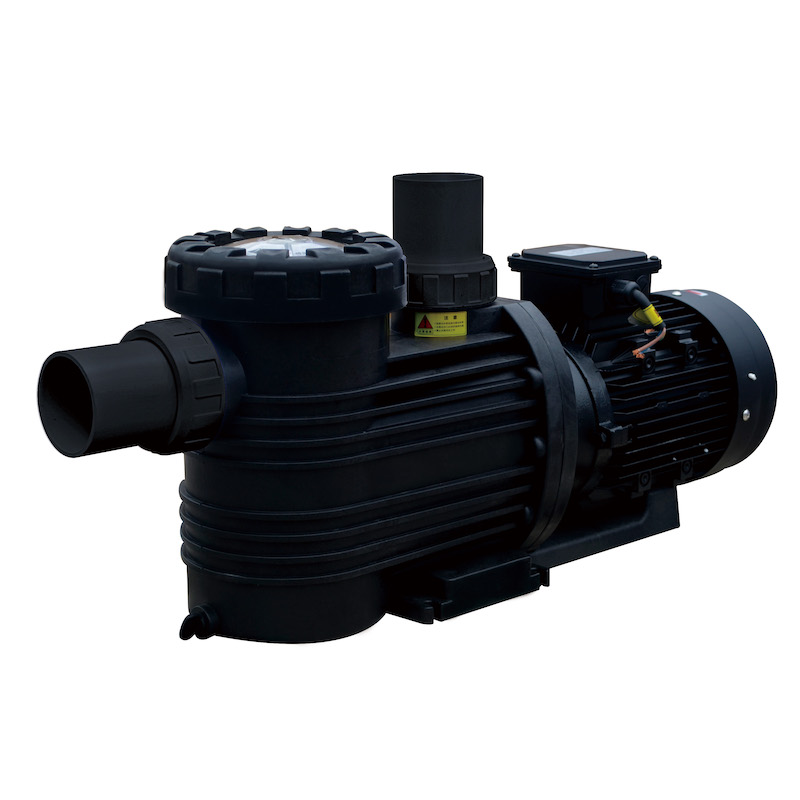
High head pumps are essentially "pressure specialists", designed to sustain adequate flow in high‑resistance environments that would starve a medium head pump. In our own project work, we routinely specify high head pumps with large fiberglass commercial sand filters where the piping network spans multiple technical rooms or levels. [poolkingfilter]
Even without a full hydraulic design, you can use a structured approach to determine which pump class is likely appropriate. [lesliespool]
Every pump decision begins with knowing how many gallons (or liters) of water you need to move. For example, volume for a simple rectangular pool can be approximated as: [lesliespool]
Length×Width×Average Depth×7.5
This gives you gallons, which you'll use to determine required turnover rate. [lesliespool]
Most pools aim for a complete water turnover every 8–10 hours. To find the minimum gallons per hour (GPH): [lesliespool]
Pool Volume÷Turnover Hours=GPH
Divide by 60 to convert to gallons per minute (GPM), which is the language pump performance charts use. [lesliespool]
Your filter, not the pump, is often the limiting factor. The pump's GPM rating should never exceed the filter's maximum flow rate, whether you are using a high‑rate sand filter, cartridge filter, or DE filter. Oversizing the pump relative to the filter can: [lesliespool]
- Force debris deeper into the media.
- Increase pressure, shortening filter life.
- Risk damage to internal laterals or cartridges over time.
When we match Poolking filters with pumps, we deliberately keep the filter slightly "oversized" relative to the pump, to keep pressure and velocity within a safe, efficient range. [poolking]
Finally, evaluate how demanding your system is:
- Short, simple runs, ground‑level equipment, no spa: likely medium head.
- Long runs, split equipment rooms, multiple levels, several water features: likely high head.
At this stage, looking up the manufacturer's feet‑of‑head vs flow curves will show whether you are in medium or high head territory for the GPM you calculated. [swimmingpoolsteve]
Your pump choice must align with pipe size, or you risk noise, cavitation, and poor efficiency. [lesliespool]
- Medium head pumps are commonly installed with 1½\" PVC in residential pools, where the maximum recommended flow rate is around 42 GPM per line. [lesliespool]
- High head pumps should usually be paired with 2\" PVC or larger, which can handle approximately 73 GPM or more with much lower friction losses. [lesliespool]
From an operational standpoint, we often see problems where a high head pump has been added to a legacy system with undersized pipe. This creates:
- Excessive velocity, leading to loud pipe noise and vibration.
- Higher friction head, which ironically keeps the actual usable flow lower than expected.
- Unnecessary stress on filters, valves, and unions.
In Poolking system designs, we therefore treat pipe sizing and pump head class as a single decision, not two separate ones. [poolkingfilter]
From a lifecycle cost perspective, "bigger" is not always "better." Industry experience and user feedback consistently show: [blog.royalswimmingpools]
- A properly sized medium head pump on a simple system often costs less to run over the year than an unnecessarily powerful high head pump. [blog.royalswimmingpools]
- When high head performance is genuinely required, variable‑speed high head pumps, run at the lowest RPM that still achieves your turnover target, can provide excellent energy savings. [blog.royalswimmingpools]
As a filtration equipment manufacturer, we routinely analyze projects where a high head pump was installed "just in case." Once we recalculate TDH and match the pump to a Poolking sand or cartridge filter with appropriate pipe sizing, we often find:
- Lower required horsepower than initially specified.
- Improved filtration quality due to better media contact time and reduced channeling.
- Noticeable reductions in electricity usage while still meeting turnover and health code requirements.
Because Poolking supplies commercial sand filters, fiberglass and plastic sand filters, cartridge filters, pumps, LED lights, and fittings from our Guangzhou and Taishan bases, we look at the pool system as a complete hydraulic ecosystem. [poolking.en.made-in-china]
When matching pump head class to Poolking filters, we recommend:
- For standard hotel or community pools with moderate plumbing complexity, pair a medium head pump with a Poolking high‑rate sand filter or cartridge filter sized with a comfortable safety margin on flow. [poolking]
- For large commercial installations (water parks, competition pools, aquatic centers) with long plumbing runs, multiple branches, and elevated structures, match a high head pump to appropriately sized fiberglass commercial filters, ensuring that the filter's maximum flow rate still exceeds the pump's best‑efficiency‑point GPM. [poolkingfilter]
- For systems with complex features (multiple spas, infinity edges, waterfalls), consider dedicated feature circuits:
- A medium head pump for the core filtration loop.
- One or more high head pumps solely for high‑pressure features.
This modular approach improves maintainability and lets you optimize each circuit for performance and efficiency.
Based on industry practice and user reports, several recurring mistakes occur when choosing between high and medium head pumps. [diy.inyopools]
- Oversizing a high head pump on simple plumbing
Leads to noise, wasted energy, and filters running at unnecessary pressure, without meaningful gains in clarity or turnover.
- Using a medium head pump on a complex, high‑resistance system
Results in poor flow at the return inlets, weak spa jets, and difficulty maintaining sanitizer levels due to inadequate circulation.
- Ignoring filter and pipe limits
Assuming "more pump is always better" can exceed recommended flow for both filters and pipe, accelerating wear and shortening component life. [lesliespool]
- Skipping professional TDH calculation
Relying only on motor horsepower instead of actual feet of head vs flow curves causes mis‑matches between pump, filter, and plumbing. [swimmingpoolsteve]
As a manufacturer, we strongly recommend that installers use manufacturer performance charts and friction loss tables, rather than rule‑of‑thumb horsepower alone, when specifying head class.
To simplify decision‑making, use this practical checklist before you select your next pump:
1. Measure pool volume in gallons or liters and define your target turnover time (e.g., 8 hours). [lesliespool]
2. Calculate required GPM using volume ÷ hours ÷ 60. [lesliespool]
3. Check your current or planned filter's maximum flow rate and ensure your target GPM is comfortably below that rating. [lesliespool]
4. Assess your plumbing layout: distance from pool to equipment, number of fittings, vertical lift, and any roof or multi‑level segments. [atlascopco]
5. List all water features and secondary circuits (spa jets, waterfalls, slides) and note which ones require higher pressure.
6. Using manufacturer pump curves, identify whether your required GPM at the estimated head falls into a medium head or high head pump's performance envelope. [diy.inyopools]
7. If in doubt, consider splitting the system: one medium head pump for filtration, separate high head pumps for features.
This sequence aligns with how professional designers and manufacturers approach new builds and retrofit projects for both residential and commercial facilities. [swimmingpoolsteve]
Because pump selection directly affects filter performance, choosing head class in isolation is risky. As a specialized manufacturer of pool sand filters, fiberglass filters, plastic filters, and cartridge filters, Poolking brings a system‑level view that many standalone pump vendors cannot offer. [poolking.en.made-in-china]
By integrating:
- Pump curves and energy profiles.
- Filter characteristics (media type, tank construction, maximum flow).
- Real‑world hydraulic layouts from thousands of installations.
we help operators:
- Maintain crystal‑clear water while honoring health and safety codes.
- Extend the life of filters, media, and pumps.
- Achieve predictable, stable performance season after season, even in demanding commercial environments.
If you are planning a new build or major retrofit, sharing your pool drawings, expected bather load, and equipment room layout with a manufacturer‑level partner will dramatically improve the match between pump head class and filtration system.
If you are unsure whether your application needs a high head pump or a medium head pump, the most reliable next step is to have your system reviewed against actual pump curves and filter specs.
As a manufacturer with over two decades of experience in commercial sand filters, fiberglass and plastic filters, cartridge filters, and complete pool filtration solutions, we can help you:
- Verify whether your current pump is correctly matched to your system.
- Recommend a head class and pump size tailored to your plumbing, filter, and performance goals.
- Propose a complete pump + filter + fittings package optimized for long‑term efficiency and water quality.
Reach out with your basic system data (pool size, pipe size, equipment layout, and existing equipment model numbers) to receive a tailored recommendation rather than relying on guesswork.
Q1: Can I upgrade from a medium head to a high head pump without changing my filter?
In many cases you can, but only if the new pump's maximum GPM stays below the filter's rated flow and your pipework can safely handle the higher pressure and velocity. A proper hydraulic review is recommended before upgrading. [lesliespool]
Q2: Will a high head pump always clean my pool better than a medium head pump?
Not necessarily. Once you reach an adequate turnover rate and correct filter sizing, more pressure does not automatically mean cleaner water; filter type, media quality, and maintenance are equally important. [swimmingpoolsteve]
Q3: How do variable‑speed pumps change the high head vs medium head decision?
Variable‑speed pumps can operate across a range of heads and flows, but their impeller and hydraulic design still lean toward a head class. You can run them at lower RPM for everyday circulation and ramp up when needed, but you should still match the base pump design to your system's TDH. [blog.royalswimmingpools]
Q4: Is it safe to use one high head pump for both filtration and water features?
It is possible, but not always optimal. Combining everything on one circuit can make it difficult to balance feature performance with filter loading and energy efficiency, especially in commercial systems. Dedicated circuits usually give better results long‑term.
Q5: How often should I review my pump and filter sizing?
You should reassess pump and head class decisions whenever you add major features (spas, slides, waterfalls), change filters or heaters, or significantly modify plumbing. Even small changes in head can affect performance, especially on tightly specified systems. [swimmingpoolsteve]
1. InyoPools – "Which is Best: High Head or Medium Head Pumps?" (definition of medium vs high head ranges, typical applications).
https://diy.inyopools.com/article/which-is-best-high-head-or-medium-head-pumps/ [diy.inyopools]
2. Leslie's Pool Supplies – "Pool Pump Sizing 101: Guide & Tips" (pool volume calculation, turnover, flow rate, pipe sizing guidelines).
https://lesliespool.com/blog/pool-pump-sizing-101.html [lesliespool]
3. United Rentals – "High Head Pumps: When to Use One and How to Choose" (definition of high head centrifugal pumps and pressure vs volume trade‑off).
https://www.unitedrentals.com/project-uptime/equipment/high-head-pumps-when-use-one-and-how-choose [unitedrentals]
4. Atlas Copco – "Understanding pump head and total head" (definition of head and total head in centrifugal pumps).
https://www.atlascopco.com/en-us/construction-equipment/resources/dewatering-pumps-guide/pump-head [atlascopco]
5. Swimming Pool Steve – "Single Speed Pool Pump Reviews" (practical usage of medium vs high head in pool systems).
https://www.swimmingpoolsteve.com/pages/pool-pump-reviews.html [swimmingpoolsteve]
6. Royal Swimming Pools – "What Size Pool Pump Do I Need? A Complete Guide" (medium vs high head guidance in residential contexts).
https://blog.royalswimmingpools.com/blog/what-horse-power-pump-should-i-get-for-my-pool [blog.royalswimmingpools]
7. Poolking – "Swimming Pool Sand Filters Suppliers & Manufacturers" (manufacturer background and product range).
https://www.poolking.co/pool-sand-filter.html [poolking]
8. Made‑in‑China – "Commercial Sand Filters for Swimming Pools" (Poolking commercial sand filters and manufacturing profile).
https://poolking.en.made-in-china.com/product/IKyJwvFMcBcV/China-Commercial-Sand-Filters-for-Swimming-Pools.html [poolking.en.made-in-china]
9. Poolking – "Top 10 Pool Filter Manufacturers in China" (Poolking positioning as a filtration manufacturer).
https://www.poolkingfilter.com/top-10-pool-filter-manufacturers-in-china.html [poolkingfilter]


