
Views: 222 Author: Tina Publish Time: 2025-10-25 Origin: Site


Content Menu
● Step-by-Step Disassembly (General Process)
>> Step 1: Drain and reduce weight
>> Step 2: Remove barriers and gain access
>> Step 4: Loosen mounting hardware
>> Step 5: Detach the base and rails
>> Step 6: Remove steps, rungs, and brackets
>> Step 7: Separate auxiliary components
>> Step 8: Final inspection and storage
● Model-Specific Tips and Variations
● Post-Disassembly Maintenance and Reassembly Preparation
● Quality Control and OEM Considerations
● FAQs
>> 1. How do I safely remove a pool ladder without damaging the pool wall?
>> 2. What should be done with the ladder after disassembly for long-term storage?
>> 3. Are there common signs of wear I should inspect before reassembly?
>> 4. How can I optimize packaging for OEM shipments?
>> 5. What are best practices for reassembly to ensure safety and performance?
Disassembling an above ground pool ladder is a routine maintenance task that helps with seasonal storage, transport, or temporary removal for safety and space optimization. This guide is written for international buyers, OEMs, batch manufacturers, and service professionals who need a clear, step-by-step procedure, safety considerations, and practical tips for packaging and reassembly. The process emphasizes careful handling of fasteners, brackets, and wall mounts, plus documentation and labeling to support efficient downstream manufacturing and logistics.
Before touching any hardware, establish a safe workspace and gather the right tools. A well-organized setup reduces the risk of dropped parts, damage to the pool wall, and personal injury.
- Tools you will typically need: Phillips and flathead screwdrivers, adjustable wrench, hex or socket set, pliers, rubber mallet, a small pry bar, cordless drill with appropriate bit sets, a tape measure, marker, zip bags or small labeled containers, and a cleaning brush.
- Safety considerations: power down any adjacent pool equipment (pump, heater) to avoid electrical hazards, and wear protective gloves. Work with a partner if possible, especially for heavier ladders, to avoid strain injuries.
- Inspection checklist: inspect all fasteners, brackets, rails, and steps for wear, cracks, or corrosion. Take clear photos before loosening anything to aid reassembly and quality control records. Check for brittle or damaged plastic components; plan replacements if necessary.
Note: The exact sequence may vary slightly by ladder model and mounting method (rim-mounted, deck-mounted, or wall-bracket-supported). Adaptation guidance is provided for common configurations.
- If submersed parts or tight clearance hinder access, lower the pool water level to reduce base weight and allow better access to mounting hardware.
- For dry-access ladders, ensure the surrounding area is dry and free of obstructions to prevent slips during handling.
- If there are locking gates or barriers near the ladder, disengage or retract them following the manufacturer's design.
- Clear a 1–2 meter working radius around the ladder to provide space for tools, parts, and potential assist from a teammate.
- Photograph every stage of the disassembly, focusing on how fasteners connect to brackets, rails, and the pool wall or deck.
- Label fasteners and brackets with consistent codes (e.g., A1, B2) and store them in labeled bags or containers. This is essential for OEM workflows and for ensuring consistent reassembly in future maintenance cycles.
- Begin by loosening screws, nuts, and clamps that secure the ladder to the pool wall, deck, or uprights. Use the appropriate screwdriver or wrench size to minimize thread damage.
- If bolts are stubborn due to corrosion, apply penetrating oil and allow a short dwell time, then reattempt. Do not force components to avoid stripping threads or cracking plastic mounts.
- Gently separate the ladder base from the mounting surface. For integrated bases, work slowly to avoid bending rails or stressing wall anchors.
- If rails are modular, identify joints or clips and release them in the order shown in the photos you captured earlier. For one-piece rails, pry carefully at the connection points, ensuring no damage to the pool wall or liner.
- If steps are detachable, unscrew or unclip them one by one. When removing, keep each step in sequence to simplify potential reassembly.
- For ladders with weighted feet or ballast components, drain or remove any ballast material before transporting or storing.
- Remove any safety locks, hand grips, or perforated brackets that might be attached to the ladder. Label and bag these parts for future reassembly.
- If the ladder uses foam grips or rubber gaskets, inspect and set them aside with related hardware for cleaning or replacement.
- After removal, inspect the mounting points on the pool wall or deck. Fill or repair any holes or damaged areas to maintain aesthetics and structural integrity when reinstalled in the future.
- Clean all parts to remove chlorine residue, grime, and salt deposits. Dry thoroughly before storage to prevent corrosion or mold growth.
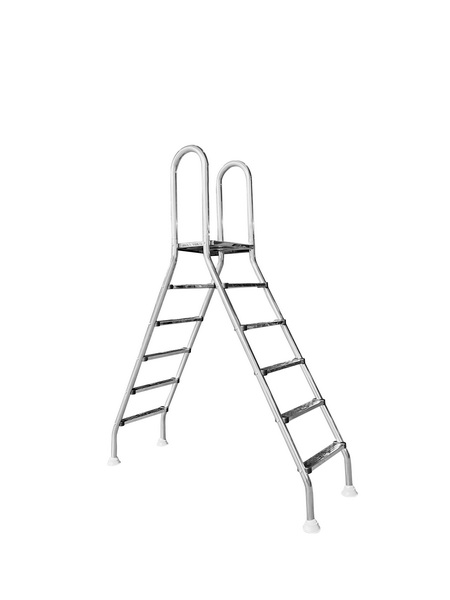
- Rim-mounted ladders: Pay attention to rim screws or brackets that anchor to the pool's outer wall. Keep washers and spacers in labeled bags. Avoid bending or twisting rails during removal.
- Deck-mounted ladders: Look for deck brackets or mounting plates with multiple screw points. Maintain alignment by noting the original orientation of brackets and rails.
- Wall-bracket ladders: Some designs use hidden fasteners or recessed brackets. Use a thin pry tool to release caps or covers gently, then access mounting screws from underneath or the side.
- During disassembly, keep parts in flat, dry areas to prevent warping or bending. Use pallets or sturdy bins when transporting multiple ladders or components for OEM shipments.
- For international shipments, package components in standard packaging sizes and label each bag with part numbers and compatible ladder models. Use protective wrap on metal parts and separate damp-prone components from electronics or LED modules.
- Create an equipment readiness sheet listing each part, its condition, and whether replacement is required before reassembly or shipment to a customer.
- If the ladder will re-enter service later, store components in a dry, temperature-controlled environment. Use desiccants in storage containers to mitigate moisture exposure.
- For OEM quality control, photograph and document every stage of the disassembly process with timestamps and model numbers to facilitate traceability.
- Documentation: keep a detailed log of every step, including model numbers, batch numbers (if applicable), and any observed wear or damage.
- Packaging: design packaging that protects metal components from scratches and corrosion, with clear labeling for easy reassembly by end users or service technicians.
- Safety compliance: ensure that all disassembled components are stored and shipped in compliance with local and international safety regulations. This includes proper handling of high-torque fasteners, reinforced brackets, and non-conductive components.
Disassembling an above ground pool ladder is a precise, methodical process that balances safety, efficiency, and long-term usability. By following a structured approach—careful preparation, systematic removal, meticulous documentation, and thoughtful post-disassembly handling—OEMs, manufacturers, and service professionals can streamline maintenance cycles, protect pool infrastructure, and prepare components for storage or shipment. With adequate labeling, model-specific notes, and clear visuals, reassembly remains straightforward, ensuring consistent performance across international markets and diverse installation environments.
- Use proper tools, gradually loosen all mounting hardware, and support the ladder during detachment to prevent stress on the wall. Photograph all connections before removing and store hardware in labeled containers. Safety remains the top priority throughout the process.
- Clean and dry all components, inspect for wear, and store in a dry, temperature-controlled area. Label parts for easy reassembly and consider using desiccants to control moisture.
- Look for cracked plastic components, bent rails, corroded fasteners, worn or stripped threads, and loose or missing brackets. Replace any damaged items to ensure a safe reassembly.
- Group parts by model and function, use labeled bags or small boxes, protect metal edges with bubble wrap, and place items in a rigid outer container with padding. Include an assembly guide and a simple reassembly checklist.
- Reassemble in reverse order of disassembly, torque fasteners to manufacturer specifications, verify alignment of rails and brackets, reinstall all safety devices, and test the ladder in a controlled environment before returning to service.
[1](https://blog.watsons.com/blog/remove-above-ground-pool-ladder)
[2](https://www.poolkingfilter.com/how-to-take-apart-a-pool-ladder.html)
[3](https://www.youtube.com/watch?v=GVzUPaFkXtY)
[4](https://www.poolkingfilter.com/how-to-take-apart-an-above-ground-pool-ladder.html)
[5](https://www.youtube.com/watch?v=JDQvPV6Fz2o)
[6](https://www.facebook.com/groups/637529959937311/posts/2576471032709851/)
[7](https://getwecycle.com/blogs/above-ground-pool-removal)
[8](https://www.tiktok.com/discover/how-to-disassemble-above-ground-pool-ladder)
[9](https://mrpoolman.com.au/blogs/news/easily-install-or-replace-your-pool-ladders-and-rails)


