
Views: 222 Author: Tina Publish Time: 2025-11-03 Origin: Site


Content Menu
● Preparation Before Installation
● Step-by-Step Installation Guide
>> Step 2: Securing the Ladder Base
>> Step 3: Weighting the Ladder
>> Step 4: Securing Ladder to Pool Wall or Deck
>> Step 5: Ladder Safety Devices
● Ladder Maintenance and Safety Tips
● Common Issues and Troubleshooting
>> 1. What is the best method to stabilize an above-ground pool ladder?
>> 2. How do I protect my vinyl pool liner from ladder damage?
>> 3. Should I remove the ladder when closing the pool?
>> 4. Can I use DIY solutions to hold down my pool ladder?
>> 5. How often should pool ladder hardware be inspected?
Securing a pool ladder is a critical step for safe pool access and accident prevention, especially for children and elderly swimmers. Pool ladders can float, tip, or wobble if not installed correctly, so proper securing techniques and devices should be used. This guide covers types of pool ladders, installation methods, practical tips for ladder stabilization, illustrated instructions, video walkthroughs, maintenance advice, and manufacturer OEM solutions.[1][10]
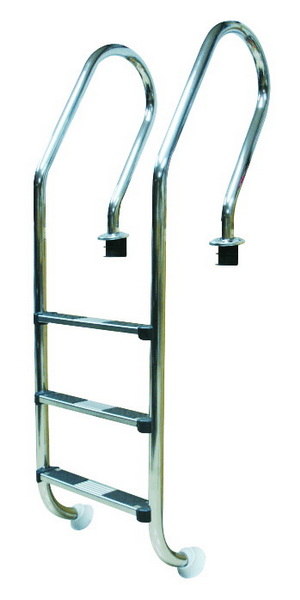
Above-ground pool ladders are designed for easy entry and exit; they often use A-frame or step-in models. These ladders generally require stabilization on both sides of the pool wall and are made from resin or stainless steel for durability. The A-frame design is popular for its stability and ease of installation, while step-in models are favored for their compact footprint and quick setup.[11][1]
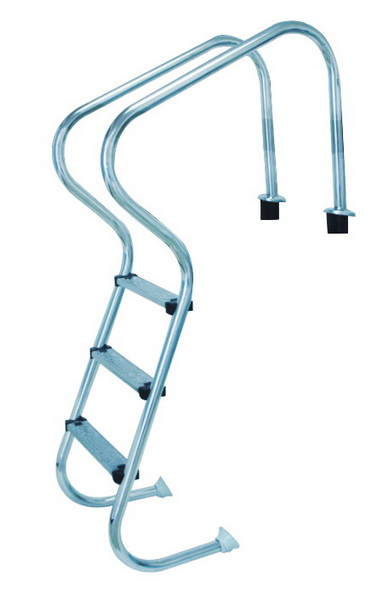
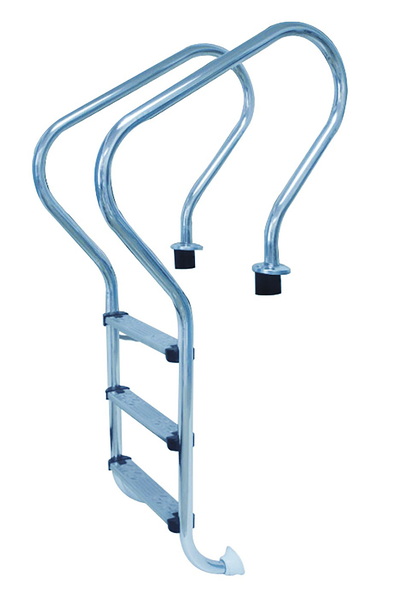
In-ground pool ladders are usually anchored to the deck or pool wall, using mounting cups, flanges, or bolted rails. Their heavy-duty build and fixed installation provide excellent stability. In-ground ladders are often made from stainless steel or aluminum, offering corrosion resistance and long-term reliability.[12][1]
As a manufacturer, you can offer custom OEM ladder solutions for both above-ground and in-ground pool models, using reinforced bases, adjustable feet, anti-slip surfaces, and corrosion-resistant materials for international clients. These solutions can be tailored to specific pool dimensions, safety standards, and aesthetic preferences.
Before starting, gather the ladder, necessary hardware (bolts, washers, nuts), stabilizing weights (such as sandbags or anchor weights), wrench, screwdriver, and pool liner protection pads. Ensure the pool area is clean and dry for best results. Review the ladder's instruction manual for model-specific details and safety warnings.[10][1]
- Position the ladder in the desired spot; make sure the feet are flat on the ground inside and outside the pool.[13][1]
- For above-ground models, place the ladder so both the interior and exterior sections are securely based.
- For in-ground models, align the ladder rails with the deck holes and lower into place.
- Use adjustable feet to level the ladder, adapting to ground and pool height differences.
- Insert bolts through designated holes and tighten with washers and nuts. Do not overtighten so feet can pivot for minor adjustments.[6][13]
- For A-frame ladders, ensure the base treads are pivotal and can be adjusted for stability.
- Add stabilizing weights inside the ladder frame: sandbags, water-filled poly tubes, or resin anchor weights can be used.
- DIY solutions might include PVC pipe weights filled with sand or gravel—these can be tied to the ladder base for extra stability.[15][10]
- For A-frame ladders, fill the holders with sand using a funnel (approximately 20 lbs per holder).[7]
- Use mounting flanges, pool ladder cups, or anchoring plates for fixed attachment.
- Tighten all bolts, brackets, and cup wedges. For in-ground ladders, ensure rails are fully seated in deck anchors.
- For deck-mounted models, use deck flanges and screws to anchor the handrails.[2][5]
- Install ladder pads between ladder and pool liner to prevent friction or damage.
- Consider safety gates, removable steps, or top latches to prevent unauthorized access by children.[16][17]
- For A-frame ladders, use roll guards or locking gates to secure the ladder when not in use.[5]
- Inspect ladder hardware (bolts, nuts, feet, railings) regularly.
- Clean ladder rails and steps to prevent slip hazards.[1]
- Remove and store ladder during pool closure, winterization, or when not in use to prevent deterioration.[17][16]
- Always face the ladder when entering or exiting the pool; never jump or dive from ladder steps.[17][13]
- For in-ground ladders, check that the ladder is not rubbing against the pool liner, which can cause tears.[1]
- Use protective pads or liners to prevent damage to the pool liner.[1]
- Ladder floats or wobbles: Add more weight or reposition base; check all feet and bolt connections.
- Rail rubs vinyl liner: Add protective pads or adjust installation angle.
- Steps flex under weight: Check for missing bolts or loose fasteners.
- Difficult gate operation: Adjust latches, lubricate hinges, and check for alignment.[13]
- Sharp corners: Sand sharp edges to prevent injury and liner damage.[7]
As a leading manufacturer, your factory can provide custom OEM ladder solutions tailored to international safety standards and client requirements. These solutions include:
- Reinforced bases for extra stability
- Adjustable feet for uneven surfaces
- Anti-slip surfaces for enhanced safety
- Corrosion-resistant materials for longevity
- Customizable designs for aesthetic integration
These OEM solutions ensure that your clients receive high-quality, safe, and durable pool ladders that meet their specific needs.
Properly holding down and stabilizing a pool ladder is vital for swimmer safety, pool longevity, and ease of use. By choosing the right ladder type, installing it correctly, weighting it for stability, and maintaining all hardware elements, you create a secure pool environment for everyone. Custom OEM options can further optimize safety and quality for professional pool installations.[10][13][1]
Weights such as sandbags, custom anchor weights, or water-filled tubes placed on the ladder's base are the best methods to prevent floating and tipping.[10][15]
Install protective pads between the ladder rails and pool liner to minimize friction and tearing.[1]
Yes. Pool ladders should be removed and stored in a dry area during off-seasons and winterization.[16][17]
Yes. PVC pipe weights, bungee cords, and zip-tied baskets are examples of effective DIY stabilization methods.[18][15]
Hardware, fasteners, and ladder feet should be inspected at least twice per season and after any major pool use or storms.[16][1]
[1](https://blog.linerworld.com/2011/01/14/swimming-pool-ladder-installation/)
[2](https://www.poolkingfilter.com/how-to-install-pool-ladder-above-ground.html)
[3](https://mrpoolman.com.au/blogs/news/easily-install-or-replace-your-pool-ladders-and-rails)
[4](https://www.youtube.com/watch?v=JJkG7vsan1E)
[5](https://www.royalswimmingpools.com/NE1162manual.pdf)
[6](https://www.propools.com/Manuals/63043_20211268342.pdf)
[7](https://lumi-o.com/app/uploads/2023/03/71550-A-Frame-Blow-Molding-Ladder.pdf)
[8](https://images.thdstatic.com/catalog/pdfImages/b8/b8fbe463-4a88-4be0-b7ab-ccfc3239982e.pdf)
[9](https://manuals.plus/asin/B07BM23G2C)
[10](https://www.poolkingfilter.com/news/How-To-Hold-Down-Pool-Ladder.html)
[11](https://sternspools.com.au/blogs/help-advice/easy-access-a-guide-to-above-ground-pool-ladders)
[12](https://www.svadonpoolcn.com/best-pool-ladder-in-ground-features-safety-installation-guide/)
[13](https://www.youtube.com/watch?v=UOszx5_q0s4)
[14](https://stock.adobe.com/search?k=%22swimming+pool+ladder%22)
[15](https://www.youtube.com/watch?v=Nb82H39bU0g)
[16](https://www.intexdevelopment.com/support/downloadmnl?filename=331PO_R1_1912_EN.pdf)
[17](https://bestwayusa.com/media/pdf_files/Coleman_Pool_Ladder_90392E_2024.pdf)
[18](https://www.tiktok.com/@annleekangeroo/video/6980798240966855942)


